
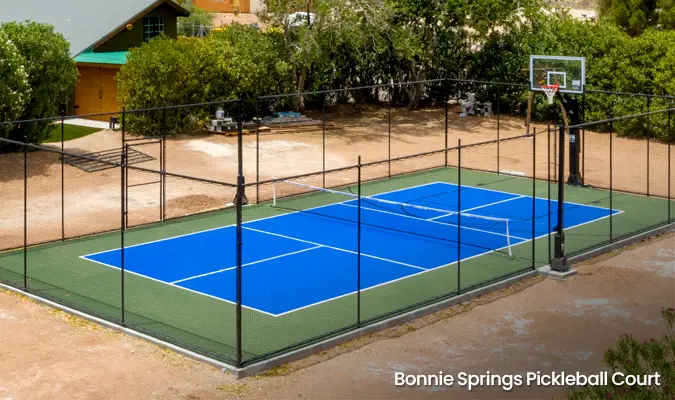
Pickleball has rapidly evolved from a backyard pastime into a nationwide phenomenon. It’s no exaggeration to call it the fastest-growing sport in America, captivating players from teenagers to retirees with its blend of strategy, agility, and camaraderie. The allure lies in its accessibility—easy to learn, low-impact on the joints, and suitable for nearly any skill level.
At Legendary Sports Construction, we bring professional-grade engineering and design expertise to the world of pickleball court construction. Every court we build is more than a flat playing surface—it’s a carefully engineered environment crafted for longevity, safety, and superior gameplay. Whether you’re developing a community recreation center, enhancing a resort, or installing a backyard court for family fun, our process ensures excellence at every stage.
We combine cutting-edge materials, modern construction techniques, and meticulous attention to detail to create pickleball courts that perform consistently season after season. Our installations are weather-resistant, low-maintenance, and designed to meet official tournament standards, ensuring you enjoy a seamless playing experience for years to come.
The surface of a pickleball court is far more than just the floor beneath your feet—it’s the foundation of gameplay quality. The choice of material affects everything: speed, bounce, comfort, and maintenance requirements.
Acrylic surfaces are the most popular option, offering excellent traction, UV resistance, and consistent bounce. They are ideal for outdoor environments, especially when coupled with cushioned underlayers that reduce impact stress on joints. For those seeking the ultimate in structural integrity, post-tension concrete stands out. Reinforced with steel cables, it provides unmatched stability and prevents cracking over time.
Other options include modular sport tiles, which offer quick installation, superior drainage, and customizable color designs. These are particularly useful for multi-sport facilities that may host basketball, volleyball, or other court-based activities. Meanwhile, asphalt offers a budget-friendly alternative, though it requires more frequent maintenance compared to concrete or acrylic.
Choosing the right surface depends on the intended use—whether recreational, professional, or multi-purpose—and the local climate. At Legendary Sports Construction, our specialists help clients assess each option based on performance goals and budget, ensuring a perfect balance of playability and durability.
Precision in measurement is essential when constructing a professional-grade pickleball court. The official court dimensions are 20 feet wide by 44 feet long, and this applies to both singles and doubles play. Beyond the playing area, additional clearance—typically 10 feet behind each baseline and 5 feet on each side—is recommended to allow for comfortable movement and safe play.
A well-designed court layout also incorporates a non-volley zone, commonly referred to as “the kitchen,” which extends seven feet from the net on both sides. This area is crucial to the game’s strategic playstyle, preventing players from smacking volleys directly at the net.
Proper orientation and drainage are equally vital. The court should ideally run north-south to reduce sun glare during morning and afternoon play. A slight gradient (about 1%) ensures effective water runoff, protecting the surface from puddling and premature wear.
Lighting is another element that separates a casual setup from a professional facility. LED floodlighting positioned at strategic angles allows for optimal nighttime visibility without creating distracting shadows or glare.
Pickleball is a fast-paced game, and a sturdy perimeter fence ensures safety and convenience. Typical fencing stands 10 to 12 feet high, preventing balls from escaping the court while maintaining visibility for spectators. Legendary Sports Construction uses powder-coated steel fencing, chosen for its durability, rust resistance, and sleek appearance that complements outdoor aesthetics.
At the heart of every pickleball court lies the net system. The official net height is 36 inches at the sidelines and 34 inches at the center. We install regulation-grade nets with heavy-duty tensioning systems that maintain consistent tautness. High-quality center straps and anchoring mechanisms prevent sagging and ensure precision play.
Our custom installations also include optional upgrades such as removable net posts for multi-use courts or wind-resistant designs for coastal or high-wind environments. The result? A professional setup that feels tournament-ready every time you play.
|
Surface Type |
Durability |
Maintenance |
Comfort |
Ideal For |
|---|---|---|---|---|
|
Acrylic Coating |
8–10 years |
Low |
Moderate |
Residential & Community Courts |
|
Post-Tension Concrete |
20+ years |
Very Low |
Firm |
Commercial & Tournament Courts |
|
Cushioned Acrylic |
7–10 years |
Low |
High |
Recreational & Senior Players |
|
Modular Tile Surface |
10–15 years |
Moderate |
Variable |
Multi-Sport & Temporary Courts |
|
Asphalt Base |
5–7 years |
Moderate |
Firm |
Budget Installations |
Few recreational amenities are as relevant right now as pickleball. With participation skyrocketing across the country, adding a court to your property makes it instantly attractive to residents, guests, and community members. It’s a social hub that promotes fitness and connection.
A full-sized pickleball court occupies less than half the space of a tennis court, making it ideal for compact lots, private residences, or shared recreational areas. You can even fit four pickleball courts in the footprint of one tennis court—perfect for multi-game facilities looking to maximize space.
Pickleball courts are built for endurance. Surfaces like acrylic and post-tension concrete require minimal maintenance, with occasional cleaning and repainting being sufficient to keep them pristine. This long-term efficiency translates to lower upkeep costs over time.
A well-designed court doesn’t have to be exclusive to pickleball. With adjustable net heights and portable equipment, it can easily convert into spaces for volleyball, badminton, or mini-tennis. Multi-use capability adds immense value to schools, recreation centers, and country clubs.
Recreational amenities directly enhance property desirability. Whether you’re a homeowner looking to elevate your backyard or a developer adding value to a new community, a custom-built pickleball court symbolizes quality, recreation, and modern living.
Every successful project begins with understanding your vision. Our team conducts an on-site assessment to evaluate factors like soil condition, available space, and drainage needs. From there, we craft a detailed design blueprint—complete with 3D renderings, layout planning, and material selection guidance.
We’ll discuss color schemes, court orientation, and lighting options to ensure every aspect of your court aligns with your environment and intended use.
This stage establishes the foundation of quality. Our crew performs grading and compaction to guarantee a perfectly level playing surface. We install advanced drainage systems to prevent water accumulation and ensure structural stability through every season.
When necessary, we reinforce the subgrade with geotextile fabric to improve soil stability and reduce cracking over time. Proper site prep is an invisible yet essential factor that determines the court’s long-term success.
Once the base is ready, we apply multiple layers of acrylic surfacing or install modular sport tiles, depending on your chosen material. Our proprietary surfacing technique creates uniform texture, optimal traction, and brilliant color contrast for visibility.
We also use UV-stable coatings to ensure that the vibrant finish resists fading and chalking even under intense sunlight.
With the surface cured, precision striping begins. Regulation lines are applied using laser-guided systems for exact placement. Each line is painted with colorfast, high-contrast coatings that won’t chip or fade under heavy use.
Accessories follow—net posts, fencing, benches, lighting, and windscreens—bringing the court to life. For premium installations, we offer custom branding or logo integration for clubs and commercial venues.
Quality assurance is our signature. Before completion, our team performs an extensive inspection covering surface flatness, line accuracy, net tension, and safety compliance. Once verified, we deliver a ready-to-play court engineered for decades of enjoyment.
The best material depends on use and climate. Post-tension concrete is the gold standard for long-term durability, while acrylic surfaces provide a professional-grade texture and bounce. For backyard courts, cushioned acrylic offers added comfort for casual play.
A typical pickleball court consists of a concrete or asphalt base, layered with acrylic or modular surfacing. The setup includes permanent boundary lines, a net system, fencing, and—if desired—lighting for nighttime play.
A professional court requires precise engineering. Start with proper site grading and a stable foundation. Use regulation dimensions, apply a high-quality acrylic coating, and install tournament-grade nets and posts. Partnering with outdoor pickleball court builders ensures compliance with USA Pickleball Association standards.
If budget is a concern, consider repurposing existing surfaces like old tennis or basketball courts. A resurfacing project, complete with new coatings and court lines, can cut costs dramatically while still delivering professional results.
Post-tension concrete is preferred because it’s reinforced with steel cables that keep the slab under compression, preventing cracking and maintaining levelness. It provides a seamless, strong, and weather-resistant base ideal for outdoor pickleball courts.
Legendary Sports Construction transforms your vision of recreation into a lasting reality. From concept to competition, we build pickleball courts that stand the test of time—beautifully engineered, precisely measured, and crafted for champions in every rally.
Please Provide Your Contact Information and Project Details