
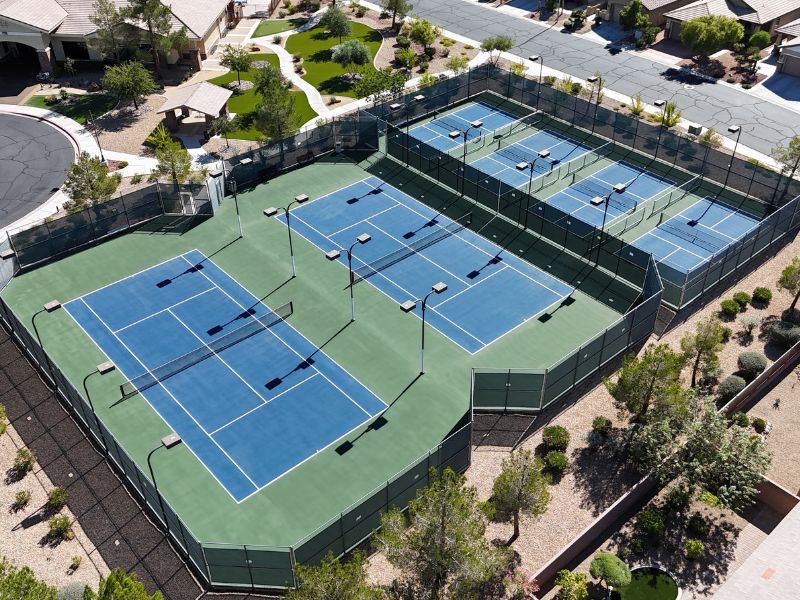
Tennis is one of the most beloved outdoor sports in Arizona and Nevada, where residents enjoy sunshine nearly all year long. However, the same climate that makes tennis so popular can also wreak havoc on outdoor courts.
Intense UV rays. Dramatic temperature swings. Heavy foot traffic. Occasional monsoon storms.
Layer by layer, these conditions break down the surface of a tennis court, causing cracks, fading, puddling, texture loss, and uneven bounce. When gameplay starts to suffer or safety becomes a concern, it’s time for professional resurfacing.
Understanding the tennis court resurfacing cost upfront helps residential and commercial court owners budget smarter and avoid bigger repair bills later. Resurfacing restores optimal playability, ensures consistent ball response, revitalizes appearance, and significantly extends the lifespan of the court.
Whether it’s a backyard tennis court resurfacing project at a private home in Scottsdale or ongoing rehabilitation for a busy club court in Las Vegas, resurfacing is a critical maintenance investment.
Pricing can vary considerably based on multiple factors — from court size to damage severity. But here are standard cost ranges typically seen in tennis court resurfacing AZ and Nevada projects:
| Type of Resurfacing | Estimated Cost |
| Residential Acrylic Court | 3,500–6,500 |
| Commercial/Club Acrylic Court | 6,000–12,000 |
| Partial Resurfacing/Minor Repair | 1,500–3,000 |
These figures typically cover:
Courts with extensive cracking, drainage issues, or base damage fall on the higher end or may need deeper structural repair.
Additional items that can increase the acrylic tennis court resurfacing price:
Resurfacing early — before surface damage spreads — ensures better performance and lower cost over time.
Several conditions determine where your court falls within the price range:
Cracks, low-spots, and peeling coatings require more labor and materials. Courts with structural failure may require crack membrane installation or partial resurfacing of the slab.
Regulation tennis courts measure 120′ x 60′ overall, but private courts may vary. Larger areas require more coating, striping, and labor time.
The most cost-efficient resurfacing type remains acrylic systems. But if your court also has:
…the budget increases.
Arizona and Nevada demand UV-resistant resurfacing products capable of resisting fading and heat degradation. Premium advanced acrylic blends can cost more but drastically extend court life.
Enhancements such as:
add value but expand the budget.
Remote areas, seasonal scheduling pushes, and workforce availability can also influence pricing.
| Resurfacing Type | Durability | Ball Performance | Maintenance Level | Estimated Cost | Ideal For |
| Standard Acrylic Resurfacing | High | Excellent | Low | Moderate | Residential & club courts |
| Cushioned Acrylic Resurfacing | Very High | Excellent | Low | Higher | Senior players & joint-friendly courts |
| Crack Membrane + Acrylic | Exceptional | Excellent | Low | Higher | Courts with structural cracking |
| Partial Court Touch-Up | Medium | Good | Low | Lowest | Quick fixes & budget-conscious projects |
This table provides a simple visual comparison when deciding how to allocate your resurfacing budget.
While DIY patch products exist, resurfacing a tennis court is a precise and technical process. Professional resurfacing ensures grip consistency, longevity, and a smooth, safe finish.
Here is the proven workflow used by professional tennis court resurfacing contractors:
A full evaluation is completed to identify concerns such as:
Each issue is documented and incorporated into the repair plan.
Success depends heavily on prep work. Contractors will:
Proper bond to the surface is achieved through professional cleaning and specialized primers.
Expert installation of advanced acrylic layers includes:
Optional cushioned systems reduce fatigue, making play easier on knees and hips — a popular upgrade in community courts and active-retirement communities in AZ and NV.
Regulation pickleball and tennis line codes require precise layout. Professionals ensure:
Custom logos can showcase club identity or homeowner style.
Performance is validated by testing bounce, viewing finish uniformity, and ensuring no tripping hazards. Owners receive a maintenance plan to extend the resurfaced court life.
This process ensures a durable outcome that withstands the climate and maintains a premium appearance.
Resurfacing is one of the smartest long-term investments for a tennis facility:
| Benefit | Why it Matters |
| Restores Ball Bounce | Improves precision and game enjoyment |
| Enhances Safety | Smooth, grippy surface reduces slips |
| Revitalizes Aesthetics | Creates a modern, visually appealing court |
| Prevents Escalating Damage | Extends life by fixing cracks before they spread |
| UV Protection | Designed for harsh AZ & NV weather |
Keeping courts fresh encourages more play and reduces ongoing maintenance needs.
Most resurfacing projects fall between 3,500 and 12,000 depending on court size and damage severity.
Every 5–7 years, depending on usage and environmental exposure.
Full construction typically ranges eighty thousand to one hundred twenty thousand, depending on surface, lighting, and accessories.
Most resurfacing is completed in 3–7 days, but some coatings require curing time before play resumes.
The process includes:
1️⃣ Cleaning & repair
2️⃣ Acrylic resurfacing layers
3️⃣ Repainting line striping
4️⃣ Final inspection and safety checks
Your tennis court is a valuable asset — treat it like one. Quality resurfacing revitalizes gameplay, enhances visual appeal, and protects your investment from costly future repairs.
Court resurfacing services Arizona and Nevada professionals deliver custom solutions designed to withstand scorching UV rays and intense heat. When you maintain your tennis court proactively, you extend its lifespan by several years and maintain a professional playing environment all year long.
Whether the goal is to enhance a residential backyard tennis oasis, reinvigorate a club facility’s competitive performance, or simply fix safety issues before they escalate — resurfacing is a smart, cost-efficient upgrade.
Bring back the bounce. Restore the performance. Keep the game alive.
For courts that look amazing, play consistently, and last longer — professional resurfacing is the winning strategy.
Please Provide Your Contact Information and Project Details