
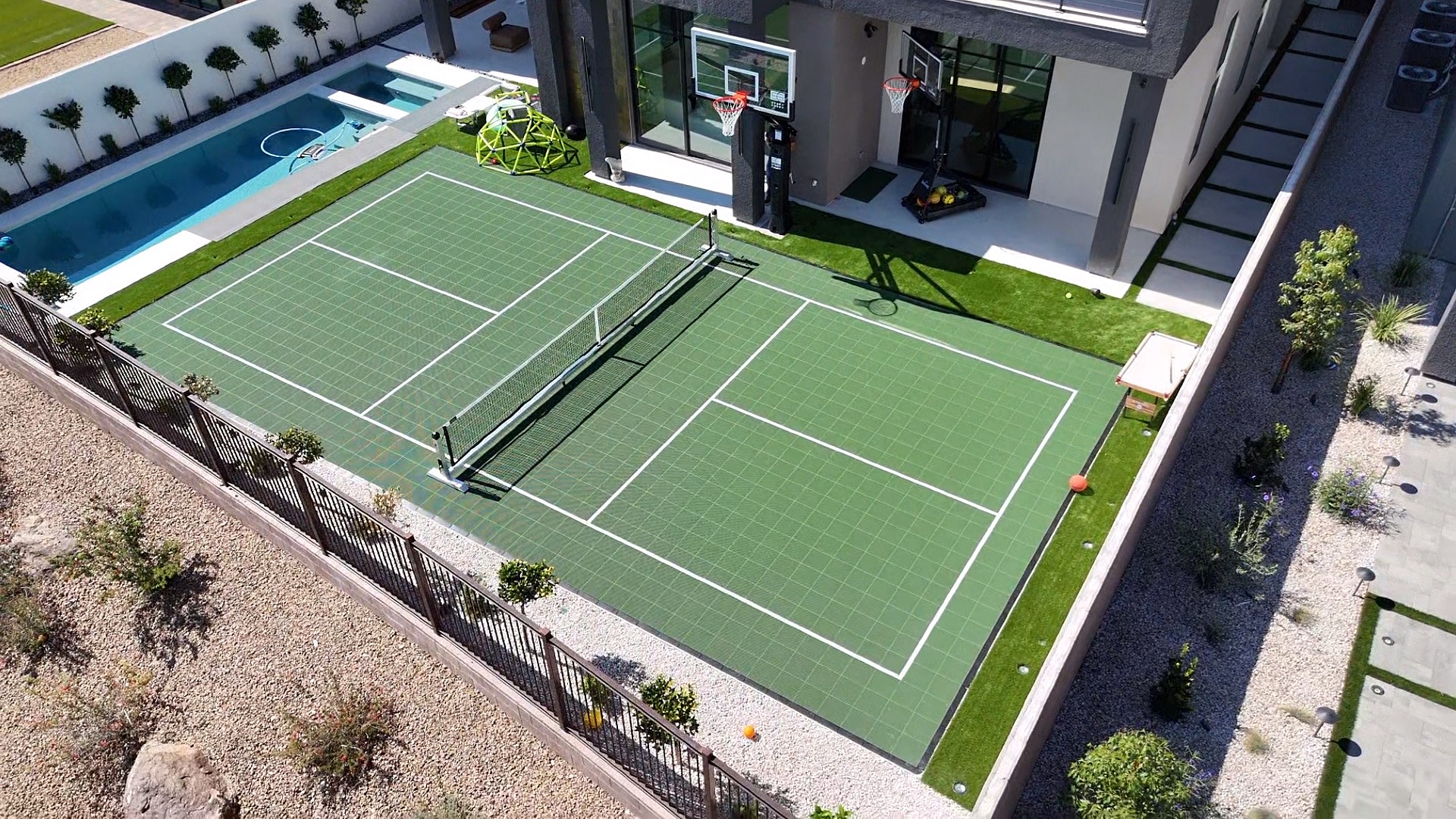
Sport Court products only available in Nevada.

Pickleball Court Surface Material: Choosing the Right Surface for Performance & Longevity

Choosing the right pickleball court surface material is one of the most important decisions in any court project. The surface directly affects ball bounce, player movement, joint comfort, safety, and how well the court holds up over time. In outdoor environments especially, heat, UV exposure, moisture, and repeated play can quickly expose weaknesses in the wrong surface choice.

At Legendary Sports Construction, we guide homeowners, HOAs, and recreational facilities through the process of selecting and installing pickleball court surfaces built for performance and longevity. Whether you’re planning a backyard court or a shared-use recreational facility, understanding how each surface material performs will help you make a confident, long-term investment.

Common Pickleball Court Surface Materials

There is no single “one-size-fits-all” surface for pickleball. Each material offers unique benefits depending on location, usage level, budget, and comfort expectations.

Acrylic-Coated Concrete

Acrylic-coated concrete is one of the most common pickleball court surfaces used today. This system involves applying textured acrylic layers over a properly prepared concrete slab.

Key characteristics

  • Smooth, consistent playing surface

  • Reliable ball bounce

  • Strong traction when properly applied

This surface is widely used for both residential and community courts. However, because the surface is rigid, it can feel harder on joints during extended play and may require resurfacing over time due to cracking or fading.

Asphalt with Acrylic Surfacing

Asphalt courts finished with acrylic coatings are similar to concrete systems but offer slightly more flexibility. This can help reduce cracking in some environments.

Why asphalt is used

  • Slight flexibility compared to concrete

  • Familiar play feel

  • Easier resurfacing over time

That said, asphalt is more susceptible to temperature-related expansion and contraction, which can lead to surface movement and long-term maintenance needs—especially in hotter climates.

Modular Tile Systems

Modular tile systems have become increasingly popular for both residential and commercial pickleball courts. These interlocking systems install over prepared bases and create a finished sports surface.

Advantages of modular tiles

  • Built-in drainage

  • Consistent traction and ball response

  • Reduced surface stress and joint impact

  • Quick installation and easy repairs

Modular systems are often selected for outdoor courts because they handle heat, moisture, and heavy use more effectively than traditional coatings.

Cushioned Court Systems

Cushioned court systems incorporate shock-absorbing layers beneath the playing surface. These systems are designed to reduce impact stress and improve comfort during long play sessions.

Best suited for

  • Recreational players

  • Senior communities

  • High-frequency use environments

While cushioned systems provide excellent comfort, they can come with higher installation costs and more complex base preparation requirements.

Comparison Table – Pickleball Court Surface Material Options

Surface Material Best For Play Feel Drainage Durability Maintenance
Acrylic-Coated Concrete Residential & community courts Firm, predictable Poor Good Moderate
Asphalt with Acrylic Surfacing Recreational facilities Slightly flexible, firm Poor Moderate Moderate
Modular Tile Systems Outdoor & multi-use courts Athletic, consistent Excellent Excellent Low
Cushioned Court Systems Comfort-focused play Soft, joint-friendly Moderate Good Moderate
 

Benefits of Choosing the Right Pickleball Court Surface

The right surface material doesn’t just improve play—it protects your investment and enhances long-term enjoyment.

Improved Ball Bounce

A consistent surface ensures predictable ball response across the entire court. This improves game flow, fairness, and skill development for players at all levels.

Enhanced Player Safety

Surfaces with proper traction and shock absorption help reduce slips, falls, and joint strain. This is especially important for frequent players and older athletes.

Weather Resistance

Outdoor pickleball court surfaces must withstand sun, heat, and moisture. Materials designed for exterior use resist cracking, fading, and surface breakdown far better than basic coatings.

Lower Maintenance Needs

Some surface materials require regular resurfacing and crack repairs. Others, like modular tile systems, allow for simple cleaning and targeted repairs, reducing long-term maintenance costs.

Long-Term Durability

Choosing a surface built for repeated play and environmental exposure helps ensure the court remains playable and attractive for many years.

Customization Options

Modern surface systems allow for color customization, clear line markings, and layout flexibility to match your space and design goals.

Our Pickleball Court Surface Installation Process

Legendary Sports Construction follows a structured process to ensure every pickleball court performs as intended from day one.

Surface Evaluation & Planning

We assess site conditions, drainage, usage goals, and environmental factors to recommend the best surface material.

Base Preparation

Proper grading, leveling, and stabilization are critical. A strong base ensures surface longevity and consistent play.

Surface Material Installation

Whether applying coatings or installing modular tiles, we use precise techniques to ensure uniformity and performance.

Court Striping & Layout

Accurate line placement ensures regulation gameplay and clean visual presentation.

Final Quality Inspection

Each project concludes with a thorough inspection to verify safety, consistency, and overall playability.

Frequently Asked Questions (FAQs)

What material are pickleball courts coated with?

Most traditional pickleball courts are coated with textured acrylic systems applied over concrete or asphalt. These coatings provide traction and ball consistency but may require periodic resurfacing.

What surface is best for an indoor court?

Indoor courts often use hardwood, cushioned vinyl systems, or modular sports tiles. Modular tile systems are increasingly popular for multi-use indoor spaces due to comfort and easy maintenance.

Best pickleball court surface?

The best surface depends on the environment and usage. For outdoor courts, modular tile systems and acrylic-coated concrete are top choices. Modular tiles excel in drainage, durability, and comfort, especially in harsh climates.

What is the official surface of a pickleball court?

There is no single mandated surface. Pickleball can be played on concrete, asphalt, or modular systems as long as the court meets size, line, and playability standards.

What type of material is best for pickleball?

For long-term outdoor use, modular pickleball court surfaces are often considered the best option due to weather resistance, consistent play, and low maintenance. Acrylic systems remain common but typically require more upkeep.

Ready to Choose the Right Pickleball Court Surface?

Selecting the right pickleball court surface material is essential for performance, safety, and durability. Legendary Sports Construction specializes in pickleball court surface installation, helping clients choose solutions that match their space, budget, and long-term goals. From backyard pickleball court surfaces to full-scale recreational facilities, we install surfaces designed to play better, last longer, and require less maintenance. Contact us today to start planning a pickleball court built for years of enjoyable play.

Sign up for our Newsletter

GET A QUOTE

Please Provide Your Contact Information and Project Details