
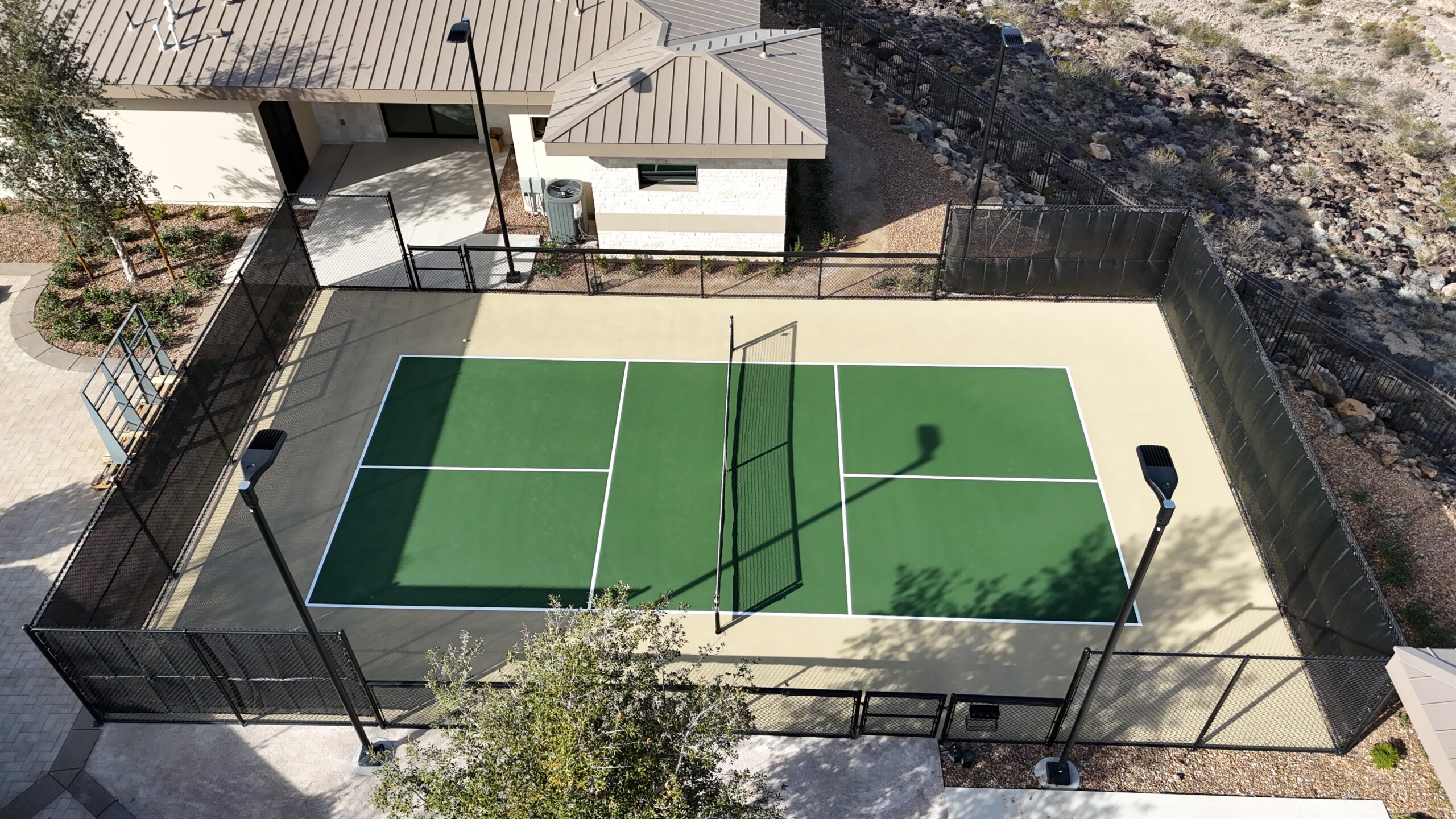
Pickleball has rapidly grown into one of the most popular recreational and competitive sports in North America. As more homeowners, sports facilities, and community parks install courts, one important question often arises: what is the best surface for a pickleball court?
The playing surface directly affects ball bounce, player traction, comfort, durability, and maintenance requirements. Choosing the right pickleball court surface material ensures the court performs consistently and remains safe for years of play.
Whether you are planning a backyard pickleball court, upgrading a community recreation area, or building a professional sports facility, understanding the available surface options is essential.
Today, most outdoor pickleball courts use one of the following surface systems:
Each option offers different benefits depending on climate, budget, maintenance expectations, and player comfort.
One of the most widely used surfaces for pickleball courts is an acrylic coating applied over a concrete base. This system uses the same style on many professional tennis and pickleball courts.
Concrete provides a strong, stable foundation, while the acrylic coating adds the necessary texture, grip, and color layers.
Key advantages of an acrylic pickleball court surface include:
Acrylic coatings are typically applied in multiple layers, including:
Because of its professional performance and durability, most tournament-level pickleball courts use acrylic surfaces over concrete.
For communities or sports facilities expecting heavy player traffic, this surface remains the gold standard.
Another increasingly popular option is modular pickleball court tiles. These systems consist of interlocking plastic tiles that snap together over a flat base such as concrete or asphalt.
They are commonly used for backyard courts, recreation centers, gyms, and multi-sport facilities.
Modular systems offer several advantages:
Because the tiles sit above the base surface, they allow airflow and drainage underneath, helping the court dry faster after rain.
For homeowners installing a backyard pickleball court surface, modular tiles can provide a comfortable, relatively low-maintenance option.
However, they may produce slightly different ball bounce compared to acrylic courts, which some competitive players notice.
Asphalt is another common structural base used for outdoor pickleball courts. Like concrete, asphalt is typically coated with acrylic sport court surfacing systems to provide texture and color.
Asphalt courts offer several advantages:
However, asphalt can expand and contract more than concrete due to temperature changes. Over time, this may cause small cracks or surface wear that require resurfacing.
With proper maintenance and resurfacing every few years, asphalt pickleball courts remain a reliable and cost-effective option.
| Surface Type | Durability | Comfort Level | Installation Cost | Maintenance | Best Use |
| Acrylic-Coated Concrete | Very High | Moderate | High | Low | Professional courts, clubs, parks |
| Asphalt with Acrylic Coating | High | Moderate | Medium | Moderate | Community courts, schools |
| Modular Pickleball Court Tiles | Moderate–High | High | Medium | Low | Backyard courts, recreational play |
| Cushioned Acrylic Systems | High | Very High | High | Low | Premium residential or club courts |
Selecting the best pickleball court surface material depends on several factors beyond cost.
Outdoor courts must withstand:
Acrylic-coated concrete and modular tile systems both perform well in outdoor environments.
Proper drainage and surface slope are also critical to prevent water pooling.
Frequent players may prefer surfaces that reduce stress on joints and muscles.
Cushioned acrylic systems and modular tiles provide additional shock absorption compared to hard concrete surfaces.
This can help reduce:
Comfort is particularly important for recreational players and older athletes, who make up a large portion of the pickleball community.
The intended use of the court plays a major role in surface selection.
Residential courts often prioritize comfort and ease of installation.
Community parks and clubs typically focus on durability and consistent play.
General recommendations include:
Choosing the right system ensures the court performs well for its intended purpose.
Different pickleball court flooring materials require different levels of maintenance.
Acrylic sport court surfaces typically require:
Modular tile systems generally require:
Low-maintenance surfaces help keep courts playable with minimal upkeep costs.
Investing in the right surface provides several long-term benefits for players and facility owners.
The correct surface ensures the ball reacts predictably during rallies, allowing players to develop accurate shots and strategies.
A textured surface improves traction, reducing the risk of slips and falls.
This is particularly important during quick lateral movements common in pickleball.
High-quality outdoor pickleball court surface systems can last 10–20 years with proper maintenance, making them a worthwhile investment.
Cushioned surfaces or modular tiles can reduce repetitive stress injuries by absorbing some of the impact from movement.
Modern sport surfaces allow for customizable colors and line markings, helping facilities create attractive and professional courts.
Many courts use contrasting color zones to improve visibility of the ball and court boundaries.
The surface of a pickleball court affects every aspect of the game.
Poorly designed or installed courts may cause:
Professional court installation ensures the base, slope, drainage, and coating system are designed specifically for pickleball play.
Proper construction also ensures compliance with standard pickleball court dimensions and sport surface specifications.
Yes. Pickleballs bounce well on concrete, which is why many courts use concrete as the structural base. However, the concrete is usually coated with acrylic sport surfacing to provide texture, grip, and color.
What surface do you use for pickleball?
Most pickleball courts use acrylic-coated concrete or asphalt surfaces. These provide the best balance of ball bounce, durability, and player traction.
For residential courts, modular pickleball court tiles are also a popular alternative.
Professional pickleball courts typically use post-tension concrete with multiple layers of acrylic sport coating. This creates a consistent, non-slip playing surface used in many tournament venues.
Yes. Pickleball is designed to be played on hard, smooth surfaces that allow the ball to bounce consistently. Common surfaces include concrete, asphalt, and acrylic-coated courts.
Concrete is one of the best structural bases for pickleball courts. When coated with acrylic sport surfacing, it provides excellent durability, traction, and consistent ball bounce.
The best pickleball court surface depends on your goals, budget, and expected usage.
For professional play and long-term durability, acrylic-coated concrete remains the most reliable option.
For backyard courts and recreational installations, modular pickleball court tiles offer comfort and quick installation.
For community courts, asphalt with acrylic coating can provide a durable and cost-effective solution.
By selecting the right materials and ensuring professional installation, you can create a pickleball court that delivers great gameplay, safety, and durability for years to come.
Acrylic, cushioned acrylic, modular tile, turf. The right answer depends on how often you will play, who is playing, and how much upkeep you want. There is no single best surface, only the one that fits your situation.
We will walk you through the trade-offs honestly, including when the cheaper option is genuinely the better one. Over 20 years building courts across the desert Southwest.
Get a free quote or call 702-883-8386 and we will help you pick.
Please Provide Your Contact Information and Project Details