
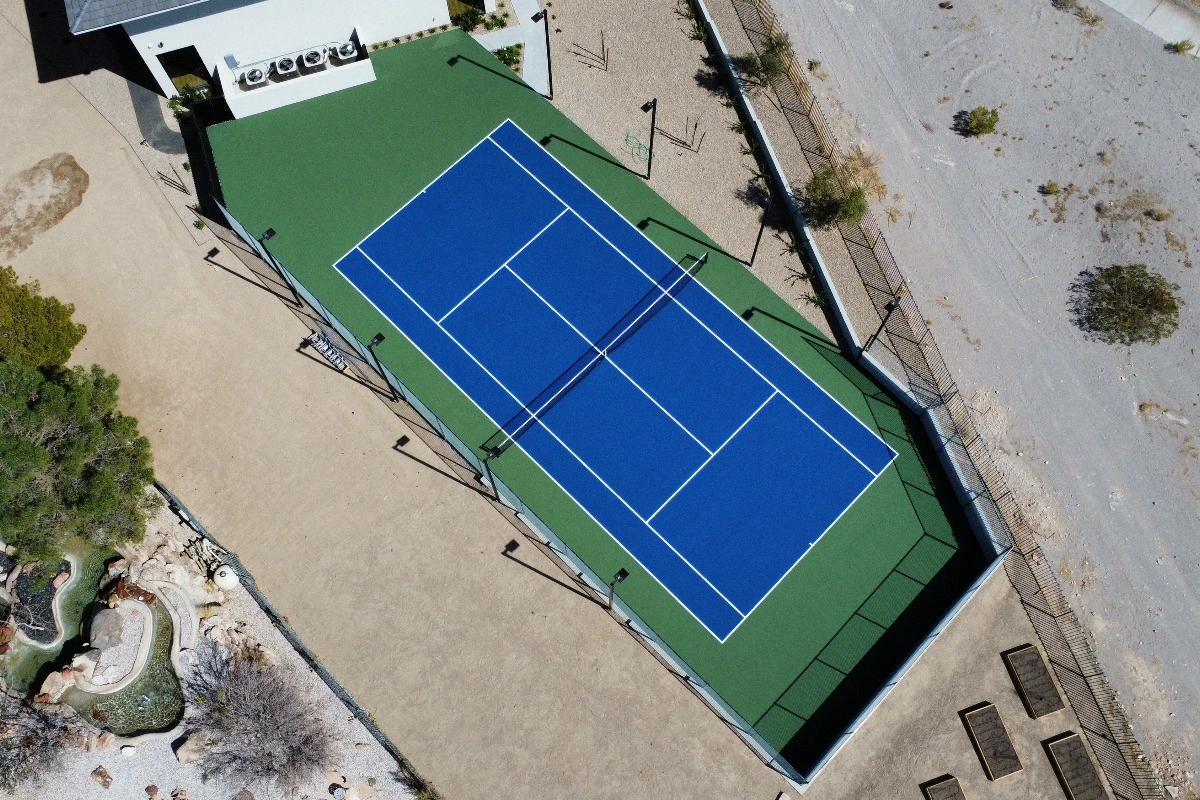
Building a tennis court is a significant investment that requires specialized knowledge, proper engineering, and high-quality construction techniques. Whether you’re planning a private backyard court, a school facility, a country club, or a community sports complex, selecting the right tennis court builder is one of the most important decisions you’ll make.
A professionally built court delivers consistent ball bounce, excellent traction, long-term durability, and an attractive appearance that enhances property value and recreational opportunities. Beyond aesthetics, the structural integrity, proper drainage, and high-quality surfacing are what distinguish a professional installation from an amateur one.
Investing in expert tennis court construction ensures your facility is safe, meets regulatory standards, and provides years of reliable performance. Homeowners, schools, and commercial facilities alike benefit from a court that is both functional and visually appealing.
A professional tennis court builder oversees every phase of the project to ensure a high-performing, durable, and compliant court. This includes:
Careful planning ensures a smooth construction process and a long-lasting playing surface.
The construction process typically involves:
Each step is crucial to creating a court that performs consistently under a variety of conditions.
Many professional builders also provide services such as:
These services ensure the investment remains playable and visually appealing for decades.
A professionally built court provides:
Substandard construction can lead to uneven surfaces, poor traction, and inconsistent ball behavior.
Correct construction methods prevent common issues such as:
A quality court requires fewer repairs and provides a longer service life, which is especially important for schools, clubs, and resorts managing multiple facilities.
These are perfect for:
Residential courts can also include custom tennis court designs with personalized colors, fencing, and lighting.
Schools often require courts designed for:
Durable surfacing and safety features are key considerations in school projects.
Designed to support:
Community courts often include seating, fencing, and lighting for multi-use play.
Large-scale facilities may include:
These courts require advanced planning and expert tennis court installation.
|
Surface Type |
Durability |
Bounce Consistency |
Maintenance |
Best Use |
|
Acrylic Hardcourt |
High |
High |
Low |
Residential, schools, clubs |
|
Cushioned Hardcourt |
High |
Medium-High |
Medium |
Family courts, high-use facilities |
|
Clay |
Medium |
Medium |
High |
Club and tournament play |
|
Grass |
Low-Medium |
Medium |
Very High |
Private estates, traditional clubs |
A professional builder assesses:
This evaluation determines the foundation requirements and surface selection.
The design phase establishes:
Custom court design ensures the facility meets functional and visual requirements.
A strong foundation is critical for long-term performance:
Proper base construction prevents settlement, cracking, and uneven surfaces.
Athletic surfacing systems are applied to create:
High-quality surfacing materials are essential for residential and commercial courts alike.
The final stage includes:
Choose contractors who specialize in:
Experience ensures the builder understands the nuances of court performance and installation.
A professional should know:
Experienced builders follow processes that maximize durability, prevent settlement issues, and maintain regulation standards.
Each property is unique. A high-quality tennis court builder tailors the design to:
A professional installation ensures:
A well-constructed tennis court becomes a premium feature, boosting residential, commercial, or club property appeal.
Proper construction minimizes long-term repair needs and reduces the likelihood of resurfacing before its time.
Expert installation with high-quality materials helps the court withstand frequent use and harsh weather conditions.
Legendary Sports Construction focuses on athletic court design, construction, resurfacing, and repair, ensuring performance and safety.
Every project is tailored to:
From planning and excavation to surfacing, striping, and equipment installation, every phase is professionally managed.
The main types are:
Acrylic hardcourt surfaces are preferred for outdoor residential and commercial courts due to durability, consistent ball bounce, and low maintenance.
What is the best flooring for a tennis court?
For indoor courts, cushioned hardwood or synthetic flooring provides traction, shock absorption, and year-round usability.
Yes. Tennis courts increase property value, attract residents or members for HOAs and clubs, and provide long-term recreational benefits.
A basic asphalt or concrete base with an acrylic finish is the most cost-effective option, balancing durability and performance.
Please Provide Your Contact Information and Project Details