
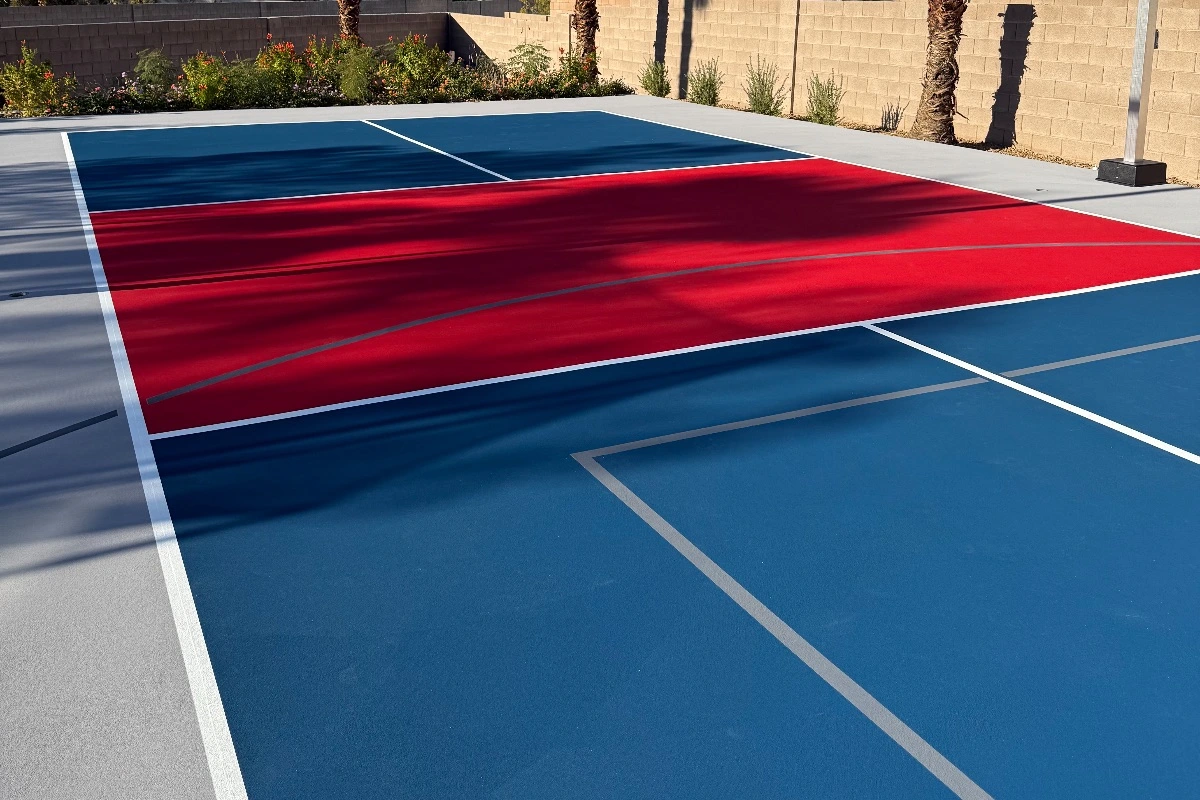
If you’re planning a new pickleball court or resurfacing an existing one, you’ve probably asked: What is the best surface for outdoor pickleball?
One of the most trusted and widely used solutions is an acrylic pickleball court surface. Professional acrylic systems are commonly used for residential backyard courts, community pickleball courts, schools, parks, athletic complexes, and competitive recreational facilities.
These surfaces are designed to deliver consistent ball bounce, reliable traction, long-term durability, weather resistance, and clean visual appeal. For outdoor courts in hot climates like Nevada and Arizona, acrylic systems are especially valuable because they are built to handle sun exposure, heat, and frequent recreational use.
A professionally installed acrylic pickleball court coating creates a smooth, slip-resistant, and performance-focused playing surface that supports both casual and competitive play.
An acrylic pickleball court surface is a layered athletic coating system applied over a stable concrete or asphalt base. Unlike ordinary paint, acrylic court surfacing is engineered specifically for sports performance, outdoor durability, and player safety.
The surface typically includes acrylic resurfacer layers, texture coatings, color coatings, and regulation line striping systems. Together, these layers create a durable playing surface with controlled traction, consistent ball response, and strong resistance to outdoor wear.
Acrylic systems can also be customized with different court colors, border colors, and line markings to match the property’s design goals.
Acrylic surfaces are widely used because they provide excellent traction, resist UV damage, handle outdoor weather conditions well, and deliver professional-style gameplay performance.
For homeowners, acrylic creates a court that looks sharp and plays consistently. For schools, parks, and recreational facilities, acrylic offers a reliable surface that can handle regular use while remaining relatively easy to maintain.
Because pickleball requires quick lateral movement, controlled stops, and precise ball response, the surface must provide the right balance of grip and smoothness. Acrylic systems are designed to support that balance.
One of the biggest advantages of acrylic systems is predictable ball response. Pickleball depends heavily on consistent bounce, especially during serves, volleys, dinks, and baseline rallies.
Players benefit from accurate bounce behavior, reliable shot performance, and better gameplay consistency. A properly installed outdoor pickleball court surface helps create a more enjoyable experience for beginners and experienced players alike.
Uneven or poorly coated surfaces can cause dead spots, unpredictable bounce, and frustrating gameplay. Acrylic surfacing helps reduce those issues when installed over a properly prepared base.
Acrylic coatings are designed with textured materials that improve foot traction and player stability. This is important because pickleball involves fast starts, quick stops, side-to-side movement, and frequent direction changes.
A slip-resistant surface helps improve player confidence and reduces the risk of slipping during normal play. The texture level can also be adjusted depending on the desired balance between traction and smooth movement.
Professional installers understand how to apply the right texture for pickleball so the court is safe without feeling overly rough.
Outdoor courts in Arizona and Nevada experience intense sun exposure, extreme heat, and seasonal weather changes. A high-quality acrylic system is engineered to resist fading, surface deterioration, and premature wear caused by UV exposure.
This makes acrylic an excellent choice for desert climates where ordinary coatings may quickly break down. When installed correctly, acrylic surfacing helps protect the court while maintaining strong color and performance over time.
Compared to many alternative surfaces, acrylic courts are relatively easy to maintain. Typical maintenance includes removing debris, washing the surface occasionally, checking drainage, and scheduling periodic resurfacing as the court ages.
Acrylic surfaces do not require complicated daily upkeep. For homeowners and facility managers, this makes them a practical long-term option.
|
Surface Type |
Best For |
Key Benefits |
Considerations |
|
Acrylic Court Surfacing |
Outdoor residential and commercial courts |
Consistent bounce, UV resistance, traction, durability |
Requires stable concrete or asphalt base |
|
Modular Tile Systems |
Backyard multi-use courts |
Cushioning, drainage, design flexibility |
Ball bounce may feel different than acrylic |
|
Cushioned Acrylic Systems |
Comfort-focused courts |
Joint comfort, traction, professional appearance |
Higher cost than standard acrylic |
|
Concrete Only |
Basic recreational spaces |
Strong base material |
Needs coating for proper play performance |
|
Asphalt Only |
Budget court foundations |
Common outdoor base option |
Should be surfaced for better durability and traction |
The foundation is one of the most important parts of the installation process. Acrylic surfacing performs best over a level, properly graded, structurally stable concrete or asphalt base.
The base must be designed with drainage in mind. If water sits on the court, it can shorten the life of the surface and create safety concerns. Professional builders evaluate slope, drainage paths, and surface stability before applying any coatings.
Before coatings are applied, the existing surface must be repaired and cleaned. Cracks are filled, surface imperfections are corrected, and the court is pressure cleaned to remove dirt, dust, and debris.
This step ensures proper coating adhesion. Skipping repairs or applying coatings over a dirty surface can lead to peeling, bubbling, or premature surface failure.
For pickleball court resurfacing, this step is especially important because older courts often have cracks, fading, worn texture, or uneven areas that need attention before new coatings are installed.
Acrylic resurfacer layers are applied to smooth minor imperfections, improve surface uniformity, and prepare the court for texture and color coatings.
This layer helps create a more consistent base for the finished surface. It also improves the appearance and performance of the court before the final color system is installed.
The final layers include court color coatings, textured performance systems, and regulation pickleball striping. Color coatings define the playing area and border zones, while striping creates the official court layout.
Professional striping is essential. Pickleball lines must be accurate, clean, and easy to see. Poor layout or crooked lines can affect gameplay and make the court look unprofessional.
A properly installed acrylic system can last many years with routine cleaning, good drainage, and periodic resurfacing. Lifespan depends on usage levels, weather exposure, base condition, coating quality, and maintenance habits.
A private backyard court may experience less wear than a busy park or school court. Commercial and community courts often require more frequent maintenance because of heavier traffic.
Over time, pickleball court resurfacing helps restore surface texture, color vibrancy, traction, and ball response. Resurfacing can prevent the need for full court replacement in many situations.
A professional resurfacing project may include cleaning, crack repair, acrylic resurfacer, new color coatings, and fresh line striping. This gives the court a renewed appearance and improved playability.
Many players prefer acrylic because it offers professional-style ball bounce, tournament-style gameplay, consistent performance, and a clean court feel. Acrylic is also commonly used in public courts, athletic complexes, and competitive recreational facilities.
If your goal is a traditional pickleball playing experience, acrylic is often the preferred option.
Modular tile systems are popular for backyard flexibility, joint comfort, drainage, and multi-use recreational courts. They may be a good fit for families who want a court that supports multiple activities and provides a softer feel underfoot.
The best choice depends on player preference, budget, intended use, maintenance goals, and climate conditions.
Poor drainage shortens surface lifespan and can cause standing water, coating damage, and unsafe play conditions. Drainage should be addressed before the surface is installed.
Cheap coatings may fade quickly, crack under UV exposure, lose traction, or deteriorate faster outdoors. High-quality acrylic court surfacing systems are designed for performance and durability.
Existing cracks and surface damage can worsen if not repaired properly. Coatings should never be treated as a shortcut for structural repair.
Too much texture can feel abrasive and slow the ball. Too little texture may reduce traction. Professional installers apply the correct texture level for pickleball performance.
Acrylic courts closely resemble the surfaces used at many recreational facilities, competitive courts, and athletic complexes. This makes them a strong choice for players who want a reliable and familiar playing experience.
The combination of traction, color, bounce, and durability makes acrylic one of the most dependable options for outdoor pickleball.
Acrylic systems perform well in desert climates, high UV exposure areas, and heavy recreational usage environments. With proper installation and maintenance, they provide lasting performance and strong visual appeal.
For homeowners, schools, parks, and commercial facilities, acrylic surfacing offers an excellent balance of performance, durability, and value.
Acrylic is one of the best and most common surfaces for outdoor pickleball courts because it provides consistent ball bounce, reliable traction, UV resistance, and long-term durability.
Pickleball is typically played on a hard, smooth, slip-resistant surface. Acrylic-coated concrete or asphalt is one of the most popular options for outdoor courts.
The best option is not regular paint, but a professional acrylic court coating system designed specifically for athletic surfaces. These systems provide better traction, durability, and UV resistance.
Pickleball can be played on several hardcourt surfaces, but acrylic-coated courts are commonly used for outdoor recreational and competitive play.
Resurfacing frequency depends on usage, weather exposure, and maintenance. High-use courts may need resurfacing sooner, while private residential courts may last longer between resurfacing projects.
Please Provide Your Contact Information and Project Details