
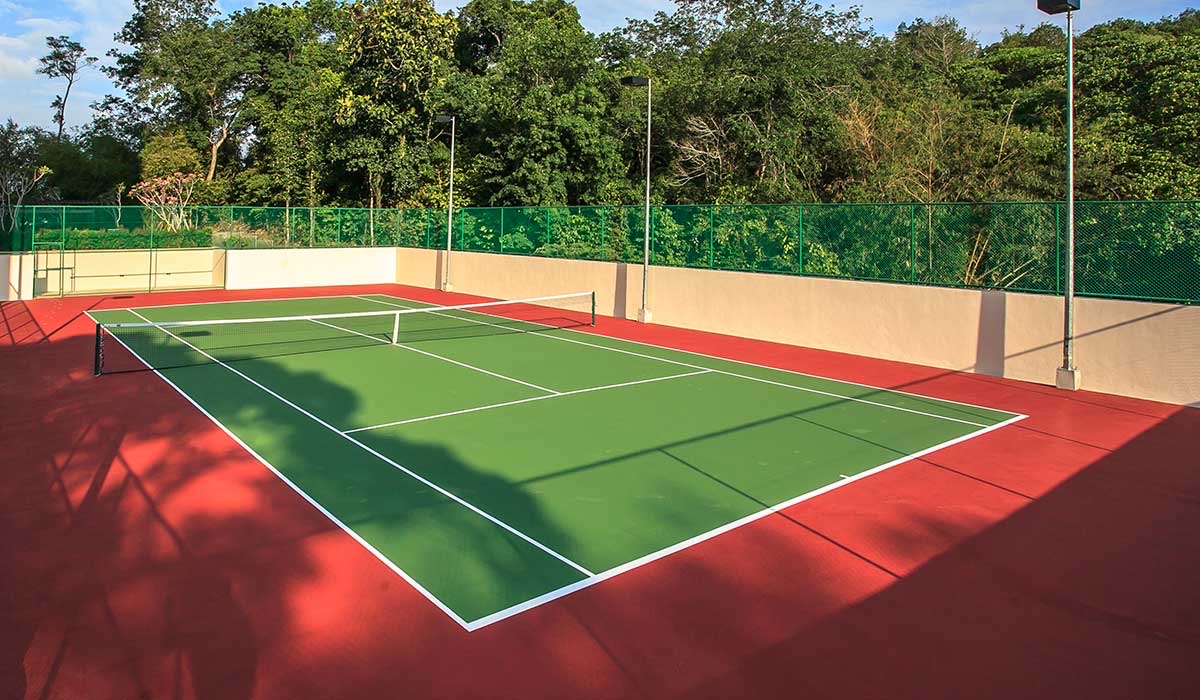
When planning a new tennis court, many homeowners and facility managers want a simple number. In reality, acrylic tennis court surface cost depends on several variables that go far beyond square footage alone. The quality of materials, condition of the base, climate considerations, and customization choices all contribute to determining the final investment.
Rather than focusing on generic price ranges, it’s more helpful to understand what drives cost and where value comes from. Acrylic surfaces remain one of the most popular outdoor tennis court solutions in Arizona and Nevada because they deliver consistent play, weather resistance, and manageable long-term maintenance.
At Legendary Sports Construction, we help clients make informed decisions by aligning surface options with performance expectations, environmental demands, and long-term ownership goals—especially in hot, high-UV regions.
Not all acrylic tennis court systems are built the same. A professional acrylic surface typically includes multiple layers, each serving a specific purpose.
Common layers include:
Higher-quality acrylic systems use better binders, UV stabilizers, and pigments. These materials improve traction, color retention, and resistance to cracking, but they also increase material and labor requirements. Lower-cost systems may reduce layers or use basic coatings, which can shorten surface lifespan.
The condition of the underlying base is one of the biggest cost variables in tennis court surface materials projects.
Base-related considerations include:
A clean, properly sloped base requires less preparation. Older courts or poorly constructed slabs may need repairs or corrective work before acrylic application can begin, increasing labor and material usage.
In Arizona and Nevada, climate plays a major role in acrylic surface selection. Extreme heat, strong UV exposure, and temperature swings require acrylic systems formulated for flexibility and sun resistance.
Climate-specific factors include:
These specialized formulations often cost more than standard acrylics but significantly extend surface life in desert environments.
Standard court colors and layouts are the most cost-efficient option. Customization adds visual appeal but requires additional materials and labor.
Customization options may include:
Each added color or logo requires extra coating layers and precise striping, which increases installation time.
| Surface Type | Play Feel | Durability | Maintenance Level | Climate Suitability |
| Acrylic-Coated Concrete | Firm, predictable | High | Moderate | Excellent |
| Acrylic-Coated Asphalt | Slightly flexible | Moderate | Moderate | Good |
| Cushioned Acrylic System | Softer, joint-friendly | High | Moderate | Excellent |
| Modular Tile Systems | Athletic, consistent | Very High | Low | Excellent |
Please Provide Your Contact Information and Project Details