
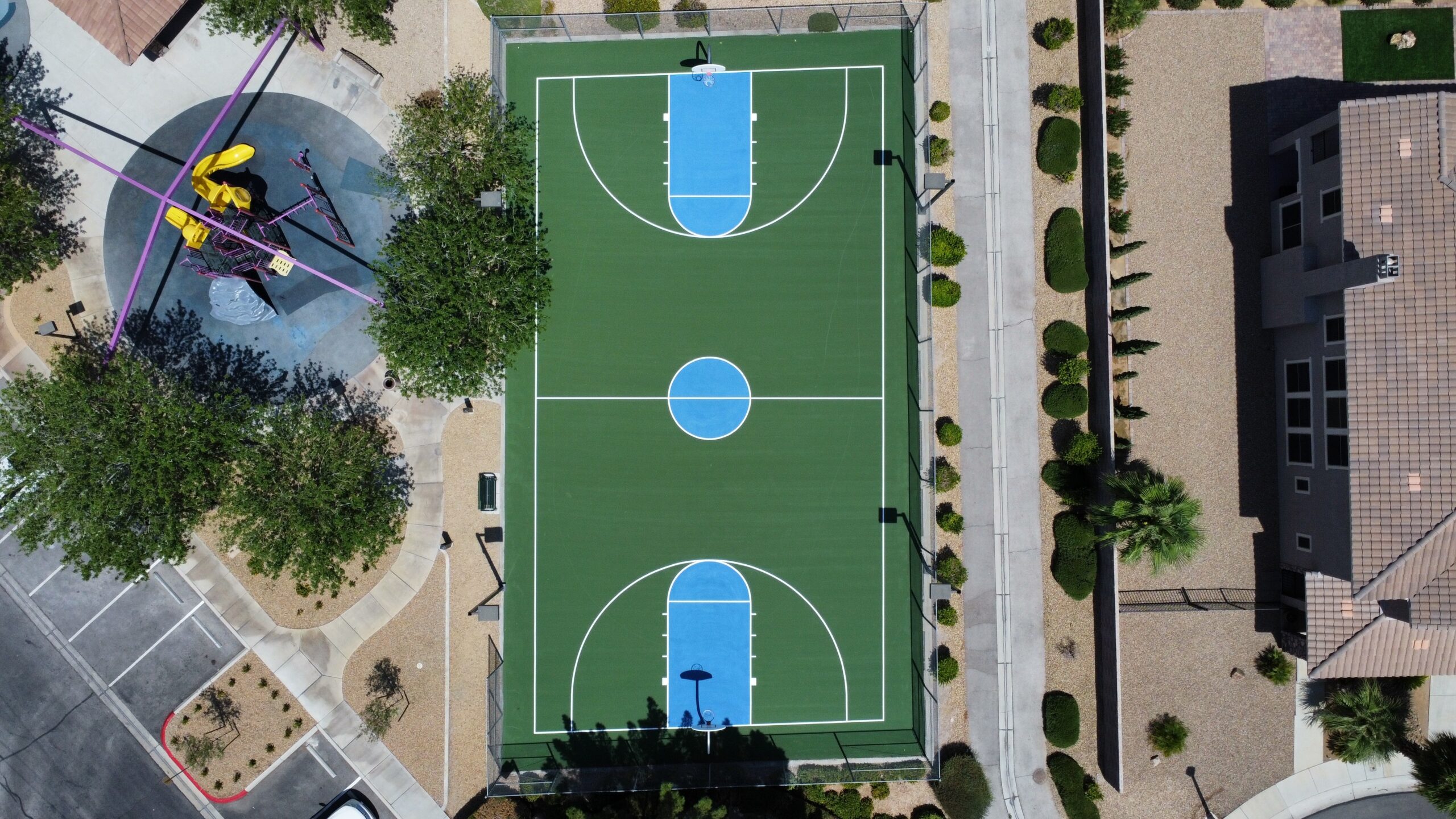
The surface of a basketball court plays a crucial role in gameplay, player safety, and long-term durability. Choosing the right material ensures consistent ball bounce, proper traction, and a reliable playing experience for athletes of all skill levels.
Whether you are designing a backyard basketball court, building a community recreation facility, or installing a professional indoor court, selecting the proper surface is one of the most important decisions during basketball court construction.
Basketball court flooring options vary depending on several factors, including indoor or outdoor installation, frequency of use, budget, and maintenance requirements. Common court materials include hardwood flooring, acrylic-coated concrete, modular interlocking tiles, synthetic turf, and post-tension concrete systems.
Understanding the benefits of each surface helps homeowners, schools, and sports facilities choose the best solution for their needs.
Several materials are commonly used for basketball courts, each offering unique advantages depending on the playing environment.
Hardwood flooring is widely considered the gold standard for indoor basketball courts. Most professional arenas, college gyms, and high school basketball facilities use hardwood surfaces because they provide excellent gameplay performance.
Hardwood courts are typically constructed using maple wood panels installed over a shock-absorbing subfloor system.
Benefits include:
Hardwood floors also allow for detailed court markings, team logos, and custom designs.
However, hardwood courts require controlled indoor environments and regular maintenance, including cleaning and periodic refinishing.
For outdoor basketball courts, acrylic-coated concrete is one of the most common and reliable surfaces.
In this system, a concrete slab is poured and cured before being coated with acrylic sports surfacing layers that add texture and color. The acrylic coatings provide the necessary traction and weather resistance for outdoor play.
Advantages include:
Because of its durability and cost efficiency, acrylic-coated concrete is widely used for parks, schools, residential courts, and community sports facilities.
Modular basketball court tiles are becoming increasingly popular for residential and recreational courts.
These systems consist of plastic tiles that snap together to create a playing surface over a flat base such as concrete or asphalt.
Benefits include:
Modular tiles are commonly used for backyard basketball courts and recreational sports courts where comfort and flexibility are important.
Although not traditionally used for competitive basketball, synthetic turf courts are sometimes installed for recreational or multi-sport environments.
Turf surfaces provide a softer playing surface and can accommodate activities beyond basketball.
Advantages include:
However, turf may not provide the same ball bounce consistency required for serious basketball play.
Post-tension concrete is a premium outdoor court construction method designed to improve durability and reduce cracking.
In this system, steel cables are tensioned within the concrete slab after curing. The tension helps strengthen the slab and prevents structural movement over time.
Benefits include:
Post-tension systems are often used for large sports facilities and professional outdoor courts.
| Surface Type | Durability | Comfort | Installation Cost | Maintenance | Best Use |
| Hardwood Flooring | High | Moderate | High | High | Indoor gyms and professional courts |
| Acrylic-Coated Concrete | Very High | Moderate | Medium | Low | Outdoor courts and parks |
| Modular Interlocking Tiles | Moderate–High | High | Medium | Low | Backyard and multi-use courts |
| Synthetic Turf | Moderate | High | Medium | Low | Recreational or training areas |
| Post-Tension Concrete | Extremely High | Moderate | High | Very Low | Commercial sports facilities |
The basketball court surface affects several aspects of the playing experience.
A quality surface ensures predictable ball bounce and traction, allowing players to perform confidently during games.
Proper court materials reduce the risk of slips, falls, and injuries. Surfaces with adequate traction and shock absorption help protect players during quick movements.
Durable materials withstand heavy foot traffic and environmental conditions, helping courts remain playable for many years.
Some court surfaces require more upkeep than others. Hardwood floors require refinishing and climate control, while acrylic-coated courts require only occasional cleaning and resurfacing.
Certain surfaces can accommodate multiple sports.
Many outdoor courts are designed to support activities such as:
Choosing versatile materials can maximize the value of a sports facility.
Selecting the best surface depends on several factors.
Indoor courts typically use hardwood flooring because it provides superior ball response and player traction.
Outdoor courts often use acrylic-coated concrete or modular tile systems that withstand weather exposure.
High-traffic courts require durable surfaces capable of handling constant play.
Community parks and school courts benefit from concrete or post-tension construction due to their strength and longevity.
Players who spend long periods on the court may benefit from surfaces with some cushioning.
Modular tiles and synthetic surfaces can help reduce joint strain compared to hard concrete.
Weather exposure, cleaning requirements, and repair costs should all be considered when selecting a court surface.
Low-maintenance surfaces such as acrylic coatings or modular tiles are often preferred for outdoor installations.
Many modern court systems allow for custom colors, logos, and court markings.
Acrylic coatings and modular tile systems offer flexible design options that help create visually appealing sports courts.
The best surface depends on the location of the court. Hardwood flooring is ideal for indoor courts, while acrylic-coated concrete or modular tile systems are commonly used for outdoor courts.
Indoor basketball courts typically use maple hardwood flooring, which provides excellent ball bounce and traction. Outdoor courts usually use acrylic-coated concrete or modular sport tiles.
Basketball courts are commonly built using hardwood flooring for indoor courts and concrete or asphalt with acrylic sport coatings for outdoor courts.
A reinforced concrete slab is generally the best base for outdoor basketball courts because it provides durability, stability, and consistent gameplay.
Modular interlocking tiles installed over a compacted base or asphalt surface can serve as a cost-effective alternative to traditional concrete courts.
Choosing the best surface for a basketball court depends on where the court will be installed and how frequently it will be used.
For indoor facilities, hardwood remains the professional standard. For outdoor courts, acrylic-coated concrete and modular basketball court tiles provide durable and versatile solutions.
By selecting the right materials and ensuring proper basketball court construction, homeowners, schools, and sports facilities can create courts that deliver excellent gameplay, player safety, and long-term performance.
Please Provide Your Contact Information and Project Details