
Sport Court products only available in Nevada.
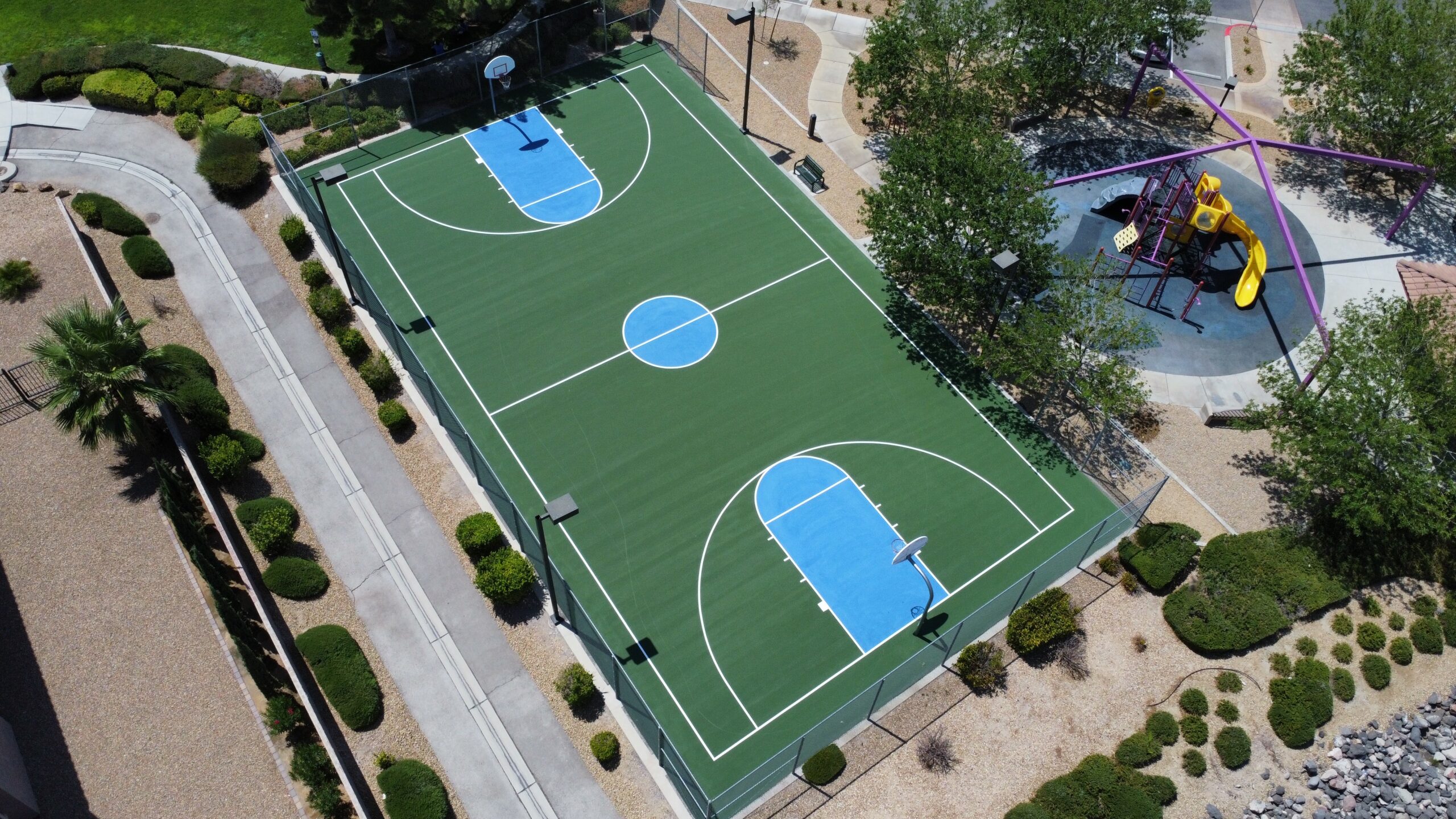
Every great game begins with a well-built foundation. Whether you’re installing a backyard basketball court, a professional tennis surface, or a multi-purpose recreational space, the material beneath your feet shapes the entire playing experience. The surface determines not only how the ball reacts but also how safe, durable, and enjoyable your court will be over time.
In regions like Arizona, Nevada, and Utah, where heat, UV exposure, and temperature fluctuations challenge even the toughest materials, choosing the right surface becomes an investment in longevity. From acrylic coatings to synthetic turf and modular tiles, today’s courts combine engineering precision with visual appeal—delivering performance, resilience, and comfort for every player.
Acrylic surfacing has become the industry standard for outdoor athletic courts. Built with a series of layered coatings applied over asphalt or concrete, this surface offers exceptional traction, UV resistance, and weather durability. The topcoat is available in multiple colors and finishes, allowing for complete customization of court aesthetics.
Acrylic systems are ideal for tennis, basketball, and pickleball, providing a consistent bounce and medium-speed play. Cushion options can be added beneath the acrylic layers to absorb shock and reduce joint stress—making the court equally suitable for professional training and recreational enjoyment.
These systems thrive in the desert climate, resisting sun damage, fading, and cracking for up to a decade before resurfacing is needed.
Modular tile courts are the future of multi-sport design. Made from high-grade polypropylene or rubberized plastic, these tiles interlock seamlessly to form a durable, flexible surface. The small gaps between tiles allow for excellent drainage, preventing puddles after rain and ensuring quick return-to-play times.
Their shock-absorbing qualities make them a popular choice for schools, parks, and backyard courts where safety is paramount. Additionally, modular systems can be uninstalled, relocated, or replaced in sections, minimizing long-term maintenance costs.
They support a variety of sports—from basketball and pickleball to volleyball and futsal—and come in vibrant color combinations to enhance visual appeal and functionality.
For those who want a surface that can last decades, post-tension concrete is unmatched. This specialized form of concrete uses steel cables tightened after curing to keep the slab under compression, preventing cracks that typically occur in traditional concrete.
It serves as the foundation of choice for professional facilities and high-traffic courts, often topped with acrylic coatings or cushioned overlays. Post-tension concrete performs exceptionally well in arid climates, resisting expansion, contraction, and surface shifting caused by extreme temperature changes.
While installation costs are higher than standard asphalt, the longevity and structural stability make it one of the best long-term investments for tennis, basketball, and multi-sport courts alike.
Synthetic turf has evolved beyond traditional grass alternatives. Built with advanced polymer fibers and infilled with sand or rubber granules, turf courts mimic the look and feel of natural grass while eliminating the constant upkeep.
This surface excels for tennis, small-field soccer, and recreational play, offering comfort and consistent traction. It’s also remarkably weather-resistant, draining quickly after rainfall and maintaining vibrant color even under direct desert sunlight.
For residential projects or multi-sport complexes, synthetic turf offers an attractive, low-maintenance option that balances softness with long-lasting performance.
| Surface Type | Durability | Maintenance | Play Comfort | Ideal Use | Climate Resistance |
|---|---|---|---|---|---|
| Acrylic Surfacing | High | Low | Moderate | Tennis, Basketball, Pickleball | Excellent (UV-Resistant) |
| Modular Interlocking Tiles | High | Very Low | High | Multi-Sport, Schools, Backyards | Excellent (Drains Fast) |
| Post-Tension Concrete | Very High | Very Low | Moderate | Professional, Public Facilities | Superior (Crack-Resistant) |
| Synthetic Turf | High | Low | High | Tennis, Soccer, Recreational Spaces | Excellent (All-Weather) |
What type of surface is a pickleball court?
Most pickleball courts use acrylic coatings over concrete or asphalt. This ensures consistent ball bounce, excellent traction, and durability in both indoor and outdoor environments.
What is the surface material of a volleyball court?
Volleyball courts can be built with synthetic turf, modular tiles, or sand, depending on indoor or outdoor placement. Modular and acrylic surfaces are ideal for indoor facilities.
What are the different types of surfaces for tennis courts?
Common tennis surfaces include acrylic hard courts, clay, grass, synthetic turf, and post-tension concrete. Acrylic and post-tension options are most suitable for the Southwest.
What is the difference between a pickleball court and a volleyball court?
Pickleball courts are smaller and have solid surfacing for ball bounce, while volleyball courts may use softer or sand-based surfaces to cushion impact and allow sliding.
What type of surface is best for pickleball?
An acrylic-coated concrete base offers the best combination of durability, traction, and play quality. It’s ideal for both residential and commercial pickleball setups.
Every sport—and every player—benefits from a thoughtfully chosen court surface. The perfect foundation balances performance, safety, and endurance, transforming a simple slab into a professional-grade play space.
From the smooth agility of acrylic surfacing to the multi-sport flexibility of modular tiles and the enduring strength of post-tension concrete, today’s materials are engineered to withstand the extremes of Arizona, Nevada, and Utah.
A well-chosen surface doesn’t just improve gameplay—it defines it. With expert planning, quality materials, and professional installation, your court will offer years of reliable, high-performance enjoyment under the Southwestern sun.
Please Provide Your Contact Information and Project Details