
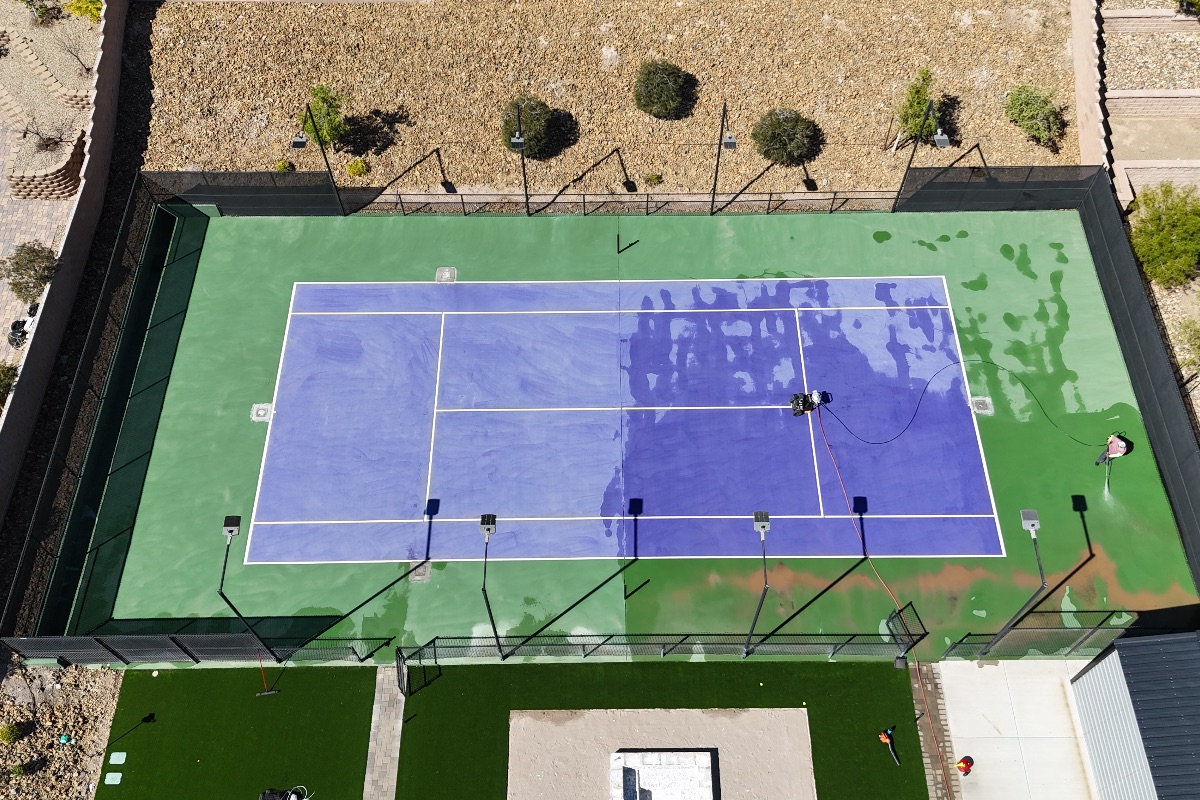
DIY tennis court resurfacing in North Las Vegas is a practical and budget-friendly solution for homeowners, schools, and recreational property managers looking to restore aging courts without paying for full professional reconstruction. In Nevada’s harsh desert climate, outdoor courts are constantly exposed to extreme sun, intense UV rays, dry heat, and occasional sudden rainstorms—all of which contribute to cracking, fading, peeling coatings, and worn-out surfaces.
Over time, even well-built courts begin to show signs of deterioration. Cracks expand, colors fade, traction declines, and ball bounce becomes inconsistent. If left untreated, these issues worsen and eventually lead to costly structural repairs. Fortunately, with the right materials, preparation, and techniques, tennis court restoration DIY projects can significantly improve appearance, playability, and lifespan.
While professional resurfacing is always ideal for large-scale or heavily damaged courts, a carefully executed DIY resurfacing project can be highly effective for courts with moderate wear.
Knowing when to resurface is critical. Acting early prevents deeper structural damage and keeps repair costs manageable.
The most obvious sign your court needs attention is visible deterioration.
Minor cracks may seem harmless at first, but they quickly spread when exposed to heat expansion and moisture intrusion.
Prompt backyard court resurfacing helps stop small problems before they become major structural failures.
Surface wear affects gameplay quality long before severe damage appears.
If the court feels inconsistent during play, resurfacing is likely overdue.
Nevada’s climate accelerates court aging faster than many other regions.
Because of these conditions, tennis court repair Nevada property owners perform often needs to occur more frequently than in milder climates.
Many North Las Vegas courts require resurfacing every 4–6 years depending on usage.
A successful resurfacing project follows a structured process. Skipping steps reduces durability and quality.
Cleaning is the essential first stage before any repairs begin.
A clean surface ensures stronger bonding for repair compounds and resurfacing materials.
Never apply coatings over dirty or damp courts.
Crack repair is critical before resurfacing begins.
Skipping crack repair is one of the most common DIY mistakes.
Proper crack repair strengthens long-term outdoor game court repair durability.
Acrylic resurfacer creates a fresh bonding layer before color coatings are added.
Apply evenly using:
Acrylic court resurfacing creates the foundation for professional-looking results.
This stage restores color, traction, and playing texture.
Sport-grade acrylic athletic court paint
Popular court colors include:
Proper coating restores both beauty and performance.
Once coatings dry completely, repaint all game lines.
Optional upgrades include:
Accurate striping ensures regulation play and professional appearance.
|
Option |
Best For |
Main Advantage |
Main Limitation |
|
DIY Resurfacing |
Moderate surface wear |
Lower cost |
More labor-intensive |
|
Professional Resurfacing |
Severe damage/full renewal |
Expert precision |
Higher cost |
|
DIY Spot Repair Only |
Minor isolated cracks |
Fast repair |
Temporary solution |
|
Full Reconstruction |
Structural base failure |
Complete rebuild |
Highest expense |
Having proper materials makes the process smoother and more effective.
Never substitute regular household paint for sports coatings.
Only court-grade materials deliver lasting performance.
Even experienced DIYers can make costly errors.
Paint alone cannot hide structural cracks.
Unrepaired cracks reopen quickly beneath coatings.
Moisture trapped beneath coatings causes:
Always allow full drying time.
Thick spots dry poorly and create inconsistent bounce.
Apply coatings evenly across all sections.
Incorrect striping affects gameplay accuracy.
Always double-check measurements before painting.
Generic paints fade faster and lack athletic traction properties.
Use only specialized court products.
DIY resurfacing offers many practical advantages.
Smooth surfaces reduce slips and trip hazards.
Even coatings restore predictable gameplay.
Freshly resurfaced courts dramatically improve curb appeal.
Timely resurfacing delays expensive reconstruction.
You can add pickleball lines or other sport layouts.
Resurfacing creates new recreational possibilities.
Can You Convert a Tennis Court into a Pickleball Court?
Yes—and resurfacing is the perfect time to do it.
Many homeowners combine tennis court restoration DIY with pickleball conversion by adding:
This increases versatility without expanding space.
Yes, pickleball lines are commonly added during resurfacing to create dual-use multi-sport and game courtts.
The process includes cleaning, crack repair, resurfacer application, color coating, and restriping the court.
Use court-grade acrylic paint, rollers or spray equipment, and follow official measurement guidelines carefully.
Always use acrylic sport and game courtt paint specifically formulated for athletic surfaces.
Add official pickleball line striping, proper net placement, and optional color-coded overlays during resurfacing.
DIY tennis court resurfacing North Las Vegas homeowners undertake can be an excellent way to revive worn courts while saving money. With proper preparation, quality materials, and careful attention to detail, resurfacing can restore both beauty and performance to aging courts damaged by Nevada’s harsh desert climate.
Whether you are improving a private backyard court, performing outdoor game court repair, or planning a tennis-to-pickleball conversion, a well-executed resurfacing project adds years of safe, enjoyable play without the expense of full reconstruction.
Please Provide Your Contact Information and Project Details