
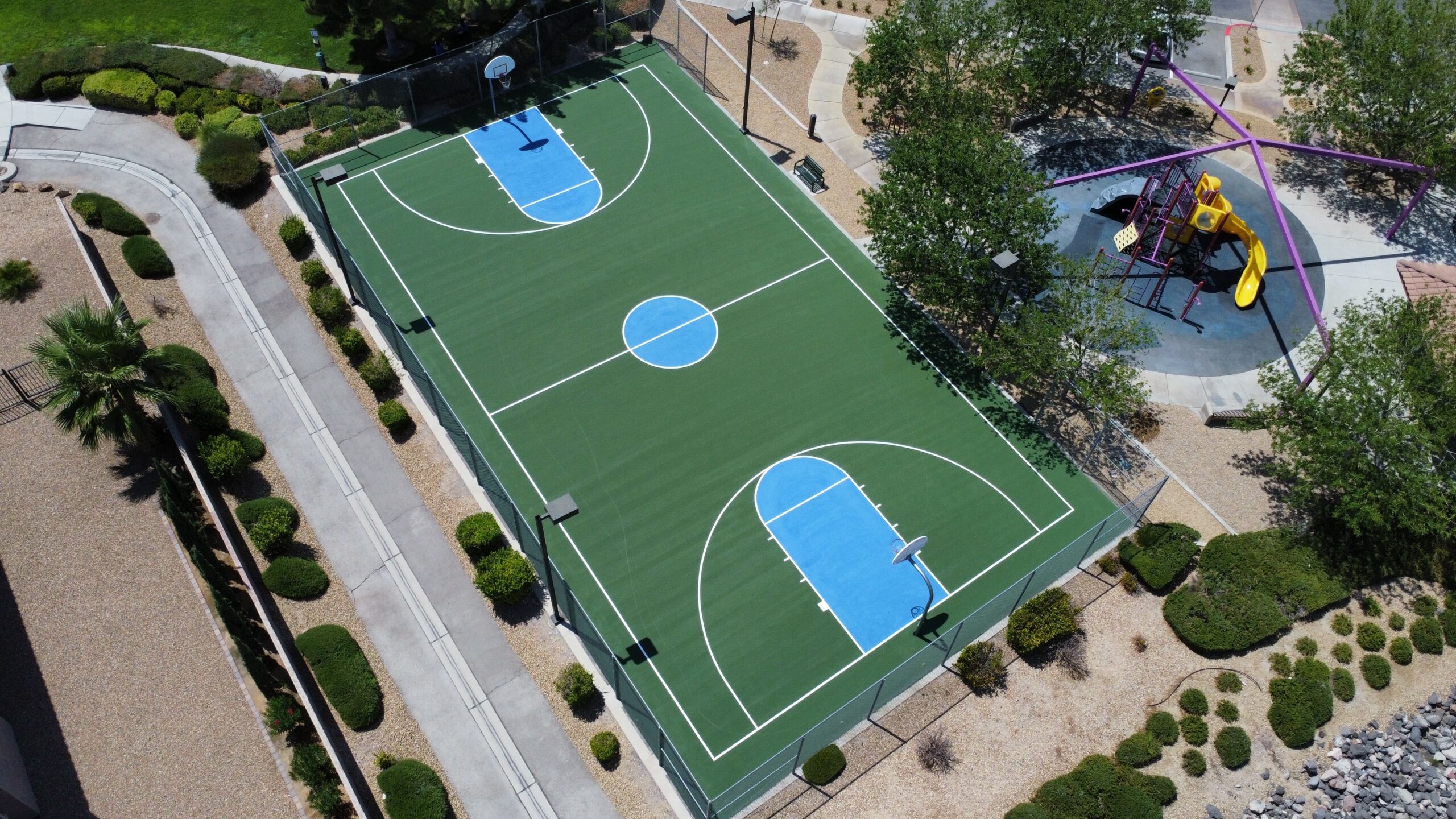
How Much Does It Cost to Build a Basketball Court: Key Factors to Consider

Understanding What Influences Basketball Court Construction Cost

“How much does it cost to build a basketball court?” is one of the most common questions homeowners, HOAs, schools, and facilities ask—and the honest answer is that it depends. Basketball court construction cost isn’t driven by a single number or material. It’s shaped by design decisions, site conditions, surface systems, and how the court will be used over time.

At Legendary Sports Construction, we help clients throughout Arizona and Nevada understand the real factors behind basketball court pricing. Instead of focusing on a one-size-fits-all estimate, we break down what actually impacts cost so you can control your budget while still building a court that performs well, lasts long, and looks professional.

Whether you’re planning a backyard half-court, a full outdoor court, or a multi-use recreational surface, understanding these variables will help you make smarter decisions and avoid surprises.

Main Factors That Influence Basketball Court Construction Cost

Surface Type & Materials

The surface system you choose is one of the most significant cost drivers. Different surfaces affect play feel, durability, installation time, and long-term maintenance.

Common basketball court surface options include:

  • Acrylic over concrete or asphalt
    A traditional option that provides a firm, consistent playing surface. Acrylic coatings add traction and color over a rigid base and are commonly used for outdoor courts.

  • Modular tile systems
    Interlocking sports tiles install over a prepared base and offer excellent traction, shock absorption, and drainage. Individual tiles can be replaced if damaged, reducing long-term repair costs.

  • Cushioned tile layouts
    Advanced modular systems with built-in cushioning help reduce joint impact and fatigue, especially for recreational or youth play.

Surface choice impacts cost through:

  • Material quality and thickness

  • Number of layers required

  • Installation labor and precision

  • Expected lifespan and maintenance cycles

For many clients evaluating outdoor basketball court materials, modular tile systems provide strong long-term value due to durability and low upkeep, even if the upfront investment is higher than basic coatings.

Site Preparation & Foundation Work

A basketball court is only as good as the base beneath it. Site preparation is one of the most important—and most variable—cost factors in any court project.

Site conditions that affect cost include:

  • Existing concrete or asphalt quality

  • Cracks, settling, or uneven surfaces

  • Drainage issues and slope corrections

  • Soil conditions and compaction needs

  • Accessibility for equipment

A clean, level, well-draining base requires less work and keeps costs down. Sites that need grading, drainage correction, or slab repairs will require additional labor and materials—but skipping this work often leads to premature surface failure.

For backyard basketball court installation Arizona projects, proper base prep is essential to avoid cracking, pooling water, and uneven play.

Court Size & Layout

Court size has a direct impact on materials, labor, and overall project scope.

Typical options include:

  • Half courts – Popular for residential backyards and casual play

  • Full-size courts – Standard for training, community, and competitive use

  • Custom layouts – Scaled designs to fit unique spaces

A full basketball court requires significantly more surface area, base work, and striping than a half court. Layout complexity also affects cost, especially when adding:

  • Buffer zones for safety

  • Multi-use paint layouts

  • Custom court orientations

Larger footprints increase cost, but they also improve playability and safety—especially for active use.

Accessories & Features

Accessories transform a basic court into a fully functional and enjoyable space, but they also add to the overall investment.

Common basketball court features include:

  • Adjustable or fixed basketball hoops

  • Backboards and rim systems

  • Fencing or ball containment

  • Lighting for evening play

  • Custom colors, logos, and striping

Each feature adds material and installation time. Lighting and fencing, in particular, can significantly affect total cost but also dramatically improve usability.

For clients working with professional basketball court builders, these features are often planned early so they’re integrated cleanly into the design rather than added later.

Comparison Table – Basketball Court Surface Options

Surface Type Best For Play Feel Drainage Durability Maintenance
Acrylic-Coated Concrete Traditional outdoor courts Firm, predictable Poor Good Moderate
Modular Tile Systems Residential & multi-use courts Athletic, consistent Excellent Excellent Low
Cushioned Tile Systems Recreational & youth play Softer, joint-friendly Excellent Excellent Low

Benefits of Professional Basketball Court Installation

Choosing professional installation isn’t just about appearance—it directly affects performance, safety, and long-term value.

Tailored Performance

Professional builders match surface systems to player needs. A family recreational court doesn’t require the same setup as a high-traffic training court, and proper selection prevents overbuilding or underbuilding.

Durable Construction

Courts built with correct base prep and climate-appropriate materials withstand heat, sun, and heavy use far better than DIY or cut-corner installations.

Safe Play

Even surfaces, proper drainage, and slip-resistant materials reduce injury risk. Safety is especially important for youth players, recreational users, and shared facilities.

Custom Features

Professional builds allow for:
  • Custom color schemes
  • Logos or branding
  • Regulation or recreational striping
  • Integrated equipment systems
These details elevate the court from “functional” to “exceptional.”

Low Maintenance

Well-built courts require fewer repairs, less resurfacing, and lower long-term upkeep—saving money over time.

Basketball Court Construction Process

Legendary Sports Construction follows a structured process to ensure predictable results and cost control.

Consultation & Design

We evaluate:
  • Available space and layout goals
  • Intended use (casual, training, competitive)
  • Surface preferences
  • Budget priorities and timeline
This planning phase defines the scope clearly before construction begins.

Site Preparation

We handle:
  • Grading and leveling
  • Drainage correction
  • Base repairs or preparation
This step is critical for long-term performance.

Surface Installation

Depending on the system selected, we:
  • Apply layered acrylic coatings
  • Install modular or cushioned tile systems
  • Ensure consistent traction and alignment
Precision here ensures uniform play across the entire court.

Line Striping & Accessories

We install:
  • Regulation or custom court lines
  • Basketball hoops and hardware
  • Optional fencing and lighting
Everything is positioned for safety, durability, and proper gameplay.

Final Inspection

Before completion, we verify:
  • Surface consistency
  • Equipment alignment
  • Drainage and safety
  • Overall play readiness

Frequently Asked Questions (FAQs)

How expensive is it to make a basketball court?

Cost varies based on surface type, site preparation, court size, and features. Backyard half courts are generally less expensive than full courts with fencing and lighting, but long-term value depends on construction quality.

Is 30×30 big enough for a basketball court?

A 30×30 area is typically suitable for a half-court setup or casual shooting space. For full gameplay and safe movement, larger dimensions are recommended.

What is the cheapest way to install a basketball court?

Using an existing concrete slab with basic striping and a single hoop is usually the lowest-cost option. However, adding a proper surface improves safety and longevity.

How much would it cost to build an indoor basketball court?

Indoor courts involve additional factors such as building construction, flooring systems, and climate control, making them significantly more complex and expensive than outdoor courts.

Planning Your Basketball Court in Arizona & Nevada

Understanding how much it costs to build a basketball court starts with understanding the variables that shape the project. Surface selection, site preparation, layout size, and accessories all influence both upfront investment and long-term value. Legendary Sports Construction works with homeowners, communities, and facilities seeking custom basketball court Arizona and Nevada solutions. From backyard basketball court installation Arizona projects to large-scale builds, we focus on durability, performance, and smart design. If you’re planning a basketball court and want clear guidance on construction factors and options, our team is ready to help you build a court that fits your goals—and your budget—without cutting corners.

Sign up for our Newsletter

GET A QUOTE

Please Provide Your Contact Information and Project Details