
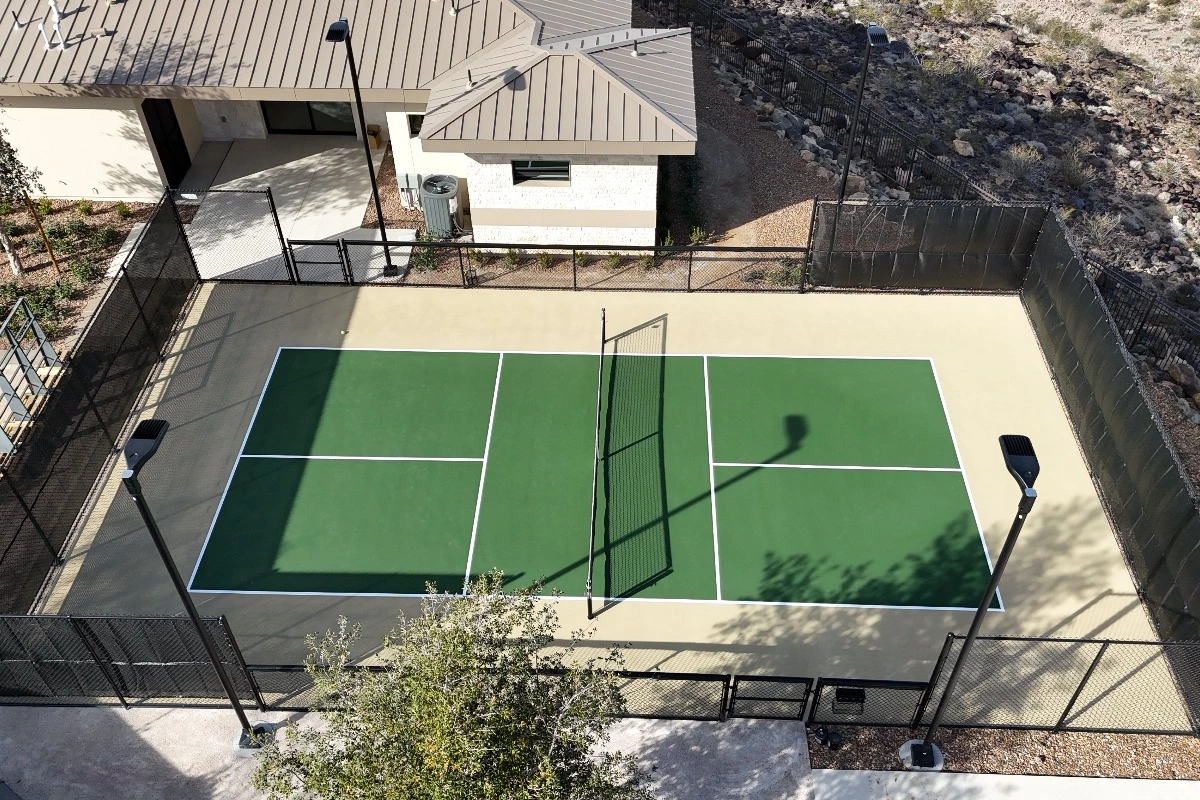
One of the most common questions homeowners ask before building a backyard game court is: “How much space do you need for a pickleball court?”
While the official playing area for pickleball is relatively compact, proper court planning also requires additional run-off space, fencing clearance, drainage considerations, and safe movement zones around the court. Whether you are planning a residential recreation space or a larger outdoor sports and games court, understanding the correct dimensions is essential for creating a safe, comfortable, and professional-quality playing experience.
Pickleball continues to grow rapidly because it combines accessibility, social interaction, and low-impact gameplay. Homeowners love that it can fit into many residential properties while still providing an exciting and active recreational feature. However, fitting a court into a backyard requires more planning than simply measuring the painted court lines.
Understanding the ideal pickleball court dimensions, clearance recommendations, and layout options will help ensure your project performs well for years to come.
A regulation pickleball court measures:
These dimensions are identical for both singles and doubles play, making court planning much simpler than sports like tennis.
The official court includes:
The kitchen extends 7 feet from the net on each side and plays a major role in pickleball strategy and gameplay.
When homeowners discuss backyard pickleball court size, they often assume the 20’ x 44’ area is the total space required. In reality, the court itself is only the beginning. Players need additional space beyond the painted boundaries to move comfortably and safely.
A pickleball net should measure:
This slight center dip is intentional and essential for proper gameplay. Incorrect net height can affect ball bounce, shot consistency, and overall court performance.
Permanent net systems are generally recommended for homeowners who want a more polished and durable recreational court. Portable nets may work for temporary setups, but permanent installations provide better stability and aesthetics.
Although the official playing area is 20 feet by 44 feet, additional clearance space is strongly recommended for safety and gameplay quality.
For most residential projects, the minimum recommended court area is approximately:
This extra space allows for:
A 30’ x 60’ court layout works well for many homeowners who want a recreational court without requiring a massive backyard footprint.
For a more professional playing experience, many court builders recommend:
This larger footprint creates extended run-off areas behind the baselines and sidelines. Competitive players especially appreciate the added movement space during fast-paced rallies and defensive shots.
If your property can accommodate the additional clearance, the larger layout often provides a much more enjoyable long-term playing experience.
|
Court Type |
Recommended Dimensions |
Best For |
Notes |
|
Official Playing Area |
20’ x 44’ |
Court markings only |
No safety clearance included |
|
Minimum Backyard Layout |
30’ x 60’ |
Casual residential play |
Most common home court size |
|
Preferred Residential Layout |
34’ x 64’ |
Comfortable competitive play |
Better movement space |
|
Multi-Use Game Court |
Custom dimensions |
Multiple sports |
Requires custom planning |
|
Compact Recreational Layout |
Smaller than 30’ x 60’ |
Small backyards |
Best for casual use |
Several site conditions can influence the final pickleball court layout and overall court usability.
Fencing should never sit directly against the playing lines. Players need space to move safely beyond the court edges.
A good recommendation is to allow:
This improves:
Proper fence placement also protects surrounding landscaping and structures from repeated ball impacts.
Before installing a court, evaluate nearby obstacles carefully.
Avoid placing courts too close to:
Trees may create shade, but they also introduce leaves, debris, roots, and sap that can affect the playing surface. Hardscape obstacles can also increase injury risks if players run beyond the court boundaries.
A well-designed recreational court should feel open and functional rather than cramped.
North-south court orientation is generally recommended because it reduces direct sun glare during morning and afternoon play.
Courts installed east-west may force players to look directly into the sun, especially during peak daylight hours. This can reduce visibility and negatively impact gameplay.
For sunny climates like Arizona, proper orientation becomes even more important for long-term usability.
Many homeowners assume their backyard is too small for pickleball, but modern court design solutions can often make it possible.
Smaller properties may benefit from:
The key is understanding how the court will be used. Casual recreational play can often work with slightly tighter dimensions, while competitive players typically benefit from larger run-off areas.
Many homeowners choose to combine several activities into one outdoor recreational space.
Popular combinations include:
A custom multi-use court can maximize backyard functionality while reducing the total footprint required for multiple separate sports areas.
Professional court builders can help balance line striping, hoop placement, net systems, fencing, and playing zones to avoid overcrowding.
The playing surface greatly impacts comfort, durability, maintenance, and gameplay quality.
Acrylic-coated concrete is one of the most popular surfaces for outdoor pickleball courts.
Benefits include:
A properly installed concrete base is critical for preventing cracks, puddling, and uneven bounce.
Modular tile systems are becoming increasingly popular for residential game courts.
Benefits include:
These systems work especially well for families wanting a multi-use recreational court.
Synthetic court systems provide a softer, more recreational-style playing experience.
Benefits include:
Homeowners looking for reduced impact on knees and joints often prefer synthetic systems over harder acrylic surfaces.
Taking the time to properly plan pickleball court clearance and layout dimensions creates significant long-term advantages.
Proper planning helps:
A cramped court may technically function, but it often feels restrictive during gameplay. Players may hesitate to chase shots or move aggressively near boundaries, reducing the overall enjoyment of the space.
A properly sized court feels more open, natural, and comfortable.
Several common planning mistakes can negatively affect the performance and longevity of a backyard court.
Avoid these issues:
Drainage is especially important for outdoor courts. Water accumulation can damage surfaces, create slipping hazards, and shorten the life of the installation.
Lighting should also be considered early in the design process if evening play is expected.
A successful residential pickleball court installation starts with a complete evaluation of the property.
Important planning factors include:
Homeowners should also think long-term. A court that works today should still feel functional years from now as players improve and usage increases.
Working with experienced outdoor game court professionals can help ensure the court is designed correctly from the beginning.
Most backyard courts should include at least 5 to 10 feet of clearance around the playing area. While the official court measures 20 feet by 44 feet, a total area closer to 30 feet by 60 feet is typically recommended for comfortable recreational play.
The best backyard pickleball court size is usually 30 feet by 60 feet at minimum. For a more professional and comfortable layout, 34 feet by 64 feet is often preferred.
A pickleball court requires a 20-foot by 44-foot playing area, but total recommended space is larger once safety clearance and movement zones are included.
Official pickleball court dimensions are 20 feet wide by 44 feet long. These measurements apply to both singles and doubles play.
Yes. A doubles badminton court shares the same dimensions as a pickleball court at 20 feet by 44 feet. However, the net height, court markings, and rules differ significantly.
So, how much space do you need for a pickleball court? While the official playing surface measures 20 feet by 44 feet, most homeowners should plan for at least 30 feet by 60 feet to allow for safe movement and comfortable gameplay.
For a more professional experience, 34 feet by 64 feet provides ideal clearance and a much more open feel during play.
From fencing placement and court orientation to surface materials and drainage, every detail contributes to the overall performance and enjoyment of the court. With proper planning and expert construction, even many residential properties can successfully accommodate a high-quality outdoor pickleball court designed for years of recreational use.
Please Provide Your Contact Information and Project Details