
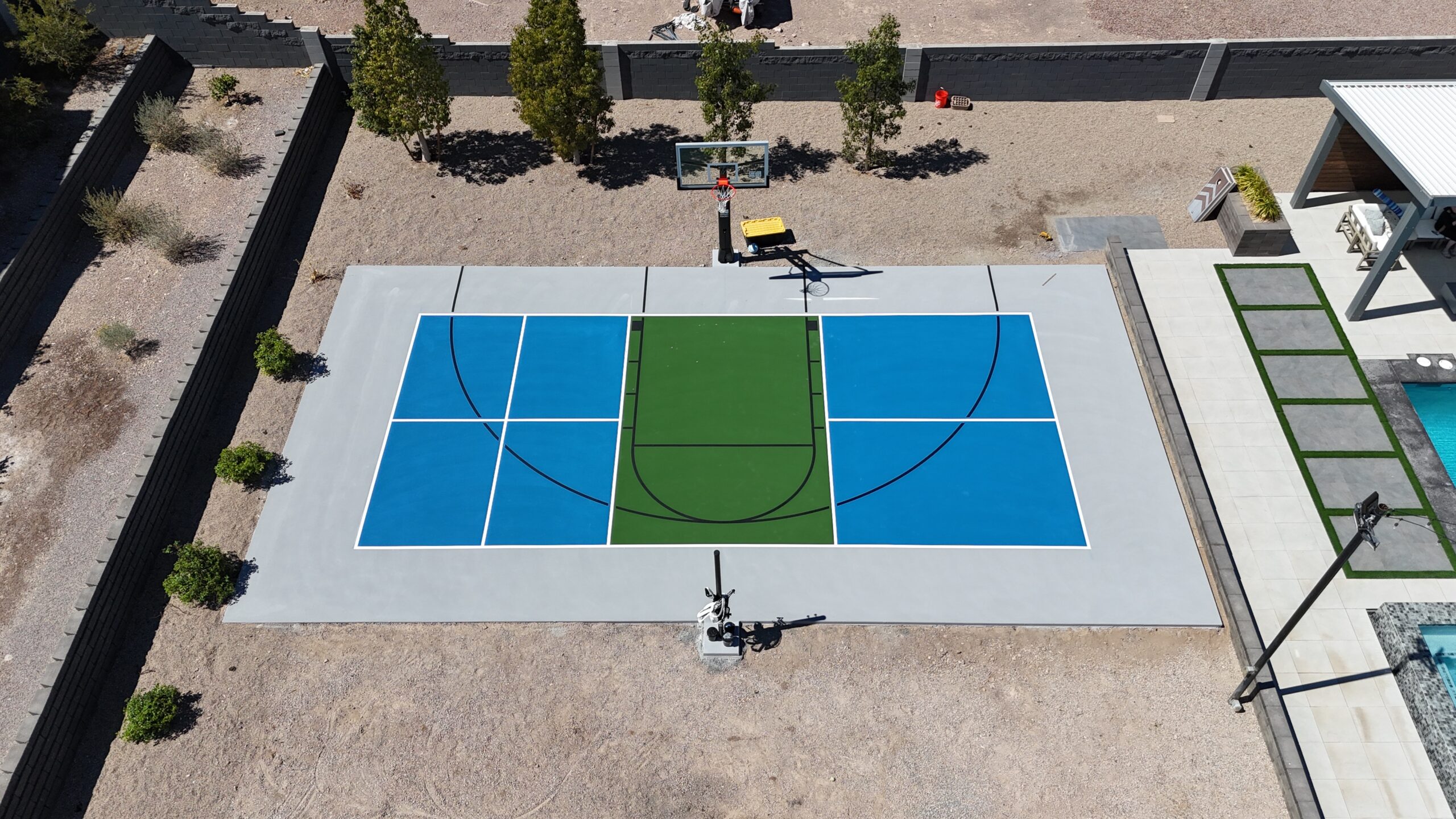
A multi-use pickleball court is designed to support pickleball while also accommodating other recreational sports such as basketball, volleyball, or badminton. These versatile courts are increasingly popular in residential backyards, community parks, schools, and recreation centers because they allow multiple activities to share the same playing surface.
Understanding the proper dimensions of a multi-use pickleball court is essential for creating a court that is safe, functional, and enjoyable for players of all ages. Proper spacing ensures players have enough room to move freely, while the correct layout allows multiple sports to be played without interference.
Whether you’re building a backyard pickleball court, installing modular pickleball tiles, or designing a community recreation space, knowing the correct court dimensions helps maximize usability and performance.
A regulation pickleball court follows specific measurements used in both recreational and competitive play. These dimensions remain consistent whether the court is used for singles or doubles matches.
The official dimensions for a pickleball court are:
These dimensions apply to both singles and doubles play, which is one of the reasons pickleball courts are easier to integrate into multi-sport recreational areas.
One of the most important features of a pickleball court is the non-volley zone, commonly referred to as the kitchen.
This zone prevents players from hitting volleys while standing near the net, creating more strategic gameplay and longer rallies.
While the court itself measures 20 ft × 44 ft, additional space around the court is recommended to ensure safe movement.
Typical clearance recommendations include:
With this buffer zone, the total recommended playing area becomes approximately:
This extra space allows players to move safely and retrieve shots without colliding with fences or surrounding obstacles.
Best For:
Dedicated pickleball courts or multi-use courts designed with proper safety spacing.
Multi-use courts often incorporate pickleball into larger court layouts that support multiple sports. Because pickleball courts are relatively compact, they can easily be integrated into existing basketball or recreation courts.
A common design is to stripe pickleball lines on larger sports courts.
Examples include:
These layouts allow communities and homeowners to enjoy several sports without needing separate courts.
To prevent confusion between sports, courts often use different line colors for each game.
Examples:
Using distinct colors makes it easy for players to quickly identify which lines apply to their game.
Even in multi-use layouts, adequate spacing between courts and sidelines is important. Buffer zones help prevent collisions between players and provide room for movement during fast-paced games.
Typical multi-use courts include 8–12 feet of safety space around the playing area whenever possible.
Best For:
Backyard courts, HOA recreation areas, and community parks that host multiple sports.
Another popular option for multi-use pickleball courts is modular interlocking court tiles. These tile systems allow courts to be installed quickly while providing a cushioned playing surface.
Modular court systems are commonly used in residential backyard courts, recreational facilities, and portable event courts.
Modular courts offer several advantages for multi-sport environments.
Quick Installation
Unlike poured concrete courts, modular tiles can be installed rapidly over an existing flat surface.
Shock Absorption
Many modular tile systems include built-in cushioning that reduces stress on joints during play.
Flexibility
Modular courts can support multiple sports with temporary or removable markings.
Low Maintenance
These surfaces typically require minimal upkeep and can withstand outdoor conditions.
Modular pickleball courts are ideal for:
They also allow property owners to easily modify court layouts if their sports preferences change over time.
| Court Type | Dimensions | Sports Supported | Best Use |
| Regulation Pickleball Court | 20 ft × 44 ft | Pickleball only | Dedicated play |
| Half Basketball Court Layout | 25 ft × 42 ft | Basketball + Pickleball | Residential courts |
| Full Basketball Court Layout | 50 ft × 84 ft | Basketball + multiple pickleball courts | Community courts |
| Modular Multi-Sport Court | Custom sizes | Pickleball, basketball, volleyball | Backyard courts |
Designing a multi-sport pickleball court requires careful planning to ensure the court functions effectively for all intended activities.
The first factor to consider is the total space available. Residential properties may only accommodate a compact court, while community recreation areas may support full-size layouts.
When designing a court, planners should account for:
A well-planned layout ensures the court remains safe and enjoyable.
Identifying which sports will be played most frequently helps determine how the court should be designed.
For example:
By prioritizing the primary sport, designers can optimize the layout while still allowing flexibility for other activities.
Several surface materials can be used for multi-use pickleball courts.
Common options include:
Acrylic Sport Coatings
Applied over concrete or asphalt for durable outdoor courts.
Synthetic Sport Surfaces
Provide cushioning and improved traction for recreational play.
Modular Court Tiles
Popular for backyard courts because they are flexible and easy to install.
Choosing the right surface improves player comfort, safety, and court longevity.
Proper placement of nets and court lines ensures fair gameplay.
Pickleball nets are typically positioned at:
Multi-use courts may include portable net systems that can be removed or repositioned depending on the sport being played.
Backyard courts are usually designed for casual recreation and may be slightly smaller than regulation layouts.
Community courts, on the other hand, typically follow official sport dimensions to support leagues, tournaments, and organized play.
Understanding the intended use of the court helps determine the best size and design.
A standard pickleball court measures 20 feet wide by 44 feet long, which is the same for both singles and doubles matches.
Multipurpose game courts can vary in size, but many residential courts measure approximately 30 ft × 60 ft, allowing room for multiple sports.
Two pickleball courts placed side by side typically require an area of about 60 ft × 60 ft, depending on spacing and safety buffers.
A regulation pickleball court requires approximately 81.75 square meters of playing area, not including additional safety space.
Ideally, a pickleball court should have at least 30 ft × 60 ft of total space to allow safe movement and comfortable gameplay.
Multi-use pickleball courts offer a practical and flexible solution for residential backyards, community parks, and recreational facilities. By understanding the correct dimensions and layout requirements, property owners and planners can design courts that support safe and enjoyable gameplay.
Because pickleball courts are relatively compact, they can easily be integrated into multi-sport backyard courts, modular recreation courts, or community sports complexes.
With proper planning, the right surface materials, and well-designed court markings, a multi-use pickleball court can provide years of recreation, fitness, and social enjoyment for players of all ages.
Please Provide Your Contact Information and Project Details