
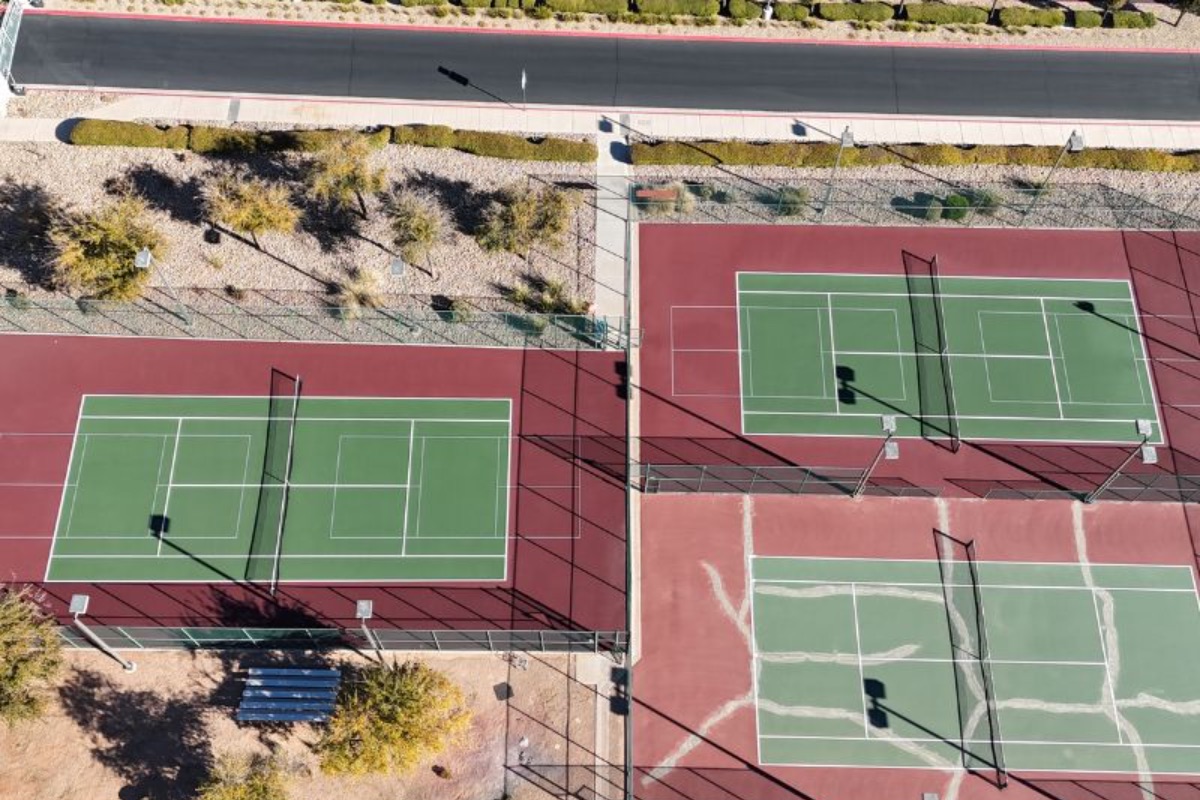
Converting an existing tennis court into a multi-sport recreational space is one of the smartest ways to maximize value and usability. Painting pickleball lines on tennis court surfaces allows homeowners, clubs, schools, and recreation centers to create flexible courts without the cost of building a completely new playing area.
As pickleball continues to grow in popularity, more property owners are choosing tennis court conversion to pickleball layouts because they offer efficient use of space, lower installation costs, and greater recreational versatility. With proper planning, precise measurements, and quality acrylic court striping materials, one court can easily support both sports while maintaining clear visibility and safe gameplay.
Whether you are upgrading a private backyard court or redesigning a public sports facility, understanding the correct layout and striping process is essential for a successful conversion.
Adding pickleball striping to an existing tennis court offers multiple benefits beyond convenience.
It transforms underused or single-purpose courts into high-value multi-sport environments.
One of the biggest advantages of painting pickleball court lines on tennis court surfaces is space efficiency.
A standard tennis court is large enough to fit several pickleball layouts depending on spacing and configuration.
Instead of dedicating separate spaces to each sport, one court can serve both effectively.
A dual-line court supports multiple sports on one surface.
This makes courts far more versatile for:
A thoughtfully planned multi-use game court design increases overall functionality without expanding property footprint.
Compared to full reconstruction, line striping conversion is highly affordable.
A tennis court conversion to pickleball project can often be completed quickly with minimal disruption.
Accurate dimensions are critical to ensure safe and regulation-compliant gameplay.
Before striping begins, understand the official measurements:
Because tennis courts are much larger, they can often accommodate:
Layout choice depends on intended use and available clearance.
Proper line placement prevents visual confusion between sports.
The pickleball kitchen (non-volley zone) must remain exactly:
Precise measurements are essential for fair and enjoyable play.
A successful court conversion follows a structured striping process.
Preparation is critical before applying any paint.
Painting over damaged surfaces reduces paint adhesion and shortens durability.
A clean base ensures crisp acrylic court striping results.
Accurate measurement determines whether your court plays correctly.
Mark:
Double-check all dimensions before painting begins.
Painter’s tape creates sharp professional striping edges.
Clean taping creates sharper finished results.
Always use sport-grade acrylic court paint designed for athletic surfaces.
Apply paint evenly using:
Allow drying between coats if multiple layers are needed.
After drying:
Optional visibility upgrades may include bold border accents.
|
Court Type |
Best For |
Main Advantage |
Consideration |
|
Tennis Only Court |
Traditional tennis play |
Clear dedicated surface |
Limited sport variety |
|
Dual-Line Tennis + Pickleball Court |
Multi-sport users |
Maximum flexibility |
Requires color planning |
|
Full Pickleball Conversion |
Pickleball-focused facilities |
Higher pickleball capacity |
Tennis use removed |
|
Backyard Tennis Court Conversion |
Residential homes |
Cost-efficient upgrade |
Space may limit court count |
Even small striping errors can affect gameplay quality.
Misplaced lines create inaccurate gameplay and frustration.
Always verify official dimensions before painting.
Cheap paint fades quickly under UV exposure and foot traffic.
Always choose professional sports-grade coatings.
If pickleball lines blend with tennis lines, players become confused.
Choose clearly distinguishable colors.
Dirty or cracked surfaces cause peeling paint and uneven lines.
Prep work cannot be skipped.
The non-volley zone is essential to pickleball rules.
Even slight kitchen misalignment affects play accuracy.
A dual-use court creates excellent long-term value.
One court accommodates different activities.
Multi-sport amenities enhance home and facility appeal.
No separate pickleball court build required.
More sports options mean more regular activity.
Perfect for neighborhoods, schools, and families.
Visual clarity improves safety and gameplay.
Simple visual design improves user experience significantly.
Yes, tennis courts are commonly converted by adding pickleball striping while preserving tennis functionality.
Absolutely. Many facilities use dual-line systems to support both sports simultaneously.
Measure regulation dimensions carefully, chalk layout guides, tape boundaries, and apply acrylic sport paint accurately.
Acrylic sport and game courtt paint is best because it offers UV resistance, durability, and slip-resistant texture.
Use chalk lines, measuring guides, straight edges, and painter’s tape before applying even coats of paint.
Painting pickleball lines on tennis court surfaces is one of the most practical ways to expand court functionality without major construction costs. Whether for private residences, schools, clubs, or community spaces, a well-executed tennis court conversion to pickleball creates a flexible, cost-effective, and highly valuable recreational upgrade.
With proper planning, accurate measurements, durable acrylic court striping materials, and thoughtful multi-use game court design, one court can successfully serve multiple sports for years of safe and enjoyable play.
Please Provide Your Contact Information and Project Details