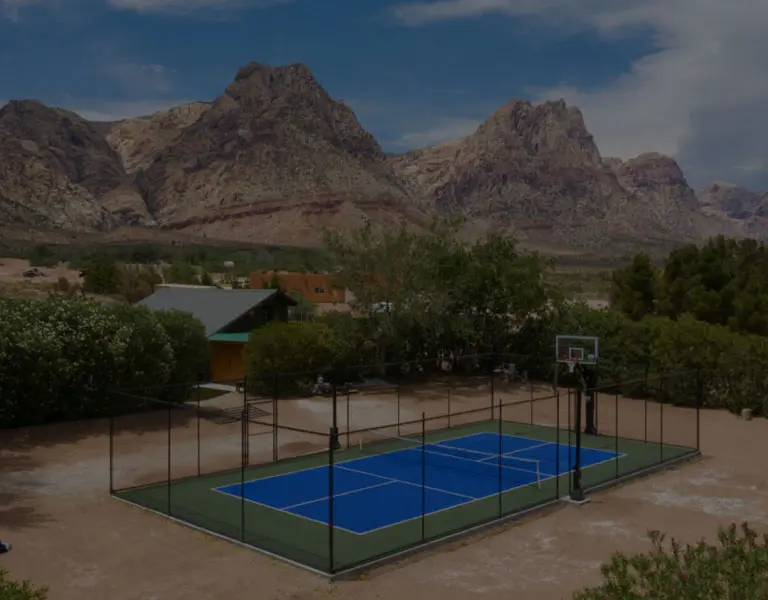
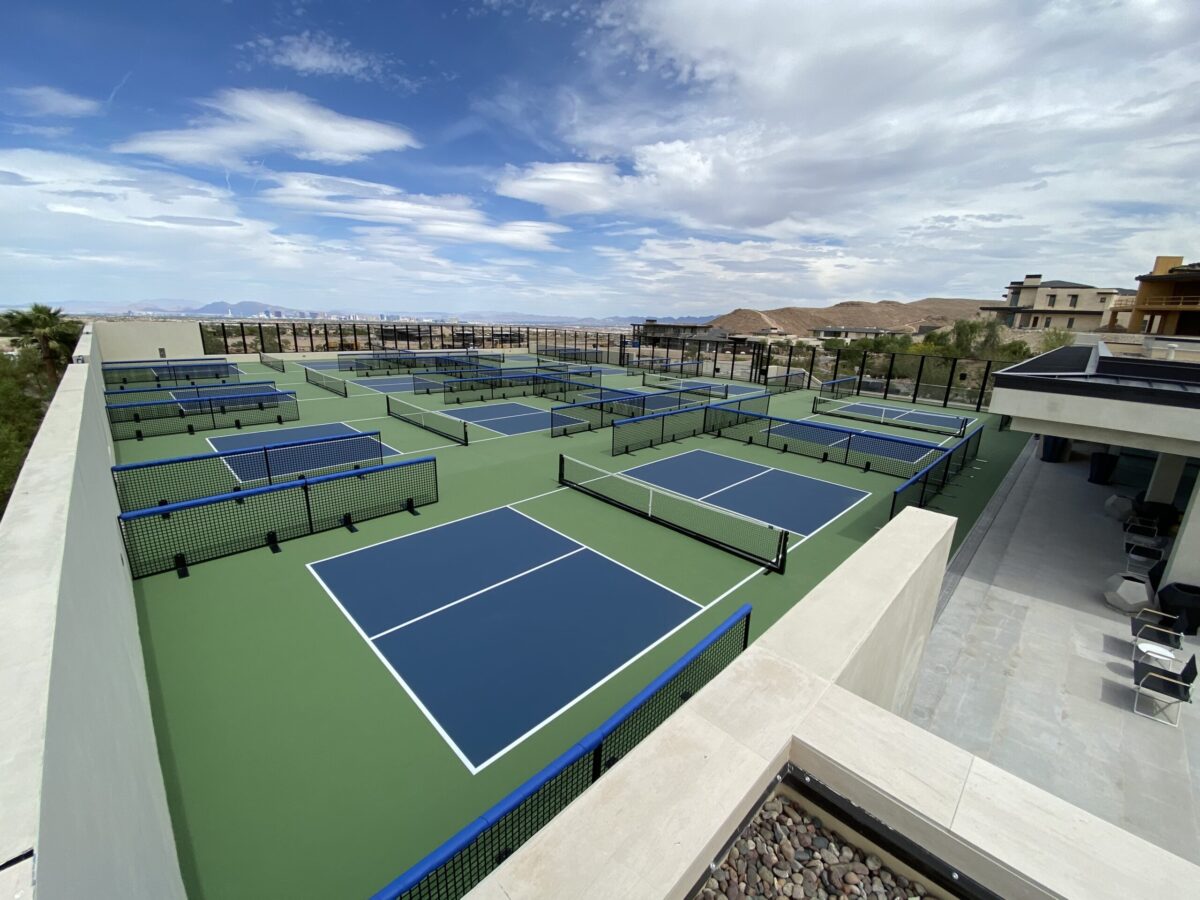
Pickleball is quickly becoming one of the most popular and fastest-growing sports in America. Curious about pickleball? Pickleball combines elements of tennis, badminton, and ping pong. It is known for being an inclusive, social, and exhilarating sport. Whether you’re a sports enthusiast or simply looking for a new hobby, here’s your guide to the game of pickleball.
Pickleball originated in the mid-1960s on Bainbridge Island, Washington, as the invention of three dads aiming to entertain their children during the summer. Over the decades, it has evolved from a backyard pastime to an international sensation, boasting tournaments, leagues, and clubs around the world.
The sport is played on a court similar in size to a doubles badminton court, but with a net lower than a tennis net. Players hold solid paddles that are larger than ping pong paddles but smaller than tennis rackets to volley a perforated ball back and forth.
The Court
A pickleball court measures 20 x 44 feet, divided into several zones. These include the service areas and a 7-foot non-volley zone (named the “kitchen”) close to the net.
Scoring
Pickleball can be played either as singles or doubles. A game is typically played up to 11 points. However, you must win by 2 points. Only the serving player or side can score points.
Serving
A serve must be made underhand, hitting the ball below the waist, and it must be served diagonally, landing in the opposite service court. The server starts from the right-hand court and switches sides with their partner (in doubles) after every point scored. If the serving team loses a point, the opposing side gains the serve.
The Kitchen
The ‘kitchen’ is a non-volley zone and a crucial element in pickleball strategy. Players cannot volley (hit the ball without letting it bounce first) if they’re standing in this zone. This ensures a more strategic game, as players cannot simply smash the ball from right at the net.
Double Bounce Rule
When the ball is served, the receiving side must let it bounce before returning, and similarly, the serving team must also let it bounce once before volleying. This means two bounces are required after the serve, one on each side.
Faults
A fault can be the result of several actions, such as failing to serve the ball into the correct service box, volleying in the kitchen, or hitting the ball out of bounds. Once a fault is made, service is either passed to the serving team’s partner or to the opposing team.
Game Flow
A game of pickleball begins with the right-hand side server. Play continues, with sides volleying back and forth, until a fault is made. Points can only be scored by the serving side. When the serving side’s score is even, the player on the right serves, and when it’s odd, the player on the left serves.
Pickleball is popular because it is easy to learn how to play and is an extremely social sport. Pickleball is a great game for a wide range of ages, lifestyles, and demographics, and ensures a fun workout.
With its soaring popularity, there’s no better time to pick up pickleball. If you’re considering setting up a backyard pickleball court, Legendary Sports Construction has got you covered. Dive into the world of pickleball and discover your new favorite hobby!
Pickleball isn’t just a passing trend—it’s quickly becoming one of the most popular recreational sports in the United States. The game appeals to players of all ages due to its simple rules, social atmosphere, and easy learning curve. For homeowners and facility managers alike, the ability to build a court that supports both fun and fitness makes pickleball an ideal feature for any property.
Additionally, pickleball courts take up less space than tennis courts and can even be installed in existing sports surfaces with some modification. This versatility, along with the sport’s low barrier to entry, has prompted a rise in residential and HOA requests for private pickleball court builds.
When designing or installing a pickleball court, there are essential features that ensure professional-grade performance and long-term durability:
Whether it’s for recreational play or tournament hosting, each feature plays a role in enhancing gameplay and court lifespan.
| Feature | Pickleball Court | Tennis Court |
| Standard Court Size | 20’ x 44’ | 36’ x 78’ |
| Net Height | 36” at sidelines, 34” in middle | 42” at posts, 36” in middle |
| Surface Material | Acrylic, concrete, or asphalt | Acrylic, clay, grass, or asphalt |
| Game Style | Faster, more social, less running | More running, more court coverage |
| Audience Age Range | Broad (families, seniors, adults) | Primarily youth and adult athletes |
| Cost to Build | Lower | Higher |
Here are some compelling reasons homeowners and residential communities are choosing to install pickleball courts:
Backyard pickleball courts convert unused lawn or concrete into purpose-driven recreation areas—plus, they require less space than most backyard pool installations.
Legendary Sports Construction offers various customization options to cater to different aesthetic and functional needs:
We can also combine pickleball with basketball or volleyball lines to create hybrid backyard courts that offer multiple sports in one space.
To ensure your pickleball court performs well for years, consider the following care tips:
Professional resurfacing is recommended every 7-10 years depending on usage and climate conditions.
Pickleball combines elements of tennis, badminton, and ping pong. It’s played on a small court with paddles and a perforated plastic ball, aiming to hit the ball over the net without letting it bounce twice.
Yes, pickleball is one of the fastest-growing sports in the U.S., gaining popularity for being easy to learn and fun for all ages.
The 5 P’s are: Preparation, Placement, Patience, Positioning, and Practice — key principles for improving your game.
The best strategy is to control the net, use placement over power, communicate with your partner, and stay patient during rallies.
Whether you’re looking to upgrade a community park, design a private backyard court, or build a tournament-ready facility, our expert team brings over 25 years of experience in sports construction to your project. We handle everything from design to installation and resurfacing—ensuring your court is built to the highest standards for safety, performance, and aesthetics.
Ready to get started on your pickleball court project? Contact Legendary Sports Construction today for a customized quote and consultation.
Please Provide Your Contact Information and Project Details