
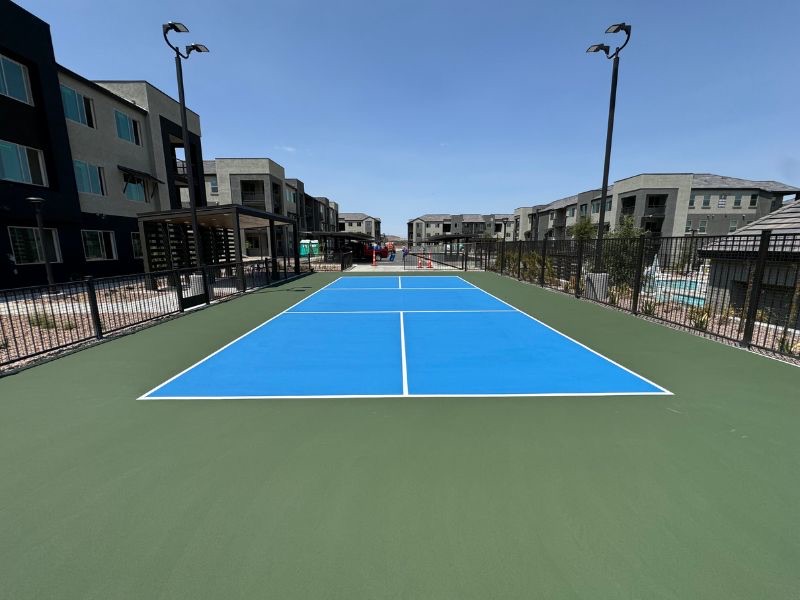
The floor of a pickleball court is much more than a flat playing surface. It directly influences gameplay performance, player safety, durability, and maintenance requirements. The right floor ensures consistent ball bounce, proper traction, and a comfortable playing experience for players of all skill levels.
Most pickleball court floors are constructed using acrylic-coated concrete, asphalt with acrylic coatings, modular interlocking tiles, post-tension concrete, or synthetic turf systems. Each material offers unique advantages depending on where the court is installed and how frequently it will be used.
Whether you’re installing a backyard pickleball court floor, building a community recreation court, or designing a professional sports facility, understanding pickleball court floor materials helps ensure the court performs well for many years.
Several surface systems are commonly used in modern pickleball court construction. Each material offers a balance of performance, durability, comfort, and installation cost.
The most common material used for professional pickleball court floors is acrylic-coated concrete.
In this system, contractors pour and cure a concrete slab, then apply multiple layers of acrylic sports coating. These coatings add texture, color, and weather protection while creating the proper traction needed for gameplay.
Benefits include:
Because of its reliability and performance, acrylic pickleball court floors are widely used in professional facilities, clubs, and community courts.
Another popular option for outdoor courts is asphalt with acrylic coating.
Asphalt provides a strong structural base that is then coated with the same acrylic sport surfacing used on concrete courts. This creates a smooth and textured playing surface suitable for pickleball.
Advantages include:
However, asphalt may require resurfacing more often than concrete due to expansion and contraction caused by temperature changes.
Modular pickleball court floor systems are becoming increasingly popular for residential and recreational installations.
These floors use plastic tiles that interlock together and sit on top of a flat surface, such as concrete or asphalt. The tiles provide a slightly cushioned playing surface that reduces stress on joints.
Benefits include:
For homeowners installing a backyard pickleball court floor, modular tile systems offer a convenient and comfortable solution.
Post-tension concrete is a premium court construction method used in high-end sports facilities.
This system reinforces the concrete slab with tensioned steel cables that run through the concrete. The tension helps prevent cracks and structural damage over time.
Advantages include:
Post-tension concrete is commonly used in professional sports complexes and premium residential courts where long-term durability is a priority.
While less common for competitive play, synthetic turf pickleball courts are sometimes used for recreational or training environments.
Synthetic turf provides a softer playing surface and can be installed over a prepared base.
Benefits include:
However, turf surfaces may not provide the same ball bounce consistency as hard court systems.
| Surface Material | Durability | Comfort | Installation Cost | Maintenance | Best Use |
| Acrylic-Coated Concrete | Very High | Moderate | High | Low | Professional courts, clubs |
| Asphalt with Acrylic | High | Moderate | Medium | Moderate | Community courts |
| Modular Tile System | Moderate–High | High | Medium | Low | Backyard courts |
| Post-Tension Concrete | Extremely High | Moderate | High | Very Low | Premium sports facilities |
| Synthetic Turf | Moderate | High | Medium | Low | Casual play areas |
The floor is the foundation of a pickleball court’s performance. The surface influences how the ball moves, how players maneuver, and how long the court lasts.
Choosing the right pickleball court floor material ensures:
For example, courts built in warm climates such as Nevada, Arizona, or Southern California often use acrylic-coated concrete because it withstands heat and UV exposure extremely well.
Selecting the best pickleball court surface depends on several factors.
The intended use of the court plays a major role in selecting the correct flooring system.
Climate conditions affect how surfaces perform over time.
Hot climates benefit from acrylic-coated concrete surfaces, which resist heat and sun exposure. Areas with frequent rain may benefit from surfaces with good drainage, such as modular tile systems.
Different surfaces provide different playing experiences.
Hard courts like concrete offer faster gameplay and consistent bounce, while cushioned modular systems provide more comfort for recreational players.
Maintenance requirements vary between surface types.
Acrylic-coated courts require occasional resurfacing, while modular tile systems may simply require cleaning and occasional tile replacement.
Choosing low-maintenance surfaces helps keep courts playable with minimal upkeep.
If the court will be used for multiple sports, modular flooring systems can be a flexible solution.
Many modular systems allow courts to accommodate:
This versatility makes them popular for schools and residential installations.
The best flooring for pickleball is typically acrylic-coated concrete, which provides consistent ball bounce, excellent traction, and long-term durability.
A pickleball court floor is commonly made from concrete or asphalt foundations coated with acrylic sport surfaces, modular tile systems, or occasionally synthetic turf for recreational courts.
Concrete with acrylic sport coatings is widely considered the best material for pickleball courts due to its durability, performance, and low maintenance requirements.
Most pickleball courts use hard sport surfaces, including acrylic-coated concrete or asphalt courts. These surfaces provide the consistent bounce required for competitive play.
Concrete slabs used for pickleball courts are typically 4 to 6 inches thick, depending on soil conditions and reinforcement requirements.
Understanding what the floor of a pickleball court is made of is essential when planning a new court installation.
From acrylic-coated concrete and asphalt surfaces to modular tile systems and synthetic turf, each flooring option offers unique advantages depending on the environment and level of play.
For professional courts, acrylic-coated concrete remains the gold standard. For homeowners installing backyard pickleball court floors, modular systems offer comfort and convenience.
By selecting the right pickleball court surface options and ensuring professional installation, you can create a court that provides safe gameplay, consistent performance, and long-lasting durability.
Please Provide Your Contact Information and Project Details