
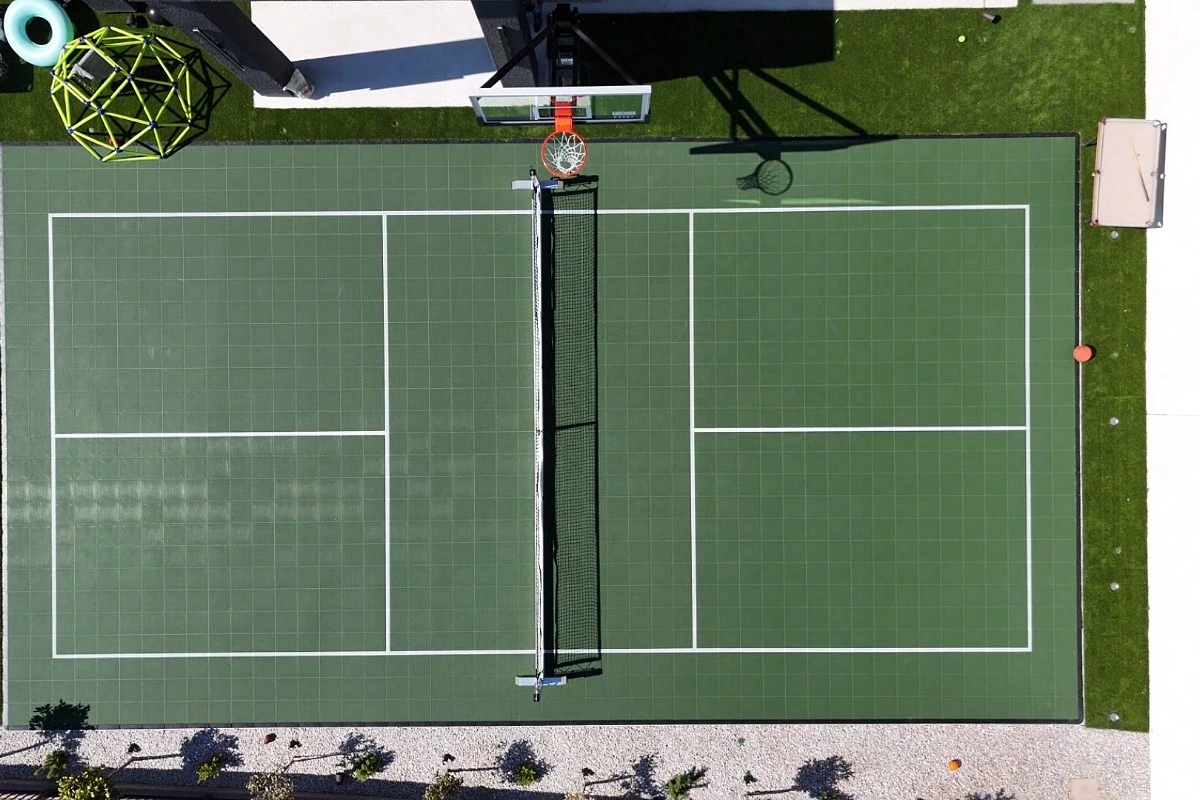
Even the highest-quality pickleball courts experience wear over time. Constant foot traffic, UV exposure, changing weather conditions, and normal aging gradually impact the surface. Over time, this leads to cracks, fading, loss of traction, uneven bounce, and reduced playability.
Fortunately, complete reconstruction is not always necessary. Professional pickleball court resurfacing is a cost-effective solution that restores performance, improves safety, and extends the lifespan of the court for many years.
Whether you manage a residential court, HOA community facility, school campus, or sports complex, pickleball court repair and restoration ensure your playing surface remains safe, visually appealing, and high-performing. Instead of replacing the entire court, resurfacing focuses on renewing the top layers while preserving the structural base.
This makes resurfacing one of the most efficient long-term maintenance strategies for any outdoor pickleball court resurfacing project.
Pickleball court resurfacing is the process of repairing, leveling, and refinishing an existing court surface without removing or rebuilding the foundation. The goal is to restore performance while extending the life of the court.
A professional resurfacing project typically includes:
A qualified pickleball court resurfacing contractor ensures each layer is applied correctly, creating a smooth, durable, and safe playing surface.
Ignoring surface deterioration can create serious issues that affect both players and facility owners.
A deteriorated court can negatively impact:
Regular pickleball court restoration ensures that small issues are corrected early, preserving both performance and investment value.
Understanding why courts wear out helps prevent future damage and improve maintenance planning.
Outdoor courts are constantly exposed to sunlight, which leads to:
UV damage is one of the leading reasons courts require resurfacing every few years.
Environmental changes also play a major role in deterioration:
Over time, these conditions reduce durability and play quality.
High-traffic courts experience natural wear from constant use:
Facilities with daily or tournament-level usage often require more frequent pickleball court repair.
Soil shifting and natural settling can cause:
Even small movements in the base can lead to visible surface damage.
Cracks are one of the earliest and most common warning signs. If left untreated, they expand and compromise the entire surface system.
UV exposure and aging cause dull or uneven colors, making the court look worn and unprofessional. Resurfacing restores a vibrant, uniform appearance.
When players begin slipping or feel inconsistent footing, it is a sign the surface texture has worn down.
Standing water indicates low spots or drainage failure, which can accelerate surface deterioration and require immediate attention.
Worn Court Lines
Faded or unclear markings affect gameplay accuracy and reduce visual clarity, especially during competitive play.
|
Condition |
Problem Impact |
Resurfacing Benefit |
|
Cracks |
Safety risks & structural damage |
Restores smooth surface |
|
Fading |
Poor aesthetics |
Restores color & visibility |
|
Poor traction |
Slipping hazards |
Improves grip & safety |
|
Water pooling |
Drainage issues |
Levels surface properly |
A professional inspection evaluates:
This helps determine the level of pickleball court resurfacing required.
Preparation ensures proper bonding of new materials:
Specialized materials are used to repair:
Proper pickleball court crack repair prevents further spreading and damage.
Acrylic resurfacing systems are applied in multiple layers:
This stage restores both performance and appearance.
Final striping includes:
Most common for pickleball court coating projects:
Designed for comfort and performance:
Some courts are upgraded to support:
These systems maximize property usability and long-term value.
Resurfacing is recommended when:
Most courts require resurfacing every 4–8 years, depending on usage and climate.
Common Mistakes When Delaying Court Resurfacing
Delaying maintenance increases long-term repair costs significantly.
Restores a clean, professional, and visually appealing court.
Better Playability
Protects the base structure and delays expensive reconstruction projects.
Experienced in full pickleball court restoration for residential and commercial facilities.
Uses professional-grade materials designed for durability and long-term performance.
Every project is tailored based on:
Most courts require resurfacing every 4–8 years, depending on usage, climate, and maintenance level.
Acrylic surfaces are most common due to durability, traction, and UV resistance.
Most courts use multi-layer acrylic coatings designed for weather resistance and consistent playability.
Acrylic or cushioned acrylic systems are best for outdoor courts, while indoor courts may use wood or synthetic flooring.
Yes. Courts and resurfacing services are in high demand due to the sport’s rapid growth, making installation and maintenance services highly profitable.
Pickleball court resurfacing is one of the most effective ways to restore safety, performance, and appearance without full reconstruction. Through proper pickleball court repair, crack filling, and resurfacing systems, courts can be brought back to near-new condition at a fraction of replacement cost.
Working with a professional pickleball court resurfacing contractor ensures proper materials, correct installation, and long-lasting results. Whether for residential, HOA, or commercial courts, resurfacing is essential for maintaining high-quality play and protecting long-term investment value.
Please Provide Your Contact Information and Project Details