
Sport Court products only available in Nevada.
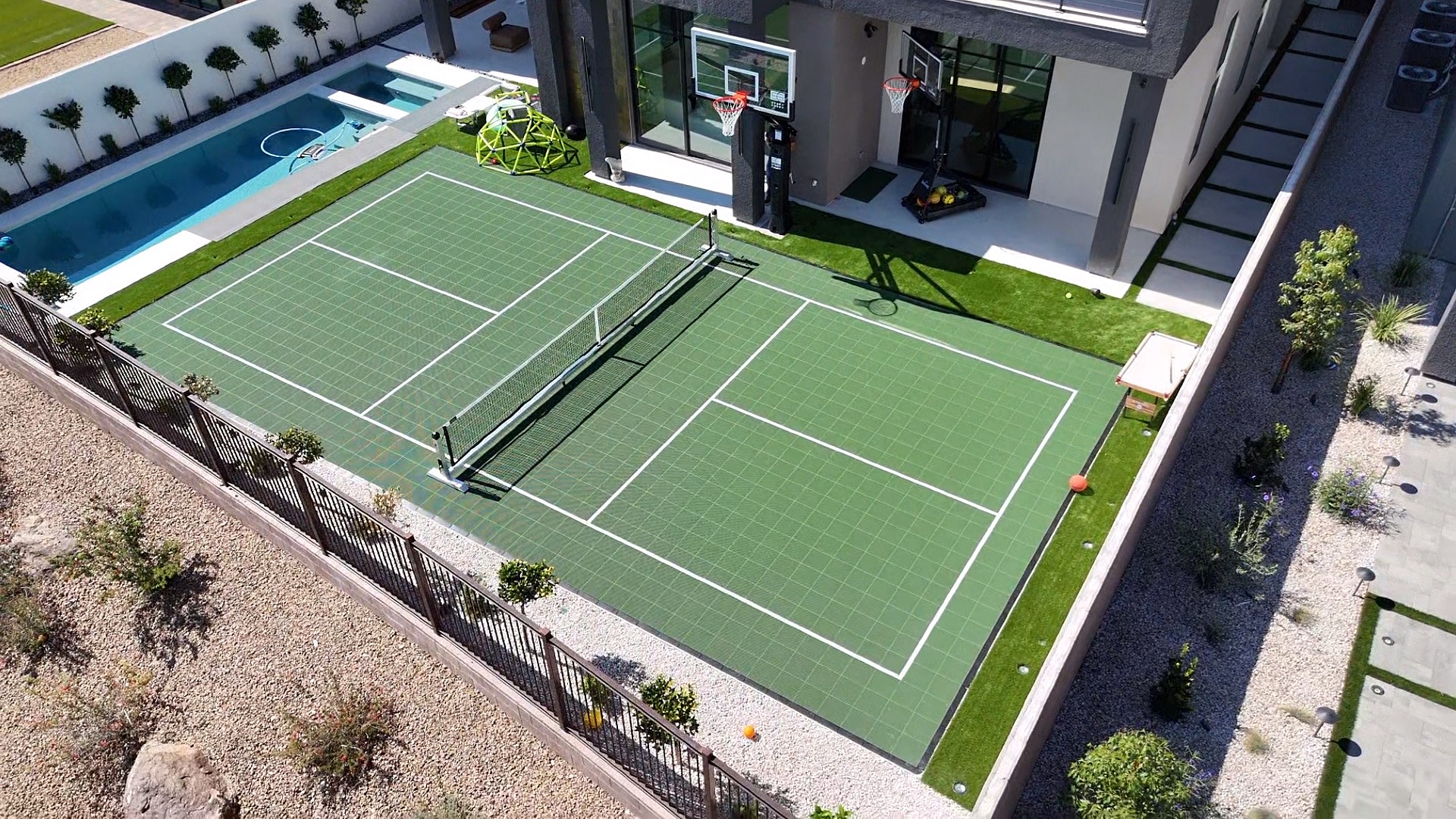
Choosing the right pickleball court surface material is one of the most important decisions in any court project. The surface directly affects ball bounce, player movement, joint comfort, safety, and how well the court holds up over time. In outdoor environments especially, heat, UV exposure, moisture, and repeated play can quickly expose weaknesses in the wrong surface choice.
At Legendary Sports Construction, we guide homeowners, HOAs, and recreational facilities through the process of selecting and installing pickleball court surfaces built for performance and longevity. Whether you’re planning a backyard court or a shared-use recreational facility, understanding how each surface material performs will help you make a confident, long-term investment.
There is no single “one-size-fits-all” surface for pickleball. Each material offers unique benefits depending on location, usage level, budget, and comfort expectations.
Acrylic-coated concrete is one of the most common pickleball court surfaces used today. This system involves applying textured acrylic layers over a properly prepared concrete slab.
Key characteristics
This surface is widely used for both residential and community courts. However, because the surface is rigid, it can feel harder on joints during extended play and may require resurfacing over time due to cracking or fading.
Asphalt courts finished with acrylic coatings are similar to concrete systems but offer slightly more flexibility. This can help reduce cracking in some environments.
Why asphalt is used
That said, asphalt is more susceptible to temperature-related expansion and contraction, which can lead to surface movement and long-term maintenance needs—especially in hotter climates.
Modular tile systems have become increasingly popular for both residential and commercial pickleball courts. These interlocking systems install over prepared bases and create a finished sports surface.
Advantages of modular tiles
Modular systems are often selected for outdoor courts because they handle heat, moisture, and heavy use more effectively than traditional coatings.
Cushioned court systems incorporate shock-absorbing layers beneath the playing surface. These systems are designed to reduce impact stress and improve comfort during long play sessions.
Best suited for
While cushioned systems provide excellent comfort, they can come with higher installation costs and more complex base preparation requirements.
| Surface Material | Best For | Play Feel | Drainage | Durability | Maintenance |
| Acrylic-Coated Concrete | Residential & community courts | Firm, predictable | Poor | Good | Moderate |
| Asphalt with Acrylic Surfacing | Recreational facilities | Slightly flexible, firm | Poor | Moderate | Moderate |
| Modular Tile Systems | Outdoor & multi-use courts | Athletic, consistent | Excellent | Excellent | Low |
| Cushioned Court Systems | Comfort-focused play | Soft, joint-friendly | Moderate | Good | Moderate |
Please Provide Your Contact Information and Project Details