
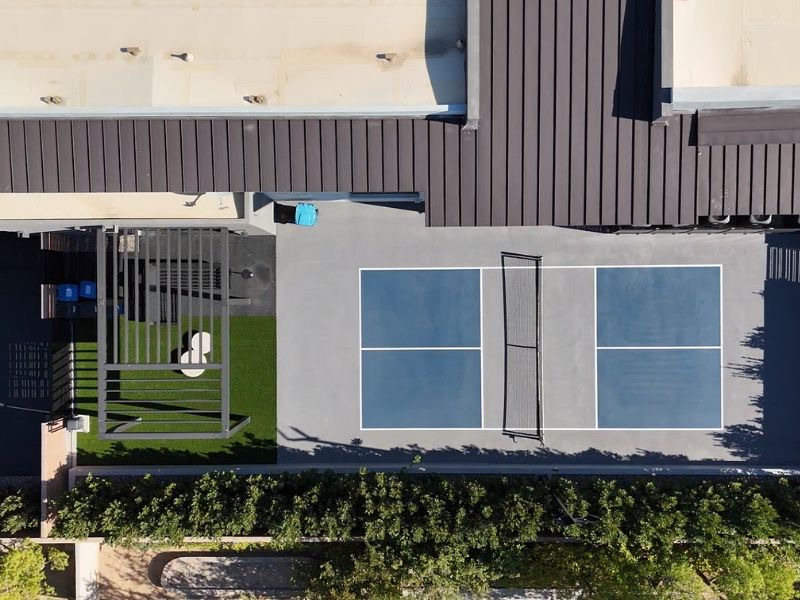
The surface of a pickleball court is one of the most important decisions in the entire construction process. It directly influences how the ball reacts, how players move, long-term maintenance requirements, and overall safety. A well-chosen surface enhances playability and comfort, while a poor choice can lead to premature wear, inconsistent bounce, and unnecessary repairs.
Legendary Sports Construction helps homeowners, HOAs, schools, and commercial facilities select and install the ideal pickleball court surface based on usage, environment, and performance goals. Whether you’re building a backyard court or a multi-court community facility, the right surface ensures years of reliable, enjoyable play.
Pickleball is a fast-growing sport enjoyed by players of all ages and skill levels. Unlike some sports that tolerate surface variability, pickleball relies heavily on predictable ball bounce, stable footing, and quick lateral movement.
The court surface affects:
In outdoor environments—especially warm, sunny climates—surface performance becomes even more critical. Choosing the right pickleball court surface option upfront prevents costly corrections later.
Acrylic pickleball court surfacing is the most widely used and trusted option for both residential and commercial courts. It is the same surface category used in many professional and tournament-level facilities.
Acrylic surfaces are applied in multiple layers over a stable base, creating a textured finish that balances grip and speed. This results in consistent ball bounce and predictable player movement.
Key advantages of acrylic surfacing include:
Acrylic pickleball courts are ideal for players who want a traditional feel and long-term reliability.
Post-tension concrete pickleball courts represent a premium construction option focused on long-term structural stability. This system uses reinforced concrete designed to reduce cracking caused by soil movement and temperature changes.
While post-tension concrete is not typically the final playing surface, it serves as an exceptionally durable base. Acrylic surfacing is usually applied on top to create the playable layer.
This option is best suited for:
Post-tension systems require a higher upfront investment but offer excellent longevity.
Asphalt is a common and cost-effective base material for pickleball courts, especially in residential or community settings. When properly installed and coated with acrylic surfacing, asphalt courts deliver solid performance at a lower initial cost.
Asphalt courts provide:
However, asphalt is more susceptible to cracking over time compared to concrete. Proper site preparation, drainage, and periodic resurfacing are essential to maximize lifespan.
Modular pickleball tiles are an increasingly popular option for backyard and multi-use courts. These interlocking tile systems are installed over a prepared base and provide a cushioned, flexible playing surface.
Modular tile systems offer:
They are especially appealing for homeowners who want comfort, design flexibility, or the ability to reconfigure the space in the future.
| Surface Type | Play Feel | Maintenance | Durability | Best Use |
| Acrylic Surfacing | Firm, consistent | Low | High | Residential & competitive play |
| Post-Tension Concrete + Acrylic | Firm, premium | Low | Very High | Long-term installations |
| Asphalt + Acrylic | Firm, responsive | Moderate | Medium–High | Budget-conscious builds |
| Modular Tile Systems | Cushioned, flexible | Low | High | Backyard & multi-use courts |
This comparison highlights how each surface option balances performance, comfort, and cost.
Selecting the right pickleball court surface delivers benefits far beyond aesthetics.
A proper surface ensures consistent ball bounce and predictable play for beginners and experienced players alike. It improves safety by providing reliable traction and reducing slip hazards.
Durable, weather-resistant surfaces minimize maintenance needs and protect your investment. Many surface options also support multi-use layouts, allowing pickleball courts to double as basketball or volleyball spaces.
From a property perspective, professionally built courts with high-quality surfaces enhance usability, appearance, and long-term value.
While many pickleball courts are outdoors, surface selection differs slightly between indoor and outdoor environments.
Outdoor pickleball courts prioritize:
Acrylic and modular tile systems are the most common outdoor solutions.
Indoor pickleball courts may incorporate:
Professional builders help match the surface to the environment to ensure optimal performance.
The process begins with evaluating your space, intended use, player demographics, and budget. This step determines the most suitable pickleball court surface option and layout.
Proper grading, compaction, and drainage preparation are essential for surface longevity. A stable foundation prevents shifting, cracking, and water-related issues.
The selected surface—acrylic, modular tile, asphalt, or concrete-based—is installed using professional methods to ensure consistency and durability.
Court lines are painted according to regulation pickleball dimensions. Nets, posts, fencing, and optional lighting are installed as needed.
A final inspection confirms surface quality, safety, and play readiness before the court is delivered for use.
Surface needs vary depending on how the court will be used.
Residential pickleball court surfaces often emphasize comfort, aesthetics, and flexibility. Modular tiles and acrylic systems are popular for backyard courts.
Commercial and community courts require higher durability and lower maintenance. Acrylic surfacing over concrete or asphalt is commonly used to support frequent play.
Professional residential pickleball court builders tailor surface selection to match usage demands.
Pickleball is typically played on acrylic-coated hard courts, modular tile systems, or coated asphalt or concrete bases. The best option depends on usage and environment.
An asphalt base with acrylic coating is usually the most cost-effective long-term solution. Modular tiles may also be affordable for smaller courts.
While pickleball can be played on various surfaces, professional courts provide safer traction, consistent bounce, and better long-term performance.
Most pickleball surfaces are made of acrylic coatings applied over asphalt or concrete, or modular plastic tile systems.
Acrylic surfacing is widely considered the best all-around option for durability, performance, and maintenance balance.
The best pickleball court surface is one that aligns with your space, playing style, climate, and long-term goals. From professional acrylic courts to cushioned modular systems, each option offers unique advantages.
With expert guidance, proper installation, and quality materials, the right surface transforms a pickleball court into a reliable, safe, and enjoyable space for years to come—whether in a backyard, community center, or commercial facility.
Please Provide Your Contact Information and Project Details