
Pickleball is one of the fastest-growing sports in North America, and one of the reasons for its popularity is its versatility. Unlike some sports that require specialized facilities, pickleball can be played on several types of courts. Whether you’re building a backyard pickleball court, installing a modular court system, or using a multi-use recreational court, the right setup ensures safe and enjoyable gameplay.
The court surface, layout, and surrounding space all play important roles in the quality of play. A properly designed pickleball court provides consistent ball bounce, reliable traction, and adequate space for player movement. These features help players perform comfortably while minimizing the risk of injuries.
From residential backyards to community recreation centers, pickleball courts are designed to meet different needs and budgets. Understanding the different pickleball court types can help homeowners, property managers, and sports enthusiasts choose the best setup for their space.
Pickleball courts can be designed in several ways depending on available space, installation preferences, and how frequently the court will be used. The most common types include dedicated backyard courts, modular tile courts, and multi-use game courts.
A dedicated backyard pickleball court is a permanent installation designed specifically for pickleball. These courts are built with regulation dimensions and professional surface materials to provide the best playing experience.
Dedicated courts are typically constructed on a concrete or asphalt base, which is then coated with acrylic sport surfacing or other specialized materials. This type of surface ensures consistent ball bounce and reliable traction during gameplay.
Dedicated courts are ideal for homeowners who frequently play pickleball and want a high-quality, permanent recreational space.
Dedicated courts work best for:
Many homeowners also install lighting and fencing to enhance the usability of their courts.
Another popular option is a modular pickleball tile court. Modular court systems use interlocking plastic tiles that snap together over a flat surface such as concrete or asphalt.
These systems are designed for flexibility and convenience, making them a great option for temporary installations or multi-use sports courts.
Because modular tiles provide excellent traction and shock absorption, they are often used for recreational courts and backyard sports areas.
Modular tile courts are ideal for:
These courts are particularly popular in areas like Nevada and Arizona, where outdoor recreation is common throughout the year.
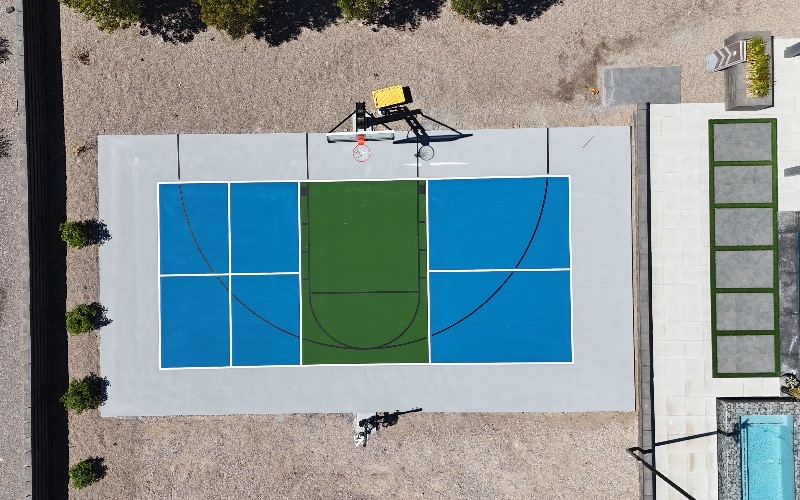
Many pickleball courts are built as part of multi-use game courts. These courts allow several sports to be played on the same surface, maximizing the use of available space.
A multi-use court might include line markings for:
This approach is especially useful for families or community centers that want to support multiple recreational activities without building separate courts.
Multi-use courts are often installed in parks, schools, residential developments, and recreational centers.
| Court Type | Durability | Comfort | Maintenance | Best Use |
| Dedicated Backyard Pickleball Court | Very High | Moderate | Low | Permanent residential courts |
| Modular Pickleball Tile Court | High | High | Low | Backyard and multi-use courts |
| Multi-Use Game Court | High | High | Low | Community and recreational spaces |
Regardless of the type of court used, several key features help ensure the court performs well and provides a safe playing environment.
A regulation pickleball court measures 20 feet wide by 44 feet long. This size is the same for both singles and doubles play.
However, it is recommended to allow additional space around the court for player movement. Many backyard courts include extra clearance to improve safety and comfort during games.
Pickleball courts can use several types of surfaces, including:
These surfaces are designed to provide consistent ball bounce, traction, and durability.
Outdoor pickleball surfaces must also withstand weather exposure, including sunlight, rain, and temperature fluctuations.
A pickleball court requires a regulation net system placed at the center of the court. The net height is slightly lower than a tennis net, which helps maintain the unique style of play associated with pickleball.
Fencing is often installed around outdoor courts to keep balls within the playing area and improve safety.
Many modern sports courts are designed with multi-sport functionality in mind. This allows pickleball courts to also support other activities without requiring additional space.
For example, a single court might include line markings for both pickleball and basketball.
This flexibility makes multi-use courts a practical choice for residential and community pickleball courts.
Pickleball courts are similar in size to badminton courts, but they have different markings and net heights. Some badminton courts can be adapted for pickleball play.
Yes. Pickleball involves movement, coordination, and moderate physical activity, which can help support bone health and overall fitness.
Pickleball is typically played on courts made from acrylic-coated concrete, modular tiles, or other sports flooring systems designed for outdoor recreation.
Acrylic-coated concrete and modular tile systems are among the most common surfaces used for pickleball courts because they provide consistent ball bounce and good traction.
Yes. Many basketball courts can be converted into pickleball courts by adding pickleball line markings and installing a portable net.
Pickleball’s flexibility is one of the reasons the sport continues to grow so rapidly. The game can be played on dedicated backyard courts, modular tile courts, or multi-use recreational courts, making it accessible for homeowners, communities, and sports facilities alike.
By choosing the right pickleball court type, players can enjoy a safe and comfortable playing environment that supports both recreational and competitive play.
Whether installed in a residential backyard or a public park, a well-designed pickleball court creates an inviting space for players to stay active, socialize, and enjoy one of the fastest-growing sports in the world.
Please Provide Your Contact Information and Project Details