
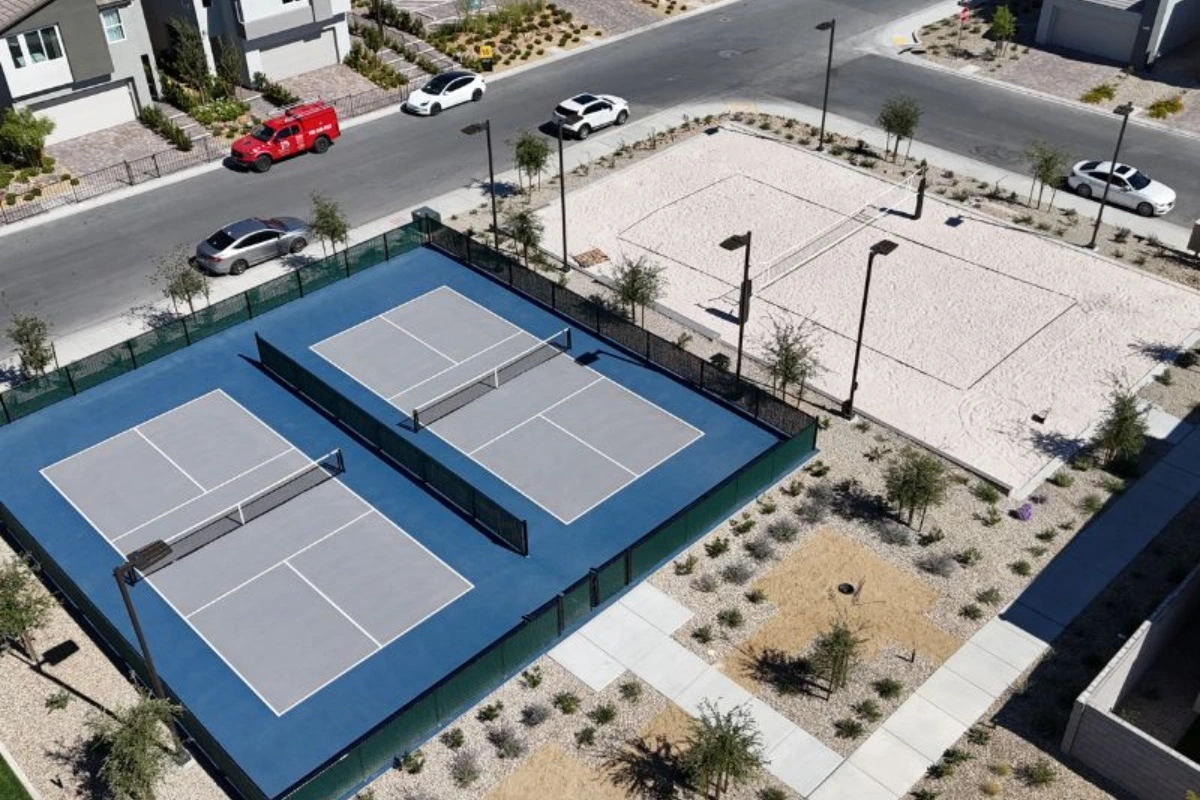
Over time, even high-quality pickleball courts begin to show signs of wear. If your court has cracks, fading colors, peeling surfaces, poor traction, standing water, or uneven gameplay, it may be time for professional pickleball resurfacing.
Many homeowners, HOAs, schools, and recreational facilities eventually face the same question: should you completely replace the court or restore the existing surface?
In many cases, resurfacing is the smarter and more cost-effective solution. A professional resurfacing system can restore court appearance, ball performance, surface traction, player safety, and long-term durability without requiring a full reconstruction.
For outdoor courts in Arizona and Nevada, resurfacing becomes especially important because constant UV exposure, heat expansion, and weather conditions accelerate surface wear. A properly resurfaced court helps protect the investment while creating a cleaner, safer, and more enjoyable playing experience.
Pickleball court resurfacing is the process of repairing and renewing an existing court surface using specialized athletic coating systems. The process may include crack repair, acrylic resurfacing layers, texture coatings, color systems, and fresh court striping.
The goal is to restore the court to optimal playing condition while extending the lifespan of the existing foundation.
Unlike full reconstruction, resurfacing focuses on repairing and renewing the top athletic surface rather than replacing the concrete or asphalt base entirely. When the structural foundation is still stable, resurfacing can provide major visual and performance improvements at a lower overall cost.
Outdoor pickleball courts constantly face UV exposure, heat expansion, moisture intrusion, heavy foot traffic, and normal surface aging. Over time, these conditions cause coatings to fade, texture to wear down, and cracks to form.
Without maintenance, these issues may continue to worsen and eventually affect gameplay quality and player safety. Resurfacing helps restore the court before minor damage becomes a larger structural problem.
Professional pickleball court restoration services also improve the appearance of older courts, helping recreational facilities and homeowners maintain a more attractive outdoor environment.
Cracks are one of the most common warning signs that a court needs attention. Small cracks may appear harmless at first, but they often spread over time due to heat expansion, water intrusion, and repeated use.
If ignored, cracks can affect ball bounce, create tripping hazards, and allow moisture to penetrate deeper into the surface system.
Professional pickleball court crack repair helps stabilize these damaged areas before resurfacing layers are applied.
Strong sunlight and UV exposure often cause acrylic court colors to fade or become uneven. Courts may begin to look dull, worn, or patchy over time.
This not only affects appearance but also reduces court visibility during gameplay. Fresh resurfacing restores vibrant colors and improves line visibility.
As athletic coatings wear down, the court may lose surface grip and traction consistency. Players may notice slippery movement, reduced stability, or difficulty controlling quick directional changes.
Acrylic resurfacing restores the textured finish designed to improve player safety and movement performance.
Standing water is another major warning sign. Poor drainage may lead to premature surface deterioration, unsafe playing conditions, and long-term structural damage.
Before resurfacing begins, professional contractors evaluate water flow and drainage conditions to determine whether corrective work is needed.
|
Surface Problem |
Common Cause |
Resurfacing Solution |
Benefit |
|
Surface Cracks |
Heat expansion and aging |
Acrylic crack repair systems |
Restores smoother gameplay |
|
Faded Colors |
UV exposure |
New color coating application |
Improves appearance and visibility |
|
Slippery Texture |
Worn surface coatings |
Textured resurfacing layers |
Better traction and safety |
|
Uneven Ball Bounce |
Surface wear or cracks |
Leveling and resurfacing |
Consistent gameplay performance |
|
Standing Water |
Drainage problems |
Drainage correction and resurfacing |
Longer court lifespan |
The resurfacing process begins with a complete court inspection. Contractors evaluate cracks, surface wear, drainage conditions, coating damage, and overall court stability.
This step helps determine the proper repair strategy and whether the existing court foundation remains structurally sound.
Professional inspections also help identify hidden issues that may affect the resurfacing results later.
Before coatings are applied, the court must be thoroughly cleaned and prepared. The surface is pressure washed, cleared of debris, and prepared for proper coating adhesion.
Preparation is critical for long-term durability. Applying coatings over dirt, loose materials, or unstable surfaces may lead to premature peeling or uneven performance.
Damaged areas are repaired using acrylic crack fillers, patch systems, and leveling materials. The goal is to stabilize the surface before resurfacing layers are applied.
Professional outdoor pickleball court repair services address both cosmetic and functional issues during this stage.
Crack repair is especially important because untreated cracks often reappear quickly beneath new coatings.
New resurfacing layers are then applied to restore surface texture, improve traction, and create consistent ball response.
Professional acrylic pickleball resurfacing systems are specifically engineered for outdoor athletic performance. These coatings are designed to resist UV exposure, weather damage, and long-term recreational use.
Texture levels can also be adjusted to create the ideal balance between traction and smooth gameplay.
The final stage includes applying fresh court colors, regulation pickleball striping, and optional multi-sport markings.
This dramatically improves the visual appearance of the court while restoring gameplay clarity and professional aesthetics.
Many resurfacing projects also include updated color combinations and custom layout enhancements.
Acrylic resurfacing remains one of the most popular choices because it provides excellent traction, UV durability, professional-style gameplay, and long-term weather resistance.
A professional pickleball court coating system creates a smooth, textured surface designed specifically for outdoor sports performance.
Acrylic systems are commonly used on recreational courts, community facilities, schools, athletic complexes, and residential backyard courts.
Some resurfacing projects include cushioned acrylic layers designed to reduce joint stress and improve player comfort.
These systems are often preferred for family recreation courts, training facilities, and recreational-focused properties where comfort is a priority.
Cushioned systems may also help reduce fatigue during longer play sessions.
Many resurfacing projects add basketball striping, volleyball markings, or additional multi-sport functionality. This allows homeowners and facilities to expand the usefulness of the court without major reconstruction.
Professional layout planning helps keep the court organized and visually clean while supporting multiple activities.
Resurfacing is typically faster, less invasive, and more efficient than complete court reconstruction. Instead of removing and rebuilding the entire foundation, resurfacing focuses on restoring the existing surface system.
This reduces project downtime and often lowers overall costs.
A professionally resurfaced court can continue performing well for many years. Regular resurfacing helps protect the underlying base while maintaining gameplay quality and safety.
For many courts, resurfacing can delay the need for complete replacement significantly.
Fresh resurfacing dramatically improves court appearance, recreational appeal, and overall outdoor aesthetics.
For residential properties, this enhances backyard entertainment value. For commercial facilities and HOAs, it helps maintain a more attractive recreational environment for guests and residents.
Small cracks and minor surface issues often become major structural problems over time. Addressing problems early usually leads to better resurfacing results and lower long-term repair costs.
Standard paints are not designed for athletic performance. They often lack proper traction, durability, UV resistance, and weather protection.
Professional acrylic sports coatings are specifically engineered for pickleball gameplay and outdoor conditions.
Water problems will continue damaging resurfaced courts if the drainage issues are not corrected first. Proper water management is critical for long-term court performance.
Improper resurfacing may lead to premature peeling, uneven texture, poor adhesion, inconsistent bounce, and reduced traction.
Experienced resurfacing contractors understand athletic coatings, crack repair methods, texture application, and climate-specific installation requirements.
Pickleball continues to grow across residential communities, parks, athletic facilities, and recreational properties. Many facilities are upgrading older courts to improve player experience and support increasing demand.
Resurfacing allows older courts to remain functional and visually appealing without complete replacement.
Resurfacing restores reliable ball bounce, proper traction, smooth movement performance, and safer playing conditions.
Players immediately notice the difference between a worn surface and a professionally resurfaced court. Improved texture, visibility, and bounce create a more enjoyable experience for all skill levels.
The timing depends on usage, weather exposure, maintenance, and coating quality. Courts with heavy recreational use or strong UV exposure may require resurfacing sooner than lightly used residential courts.
Most outdoor pickleball courts use acrylic athletic coating systems designed for traction, UV resistance, and consistent gameplay performance.
Acrylic hardcourt surfacing is one of the most popular choices because it provides reliable bounce, durability, traction, and weather resistance.
Pickleball is commonly played on acrylic-coated concrete or asphalt surfaces. Some courts also use cushioned systems or modular athletic tiles.
Professional acrylic sports coatings are considered one of the best options because they are designed specifically for athletic performance, outdoor durability, and player safety.
Please Provide Your Contact Information and Project Details