
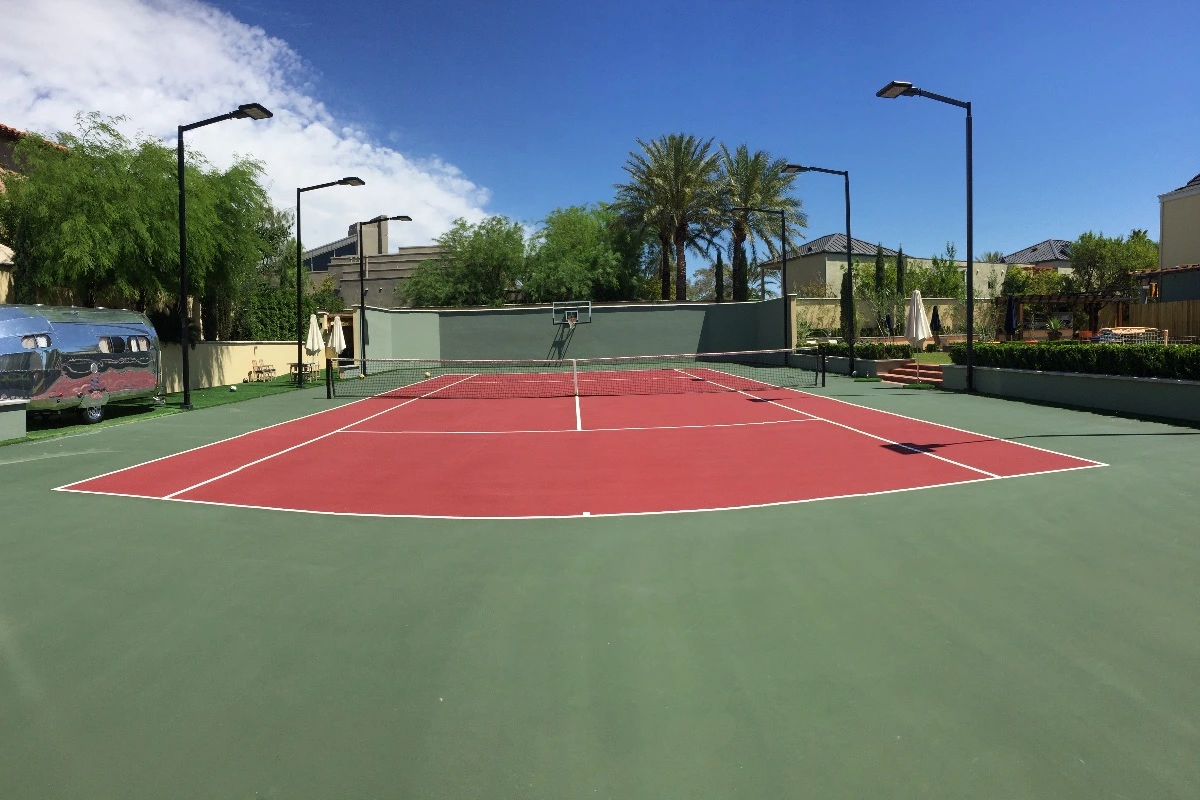
When a tennis court begins to fade, crack, or lose its playing quality, the solution is not always full replacement. In many cases, hiring professional resurfacing tennis court contractors is the most effective way to restore performance, safety, and appearance while avoiding the higher cost and disruption of rebuilding the entire court.
Professional resurfacing specialists focus on repairing and restoring athletic court systems so they can perform like new again. Whether you manage a residential backyard court, an HOA recreational facility, a school athletic complex, a sports club, or a training center, choosing the right contractor has a major impact on how long your court lasts and how well it performs.
A properly resurfaced court improves ball bounce consistency, traction, gameplay quality, and visual appearance while helping extend the life of the existing court structure.
Professional tennis court resurfacing contractors handle much more than simply repainting a worn court. Their work involves evaluating the structural condition of the surface, repairing damaged areas, restoring athletic coatings, and improving long-term durability.
The resurfacing process typically begins with a detailed court inspection. Contractors evaluate surface cracks, drainage conditions, coating wear, base stability, and signs of structural movement.
This inspection helps determine whether the court only needs localized repairs, full resurfacing, or more advanced restoration work. A proper evaluation is essential because surface problems are often connected to underlying drainage or foundation issues.
Experienced contractors understand how to identify the difference between cosmetic wear and structural damage.
One of the most important parts of resurfacing is repairing cracks and damaged areas. Professional tennis court repair contractors use specialized repair systems designed for outdoor athletic surfaces.
Common services include crack filling, surface leveling, patch repair systems, and structural stabilization. Flexible repair materials are often used because tennis courts naturally expand and contract outdoors.
Proper crack repair helps prevent moisture intrusion and slows the spread of future damage.
Professional resurfacing usually includes acrylic resurfacer layers, textured athletic coatings, color restoration systems, and new court striping.
Acrylic tennis court resurfacing is popular because acrylic systems provide reliable traction, consistent ball bounce, UV resistance, and long-term weather durability. These coatings are specifically designed for athletic performance and outdoor exposure.
Modern acrylic systems also allow for custom court colors, multi-sport layouts, and updated court aesthetics.
Some projects involve more than resurfacing alone. Full tennis court restoration services may also include net replacement, fence adjustments, lighting upgrades, drainage improvements, and multi-use court conversions.
For example, many older tennis courts are now being converted into dual-use tennis and pickleball courts to increase recreational functionality.
Outdoor courts constantly face environmental and structural stress. Over time, even high-quality athletic surfaces begin to deteriorate.
Outdoor courts are exposed to UV rays, heat expansion, color fading, and surface drying year-round. In areas like Arizona and Nevada, intense sunlight accelerates coating wear and surface aging.
Over time, this exposure weakens the acrylic system and reduces traction performance.
As courts age, acrylic coatings gradually wear down, surface texture becomes smoother, and ball response becomes inconsistent.
Older courts may also develop faded colors, visible patchiness, and reduced visual appeal. Professional resurfacing restores these performance characteristics while improving the overall appearance of the court.
Ground movement can lead to cracking, uneven surfaces, and water intrusion. Soil expansion, settling, and moisture changes create stress beneath the court surface.
Without maintenance, these structural issues can continue spreading and eventually require more expensive repairs.
Recognizing early warning signs helps prevent larger problems later.
Cracks are usually the earliest sign that resurfacing may be needed. Even small cracks can allow moisture into the surface system, eventually causing more extensive deterioration.
Professional repair is recommended before cracks begin spreading.
If ball behavior becomes inconsistent, the surface may no longer be level or properly textured. Uneven bounce is a common sign of surface wear or underlying damage.
Loss of traction reduces player safety and gameplay quality. Worn acrylic coatings may become smoother over time, increasing the risk of slipping during movement.
When a court looks dull, patchy, or heavily faded, resurfacing can dramatically improve its appearance while restoring athletic performance.
|
Service Type |
Best For |
Main Benefit |
Limitation |
|
Minor Court Repair |
Small cracks and isolated damage |
Lower cost and fast repair |
Does not restore full surface |
|
Full Court Resurfacing |
Worn or aging athletic surfaces |
Restores gameplay and appearance |
Existing base must remain stable |
|
Crack Repair + Resurfacing |
Courts with spreading surface damage |
Extends court lifespan significantly |
More involved than basic repairs |
|
Full Reconstruction |
Severe structural failure |
Completely new court system |
Highest cost and longest timeline |
|
Multi-Sport Conversion |
Older underused tennis courts |
Adds recreational flexibility |
Requires layout redesign |
Professional outdoor tennis court resurfacing follows a structured process to ensure durability and consistent gameplay performance.
Contractors first evaluate crack severity, surface wear, drainage issues, and overall base integrity.
This step determines the best resurfacing strategy and helps identify hidden structural concerns.
Preparation includes pressure washing, debris removal, cleaning the surface, and removing loose or deteriorated coatings.
Proper preparation is critical because resurfacing materials must bond correctly to the existing court surface.
Cracks are routed if necessary, filled using flexible repair compounds, and smoothed to create a more uniform surface.
Using flexible athletic repair systems helps reduce the chance of cracks reopening quickly.
Multiple acrylic layers are then applied to restore texture, color, traction, and gameplay consistency.
Professional resurfacing systems are designed to improve durability while delivering professional-style court performance.
The final stage includes regulation court striping, optional multi-sport markings, and protective finishing layers.
This gives the court a clean, refreshed appearance while improving visibility and playability.
Choosing the right contractor is one of the most important decisions in the resurfacing process.
Professional contractors should understand court physics, athletic surfacing systems, outdoor durability requirements, and sports-specific performance needs.
Tennis courts require specialized knowledge that differs from ordinary concrete or paving work.
The best contractors use high-quality UV-resistant coatings, flexible resurfacing compounds, and industry-grade athletic materials.
Premium systems generally last longer and perform better under heavy sun exposure and outdoor use.
Good contractors understand how water affects athletic courts. Proper drainage helps prevent standing water, surface failure, and premature cracking.
Drainage corrections are often a critical part of long-term court restoration.
Top contractors also offer custom court colors, backyard court designs, pickleball integration, and multi-sport conversion options.
This allows homeowners and facilities to modernize older courts while improving recreational value.
Low-cost bids often mean lower-quality materials, rushed preparation, or limited experience. Cheap resurfacing may fail much sooner than professionally installed systems.
Surface preparation is one of the most important parts of resurfacing. Poor prep work often leads to premature peeling, uneven coatings, and shorter court lifespan.
Tennis court resurfacing requires specialized expertise. Contractors who mainly handle general concrete work may not understand athletic surfacing requirements.
Reliable resurfacing contractors typically provide some form of workmanship or material warranty protection.
Professional resurfacing offers several important advantages:
For homeowners, HOAs, schools, and athletic facilities, resurfacing is often the most practical way to restore court functionality without full reconstruction.
Professional resurfacing typically includes crack repair, cleaning, surface preparation, acrylic resurfacer application, color coating systems, and new court striping.
The cost depends on crack severity, drainage issues, court size, coating systems, and whether repairs or full resurfacing are required.
Acrylic athletic coating systems are among the most popular because they provide durability, UV resistance, traction, and consistent gameplay performance.
The timing depends on climate, usage levels, maintenance, and coating quality. Courts exposed to heavy sun or high usage may require resurfacing more frequently.
Professional acrylic sports coatings are widely considered one of the best options for outdoor courts because they are designed specifically for athletic performance and long-term outdoor durability.
Please Provide Your Contact Information and Project Details