
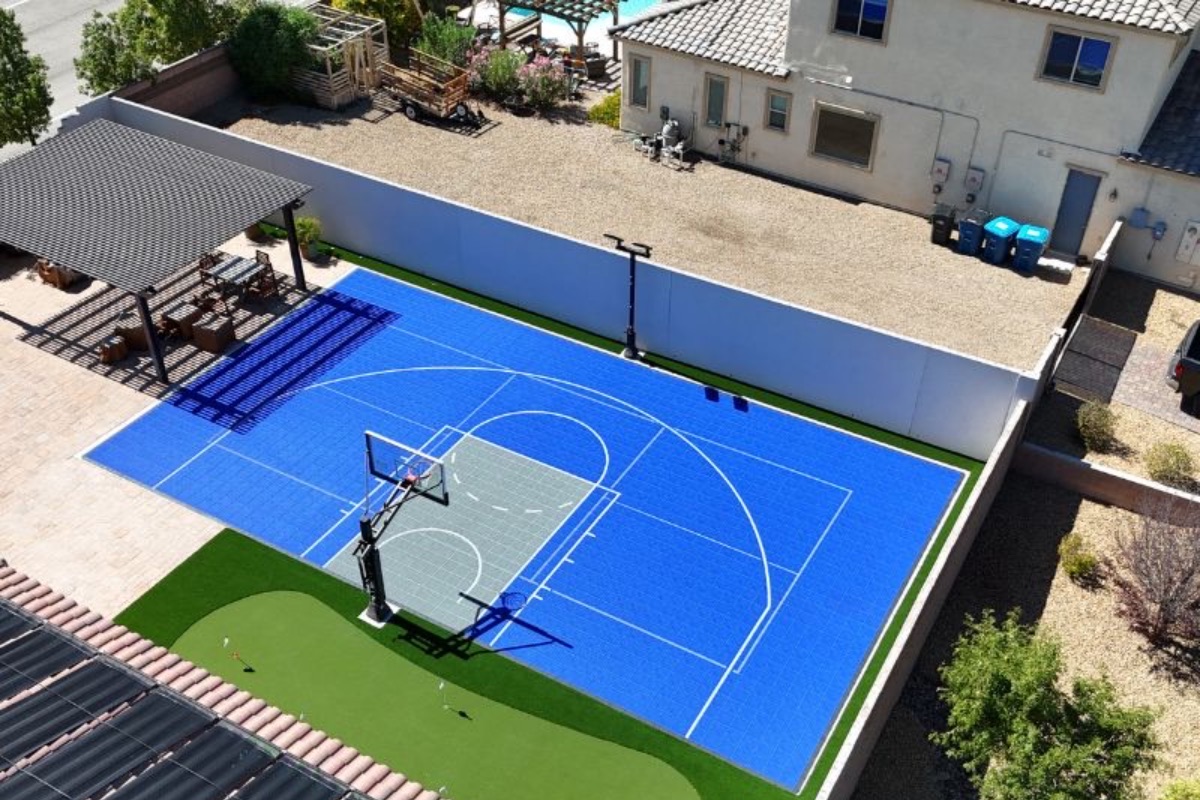
A small backyard does not mean you have to give up on having a basketball court. In fact, some of the best home sports spaces are created through clever planning, efficient layouts, and the right surface materials. With smart design, even a limited outdoor area can become a functional court for shooting practice, casual games, fitness, and family fun.
Today, more homeowners are exploring small backyard basketball court ideas because they want to maximize outdoor space without sacrificing style or playability. Whether you have room for a half-court setup, a corner shooting zone, or a multi-use recreational surface, a compact court can still deliver durability, performance, and long-term value.
The key is to choose a layout that fits your property, select the right flooring system, and incorporate practical features that make the court feel larger, safer, and easier to enjoy. A thoughtfully planned compact backyard basketball court can transform an underused yard into one of the most exciting and valuable spaces on your property.
When space is limited, the design has to work harder. The most effective small-court layouts focus on smart positioning, efficient use of dimensions, and features that support everyday recreational play.
A half court basketball backyard layout is one of the most popular options for homeowners with limited space. It provides enough room for shooting, dribbling, one-on-one games, and casual practice without requiring the footprint of a full-size court.
Features include:
A half-court design works especially well in rectangular yards where the hoop can be placed at one end with enough open area in front for movement. This layout is often the best balance between realism and space efficiency.
If your backyard is especially tight or has an irregular shape, a corner court may be the best solution. This design places the hoop in a corner section of the yard, allowing you to carve out a compact practice area without taking over the entire outdoor space.
Features include:
This option is excellent for homeowners who want a basketball zone without a full court feel. It is simple, functional, and surprisingly effective for practice.
One of the most practical driveway basketball court ideas is to convert part or all of an existing driveway into a game area. If you already have a level paved surface, you may not need major construction at all.
Features include:
This approach is a smart choice for homeowners who want a playable court without committing a large section of the yard to a permanent sports installation.
A small backyard court becomes even more valuable when it supports multiple sports. A backyard game court design that combines basketball with another activity like pickleball, volleyball, or general play can maximize every square foot.
Features include:
A multi-use court is especially helpful for families with children of different ages and interests. One compact space can support a wide range of activities without needing multiple separate outdoor features.
The surface you choose affects everything from comfort and durability to maintenance and overall appearance. For small courts, flooring choice matters even more because the space needs to perform efficiently.
Acrylic-coated concrete is one of the most common surfaces for outdoor residential courts.
Benefits include:
This is a solid choice for homeowners who want a permanent court with a more traditional basketball feel. It works especially well when the base already exists or when building a new court from the ground up.
Modular backyard court flooring has become increasingly popular for compact residential courts because it offers comfort, flexibility, and easier installation.
Benefits include:
For many homeowners, modular tiles are the ideal solution for a compact backyard basketball court because they are available in different colors, can be installed over existing hard surfaces, and often feel more forgiving than bare concrete.
For a more budget-conscious project, a painted concrete court may be enough to create a usable and attractive game area.
Benefits include:
The tradeoff is that painted surfaces may require more maintenance over time and generally do not offer the same comfort level as modular tile systems.
|
Court Idea |
Best For |
Main Advantage |
Consideration |
|
Half-Court Compact Design |
Small to medium backyards |
Most realistic play feel |
Needs more room than corner setups |
|
Corner Basketball Court |
Very tight spaces |
Minimal footprint |
Limited movement area |
|
Driveway Basketball Conversion |
Existing paved surfaces |
Budget-friendly |
Shared use with vehicles |
|
Multi-Use Backyard Court |
Families and versatile recreation |
Supports multiple activities |
More complex layout planning |
A limited footprint requires smart design choices. The right details can make a small court feel bigger, safer, and more useful.
If floor space is limited, use the vertical dimension wisely. Wall-mounted hoops or adjustable hoop systems can save room while keeping the playing area open.
This approach is especially helpful in narrow yards or driveway installations where every foot matters.
Lighter shades can make a compact court feel more open and visually spacious. They also tend to stay a bit cooler under direct sun than darker colors.
Good color strategies include:
A smart color palette helps the court blend well with landscaping while enhancing visibility.
Even a small court benefits from clear edges. Low-profile fencing, boundary markers, or short retaining walls can help keep balls contained without making the area feel boxed in.
This improves both safety and convenience.
Whenever possible, orient the court so players are not forced to shoot directly into harsh afternoon sunlight. Proper placement can make a major difference in comfort and usability.
If you are building a multi-use area, use color-coded striping so each sport remains easy to follow. Thoughtful marking makes the court more functional without creating visual confusion.
A compact court may take up less room, but it still delivers major value.
A well-designed small court makes the most of the space you have. Instead of leaving a side yard, patio extension, or unused backyard section underutilized, you can turn it into an active recreational zone.
One of the biggest advantages of having a home court is convenience. It becomes easy to step outside for a quick game, a few practice shots, or an active break during the day.
A smart backyard game court design adds appeal for families and can make your home more distinctive. It is both a lifestyle upgrade and a practical property enhancement.
Smaller courts require less cleaning, less material, and often lower repair costs. That makes them more manageable over the long term.
Many small court projects begin simply and evolve later. You might start with a hoop and painted surface, then add modular backyard court flooring, striping, lighting, or fencing in future phases.
A compact court can also be easier on the budget than a full-size installation.
Ways to keep costs manageable include:
This phased approach makes it possible to create a great court without doing everything at once.
A few well-chosen features can make a big difference in how enjoyable the court feels.
Popular additions include:
Because the court footprint is smaller, these upgrades often feel more affordable and impactful.
The cheapest option is usually to install a hoop over an existing driveway or concrete slab and add simple striping for a basic practice area.
A painted concrete surface or driveway conversion is generally the most affordable option, especially if the hard surface already exists.
A good size depends on your space, but many homeowners choose a half-court setup or a smaller shooting area that fits comfortably within the yard while still allowing movement.
It depends on your goals. Acrylic-coated concrete offers durability, while modular backyard court flooring offers added comfort and easier upgrades.
You can use asphalt or install modular tiles over a stable hard base. Many homeowners prefer tile systems for comfort and flexibility.
The best small backyard basketball court ideas prove that you do not need a huge yard to create a fun, durable, and useful outdoor sports space. With the right layout, materials, and finishing details, even a limited area can become a high-performing compact backyard basketball court for family recreation, fitness, and everyday enjoyment.
Whether you choose a half court basketball backyard setup, explore creative driveway basketball court ideas, or build a flexible backyard game court design with modular backyard court flooring, thoughtful planning makes all the difference. A small court may take up less room, but when designed well, it can deliver big value.
Please Provide Your Contact Information and Project Details