
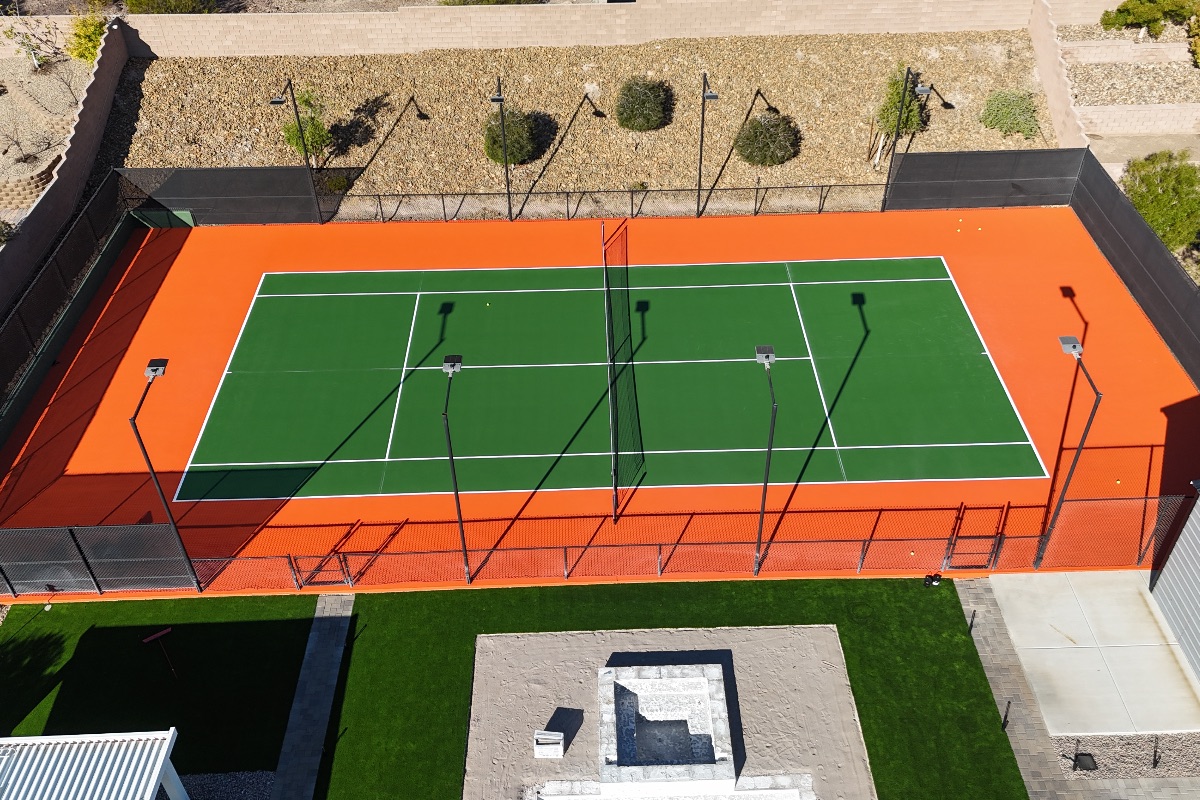
Outdoor courts in Arcadia take a beating. Between intense Arizona sun, temperature swings, dust, and regular play, even a well-built court can start to show its age. Cracks form, colors fade, water begins to pool, and the once-smooth surface starts affecting bounce, traction, and overall playability. That is where tennis court repair Arcadia AZ services become essential.
A worn court does not always need to be torn out and rebuilt from scratch. In many cases, targeted repairs and professional resurfacing can restore appearance, improve safety, and extend the life of the court for years. Whether you own a private backyard court, manage a community amenity, or maintain a multi-use recreational space, resurfacing is often the most practical path to restoring performance without the cost of full reconstruction.
Professional tennis court resurfacing Arcadia Arizona property owners choose is designed to correct visible wear while protecting the court from future deterioration. From crack filling and leveling to acrylic coatings and line striping, the process brings a court back to life in a way that looks better, plays better, and lasts longer.
Every court tells you when it needs attention. Sometimes the signs are subtle, like a slight loss of traction or faded lines. Other times, the damage is impossible to ignore. Recognizing these issues early can help you avoid more extensive structural problems later.
Cracking is one of the most common reasons homeowners and property managers call for cracked tennis court repair. In Arcadia, heat expansion, base movement, and age all contribute to surface separation. What begins as a thin hairline crack can gradually widen and create bigger structural concerns.
Problems caused by surface cracks include:
Small cracks can often be repaired before resurfacing, but widespread crack patterns may indicate deeper base issues that require more detailed evaluation.
Strong UV exposure is relentless in Arizona. Over time, that sunlight breaks down coatings, dulls color, and reduces the surface texture that players rely on for traction. A court may still be technically usable, but it will not perform or look the way it should.
Signs of a worn surface include:
This is one of the main reasons property owners invest in acrylic court resurfacing. Fresh coatings restore the court’s appearance while also renewing the texture and consistency that make the game more enjoyable.
Even in a dry climate, drainage matters. When a court does not drain properly, water can collect in low spots after rain or washing. Those puddles do more than delay play. They slowly degrade the surface and may signal leveling issues that affect long-term durability.
Drainage-related problems include:
A quality outdoor game court restoration project should identify and address drainage concerns before new coatings are applied.
Resurfacing is not just about making the court look fresh. A properly executed project follows a step-by-step process that repairs existing issues, improves surface consistency, and protects the court moving forward.
The first step is always a professional assessment. Contractors inspect the surface, measure the extent of visible wear, and determine whether the court needs localized repair, full resurfacing, or more extensive base correction.
During this stage, they typically evaluate:
This evaluation helps determine the right scope of work. A court with minor surface wear may only need new coatings, while a court with structural cracking may need a more involved repair plan.
Before any resurfacing products are applied, the court must be repaired and prepared properly. Skipping or rushing this phase is a recipe for short-term results and long-term frustration.
Typical preparation steps include:
This is where backyard court repair becomes especially important. Residential courts often go longer between maintenance cycles, so surface prep can make a major difference in how long the new finish lasts.
Once repairs are complete, contractors apply resurfacing systems designed for athletic courts. Acrylic court resurfacing is one of the most popular solutions because it offers durability, attractive color options, and a consistent playing finish.
Benefits of resurfacing application include:
Acrylic coatings also allow for custom color combinations that can modernize the look of the court while maintaining performance.
After resurfacing, the final step is applying fresh court lines. Precise striping is essential not only for appearance but also for accurate gameplay. Clean, sharp lines instantly make the court feel newer and more professional.
This phase may include:
For many properties in Arcadia, resurfacing also creates an opportunity to turn an aging tennis court into a more flexible multi-use court.
|
Restoration Option |
Best For |
Main Benefit |
Consideration |
|
Crack Repair Only |
Minor isolated damage |
Stops small issues from spreading |
Does not fully refresh appearance |
|
Acrylic Court Resurfacing |
Faded, worn, aging courts |
Restores playability and appearance |
Requires proper prep for best results |
|
Patch and Level Repair |
Courts with low spots or uneven areas |
Improves drainage and safer play |
May need resurfacing afterward |
|
Full Outdoor Game Court Restoration |
Courts with multiple visible issues |
Comprehensive performance renewal |
Higher upfront investment |
|
Multi-Use Court Conversion |
Underused residential or community courts |
Adds pickleball and recreation flexibility |
Requires new striping layout |
Resurfacing is one of those improvements that pays off in multiple ways at once. It improves how the court looks, how it plays, and how long it lasts.
A smooth, uniform surface allows for more reliable bounce and movement. Players notice the difference almost immediately. Instead of adjusting to dead spots, rough patches, or unpredictable rebound, they can enjoy a court that plays the way it was meant to.
Cracks, uneven areas, and worn texture increase the risk of slips and trips. Repairing those issues makes the court safer for everyone, from casual players to more competitive users.
A timely resurfacing project can postpone the need for major reconstruction. That alone makes it a smart investment. Rather than letting damage compound year after year, resurfacing gives the court a new lease on life.
Fresh colors and crisp striping dramatically improve the court’s curb appeal. A resurfaced court looks cleaner, newer, and better maintained, which matters for both private homes and shared recreational properties.
Many resurfacing projects in Arcadia now include extra striping for pickleball or practice zones. That means one improved court can support more activities without expanding your footprint.
A resurfaced court can last for years, but only if it is maintained properly. Fortunately, maintenance is not complicated. The key is consistency.
Dust, leaves, and debris can wear down the coating over time. Regular sweeping or blowing helps preserve both appearance and texture.
If water pools after rain or washing, remove it promptly. Standing water can shorten the life of coatings and reveal underlying drainage issues.
Take time each year to look for new cracks, surface wear, or fading. Catching small issues early is far more affordable than waiting until they spread.
Depending on usage levels and weather exposure, resurfacing may need to be refreshed every few years. Courts with heavy play may require attention sooner than lightly used private courts.
Overhanging trees, shrubs, and loose ground cover can lead to excess debris buildup. Keeping landscaping tidy helps reduce surface contamination and cleanup needs.
Resurfacing a tennis court means repairing minor damage, preparing the existing surface, and applying new coating systems to restore appearance, traction, and playability. It does not usually involve tearing out and rebuilding the full court structure.
The process generally includes inspection, crack repair, surface cleaning, leveling where needed, applying acrylic resurfacing products, and repainting game lines. Professional contractors handle the work to ensure proper adhesion, performance, and finish quality.
The cost depends on the court’s condition, size, repair needs, and whether you are doing simple resurfacing or a more complete outdoor game court restoration. Minor repairs cost less, while courts with structural issues or custom multi-use striping cost more.
Most resurfacing projects can be completed in a few days, though the timeline depends on the extent of repair work, curing time, and weather conditions. Courts with major crack or drainage issues may take longer.
Many courts benefit from resurfacing every 4 to 8 years, depending on climate, usage, and maintenance. In hot, sunny environments like Arcadia, courts may need attention sooner if the surface is heavily exposed and frequently used.
A tired court does not have to stay that way. Professional tennis court repair Arcadia AZ services can correct cracks, improve drainage, renew color, and bring back the smooth, reliable performance players expect. Whether you need targeted backyard court repair, full tennis court resurfacing Arcadia Arizona homeowners trust, or a more complete outdoor game court restoration, resurfacing is often the most practical way to protect your investment.
Instead of letting surface damage spread and shorten the life of the court, timely repairs and acrylic court resurfacing help restore both function and appearance. The result is a court that feels better to play on, looks far more inviting, and continues serving your property for years to come.
Please Provide Your Contact Information and Project Details