
Sport Court products only available in Nevada.
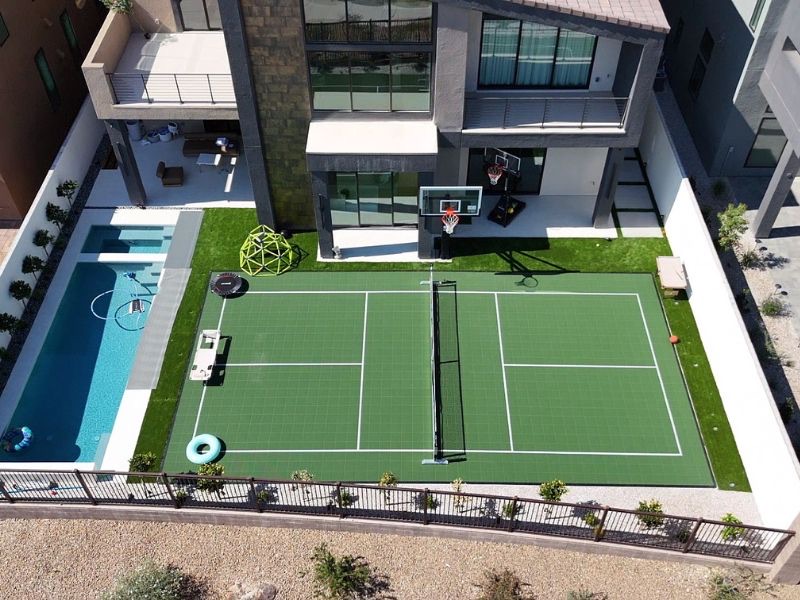
A volleyball court backyard setup is more than just a recreational upgrade—it’s a statement piece that transforms how you use your outdoor space. From casual weekend games to organized family tournaments and social gatherings, a professionally built backyard volleyball court creates a dedicated area for movement, competition, and connection.
Legendary Sports Construction specializes in custom home volleyball court construction designed for long-term durability, safety, and performance. Every court is engineered to handle intense sun exposure, temperature swings, and regular use, making it an ideal solution for homeowners in Arizona and Nevada who want reliable outdoor recreation without constant upkeep.
Unlike temporary or DIY installations, professional backyard volleyball court installation ensures correct dimensions, proper drainage, and materials chosen specifically for your environment and lifestyle.
A custom backyard volleyball court turns underutilized yard space into a personal recreation destination. It encourages physical activity, supports social interaction, and adds structure to outdoor entertainment in a way few other home features can.
Volleyball is a low-barrier sport that appeals to all ages, making it ideal for families with children, teens, and adults alike. Whether your goal is fitness, fun, or hosting guests, a volleyball court backyard layout can be tailored to your exact needs. Some homeowners prefer a relaxed sand volleyball court backyard for barefoot play, while others want a more structured layout that supports skill development and competitive matches.
Customization ensures your court works with your property—not against it. From orientation and spacing to surface selection and net systems, each design choice impacts playability, comfort, and longevity.
The surface is one of the most important decisions in any backyard volleyball court installation. It determines how the court feels underfoot, how much maintenance it requires, and how it performs over time.
Sand volleyball courts are the most popular option for residential installations. They provide excellent shock absorption, reduce joint strain, and create a classic beach-style playing experience. Properly selected and installed sand drains efficiently and resists compaction, ensuring consistent play.
Grass volleyball courts offer a natural appearance and blend seamlessly into landscaped yards. They are best suited for casual play and recreational use but require ongoing maintenance, including watering, mowing, and surface leveling.
Synthetic or modular surfaces deliver consistent traction and predictable ball response. These systems are ideal for homeowners who want minimal maintenance and a clean, modern look. They are also highly durable and perform well in extreme heat.
Each surface option can be customized to match your usage frequency, aesthetic preferences, and maintenance expectations.
A regulation volleyball court measures 60 feet long by 30 feet wide, but residential volleyball court builders often adjust layouts to fit backyard constraints. Custom sizing allows homeowners to enjoy a functional court even on smaller or irregularly shaped properties.
Equally important is the space surrounding the court. Adequate clearance on all sides allows players to move safely, chase balls, and avoid obstacles. Proper spacing also creates room for seating, shade structures, or landscaping features that enhance the overall experience.
Orientation matters as well. Aligning the court to minimize sun glare during peak play hours significantly improves comfort and visibility, especially in desert environments.
A professionally installed net system is essential for consistent, safe play. Net height must be accurate, tension properly maintained, and posts securely anchored to withstand repeated use.
Boundary markings clearly define the playing area and ensure fair gameplay. These can be installed using recessed lines, contrasting materials, or removable options depending on the surface type and desired flexibility.
Many homeowners opt for removable or adjustable net systems, allowing the court to serve multiple purposes when volleyball isn’t being played.
| Surface Type | Play Style | Maintenance Level | Durability | Best For |
| Sand | Traditional, impact-reducing | Moderate | High | Family play, beach-style volleyball |
| Grass | Casual, natural | Moderate–High | Medium | Informal recreation |
| Synthetic / Modular | Competitive, consistent | Low | Very High | Low-maintenance, year-round use |
This comparison highlights how surface selection directly impacts maintenance, longevity, and play experience.
Investing in home volleyball court construction offers benefits that extend well beyond recreation.
A backyard volleyball court encourages regular outdoor activity, helping families stay active without leaving home. It creates a natural gathering point for friends and guests, making entertaining effortless and engaging.
Custom layouts ensure your court fits your yard perfectly, while professional construction ensures durability in harsh desert conditions. Over time, a volleyball court backyard feature can enhance property appeal by adding a unique, functional amenity that sets your home apart.
For many homeowners, the court becomes a centerpiece of outdoor living—used as often for social connection as for sport.
Every project begins with a detailed consultation. We evaluate your yard size, layout, soil conditions, drainage, and intended use. This allows us to design a custom backyard volleyball court that fits seamlessly into your property while meeting performance and safety standards.
Design considerations include surface selection, court orientation, spacing, and optional features such as lighting or seating areas.
Proper site preparation is critical to long-term success. This phase includes grading, drainage planning, and base construction to ensure a stable, level foundation.
Poor preparation can lead to uneven surfaces, standing water, and premature wear. Professional preparation eliminates these issues and sets the stage for a court that performs consistently for years.
Once the site is prepared, the selected surface is installed using proven techniques tailored to the material type. Sand is carefully layered and leveled, grass is established with proper soil support, and synthetic systems are installed over precision-built bases.
This step ensures uniform performance, player safety, and visual consistency.
Net systems are installed at regulation height with secure anchoring to maintain proper tension. Boundary markings are added with accuracy to ensure clear visibility and reliable gameplay.
Optional upgrades allow for removable components or multi-use configurations that add flexibility to your outdoor space.
Before project completion, every aspect of the court is inspected. Surface consistency, alignment, net tension, and overall readiness are verified to ensure the court is safe, functional, and ready for play.
A standard volleyball court is 60 feet by 30 feet. In backyard installations, dimensions may be adjusted slightly to fit available space, but maintaining proportional sizing and safety clearance is essential for enjoyable play.
The best surface depends on how the court will be used. Sand is ideal for traditional play and impact reduction, synthetic surfaces are best for low maintenance and consistency, and grass works well for casual recreation with regular upkeep.
Creating a volleyball court involves proper site evaluation, grading, drainage, surface installation, and net setup. Professional backyard volleyball court installation ensures safety, durability, and accurate dimensions that DIY solutions often lack.
In addition to the court itself, several feet of clearance on all sides is recommended. This allows for safe movement, ball retrieval, and spectator areas, improving both safety and enjoyment.
Washed, angular sand with a consistent grain size is typically used. This type of sand drains well, resists compaction, and provides stable footing while remaining comfortable for barefoot play.
A custom backyard volleyball court is an investment in health, entertainment, and outdoor living. With thoughtful design, durable materials, and professional construction, your court becomes a long-term feature that enhances how you use your property.
Whether you envision a relaxed sand volleyball court backyard or a structured recreational setup, working with experienced residential volleyball court builders ensures your project is built correctly from the ground up—delivering performance, safety, and enjoyment for years to come.
Please Provide Your Contact Information and Project Details