
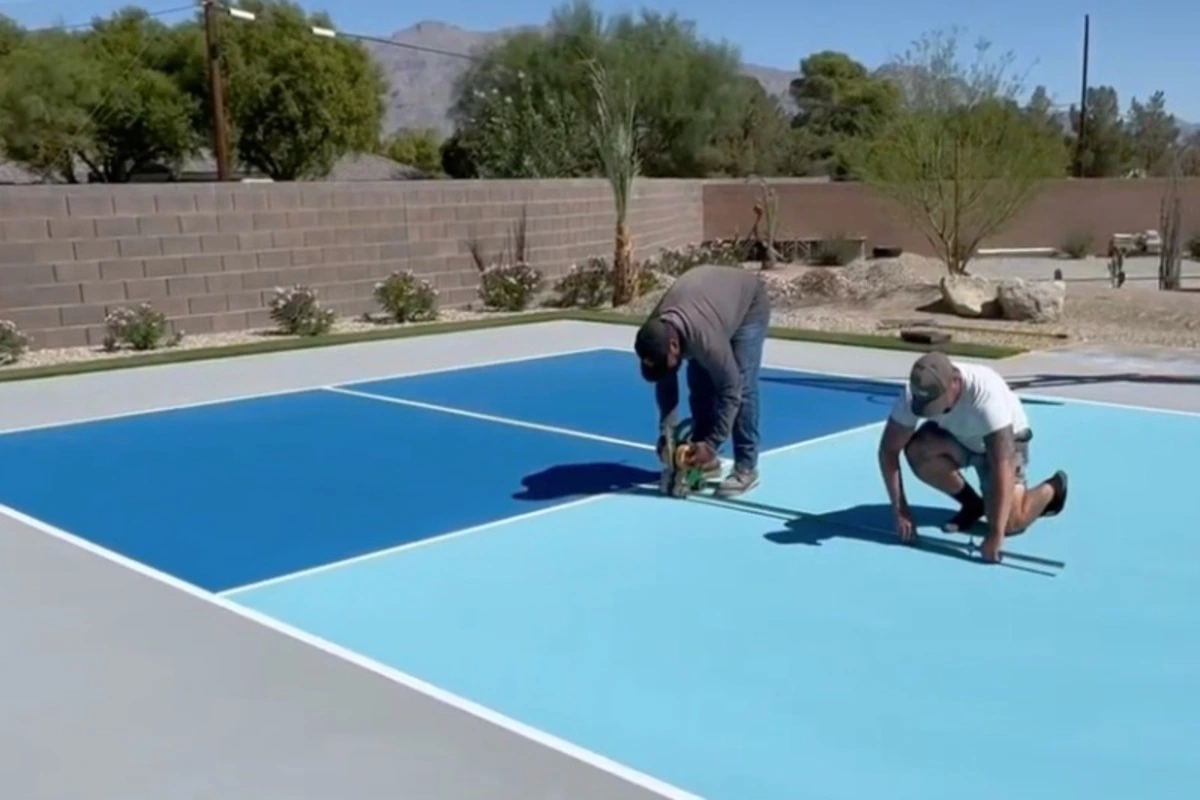
A volleyball court experiences constant exposure to foot traffic, athletic activity, weather conditions, and UV rays. Over time, these factors can cause surface wear, cracks, fading, and reduced playability. That’s where volleyball court resurfacing becomes essential.
Resurfacing restores the appearance, safety, and performance of an existing court without the cost of complete reconstruction. Whether you manage a school court, community facility, or recreational complex, athletic court resurfacing can significantly extend the life of your investment.
For many facility owners, resurfacing is not just maintenance—it is a cost-effective strategy to preserve play quality and prevent long-term structural damage.
Volleyball court resurfacing involves repairing and renewing the playing surface while preserving the existing court foundation when possible.
The process often includes:
A professional volleyball court resurfacing contractor ensures each layer is applied correctly to restore both performance and durability.
A deteriorating court can negatively affect:
Regular volleyball court restoration helps maintain consistent play conditions and reduces the risk of more expensive structural repairs in the future.
Cracks are one of the most common warning signs. If ignored, they can expand and lead to deeper structural damage requiring major repair.
UV exposure gradually causes:
This is especially common in outdoor volleyball court resurfacing projects exposed to constant sunlight.
Heavy use may result in:
These issues directly impact game quality and player safety.
Standing water often indicates:
Proper resurfacing can correct leveling and improve water flow.
Professional volleyball court repair can address:
Early intervention prevents costly reconstruction later.
Resurfacing restores:
This is critical for maintaining a safe and competitive surface.
A new surface dramatically improves:
A refreshed court enhances both user experience and facility reputation.
|
Condition |
Before Resurfacing |
After Resurfacing |
|
Surface Texture |
Worn, uneven |
Smooth, consistent |
|
Traction |
Reduced |
Restored grip |
|
Appearance |
Faded, dull |
Bright, professional |
|
Safety |
Higher risk |
Improved safety |
|
Performance |
Inconsistent bounce/movement |
Reliable playability |
Contractors evaluate:
This helps determine the scope of volleyball court resurfacing required.
Preparation may include:
Proper preparation ensures coatings bond correctly.
Repair methods stabilize:
This step is essential in volleyball court crack repair to prevent future spreading.
New coating layers provide:
This is a core part of modern athletic court resurfacing systems.
Fresh lines are applied for:
Accurate striping ensures proper gameplay standards.
Acrylic coatings are widely used because they offer:
They are the most common choice for volleyball court resurfacing contractor projects.
These systems provide:
Ideal for high-use recreational courts.
Some resurfacing projects upgrade courts to support multiple sports, improving facility versatility and long-term value.
Courts with heavy traffic require resurfacing more frequently than lightly used courts. Regular inspection helps determine timing.
Outdoor courts exposed to:
will typically require more frequent volleyball court restoration.
Routine cleaning and minor repairs can delay full resurfacing and reduce long-term costs.
Small cracks often expand into major structural problems over time.
Reduced traction or uneven play surfaces increase safety risks.
Water problems can accelerate deterioration and shorten the lifespan of the court.
Athletic courts require specialized materials and techniques that general contractors may not understand.
Resurfacing helps create:
A restored surface looks newer, cleaner, and more professional.
Players benefit from:
Proper volleyball court resurfacing protects the base structure and delays costly reconstruction.
Legendary Sports Construction specializes in volleyball court restoration, improving safety, appearance, and performance.
Only proven surfacing materials are used to ensure long-term durability and reliable performance.
Every project is tailored to:
This ensures the right solution for every facility.
Acrylic surfaces are widely used for outdoor courts due to their durability and traction.
Wood or synthetic sports flooring is commonly used indoors for performance and shock absorption.
Acrylic systems are the most popular choice for outdoor athletic courts.
Acrylic or cushioned acrylic systems are preferred for consistent playability and durability.
It depends on use, but acrylic, hardwood, and synthetic sports flooring are the most common options.
Volleyball court resurfacing is one of the most effective ways to restore performance, safety, and appearance without the cost of full reconstruction. Whether dealing with cracks, fading, or surface wear, timely volleyball court repair ensures long-term usability and reduced maintenance costs.
Working with an experienced volleyball court resurfacing contractor guarantees proper materials, correct installation methods, and lasting results. A professionally restored court not only improves gameplay but also extends the life and value of the entire facility.
Please Provide Your Contact Information and Project Details