
Standard Basketball Court Size: Everything You Need to Know
 Websitness Team
on
December 29, 2025
Websitness Team
on
December 29, 2025
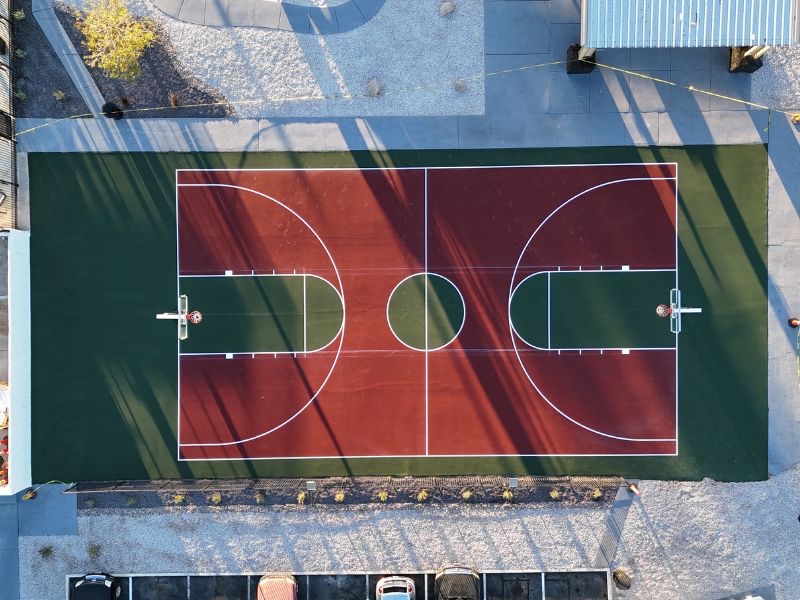
Standard Basketball Court Size: Everything You Need to Know
Understanding the standard basketball court size is essential when designing a new court, renovating an existing one, or planning a backyard recreational space. Whether you want a residential basketball court setup, a full professional layout, or a compact half-court for practice, correct dimensions ensure safety, comfort, and optimal playability. For court planning in places like Arizona and Nevada, where outdoor sports thrive year-round, proper sizing also supports long-term functionality, compliance with local requirements, and enjoyable gameplay for athletes of all levels.
A well-planned court means the difference between casual entertainment and high-performance use. From driveway half-courts to large, competitive facilities, having a clear understanding of measurements and layout is the first step toward successful basketball court planning Arizona and Nevada residents can rely on.
Regulation Dimensions for Basketball Courts
Basketball has a long-established set of measurement standards that help maintain fairness, consistency, and spacing. These guidelines come from athletic associations that govern professional and scholastic play.
Here is what defines a professional basketball court layout and other commonly used court configurations:
Full-Size Court (Professional/High School)
- Length: 84 feet
- Width: 50 feet
- Used for high school competition and many recreational facilities
- Ensures proper spacing for team movement and running plays
NBA/NCAA Court (Elite Competition)
- Length: 94 feet
- Width: 50 feet
- Common for NCAA universities, NBA arenas, and training facilities
- Offers maximum running distance and spacing for advanced competitive play
Half-Court / Residential Court
- Length: 47–50 feet
- Width: 42–50 feet (varies based on available space)
- Ideal for backyards, driveways, and small community parks
- Still enables shooting, dribbling, and practice for all ages
Key Markings & Basket Height
Every court, regardless of size, must include:
- Free Throw Line:
15 feet from the backboard to the foul line - Three-Point Line:
- NBA: 23.75 feet (22 feet in corners)
- High School: 19.75 feet
- Basket Height:
10 feet from the court surface to the rim
These details are essential whether building a backyard basketball court dimensions project or outfitting a professional training space.
Factors to Consider When Planning Court Size
Determining the best layout requires careful evaluation of both the property and the court’s intended use. Here are the key planning elements to ensure your court accommodates every movement:
Available Space
- Most homeowners cannot fit a full 94’ court
- Half-court configurations can be customized to fit limited spaces
- Outdoor fencing and play boundaries may require additional width
Intended Use
- Full courts support competitive games and team practices
- Half courts focus on shooting drills, 1-on-1, and family recreation
Surface Type
Choosing the right foundation influences safety and longevity:
- Concrete — most durable and ideal for professional installations
- Asphalt — cost-effective for community play
- Modular sports tiles — cushioned, lower-impact option for backyard basketball court setups
Safety Zone / Buffer Area
Plan for 3–10 feet of clear space around the perimeter for:
- Player run-off protection
- Audience seating or viewing areas
- Equipment clearance and fencing
Customization & Multi-Court Configurations
Many homeowners combine basketball markings with:
- Pickleball lines
- Volleyball layouts
- Multi-sport adjustable hoops
The more versatile your design, the more value and long-term enjoyment it brings.
Comparison Table – Court Sizes
| Court Type | Length | Width | Best Use | Space Needed (with buffer) |
| Full NBA/NCAA Court | 94 ft | 50 ft | Professional-level play | 110 ft x 60 ft |
| High School Full Court | 84 ft | 50 ft | Competitive high school + community | 100 ft x 60 ft |
| Half-Court – Standard | 47 ft | 50 ft | Residential or practice court | 60 ft x 60 ft |
| Compact Backyard Court | 30–45 ft | 30–45 ft | Small residential spaces | Depends on layout |
This quick-reference chart helps property owners evaluate what fits best before moving into construction.
Benefits of Using Standard Court Dimensions
Working with regulation measurements delivers several performance and usability advantages:
- Ensures safe and consistent gameplay
Players learn the proper spacing crucial to competitive play - Meets recreational or competitive standards
Courts can host community events or league games - Optimizes spacing for players and accessories
Perfect alignment with hoops, backboards, and boundary areas - Makes installation and maintenance easier for professionals
Standardized templates reduce measurement errors - Supports future upgrades
Resurfacing, repainting, and equipment additions remain compatible
For those planning residential basketball court setup, maintaining at least scaled regulation proportions creates a reliable training environment.
Frequently Asked Questions
What is the standard size of a basketball court?
A professional high school court is 84 ft x 50 ft, while NBA/NCAA courts measure 94 ft x 50 ft.
Is 20 meters the length of a basketball court?
No — 20 meters is only about 65.6 feet, significantly shorter than any full-size regulation court. It may work only for compact youth play or driveway setups.
Is 30×30 big enough for a basketball court?
A 30×30 ft space supports basic shooting practice but is too small for true half-court dimensions. It may work with a wall-mounted hoop or reduced line markings.
What’s the best size for a basketball court?
For most residential properties:
- A half-court (47–50 ft by 42–50 ft) is ideal
- It offers high functionality without overwhelming the yard
Can you DIY a basketball court?
While possible, it is not recommended.
A DIY build may overlook:
- Proper leveling and grading
- Court drainage requirements
- Surface durability
- Correct line measurements
Hiring professionals ensures accurate court dimension guidelines, long-lasting construction, and safety compliance.
Whether planning a luxurious recreational court for a family or designing a fully functional community sports facility, accurate sizing is the key foundation. Understanding the standard basketball court size protects both gameplay quality and player well-being.
Residents of Arizona and Nevada — known for their love of outdoor athletics — can gain long-term value by prioritizing correct measurements from the very start. With proper basketball court planning Arizona, flexible backyard basketball court dimensions, and a professional basketball court layout, you’ll enjoy a versatile, safe, and durable court built to withstand active play for years to come.
If you’re ready to take the next step, expert court builders in the region can help evaluate your property, discuss design options, and guide you through installation or upgrades. Proper planning leads to extraordinary performance — every basket, every bounce, every game.