
Backyard Basketball Court Dimensions: Planning the Perfect Court
 Websitness Team
on
January 8, 2026
Websitness Team
on
January 8, 2026
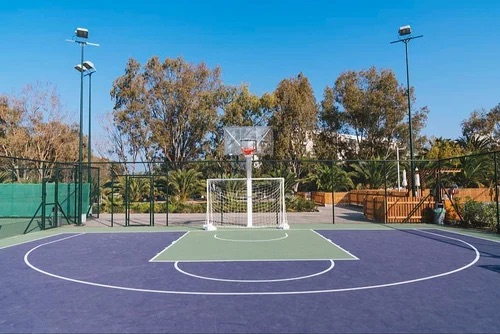
Backyard Basketball Court Dimensions: Planning the Perfect Court
Designing a home basketball court is an exciting upgrade for any property, especially in year-round warm climates like Arizona and Nevada. However, the key to a successful installation lies in choosing the correct backyard basketball court dimensions. Whether you want a regulation-style play area or a compact driveway practice zone, proper sizing ensures safety, ideal ball bounce, and an enjoyable playing experience for athletes of all ages.
Legendary Sports Construction specializes in residential basketball court planning, helping homeowners optimize their available space while staying true to performance standards. With careful measurement and expert guidance, your backyard can transform into a high-quality basketball environment that fits the way you and your family love to play.
Standard Dimensions for Backyard Basketball Courts
Basketball courts come in multiple size configurations depending on space, purpose, and budget. Below are the most common measurements used for home court installations.
Half-Court Dimensions
Half-courts are the most popular design for residential properties. They provide ample room for shooting practice, dribbling, one-on-one matchups, and driveway games.
Recommended sizing:
- Length: 42–50 feet
- Width: 47–50 feet
This layout includes enough space for free-throw practice, perimeter shots, and realistic gameplay flow.
Full-Court Backyard Basketball Dimensions
If the property supports a larger build, a full-court layout allows for advanced skill development, competitive games, and full-speed conditioning.
Standard full court:
- Length: 84 feet
- Width: 50 feet
This matches high-school regulation size and is ideal for serious training or private athletic development.
Hoop Height
- Standard height: 10 feet
- Adjustable hoops allow young players to learn proper mechanics and build confidence through each stage of growth.
Safety Zones
To prevent accidents and obstructions:
- Minimum clearance: 3–5 feet around all edges
- Extra space also allows room for seating, accessory storage, or landscaping
This buffer supports fluid court movement and minimizes the risk of injuries from colliding with walls or boundaries.
Factors to Consider When Planning Court Dimensions
Not every backyard can hold a regulation-sized build — and that’s perfectly okay. The goal of home basketball court layout planning is to maximize the fun and functionality of the area you have available.
Here’s what to consider:
Available Space
Measure the full usable backyard area — including clearances for fencing, trees, electrical utilities, and patio structures. The court must fit the yard comfortably rather than dominate or restrict it.
Intended Use
Ask:
Are you planning for casual play or competitive training?
- Half-court: great for youth players, family recreation, and general fitness
- Full-court backyard basketball: ideal for advanced athletes and more intense drills
The use-case guides design decisions and prevents wasted space.
Surface Type
Your chosen court surfacing affects foundational needs:
- Concrete = longest lifespan and best ball response
- Asphalt = budget-friendly but needs more maintenance
- Modular tiles = cushioned and visually customizable
Material selection may alter the required footprint slightly since edging systems differ.
Multi-Use Options
Many families love backyard sports and game court Arizona configurations that include:
- Pickleball lines
- Volleyball setups
- Shooting cages
- Multi-sport markings
Dual-use and triple-use courts ensure every inch of the surface is enjoyed.
Hoop Type & Placement
Different hoop systems require different spacing:
- In-ground systems need secure concrete footing and overhang clearance
- Portable hoops allow relocation but may interrupt baseline play
- Wall-mounted hoops conserve space in compact layouts
Placement determines court orientation, safety margins, and sight lines.
Comparison Table – Backyard Court Sizes
| Court Type | Dimensions (Length × Width) | Best For | Space Needed (incl. safety zone) |
| Compact Driveway Practice | 30–35 ft × 25–30 ft | Small yards, shooting drills | 45 ft × 40 ft |
| Standard Half-Court | 42–50 ft × 47–50 ft | Recreational games | 60 ft × 60 ft |
| High-School Full Court | 84 ft × 50 ft | Competitive play | 100 ft × 60 ft |
This quick guide helps homeowners visualize what will realistically fit before moving to the construction phase.
Benefits of Using Proper Court Dimensions
Accurate sizing is the foundation for a high-performing backyard court. Here’s what proper planning guarantees:
✔ Maximized playability and comfort for all players
✔ Correct hoop and line positioning for real-game practice
✔ Planned circulation areas prevent accidents and missteps
✔ Future resurfacing or expansions remain easy and cost-effective
✔ Professionally designed courts feel authentic and balanced
With guidance from expert builders, even non-regulation courts can deliver pro-level experience and joy.
Frequently Asked Questions
What is the minimum size for a backyard basketball court?
The absolute minimum for functional play is around 30 ft × 30 ft, but this allows only limited practice and small shooting areas. Most homeowners aim for at least a partial half-court.
What is the size of an outdoor basketball court?
Full-size outdoor courts follow standard school-regulation measurements:
84 ft × 50 ft for high-school level play.
Is 30×30 big enough for a basketball court?
It works for introducing fundamentals — dribbling, layups, and free throws — but it’s too small for proper half-court basketball dimensions. It’s best used as a fun practice zone, not full play.
What are the dimensions of a typical basketball court?
Professional indoor arenas measure 94 ft × 50 ft (NBA/NCAA).
High-school courts use 84 ft × 50 ft.
Residential courts scale proportionately based on available backyard space.
What is the cheapest way to build a basketball court in your backyard?
Choosing asphalt instead of concrete and skipping upgrades like lighting or acrylic coatings will lower upfront costs. However, asphalt may require more frequent repairs.
Working with professionals saves money long-term by preventing mistakes and rework.
Building a home basketball environment is a rewarding investment — it encourages regular exercise, family bonding, and skill development while elevating property value. The right backyard basketball court dimensions can turn any outdoor space into the ultimate recreational destination.
For homeowners across Arizona and Nevada, Legendary Sports Construction delivers customized designs based on:
🏀 Property size
🏀 Player age and skill level
🏀 Surface type preferences
🏀 Multi-use court goals
🏀 Long-term durability expectations
Whether planning a full-court athletic training hub or a compact recreational setup, we ensure residential basketball court planning that optimizes performance, appearance, and value.
From half-court basketball dimensions to complete home basketball court layout solutions, our team is ready to make your project — and your jump shot — a success.