
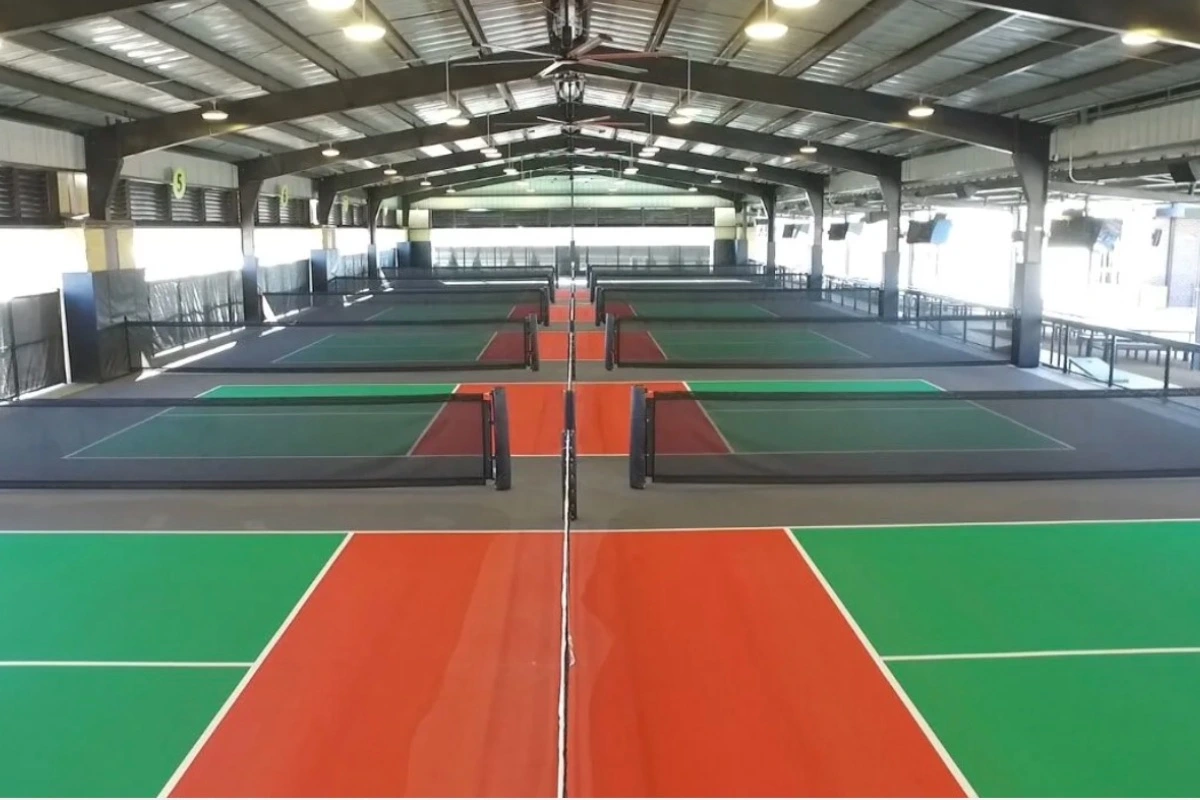
When designing or resurfacing a court, one of the most overlooked—but important—decisions is choosing the right pickleball court paint colors. Color does not just affect appearance. It also impacts ball visibility, player performance, heat absorption, court safety, and the overall feel of the space.
Whether you are building a backyard court, upgrading an HOA facility, or resurfacing a recreational game court, selecting the right color combination plays a major role in how the court looks and performs. A well-planned color system can make the court easier to play on, more comfortable in hot climates, and more visually appealing for years.
Professional court builders use athletic-grade coatings designed specifically for outdoor sports surfaces. These coatings are not standard paint. They are textured, UV-resistant systems built to handle foot traffic, sun exposure, and regular gameplay.
The right pickleball court colors help players track the ball more easily, identify boundaries clearly, and reduce visual confusion during fast rallies. Pickleball is a quick game, and players need to react to shots in real time. Poor color contrast can make it harder to see the ball, judge lines, and move confidently.
A strong contrast between the playing area, outer zones, and court lines creates a cleaner visual field. This is especially important for shared courts, recreational facilities, and older players who may need clearer boundary visibility.
Color choices also affect performance and safety. When the court lines stand out clearly against the playing surface, players can position themselves better and react faster. This improves court awareness and reduces hesitation during gameplay.
A good color system also supports safer movement. If the surface markings are confusing, players may misjudge boundaries, step awkwardly, or lose focus during quick directional changes.
In hot climates like Nevada and Arizona, court color can influence surface temperature. Dark colors absorb more heat, while lighter colors reflect more sunlight. This can affect player comfort, especially during warm afternoons.
Choosing heat-conscious pickleball court design colors can make outdoor courts more enjoyable and practical for regular use.
The most common professional layout includes a blue playing surface with green outer zones. This combination is popular because it provides strong contrast, a clean tournament-style appearance, and balanced visibility.
Blue helps the ball stand out clearly, while green creates a familiar athletic court look. This is one of the safest choices for homeowners, parks, HOAs, and recreational facilities that want a traditional pickleball court appearance.
Some courts use a red playing area with green surrounding zones. This creates a bold, energetic look while still offering strong contrast between court sections.
Red and green combinations can work well when the surrounding property design supports warmer tones. However, in very hot climates, darker red shades may absorb more heat than lighter alternatives.
Modern court designs often use light gray playing areas with blue or colored borders. This combination creates a sleek, contemporary appearance while reducing glare and visual intensity.
Gray-based designs are especially popular for custom backyard courts because they can blend nicely with patios, landscaping, pool decks, and modern outdoor living spaces.
|
Color Combination |
Best For |
Main Benefits |
Considerations |
|
Blue Playing Area + Green Border |
Traditional pickleball courts |
Excellent visibility, professional look, strong contrast |
Very common design |
|
Green Playing Area + Blue Border |
Parks and recreational courts |
Balanced appearance, familiar game court style |
Works best with bright line striping |
|
Red Playing Area + Green Border |
Custom residential courts |
Bold look, strong zone separation |
Dark reds may absorb more heat |
|
Light Gray + Blue Border |
Modern backyard courts |
Sleek design, lower glare, clean appearance |
Needs strong line contrast |
|
Tan + Green Border |
Desert-style properties |
Natural look, better heat reflection |
May need brighter line colors |
|
Full Blue Court + White Lines |
Compact backyard courts |
Simple, clean, high visibility |
Less zone separation |
Most professional pickleball courts use acrylic court color coatings. These systems are specifically designed for athletic surfaces and include acrylic-based coatings, textured surfacing materials, and UV-resistant pigments.
A professional outdoor pickleball court paint system is designed for outdoor durability, consistent traction, long-term color stability, and reliable performance. These coatings also help protect the surface from wear caused by sunlight, weather, and regular play.
Acrylic coatings can be applied over properly prepared concrete or asphalt surfaces. They are commonly used for pickleball, tennis, basketball, and multi-use recreational courts.
Standard paint should not be used on pickleball courts. Regular paint can peel quickly outdoors, become slippery, fade under UV exposure, and reduce gameplay quality.
House paint, garage floor paint, or general commercial coatings are not engineered for athletic movement, ball response, or slip resistance. They may look acceptable at first, but they often fail much faster than professional sport coatings.
Only athletic-grade acrylic coatings should be used for proper court performance and durability.
Before color coatings are applied, the court surface must be cleaned, repaired, and leveled if needed. Surface preparation may include pressure washing, crack repair, patching, and removing loose coating material.
This step is essential because the new color system needs a clean and stable surface to bond properly.
Once the court is prepared, acrylic layers are applied to create a uniform base color and proper adhesion surface. These layers help improve appearance and prepare the court for final color zones.
On resurfacing projects, this step can dramatically improve the look of an older, faded court.
Different colors are then applied for the playing area, out-of-bounds zones, borders, and multi-sport layouts. These zones help players quickly understand the court layout.
For multi-use courts, professional planning is important to prevent the design from looking too busy.
Finally, pickleball lines are painted using athletic-grade striping materials. Multi-use markings may also be added for basketball, volleyball, or tennis layouts.
Sharp, accurate striping is essential for both appearance and playability. Poor line work can make even a newly resurfaced court look unprofessional.
High contrast improves gameplay because the ball stands out clearly, court lines are easy to see, and playing zones are visually distinct. This helps players react faster and move more confidently.
The best color for pickleball court visibility usually depends on the ball color being used. Since many pickleballs are bright yellow, orange, or green, the court surface should provide enough contrast to make the ball easy to track.
Blue and gray surfaces often work well with bright pickleballs because they create strong visual separation.
Poor color combinations include low-contrast shades, overly bright reflective tones, and similar colors for different court zones. These can reduce gameplay clarity and make the court harder to use.
For example, using two very similar green shades for the playing area and border may look subtle but can make boundaries difficult to identify. Likewise, overly bright surfaces may create glare during sunny conditions.
In areas like Arizona and Nevada, heat-conscious color selection matters. Better options often include light gray, light blue, tan-based coatings, and medium-tone color systems.
These colors can help reduce heat absorption compared to darker tones while still maintaining a clean, professional appearance.
For residential backyards, lighter modern color palettes can also blend beautifully with desert landscaping, pool areas, stonework, and outdoor living spaces.
Dark colors such as deep red, dark green, navy, and black tones can increase surface temperature significantly. While these colors may look dramatic, they may not be ideal for courts exposed to direct sun throughout the day.
Professional court designers can help balance appearance, heat comfort, and visibility when selecting the final color scheme.
Custom court designs are one of the biggest advantages of professional resurfacing and installation. Courts can include team colors, HOA branding, multi-sport layouts, decorative borders, school colors, or personalized backyard designs.
Custom colors can make a court feel unique while still maintaining proper playability. The key is choosing colors that look good and function well during play.
Homeowners choose custom pickleball court resurfacing colors because they want the court to match the property’s style. A custom court can complement landscaping, patios, pool decks, exterior paint colors, and outdoor furniture.
For schools, HOAs, and commercial facilities, branded court colors can create a more polished and memorable recreational environment.
Poor contrast reduces gameplay quality. The court should make it easy to see the ball, lines, and boundaries.
Looks matter, but performance is more important. A beautiful court that is hard to play on is not a successful design.
Some colors perform poorly in extreme heat. Darker tones may make the surface hotter and less comfortable during outdoor play.
Too many colors can create visual confusion. A simple, clean color scheme often performs better and looks more professional.
Choosing the right color system improves gameplay visibility, player safety, surface comfort, property aesthetics, and long-term court appearance.
A professionally selected color combination can also help your court look newer for longer. UV-resistant acrylic systems maintain color better than standard paints and are designed to perform under outdoor conditions.
For homeowners, the right colors can turn a basic court into a premium backyard feature. For facilities, they can improve user experience and support a more professional recreational environment.
Blue and green are among the most popular pickleball court colors because they provide strong contrast, good visibility, and a professional appearance. Light gray and blue combinations are also popular for modern backyard courts.
Pickleball courts should use acrylic game court coatings, not regular paint. These coatings are designed for traction, UV resistance, outdoor durability, and athletic performance.
Common pickleball court colors include blue, green, red, gray, tan, and white line markings. Blue and green are the most traditional combinations.
For court surfaces, blue and green are the most common. For pickleballs, bright yellow and green are commonly used because they are easy to see during play.
Yes. Pickleball court colors affect ball visibility, player awareness, heat absorption, safety, and overall design. A good color combination improves both performance and appearance.
Color is the fun part, and it matters more here than most places. Lighter, reflective surfaces run cooler through a desert summer, and UV-stable acrylic holds those colors instead of chalking out after one season.
But the color only looks right if what is underneath is right. We build base-first across Southern Nevada and Arizona, so the surface stays true and the lines stay crisp for years.
Tell us your space and your colors and we will show you what it can look like. Request a free quote or call 702-883-8386.
Please Provide Your Contact Information and Project Details