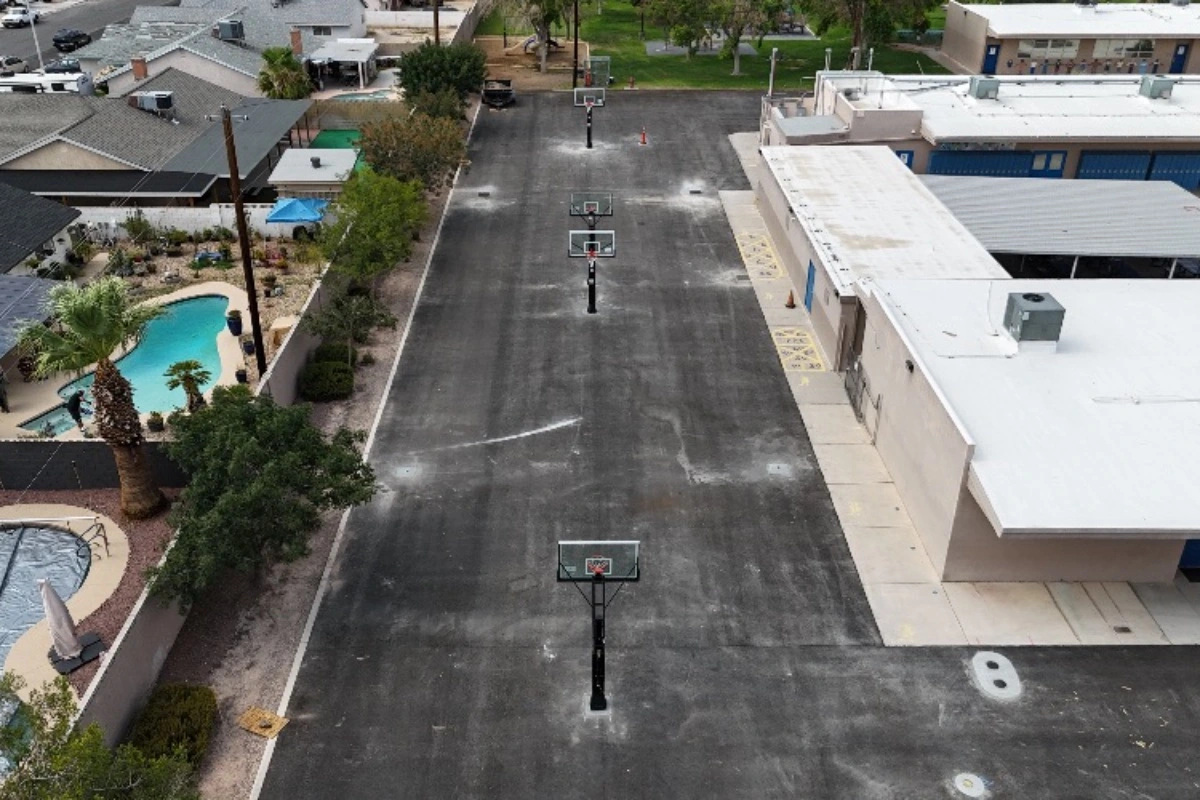
Building a basketball court goes far beyond pouring concrete or laying a simple surface. Basketball court floor construction is a comprehensive process that involves engineered layers working together to create a durable, high-performance athletic surface. A properly constructed floor ensures consistent ball bounce, player safety, long-term durability, and weather resistance for outdoor courts.
Whether constructing a backyard court, a school gym, or a commercial sports facility, the flooring system is the backbone of the entire project. Selecting the right materials, base preparation methods, and coating systems is crucial to achieving a safe, playable, and long-lasting court. Local basketball court flooring installation experts in Phoenix emphasize climate-appropriate materials, especially UV-resistant acrylic coatings and reinforced concrete bases, to ensure optimal performance.
What Is Basketball Court Floor Construction?
Basketball court floor construction encompasses all steps necessary to create a fully functional court, from base preparation to final striping and finishing. It’s both an art and a science, combining engineering, material science, and sports performance knowledge.
Full Flooring System Build
A professional construction project typically includes:
- Base preparation (concrete or asphalt) – Creates a stable, level foundation.
- Surface leveling and grading – Ensures proper ball bounce and safe footing.
- Crack control systems – Prevents structural damage from heat, expansion, or settling.
- Acrylic or sport coating installation – Provides traction, weather durability, and aesthetic finish.
- Line striping and finishing – Establishes clear court markings and optional multi-sport layouts.
Why Flooring Matters Most
The court floor determines:
- Gameplay quality – Bounce, grip, and ball control depend on proper construction.
- Injury risk – Poorly built floors increase slips, joint strain, and surface injuries.
- Court lifespan – Durable flooring reduces maintenance and replacement costs.
- Maintenance needs – Correct materials minimize frequent resurfacing or repairs.
What Are Basketball Court Flooring Systems Made Of?
Understanding materials is key to basketball court surface construction and performance.
Concrete Base Layer
Most outdoor courts begin with a reinforced concrete basketball court base and coating:
- Provides structural strength for heavy use.
- Supports long-term load and prevents settling.
- Requires proper leveling, curing, and crack control for durability.
Acrylic Sport Surfacing
Acrylic coatings are standard for outdoor basketball court flooring:
- UV-resistant to prevent fading in sunny climates.
- High traction to reduce slips and enhance player control.
- Weather durable to withstand rain, heat, and temperature fluctuations.
- Custom color options to meet aesthetic or branding requirements.
Cushioned Systems
Cushioned flooring layers provide:
- Shock absorption to reduce joint strain.
- Protection against impact injuries.
- Comfort for frequent gameplay in gyms or high-use outdoor courts.
Modular Tile Systems
Modern courts often use interlocking modular tiles:
- Rapid installation for commercial or temporary setups.
- Multi-sport flexibility for basketball, volleyball, and tennis.
- Heat-resistant and easy to maintain for outdoor environments.
Comparison Table – Basketball Court Flooring Systems
|
Flooring System
|
Durability
|
Maintenance
|
Comfort
|
Multi-Sport Use
|
Ideal For
|
|
Concrete Base + Acrylic Surface
|
High
|
Low
|
Medium
|
Medium
|
Outdoor courts
|
|
Cushioned Acrylic System
|
High
|
Low
|
High
|
Medium
|
Gyms, high-use
|
|
Modular Tile System
|
Medium
|
Low
|
High
|
High
|
Commercial/multi-use
|
How Basketball Court Floor Construction Is Done
Step 1 – Site Preparation
Preparation is critical for performance and longevity:
- Excavation or grading to ensure level surface.
- Drainage planning to prevent water pooling.
- Accurate measurement of court dimensions to meet regulations.
Step 2 – Base Installation
A stable foundation is the most important component:
- Concrete slab or asphalt layer, reinforced if necessary.
- Proper slope ensures water runoff and prevents standing water.
- Crack control joints may be added to mitigate stress fractures.
Step 3 – Surface Repair & Leveling
Before applying coatings:
- Existing cracks are sealed.
- Uneven areas are corrected for uniformity.
- Surface is cleaned thoroughly for adhesion.
Step 4 – Acrylic or Surface System Application
Professional installation includes:
- Primer or binder coat for strong adhesion.
- Cushion layers (if applicable) to improve safety and comfort.
- Color finish coats for aesthetics and UV protection.
- Texture layers to enhance grip and traction.
Step 5 – Line Striping & Finishing
The final touches include:
- Basketball court markings for regulation play.
- Optional multi-sport layouts for versatility.
- UV-resistant paint sealing to prolong line visibility.
Indoor vs Outdoor Basketball Floor Construction
Outdoor Courts
Require specialized materials to withstand Arizona climates:
- UV-resistant coatings to prevent fading.
- Weatherproof acrylic systems for rain and sun exposure.
- Drainage systems to protect the concrete base from erosion.
Indoor Courts
Focus on performance and injury prevention:
- Hardwood or synthetic materials for consistent bounce.
- Shock absorption systems to reduce joint stress.
- Controlled environment design for humidity and temperature stability.
Why Proper Floor Construction Is Important
Player Safety
Properly constructed courts prevent:
- Slips due to inadequate traction.
- Joint strain from hard or uneven surfaces.
- Injuries from surface irregularities.
Game Performance
The flooring system ensures:
- Consistent ball bounce and responsiveness.
- Proper traction for agile movement and stability.
- Smooth, uninterrupted gameplay across all zones.
Long-Term Durability
Correct construction reduces:
- Cracking and surface peeling.
- Frequency and cost of maintenance or resurfacing.
- Premature deterioration of materials due to climate stress.
Common Mistakes in Basketball Court Floor Construction
- Poor Base Preparation – Leads to cracks, uneven surfaces, and early failure.
- Wrong Material Selection – Using materials unsuitable for outdoor heat or indoor use accelerates wear.
- Skipping Drainage Design – Water pooling damages both surface and foundation.
- Low-Quality Acrylic Systems – Fade and peel prematurely under sunlight and traffic.
Benefits of Professional Basketball Court Floor Construction
- High-performance playing surface for safety and enjoyment.
- Long-lasting durability with minimal maintenance.
- Custom design flexibility to fit space and multi-sport needs.
- Lower long-term repair and resurfacing costs.
How Long Does a Basketball Court Floor Last?
Outdoor Systems
- Acrylic systems: Long lifespan with periodic resurfacing.
- Cushioned systems: Extended durability and player comfort with proper maintenance.
Indoor Systems
- Hardwood: Lasts decades with refinishing and protective care.
- Synthetic: High durability with low upkeep and consistent performance.
Frequently Asked Questions (FAQs)
What kind of flooring is used in basketball courts?
Common options include hardwood (indoor), acrylic (outdoor), cushioned acrylic, and modular tile systems for versatile multi-sport use.
How to build a basketball court floor?
Start with site grading, base installation, crack control, surface leveling, acrylic or coating application, and finish with line striping and inspection.
What kind of flooring is best for a court?
It depends on usage: hardwood for indoor gyms, acrylic coatings for outdoor courts, and cushioned systems for heavy-use multi-purpose courts.
What is the floor area of a basketball court?
Regulation courts measure 94 feet by 50 feet, but backyard or recreational courts can be customized to available space.
What is the best surface for a basketball court?
For outdoor use, acrylic basketball court surface systems over a concrete base provide durability, weather resistance, and consistent play. Indoor courts typically use hardwood or synthetic materials.
Professional basketball court floor construction ensures every court meets performance, safety, and durability standards. By combining quality materials, proper base engineering, and expert basketball court flooring installation, you can achieve a court that lasts decades and provides a superior playing experience. Whether constructing a backyard basketball court Phoenix AZ homeowners enjoy or a commercial sports facility, investing in engineered flooring systems guarantees optimal performance and minimal long-term maintenance.