
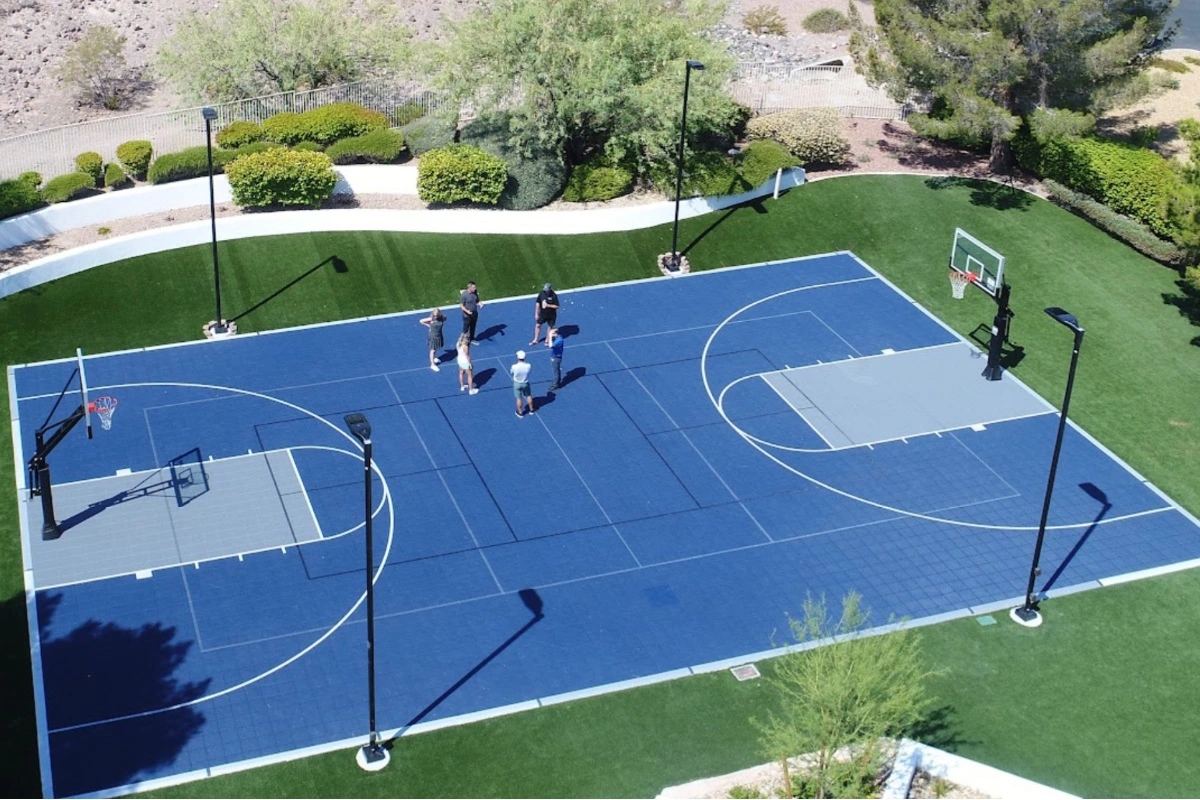
Multipurpose court construction is the professional process of designing and building a single athletic surface that supports multiple sports, including basketball, pickleball, volleyball, and tennis. Instead of building separate courts for each sport, a multipurpose court consolidates them into one well-planned, functional area. This approach maximizes space, reduces construction and maintenance costs, and creates a flexible, long-lasting recreational environment.
Multipurpose courts are widely used in residential backyards, HOAs, community parks, schools, universities, resorts, and recreation centers. They provide families, students, and athletes with a versatile space to play, train, and practice while offering durability, precise layout accuracy, and professional-level performance.
Professional multi court construction focuses on design precision, high-performance materials, and proper layout to ensure that all integrated sports can coexist safely. From line striping accuracy to base preparation, every detail is engineered to deliver optimal results for recreational, training, or competitive use.
Multipurpose court construction involves several critical phases:
A multipurpose court supports multiple activities on the same surface. Depending on the design, one court can accommodate:
This multi-sport functionality is ideal for small yards, community spaces, or athletic facilities that want maximum versatility.
Basketball is commonly the primary sport on multipurpose courts. Typical features include:
Basketball integrates seamlessly with pickleball or volleyball, allowing safe, efficient multi-use without overlapping or confusing line layouts.
Pickleball is increasingly popular for residential and community courts. Key considerations include:
A basketball and pickleball court combination is one of the most requested residential designs today due to its space efficiency and family-friendly appeal.
Volleyball on multipurpose courts includes:
Adding volleyball increases usage diversity and ensures year-round recreational activity.
Some multipurpose courts include modified tennis layouts for recreational training:
Modified tennis allows even limited backyards to benefit from tennis practice without consuming excessive space.
Acrylic athletic coatings are the most common solution for outdoor multipurpose courts. Benefits include:
Acrylic surfacing ensures consistent ball bounce, player safety, and professional appearance for basketball, pickleball, and volleyball.
Concrete bases are essential for structural stability:
Concrete bases are recommended for high-use public courts or professional installations.
Modular interlocking tiles provide flexibility and comfort:
Modular tiles are ideal for backyard courts, schools, or community recreation areas.
Cushioned acrylic systems combine durability with comfort:
These systems are especially popular in residential environments where comfort and safety are priorities.
|
System Type |
Best For |
Key Benefits |
Considerations |
|
Acrylic Surfacing |
Outdoor multi courts |
UV resistant, long-lasting, excellent traction, customizable colors |
Requires proper base prep and occasional resurfacing |
|
Concrete Base |
High-use or commercial courts |
Structural stability, heavy-duty performance |
Needs top-layer coating for traction & aesthetics |
|
Modular Tiles |
Backyard or school courts |
Shock absorption, replaceable sections, multi-sport flexibility |
Ball bounce feels different from acrylic |
|
Cushioned Acrylic |
Family courts |
Comfort, reduced joint impact, multi-sport compatibility |
Higher installation cost, periodic maintenance |
|
Combination/Hybrid |
Custom multi-sport layouts |
Mix of tiles, acrylic, cushioned layers |
Complex installation, higher initial investment |
Professional contractors evaluate:
Site evaluation ensures that the court will meet long-term functionality and safety standards.
A stable foundation is critical:
A proper base prevents cracking, uneven surfaces, and water damage.
The chosen surface system is applied:
Professional installation ensures durability, traction, and accurate sports line placement.
Line striping for basketball, pickleball, volleyball, and optional tennis ensures clear, visible markings that do not conflict. Accurate markings improve gameplay, safety, and visual aesthetics.
Final checks include:
Regular cleaning, resurfacing, and crack repair increase longevity.
What is a multi-purpose court?
A court designed to support several sports in one space, maximizing utility and space efficiency.
What is a multi-game court?
A recreational or professional court that supports basketball, pickleball, volleyball, and modified tennis simultaneously.
What is the size of a multipurpose game court?
Sizes vary based on included sports and available space; professional layout planning ensures proper clearance.
How big is a multi game court?
Residential courts are typically 30–60 feet wide and 60–120 feet long, adjusted to the property and sports included.
What surface is best for a court?
Acrylic coatings, modular tiles, and cushioned acrylic systems are all popular. Choice depends on climate, usage, and sports requirements.
Please Provide Your Contact Information and Project Details