
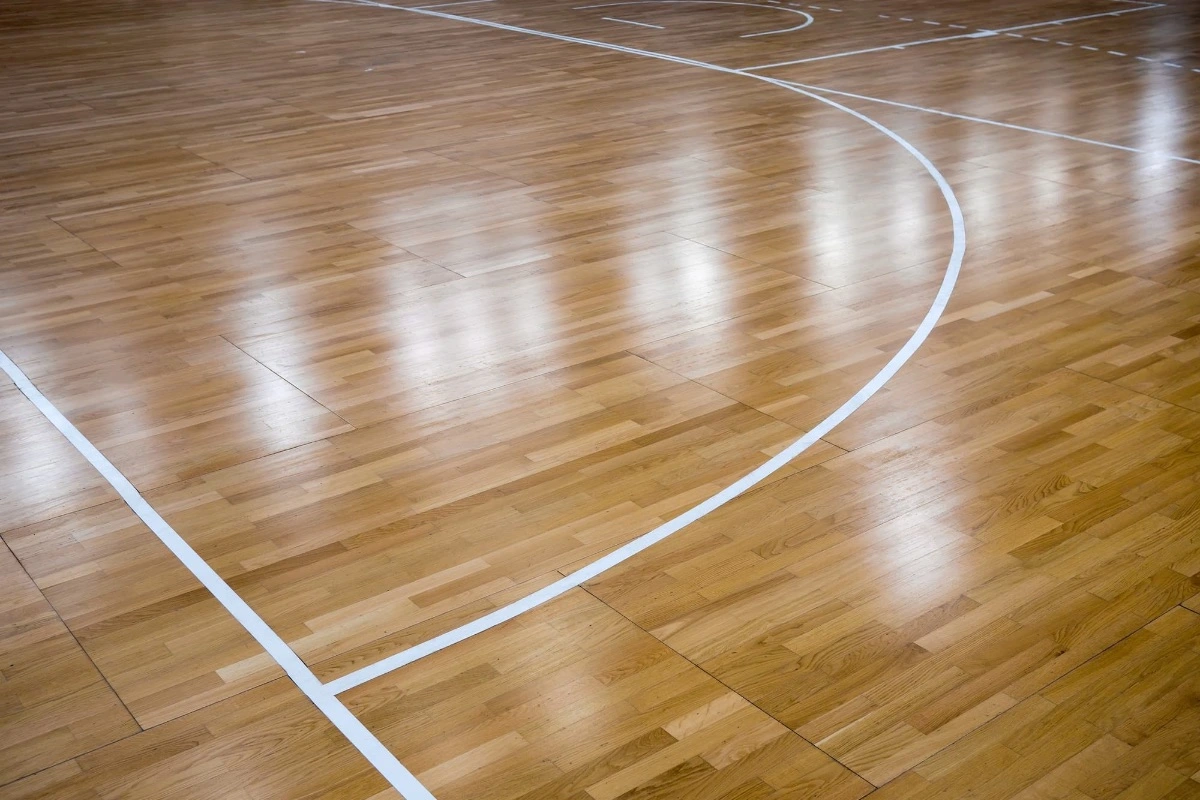
When people think of professional basketball, they picture athletes competing on a beautiful hardwood court. From high school gyms to collegiate arenas and professional facilities, the hardwood basketball court remains the most trusted and recognized indoor playing surface.
Hardwood flooring delivers excellent ball response, dependable traction, player comfort, and long-lasting durability. While various indoor game court flooring systems are available today, hardwood continues to set the benchmark for performance, appearance, and athlete safety. Whether constructing a new gymnasium or renovating an existing facility, hardwood basketball court installation remains one of the most popular choices for competitive basketball environments.
A hardwood basketball court is an indoor sports flooring system constructed using specially selected wood materials installed over a performance-engineered subfloor.
The complete system typically includes:
This layered construction provides the performance characteristics athletes expect while helping reduce stress on joints during play.
Hardwood courts are known for:
Because of these advantages, hardwood remains the preferred option for indoor basketball court flooring in schools, colleges, sports complexes, and professional arenas.
Maple basketball court flooring is the most common material used in basketball court construction. Maple offers a dense grain structure and exceptional durability that makes it ideal for athletic applications.
Benefits of maple include:
Maple has become the industry standard because it provides:
These characteristics make maple the preferred choice for basketball court wood flooring across virtually every level of competition.
Although maple remains the leading choice, some facilities may explore alternative hardwood species for specific design preferences or architectural requirements. However, few materials match maple’s combination of durability and athletic performance.
The process begins with a thorough evaluation of the facility.
Contractors assess:
Proper planning helps ensure long-term flooring performance.
The subfloor system serves as the foundation of the court.
It provides:
A properly designed subfloor is essential for athlete comfort and safety.
Individual hardwood boards are installed with precision to create a smooth and uniform playing surface.
During hardwood basketball court installation, contractors carefully align each board to ensure consistent performance throughout the court.
After installation, the surface undergoes:
These steps create the polished appearance associated with professional basketball courts.
The final stage includes:
This transforms the flooring system into a fully functional athletic facility.
|
Flooring Type |
Ball Response |
Shock Absorption |
Durability |
Maintenance |
Best Application |
|
Maple Hardwood |
Excellent |
Excellent |
Excellent |
Moderate |
Competitive basketball |
|
Synthetic Sports Flooring |
Good |
Good |
High |
Low |
Multi-purpose gyms |
|
Rubber Sports Flooring |
Fair |
Excellent |
High |
Low |
Training facilities |
|
Vinyl Sports Flooring |
Good |
Good |
Moderate |
Low |
Recreational facilities |
|
Concrete with Coating |
Fair |
Poor |
High |
Low |
Budget facilities |
Players benefit from:
Hardwood delivers the performance athletes expect during both practice and competition.
Modern hardwood systems provide:
These features help support athlete performance throughout games and training sessions.
A hardwood basketball court creates a polished, professional appearance that enhances the overall atmosphere of a facility.
The natural beauty of wood flooring remains unmatched by many alternative surfaces.
With proper maintenance, hardwood courts can provide decades of service.
Many facilities consider hardwood one of the most cost-effective long-term investments for indoor athletic spaces.
Quality gymnasium basketball flooring withstands:
Unlike many flooring materials, hardwood can often be refinished multiple times throughout its lifespan.
Refinishing restores:
This can significantly extend the life of the flooring system.
Many facilities use hardwood floors for:
This versatility increases the value of the facility.
Few flooring systems can match the performance and prestige of a professionally installed hardwood court.
For competitive basketball, hardwood remains the benchmark for excellence.
Excess moisture can lead to:
Proper moisture management is critical during construction.
The subfloor significantly impacts:
A poorly designed foundation can compromise the entire court system.
Low-quality finishes may reduce:
Professional finishing helps maximize court performance.
Athletic flooring systems require specialized expertise beyond traditional hardwood flooring installation.
Experienced game court contractors understand the unique requirements of indoor basketball court flooring systems.
Regular cleaning removes:
Keeping contaminants off the surface helps protect the finish and maintain consistent playing conditions.
Facilities should avoid:
These precautions help preserve the flooring system.
Periodic refinishing helps restore:
Refinishing schedules vary based on usage levels and facility demands.
Routine inspections help identify issues before they become expensive repairs.
Early detection can extend the life of the court and reduce maintenance costs.
Legendary Sports Construction understands the unique requirements of hardwood basketball court installation and athletic flooring systems.
Every court is built with attention to:
The goal is to create courts that perform consistently for years.
Projects can include:
Each court is designed to meet the specific goals of the facility.
Maple is widely considered the best wood for basketball courts because of its durability, dense grain structure, excellent ball response, and long-term performance.
Many indoor basketball courts are commonly referred to as hardwood courts because they are constructed using hardwood flooring, most often maple.
For competitive indoor basketball, hardwood flooring remains the preferred choice due to its superior playing characteristics, safety features, and professional appearance.
The best material depends on the facility’s goals, but maple hardwood is generally regarded as the highest-performing material for indoor basketball courts.
With proper maintenance and periodic refinishing, a hardwood basketball court can last several decades while continuing to provide excellent athletic performance.
Please Provide Your Contact Information and Project Details