
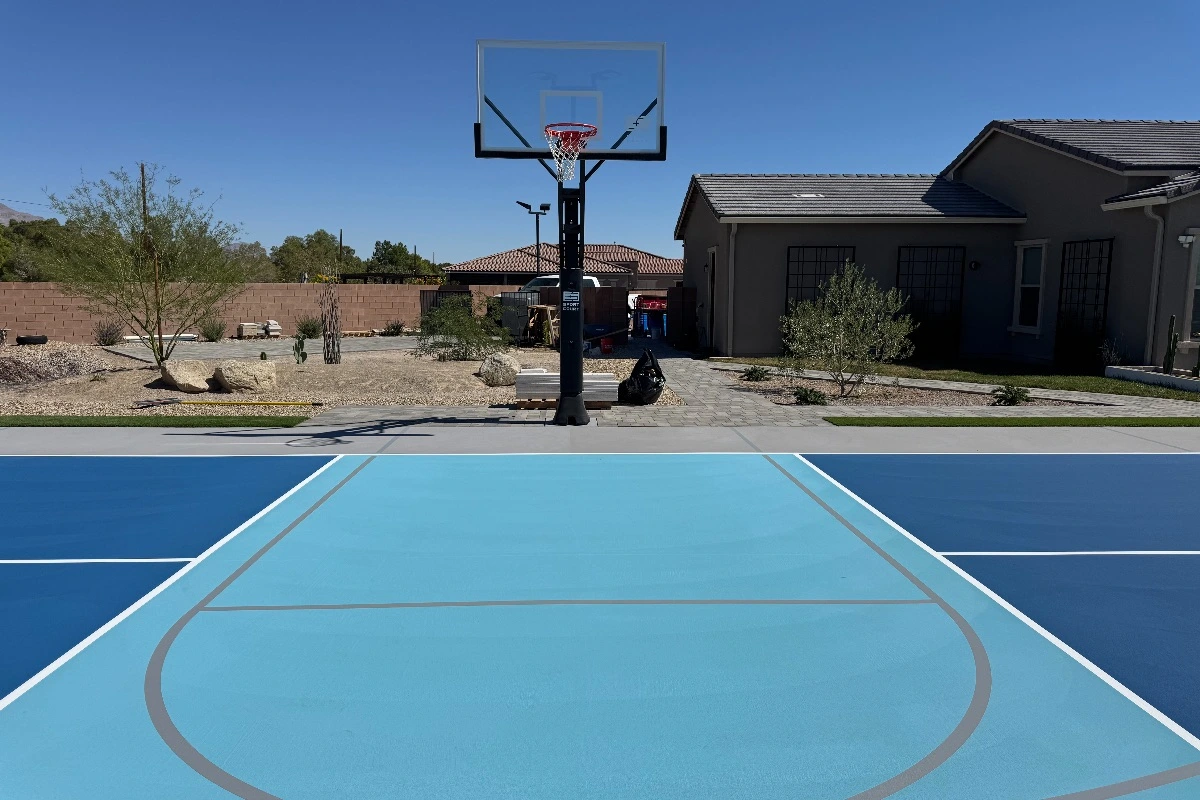
A well-maintained basketball court is critical for safe, enjoyable play and long-term durability. Over time, outdoor and indoor courts alike can experience wear from weather, UV exposure, heavy usage, and foundation movement. Common issues include cracks, surface deterioration, fading, uneven areas, drainage problems, and poor traction.
Timely professional basketball court repair restores these courts without the need for full reconstruction. Whether it’s a backyard court, school gym, HOA recreation area, or commercial facility, early repairs protect your investment, improve safety, and extend the life of your court.
Basketball court repair addresses issues affecting safety, playability, and appearance. Typical repairs include:
Ignoring damage can result in:
Professional concrete basketball court repair ensures that small problems are addressed before they become major, costly issues.
Cracks are the most common issue and can result from:
UV exposure and heavy play gradually wear down court surfaces, causing:
Depressions or bumps negatively affect gameplay and safety:
Improper drainage leads to:
Addressing drainage is critical to maintain a long-lasting and playable court.
|
Action |
Cost |
Durability |
Downtime |
Maintenance |
Best Use |
|
Minor Repair |
Low |
High |
Short |
Low |
Small cracks, minor surface damage |
|
Full Resurfacing |
Medium |
Very High |
Moderate |
Low |
Faded or moderately damaged courts |
|
Complete Replacement |
High |
Very High |
Long |
Medium |
Severe structural damage or uneven base |
A professional assessment identifies:
Cleaning removes:
Proper surface preparation ensures repair materials adhere correctly.
Common repair techniques include:
Leveling smooths uneven areas to:
After repair, basketball court resurfacing can include:
Resurfacing improves both aesthetics and playability.
Homeowners can address minor issues themselves:
Pros:
Cons:
Hiring an experienced game court repair services team ensures:
Pros:
Cons:
For most courts, professional repair is more cost-effective long-term.
Even small cracks can grow quickly under sun, rain, and frequent play. Early repair prevents larger structural problems.
Standing water indicates drainage or surface issues that must be addressed before they worsen.
Slippery or uneven surfaces increase injury risk, making repair essential.
Faded or worn courts reduce facility value and can discourage use.
Sun, rain, heat, and UV rays break down surface coatings over time, leading to fading, cracking, and reduced traction.
Frequent play causes:
Soil shifts cause:
Improper base installation can lead to early structural and surface problems.
Repairs remove hazards such as:
Restored courts provide:
Repairing early avoids expensive full replacement costs.
Proper maintenance and resurfacing significantly increase usability and performance longevity.
Professional resurfacing and color restoration enhance the court’s look and encourage consistent use.
Experienced in diagnosing and repairing basketball court cracks and other surface issues for indoor and outdoor facilities.
We use professional-grade materials designed for athletic surfaces to withstand heavy use and extreme weather conditions.
From minor crack repairs to full basketball court resurfacing, every project is customized to meet your court’s unique needs.
How to repair a basketball court?
Start with a professional inspection to identify cracks, low spots, and drainage problems. Clean the surface thoroughly, fill cracks with flexible materials, level uneven areas, and optionally resurface with acrylic coatings or modular tiles.
How to fix a slippery basketball court?
Slippery courts result from worn coatings, dirt, or moisture. Cleaning, resurfacing, and applying a non-slip acrylic or textured finish restores safe traction.
What kind of paint do they use on basketball courts?
Professional courts use acrylic line paint for durability and UV resistance. Acrylic ensures consistent bounce and traction for players.
What is the cheapest way to build a basketball court?
A simple concrete slab with painted lines is the most budget-friendly approach. For existing courts, targeted crack repair and resurfacing are cost-effective alternatives to full replacement.
What material is commonly used for basketball courts?
Concrete is the base for outdoor courts, often finished with acrylic coatings or modular tiles for performance, traction, and comfort. Professional repairs restore these materials efficiently.
How long does basketball court repair last?
When performed correctly with professional materials, repairs and resurfacing can last 5–10 years depending on use, weather, and maintenance.
Can you repair a court yourself?
DIY repairs are possible for minor cracks, but professionals are recommended for structural issues, resurfacing, and long-term performance.
Why is resurfacing important?
Basketball court resurfacing restores worn areas, improves traction, enhances appearance, and extends the court’s life. It’s a cost-effective alternative to replacement.
How often should a court be inspected?
Courts should be inspected annually, and after extreme weather, to catch cracks, drainage issues, or surface wear early.
Please Provide Your Contact Information and Project Details