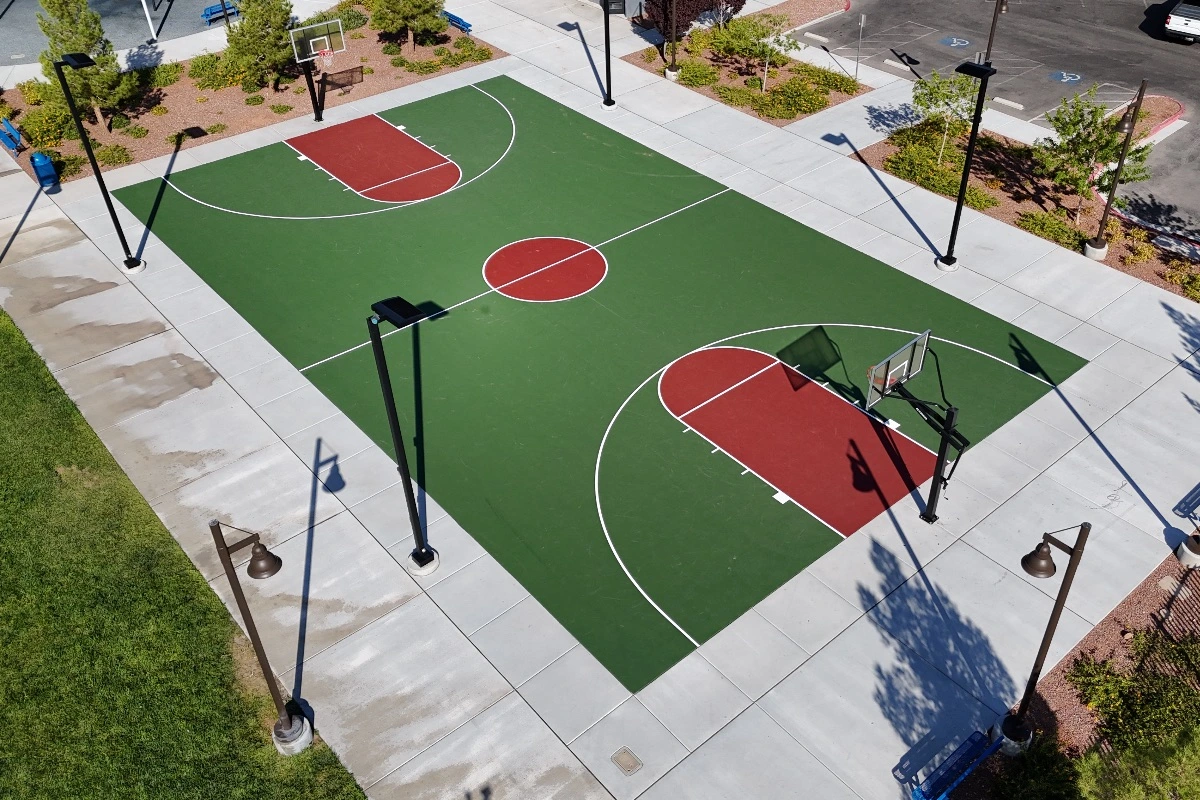
Acrylic is the most widely used surfacing system for outdoor sports courts, and understanding why it’s the standard, and how to maintain it, helps you get the most life and performance out of your investment.
Why Acrylic Is the Standard Court Surface
Consistent playing performance. Acrylic systems are engineered to provide a specific surface texture that delivers reliable ball bounce and player traction across the entire court, unlike raw concrete or asphalt, which can have inconsistent texture from panel to panel.
Design flexibility. Acrylic coatings come in virtually any color, allowing custom court designs, team colors, two-tone key areas, and multi-sport line overlays that would be difficult or impossible with other surface types.
Cost-effectiveness. Compared to specialty synthetic systems or premium modular tiles, acrylic surfacing delivers a professional-grade playing surface at a lower overall cost, especially when factoring in application over an existing, well-prepared concrete or asphalt base.
Reparability. Acrylic systems can be recoated rather than fully replaced, extending the usable life of a court for decades with periodic maintenance instead of expensive rebuilds.
How Acrylic Surfacing Is Applied
A proper acrylic system is built in layers:
- Crack repair and patching of the underlying base, if needed.
- Resurfacer coat, a textured layer that smooths minor surface imperfections and creates the base texture for ball bounce.
- Color coats, typically two or more coats applied for even color and durability.
- Line striping, using durable, UV-resistant paint for precise regulation markings.
Each layer needs proper cure time before the next is applied. Rushing this process is one of the most common reasons budget installations fail early, coats that haven’t cured properly don’t bond or wear correctly.
UV Durability: Why It Matters in Las Vegas and Phoenix
Not all acrylic coatings are created equal, and this matters enormously in a climate as demanding as ours. Generic or interior-grade coatings break down under sustained UV exposure and high surface temperatures, leading to:
- Chalking, a powdery residue that forms as the coating’s binder degrades under UV exposure.
- Fading, especially in darker colors that absorb more heat and UV energy.
- Premature cracking, as the coating loses flexibility and can no longer move with the base beneath it.
We use acrylic systems specifically formulated for high-heat, high-UV climates. These systems hold color and texture significantly longer under desert sun than generic products, which is the difference between a court that looks great for two seasons and one that looks great for years.
Maintaining an Acrylic Court
Routine cleaning. Sweeping debris and rinsing the surface periodically prevents dirt and organic buildup from degrading the coating prematurely.
Prompt crack attention. Small cracks should be addressed quickly with flexible fillers before they widen and allow water intrusion, which can undermine the base beneath the coating.
Periodic recoating. Most acrylic courts benefit from a full recoat every four to seven years, depending on usage intensity and sun exposure. Recoating restores color, texture, and surface protection at a fraction of the cost of a full rebuild.
Avoiding harsh chemicals. Certain cleaning products and de-icers (in colder climates) can degrade acrylic coatings faster than normal wear. We can advise on safe maintenance practices specific to your court.
FAQ
Why is acrylic the most common surface for outdoor sports courts?
Acrylic offers a strong combination of performance, design flexibility, and cost-effectiveness, while also being straightforward to recoat and maintain over the court’s life.
How long does an acrylic court surface last?
With proper installation and periodic recoating every four to seven years, an acrylic surface system can support a court for well over a decade before major structural work is needed.
Does acrylic surfacing fade in Las Vegas or Phoenix heat?
Standard or generic coatings can fade and chalk under intense desert sun. UV-stable acrylic systems formulated specifically for high-heat climates resist this significantly better.
How often should an acrylic court be recoated?
Typically every four to seven years, depending on usage and sun exposure, though heavily used courts may need it sooner.
Can acrylic surfacing be applied over an existing asphalt or concrete pad?
Yes, as long as the existing base is structurally sound and properly sloped. We assess the base before recommending a resurfacing plan.
Is acrylic surfacing slippery when wet?
Properly textured acrylic coatings maintain reasonable traction even when damp, though like most outdoor court surfaces, play should generally pause during active rain.
This page connects to our
surface options guide and our resurfacing and maintenance page. Ready to discuss your court’s surface system? Get a quote from Legendary Sport Construction today.