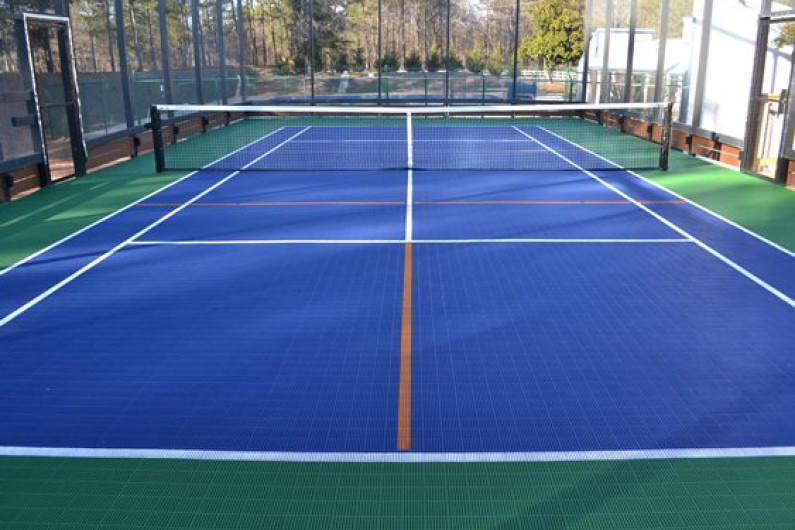
Tennis Court Resurfacing in Boulder City, NV: Restore Your Court’s Performance

Tennis Court Resurfacing in Boulder

Tennis Court Resurfacing in Boulder City, NV: Restore Your Court’s Performance

Tennis Court Resurfacing Services in Boulder City, NV

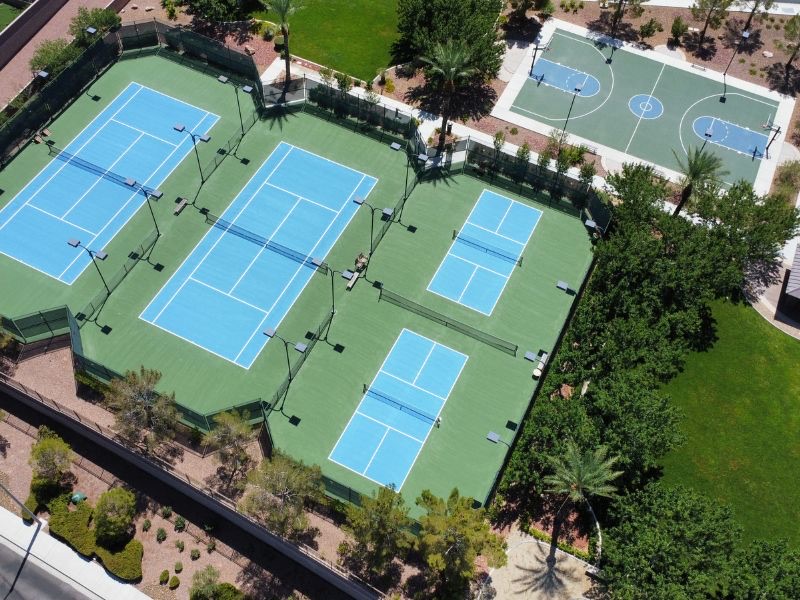
A properly maintained tennis court is essential for consistent play, player safety, and long-term durability. Over time, even well-built courts experience surface wear from sun exposure, temperature fluctuations, and regular use. Without routine maintenance, these issues can affect ball bounce, traction, and overall enjoyment of the game.

Legendary Sports Construction provides professional tennis court resurfacing services for residential and community courts in Boulder City, Nevada. Our resurfacing solutions are designed to restore performance, improve safety, and extend the usable life of your court without the expense of full replacement. Whether you maintain a private backyard court or a shared recreational facility, resurfacing is a cost-effective way to bring your court back to peak condition.

Why Resurfacing Your Tennis Court Matters

Tennis court resurfacing is not just about appearance—it plays a critical role in performance and safety. Over time, surface degradation can compromise play quality and increase the risk of injury. Resurfacing addresses these issues while protecting the structural integrity of the court.

Improved Playability
A resurfaced court restores consistent ball bounce and reliable traction. This ensures predictable gameplay, whether the court is used for casual matches or competitive practice.

Enhanced Safety
Cracks, uneven areas, and worn coatings increase the risk of slips and trips. Resurfacing smooths the surface and eliminates hazards, creating a safer playing environment.

Aesthetic Appeal
Faded colors and worn lines can make a court look neglected. Resurfacing refreshes surface coatings and striping, restoring a clean, professional appearance.

Durability
New surface layers protect the underlying asphalt or concrete from UV exposure, moisture intrusion, and further deterioration.

Cost-Effective Maintenance
Resurfacing extends the life of an existing court, delaying the need for complete reconstruction and significantly reducing long-term costs.

For tennis court maintenance in Boulder City, resurfacing is one of the most effective ways to preserve court quality in a challenging desert climate.

Common Tennis Court Surface Issues

Courts in Boulder City are exposed to intense sun, heat, and seasonal weather changes. These conditions contribute to a range of surface problems that resurfacing is designed to correct.

Cracks and surface damage often develop as materials expand and contract with temperature changes. These cracks can widen over time if left untreated.

Faded or peeling surface coatings are common due to prolonged UV exposure. This not only affects appearance but can also reduce traction.

Uneven areas can form from base movement or wear, leading to inconsistent ball bounce that impacts gameplay.

Worn-out lines and court markings reduce visibility and accuracy, making it difficult to play according to standard dimensions.

Drainage or water pooling issues may occur if surface coatings degrade, allowing moisture to collect instead of draining properly.

Professional outdoor tennis court restoration addresses these problems before they compromise the court’s structure.

Tennis Court Resurfacing Process

A successful resurfacing project follows a structured, detail-oriented process to ensure lasting results. Each step is designed to restore performance while protecting the underlying court.

Inspection & Assessment

The process begins with a comprehensive inspection of the court. Surface condition, cracks, drainage patterns, and wear areas are evaluated to determine the appropriate resurfacing approach. This assessment ensures all problem areas are addressed—not just the visible ones.

Cleaning & Surface Preparation

The court is thoroughly cleaned using professional equipment to remove dirt, debris, and loose materials. Cracks are repaired, low spots are leveled, and the surface is prepped to ensure proper adhesion of new coatings.

Surface preparation is one of the most important steps, as it directly affects the longevity of the resurfacing.

Resurfacing Application

High-quality acrylic coatings are applied to restore color, texture, and performance. These coatings are designed for outdoor tennis court restoration, providing UV resistance, consistent traction, and uniform ball response.

Multiple layers may be applied depending on the court’s condition and desired finish.

Court Striping

Once the surface coatings cure, court lines are repainted according to standard tennis dimensions. Crisp, accurate striping ensures the court is suitable for both recreational and competitive play.

Final Inspection & Maintenance Guidance

The project concludes with a final inspection to confirm surface smoothness, line accuracy, and overall play readiness. Maintenance recommendations are provided to help extend the life of the resurfaced court.

Comparison Table – Tennis Court Surface Options

Surface TypePlay SpeedMaintenance LevelDurabilityBest Use
Acrylic Coating SystemMediumLowHighMost residential & community courts
Cushioned Acrylic SystemMedium-SlowLowHighEnhanced comfort & joint support
Hard Court ResurfacingMedium-FastLowVery HighCompetitive or frequent-use courts

This comparison highlights how different resurfacing systems can be tailored to performance preferences and usage levels.


Benefits of Resurfacing Tennis Courts

Resurfacing delivers measurable benefits that go beyond visual improvements.

It restores optimal playing conditions by improving ball bounce, speed, and traction. Players experience more predictable gameplay and reduced strain from uneven surfaces.

Safety is significantly enhanced as cracks, low spots, and worn areas are corrected. This reduces trip hazards and supports confident movement on the court.

Resurfacing revitalizes the court’s appearance with fresh colors and clean lines, creating a professional, well-maintained look.

By extending the life of the existing court structure, resurfacing avoids the high cost and disruption of full court replacement.

Finally, resurfaced courts are suitable for a wide range of uses—from casual backyard play to structured training and competitive matches.

Frequently Asked Questions (FAQs)

What is the cheapest way to resurface a tennis court?

The most affordable option is typically an acrylic resurfacing system applied over an existing hard court. This approach restores performance and appearance without rebuilding the base, making it cost-effective for most residential courts.

How often should a tennis court be resurfaced?

Most outdoor tennis courts benefit from resurfacing every 4 to 8 years, depending on usage, climate conditions, and maintenance practices. Courts in high-sun environments like Boulder City may require more frequent attention.

What is the best surfacing material for a tennis court?

Acrylic coating systems are the most common choice due to their durability, consistent play characteristics, and low maintenance requirements. Cushioned systems are also popular for players seeking added comfort.

How long does it take to resurface a tennis court?

Most tennis court resurfacing projects take several days to complete, depending on court condition, repair needs, and curing time for coatings. Weather conditions can also affect the timeline.

How much to resurface a tennis court?

The cost to resurface a tennis court varies based on surface condition, court size, and selected materials. Professional resurfacing is significantly more affordable than full reconstruction and offers excellent long-term value.

Restore Your Tennis Court in Boulder City, NV

Tennis court resurfacing is a smart investment in performance, safety, and longevity. With professional materials, precise application, and expert preparation, resurfacing brings new life to worn courts while preserving the existing structure.

For homeowners and communities seeking reliable tennis court resurfacing in Boulder City, NV, professional court resurfacing services ensure your court looks better, plays better, and lasts longer—ready for years of enjoyment and competitive play.
Sign up for our Newsletter

Outdoor Sports Turf: Durable & Versatile Surfaces for Recreational Spaces

Outdoor Sports Turf

Outdoor Sports Turf: Durable & Versatile Surfaces for Recreational Spaces

Outdoor Sports Turf Installation Services

Outdoor sports turf has become one of the most popular surface solutions for homeowners and property owners seeking durability, performance, and low maintenance. Designed to replicate the look and feel of natural grass without the constant upkeep, sports turf offers a practical and visually appealing alternative for a wide range of recreational uses.

Legendary Sports Construction provides professional outdoor sports turf installation services across Arizona and Nevada. Our turf systems are engineered to withstand intense sun exposure, temperature fluctuations, and frequent use, making them ideal for backyard recreation, training areas, and multi-use play spaces. Each installation is custom-designed to match the property layout, intended activity, and long-term performance needs.

Build a High-Performance Outdoor Sports Turf Surface

Outdoor sports turf creates a reliable, safe, and functional surface for year-round use. Unlike natural grass, which can become patchy, muddy, or uneven, synthetic turf maintains consistent performance regardless of weather or foot traffic.

Homeowners often choose backyard sports turf to create flexible recreational areas that support multiple activities. From casual play and fitness routines to agility training and youth sports practice, turf surfaces adapt easily to changing needs. In Arizona and Nevada climates, where water conservation and heat resistance are major concerns, artificial turf for recreation offers a sustainable and practical solution.

A professionally installed outdoor sports turf system ensures proper drainage, stable footing, and long-term durability—key factors that separate high-quality installations from basic DIY turf projects.

Key Components of a Quality Outdoor Sports Turf System

Turf Material Types

Selecting the right turf material is critical to performance, comfort, and longevity. Modern outdoor sports turf is engineered with advanced fibers and backing systems that closely mimic natural grass while delivering superior durability.

Short-pile turf is ideal for multi-use recreational areas where consistent ball roll and easy movement are priorities. This type of turf works well for casual sports, fitness zones, and backyard play spaces.

Medium-pile turf provides added resilience and cushioning, making it suitable for athletic training, agility drills, and higher-impact activities. It balances comfort with performance while maintaining a clean, professional appearance.

Cushioned turf systems incorporate shock-absorbing layers beneath the surface to reduce impact and enhance safety. These systems are commonly used for family-friendly recreation areas and spaces designed for frequent activity.

Each turf option is selected based on how the space will be used, the desired level of cushioning, and maintenance preferences.

Base Preparation & Drainage

A high-performance turf surface starts below the surface. Proper base preparation is essential to prevent shifting, uneven areas, and drainage problems.

The installation process includes excavation, grading, and compaction to create a stable foundation. Drainage systems are carefully designed to allow water to flow through the turf and away from the base, preventing pooling and surface damage.

In desert environments, effective drainage and base stability are especially important. Professional preparation ensures the turf remains level, functional, and visually appealing over time.

Infill & Edge Containment

Infill materials play a vital role in turf performance. They help support the turf fibers, improve traction, and provide cushioning underfoot. Depending on the application, different infill blends may be used to optimize comfort and durability.

Edge containment secures the turf perimeter, preventing movement and maintaining clean, defined boundaries. This detail ensures the turf stays in place during heavy use and preserves the overall appearance of the installation.

Together, infill and edge containment contribute to consistent playability and long-term structural integrity.

Comparison Table – Outdoor Sports Turf Options

Turf TypePile HeightCushioningMaintenance LevelBest Use
Short-Pile TurfLowMinimalVery LowMulti-use recreation
Medium-Pile TurfMediumModerateLowTraining & agility
Cushioned Turf SystemVariableHighLowFamily & safety-focused areas

This comparison helps homeowners select the turf system that best matches their activity level and performance expectations.

Benefits of Outdoor Sports Turf

Installing outdoor sports turf offers a wide range of advantages for residential and recreational properties.

Sports turf is a low-maintenance alternative to natural grass, eliminating mowing, watering, and fertilizing. It provides a consistent playing surface throughout the year, regardless of weather or usage.

Turf systems are designed to withstand harsh desert climates, making them ideal for Arizona and Nevada properties. The cushioned surface enhances safety for recreational use while remaining durable enough for frequent activity.

Because of its versatility, outdoor sports turf works well for backyard recreation, fitness zones, and multi-use play areas. It enhances property appeal by creating a clean, functional outdoor space that supports an active lifestyle.

Our Outdoor Sports Turf Installation Process

Consultation & Design

Every project begins with a detailed consultation. We evaluate your space, intended use, and layout requirements to design a turf system that aligns with your goals. This phase ensures the surface performs as expected while fitting naturally into the surrounding environment.

Design considerations include activity type, pile height selection, drainage planning, and integration with existing landscaping or hardscapes.

Site Preparation

Proper site preparation is critical for long-term success. The area is excavated, graded, and compacted to create a solid base. Drainage components are installed to manage water flow and protect the integrity of the turf system.

This step prevents future issues such as uneven surfaces or water accumulation.

Turf Installation

The selected turf materials are precisely placed and securely fastened. Seams are carefully joined to maintain a uniform appearance, and the turf is trimmed to fit the designated area with clean edges and transitions.

Professional installation ensures the surface remains stable and visually consistent.

Infill & Finishing

Infill is applied evenly to support turf fibers and enhance performance. Edge containment is installed to lock the system in place and maintain defined borders.

These finishing steps are essential for achieving optimal playability and durability.

Final Inspection

Before completion, the turf system undergoes a thorough inspection. Surface consistency, drainage performance, and overall readiness are verified to ensure the installation meets quality standards and is ready for use.

Frequently Asked Questions (FAQs)

What is outdoor turf?

Outdoor turf is a synthetic grass system designed for exterior use. It replicates the appearance of natural grass while offering improved durability, drainage, and reduced maintenance for recreational and functional spaces.

What is the best turf for sports?

The best turf for sports depends on the activity. Short-pile turf works well for multi-use recreation, while medium-pile or cushioned systems are better for training and higher-impact activities.

What is sport turf?

Sport turf is a type of artificial turf engineered specifically for athletic and recreational use. It is designed to provide consistent traction, durability, and performance under regular foot traffic.

How long does outdoor turf last?

High-quality outdoor sports turf can last 10 to 15 years or longer with proper installation and minimal maintenance, even in demanding climates.

How much is a roll of turf?

The cost of a roll of turf varies based on material quality, pile height, and backing system. Pricing is typically determined by square footage and installation requirements rather than individual rolls.

Upgrade Your Outdoor Space With Sports Turf

Outdoor sports turf is a smart investment for homeowners seeking a durable, versatile, and low-maintenance surface. Whether you’re creating a backyard play area, a fitness zone, or a multi-use recreational space, professionally installed turf delivers consistent performance and long-term value.

With expert design, proper base preparation, and high-quality materials, residential sports turf installation transforms outdoor areas into functional spaces built to support active lifestyles in Arizona and Nevada.

Sign up for our Newsletter

Pickleball Court Backyard Henderson, Nevada: Custom Home Court Installation

pickleball court backyard Henderson Nevada

Pickleball Court Backyard Henderson, Nevada: Custom Home Court Installation

Backyard Pickleball Court Construction in Henderson, Nevada

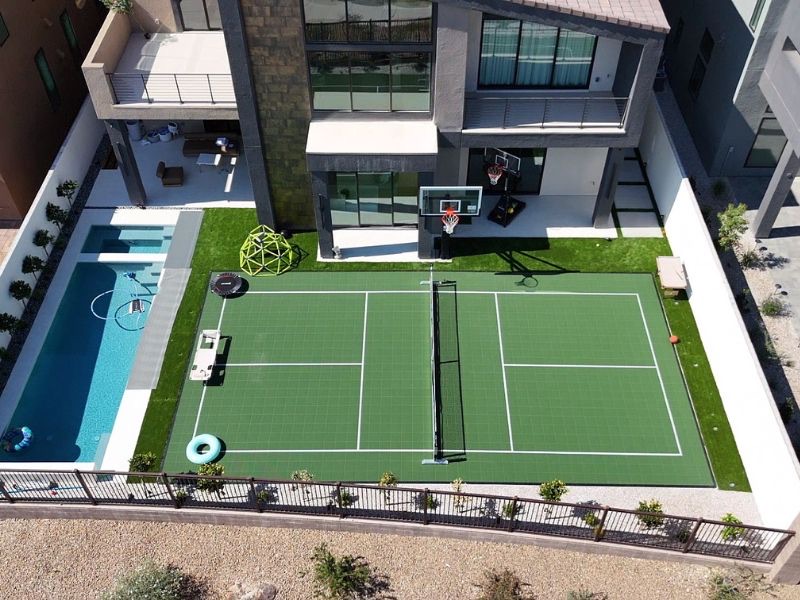
A backyard pickleball court is one of the most practical and enjoyable outdoor upgrades a homeowner can make. Pickleball combines accessibility, fitness, and social interaction in a compact court size, making it ideal for residential properties. For homeowners in Henderson, Nevada, where outdoor living is part of everyday life, a professionally built backyard pickleball court provides year-round recreation without leaving home.

Legendary Sports Construction specializes in designing and building high-quality backyard pickleball courts in Henderson, Nevada. Each court is engineered for durability, consistent play, and long-term performance in desert conditions. Whether you’re introducing the game to family members or refining competitive skills, a custom-built court ensures safety, accuracy, and lasting value.

Build a Custom Backyard Pickleball Court for Fun, Fitness & Entertainment

Pickleball has quickly become one of the fastest-growing sports in the country, largely because it appeals to all ages and skill levels. A custom backyard pickleball court allows homeowners to enjoy spontaneous games, structured practice sessions, or social play without relying on public facilities.

A professionally designed pickleball court backyard setup maximizes both function and enjoyment. Court orientation, surface selection, and spacing are carefully planned to ensure comfortable play during peak sun hours while preserving the overall aesthetics of your outdoor space. In Henderson, where heat and sun exposure are major considerations, thoughtful design is essential for long-term performance.

Whether your goal is casual family recreation or regular competitive play, a custom backyard pickleball court provides a private, convenient, and visually appealing solution.

Key Components of a Quality Backyard Pickleball Court

Court Surface Types

The surface of a backyard pickleball court directly impacts ball bounce, player comfort, and maintenance requirements. Choosing the correct surface is critical for consistent play and durability in Nevada’s climate.

Acrylic-coated concrete surfaces are the most common choice for residential pickleball court builders. They provide predictable ball response, excellent traction, and long-lasting performance when properly installed and sealed.

Asphalt base systems are another outdoor-friendly option. When paired with professional coatings, asphalt courts offer smooth play and effective drainage, though they may require periodic maintenance over time.

Modular tile surfaces provide added cushioning and flexibility. These systems are ideal for homeowners seeking reduced joint impact, quick installation, or multi-use functionality. Modular tiles also allow for easy repairs and customization.

Each surface option is selected based on usage frequency, maintenance preferences, and long-term performance expectations.

Court Dimensions & Layout

A standard pickleball court measures 20 feet wide by 44 feet long, suitable for both singles and doubles play. In addition to the playing area, proper layout includes non-volley zones, accurate line striping, and adequate clearance around the court.

Residential pickleball court builders often customize layouts to fit available backyard space while maintaining correct proportions. Clearance around the court allows for safe movement, ball retrieval, and optional seating or landscaping features.

Court orientation is especially important in Henderson. Aligning the court to minimize sun glare during morning or evening play significantly improves visibility and comfort, enhancing the overall playing experience.

Net Systems & Court Accessories

High-quality net systems are essential for consistent pickleball play. Proper net height, tension, and anchoring ensure reliable performance and long-term durability.

Court accessories can further enhance functionality and comfort. Optional additions may include fencing to contain balls, lighting for evening play, and wind screens to improve consistency during breezy conditions. These features help transform a simple backyard court into a fully functional recreational space.

Comparison Table – Backyard Pickleball Court Surface Options

Surface TypePlay FeelMaintenance LevelDurabilityBest For
Acrylic-Coated ConcreteFirm, consistent bounceLowVery HighLong-term residential use
Asphalt with CoatingSmooth, outdoor-friendlyModerateHighCost-effective outdoor courts
Modular Tile SystemCushioned, flexibleLowHighJoint comfort and multi-use

This comparison highlights how surface selection affects playability, upkeep, and long-term performance.

Benefits of a Backyard Pickleball Court

A backyard pickleball court offers more than entertainment—it enhances lifestyle and property value.

It provides convenient at-home recreation, encouraging regular exercise without travel or membership fees. Pickleball is low-impact, making it suitable for players of all ages while still delivering cardiovascular benefits.

Because pickleball courts require less space than larger sports courts, they fit comfortably into many Henderson backyards. Professional construction ensures materials and finishes withstand Nevada’s heat, sun exposure, and seasonal temperature changes.

Beyond recreation, a well-designed pickleball court backyard feature enhances property appeal, adding a unique and functional outdoor amenity that supports modern living.

Our Backyard Pickleball Court Construction Process

Consultation & Design

Every project begins with a detailed consultation. We evaluate backyard size, drainage conditions, sun exposure, and intended use to design a custom court layout that balances playability with aesthetics.

This phase ensures the court integrates seamlessly with your property while meeting performance and safety standards.

Site Preparation

Proper site preparation is essential for long-term success. Grading, base construction, and drainage planning create a stable foundation that prevents cracking, water pooling, and uneven surfaces.

In Henderson’s desert environment, professional preparation is critical to maintaining surface integrity over time.

Surface Installation

Once the base is prepared, the selected surface is installed using proven methods. Acrylic coatings are applied evenly for consistent bounce, modular tiles are secured for stability, and asphalt systems are finished to withstand outdoor conditions.

This step ensures a uniform playing surface designed for durability and comfort.

Striping & Accessories

Accurate court striping defines non-volley zones, baselines, and sidelines with precision. Net systems are installed at regulation height, and optional accessories such as fencing or lighting are added as requested.

These finishing touches complete the court and enhance usability.

Final Inspection

Before completion, the court undergoes a full inspection. Dimensions, surface quality, striping accuracy, and net performance are verified to ensure the court is ready for play and built to last.

Frequently Asked Questions (FAQs)

What is the best size for a backyard pickleball court?

A standard pickleball court is 20 feet by 44 feet. Backyard courts may include additional clearance around the playing area for safety, seating, and ball retrieval.

What is the best surface for an outdoor pickleball court?

Acrylic-coated concrete is the most popular choice for outdoor courts due to its durability, consistent bounce, and low maintenance. Modular tile systems are also effective for homeowners seeking added cushioning.

What is the cheapest way to make a pickleball court?

Temporary striping on an existing concrete or asphalt surface is the most affordable option. However, professional pickleball court construction Nevada homeowners invest in offers superior performance, safety, and longevity.

What is the 10 second rule in pickleball?

The 10-second rule requires the server to serve the ball within 10 seconds after the score is called. This rule helps maintain pace of play during matches.

Can you play pickleball on a concrete driveway?

Yes, pickleball can be played on a concrete driveway with temporary nets and striping. However, a professionally built backyard pickleball court provides better surface quality, safety, and long-term performance.

Build Your Backyard Pickleball Court in Henderson, Nevada

A custom backyard pickleball court is an investment in fitness, entertainment, and outdoor living. With expert design, durable materials, and professional installation, your court becomes a long-term feature that enhances both lifestyle and property value.

For homeowners searching for reliable residential pickleball court builders, professional pickleball court construction in Henderson, Nevada ensures a court that performs consistently, looks exceptional, and stands up to the desert environment for years to come.

Sign up for our Newsletter

Volleyball Court Backyard: Build a Fun & Functional Outdoor Play Space

backyard volleyball

Volleyball Court Backyard: Build a Fun & Functional Outdoor Play Space

A volleyball court backyard setup is more than just a recreational upgrade—it’s a statement piece that transforms how you use your outdoor space. From casual weekend games to organized family tournaments and social gatherings, a professionally built backyard volleyball court creates a dedicated area for movement, competition, and connection.

Legendary Sports Construction specializes in custom home volleyball court construction designed for long-term durability, safety, and performance. Every court is engineered to handle intense sun exposure, temperature swings, and regular use, making it an ideal solution for homeowners in Arizona and Nevada who want reliable outdoor recreation without constant upkeep.

Unlike temporary or DIY installations, professional backyard volleyball court installation ensures correct dimensions, proper drainage, and materials chosen specifically for your environment and lifestyle.


Create a Custom Backyard Volleyball Court for Recreation & Fitness

A custom backyard volleyball court turns underutilized yard space into a personal recreation destination. It encourages physical activity, supports social interaction, and adds structure to outdoor entertainment in a way few other home features can.

Volleyball is a low-barrier sport that appeals to all ages, making it ideal for families with children, teens, and adults alike. Whether your goal is fitness, fun, or hosting guests, a volleyball court backyard layout can be tailored to your exact needs. Some homeowners prefer a relaxed sand volleyball court backyard for barefoot play, while others want a more structured layout that supports skill development and competitive matches.

Customization ensures your court works with your property—not against it. From orientation and spacing to surface selection and net systems, each design choice impacts playability, comfort, and longevity.

Key Components of a Quality Backyard Volleyball Court

Court Surface Types

The surface is one of the most important decisions in any backyard volleyball court installation. It determines how the court feels underfoot, how much maintenance it requires, and how it performs over time.

Sand volleyball courts are the most popular option for residential installations. They provide excellent shock absorption, reduce joint strain, and create a classic beach-style playing experience. Properly selected and installed sand drains efficiently and resists compaction, ensuring consistent play.

Grass volleyball courts offer a natural appearance and blend seamlessly into landscaped yards. They are best suited for casual play and recreational use but require ongoing maintenance, including watering, mowing, and surface leveling.

Synthetic or modular surfaces deliver consistent traction and predictable ball response. These systems are ideal for homeowners who want minimal maintenance and a clean, modern look. They are also highly durable and perform well in extreme heat.

Each surface option can be customized to match your usage frequency, aesthetic preferences, and maintenance expectations.

Court Dimensions & Layout

A regulation volleyball court measures 60 feet long by 30 feet wide, but residential volleyball court builders often adjust layouts to fit backyard constraints. Custom sizing allows homeowners to enjoy a functional court even on smaller or irregularly shaped properties.

Equally important is the space surrounding the court. Adequate clearance on all sides allows players to move safely, chase balls, and avoid obstacles. Proper spacing also creates room for seating, shade structures, or landscaping features that enhance the overall experience.

Orientation matters as well. Aligning the court to minimize sun glare during peak play hours significantly improves comfort and visibility, especially in desert environments.

Net Systems & Boundary Markings

A professionally installed net system is essential for consistent, safe play. Net height must be accurate, tension properly maintained, and posts securely anchored to withstand repeated use.

Boundary markings clearly define the playing area and ensure fair gameplay. These can be installed using recessed lines, contrasting materials, or removable options depending on the surface type and desired flexibility.

Many homeowners opt for removable or adjustable net systems, allowing the court to serve multiple purposes when volleyball isn’t being played.

Comparison Table – Backyard Volleyball Court Surface Options

Surface TypePlay StyleMaintenance LevelDurabilityBest For
SandTraditional, impact-reducingModerateHighFamily play, beach-style volleyball
GrassCasual, naturalModerate–HighMediumInformal recreation
Synthetic / ModularCompetitive, consistentLowVery HighLow-maintenance, year-round use

This comparison highlights how surface selection directly impacts maintenance, longevity, and play experience.

Benefits of a Backyard Volleyball Court

Investing in home volleyball court construction offers benefits that extend well beyond recreation.

A backyard volleyball court encourages regular outdoor activity, helping families stay active without leaving home. It creates a natural gathering point for friends and guests, making entertaining effortless and engaging.

Custom layouts ensure your court fits your yard perfectly, while professional construction ensures durability in harsh desert conditions. Over time, a volleyball court backyard feature can enhance property appeal by adding a unique, functional amenity that sets your home apart.

For many homeowners, the court becomes a centerpiece of outdoor living—used as often for social connection as for sport.

Our Backyard Volleyball Court Construction Process

Consultation & Design

Every project begins with a detailed consultation. We evaluate your yard size, layout, soil conditions, drainage, and intended use. This allows us to design a custom backyard volleyball court that fits seamlessly into your property while meeting performance and safety standards.

Design considerations include surface selection, court orientation, spacing, and optional features such as lighting or seating areas.

Site Preparation

Proper site preparation is critical to long-term success. This phase includes grading, drainage planning, and base construction to ensure a stable, level foundation.

Poor preparation can lead to uneven surfaces, standing water, and premature wear. Professional preparation eliminates these issues and sets the stage for a court that performs consistently for years.

Surface Installation

Once the site is prepared, the selected surface is installed using proven techniques tailored to the material type. Sand is carefully layered and leveled, grass is established with proper soil support, and synthetic systems are installed over precision-built bases.

This step ensures uniform performance, player safety, and visual consistency.

Net & Boundary Installation

Net systems are installed at regulation height with secure anchoring to maintain proper tension. Boundary markings are added with accuracy to ensure clear visibility and reliable gameplay.

Optional upgrades allow for removable components or multi-use configurations that add flexibility to your outdoor space.

Final Inspection

Before project completion, every aspect of the court is inspected. Surface consistency, alignment, net tension, and overall readiness are verified to ensure the court is safe, functional, and ready for play.

Frequently Asked Questions (FAQs)

What is the size of a volleyball court in the backyard?

A standard volleyball court is 60 feet by 30 feet. In backyard installations, dimensions may be adjusted slightly to fit available space, but maintaining proportional sizing and safety clearance is essential for enjoyable play.

What is the best surface for a volleyball court?

The best surface depends on how the court will be used. Sand is ideal for traditional play and impact reduction, synthetic surfaces are best for low maintenance and consistency, and grass works well for casual recreation with regular upkeep.

How to create a volleyball court?

Creating a volleyball court involves proper site evaluation, grading, drainage, surface installation, and net setup. Professional backyard volleyball court installation ensures safety, durability, and accurate dimensions that DIY solutions often lack.

How much space is needed for volleyball?

In addition to the court itself, several feet of clearance on all sides is recommended. This allows for safe movement, ball retrieval, and spectator areas, improving both safety and enjoyment.

What kind of sand is used for volleyball courts?

Washed, angular sand with a consistent grain size is typically used. This type of sand drains well, resists compaction, and provides stable footing while remaining comfortable for barefoot play.

Build Your Custom Backyard Volleyball Court

A custom backyard volleyball court is an investment in health, entertainment, and outdoor living. With thoughtful design, durable materials, and professional construction, your court becomes a long-term feature that enhances how you use your property.

Whether you envision a relaxed sand volleyball court backyard or a structured recreational setup, working with experienced residential volleyball court builders ensures your project is built correctly from the ground up—delivering performance, safety, and enjoyment for years to come.

Sign up for our Newsletter

Basketball Court Hardwood Flooring in Gilbert, AZ: Professional & Durable

basketball court hardwood flooring Gilbert AZ

Basketball Court Hardwood Flooring in Gilbert, AZ: Professional & Durable

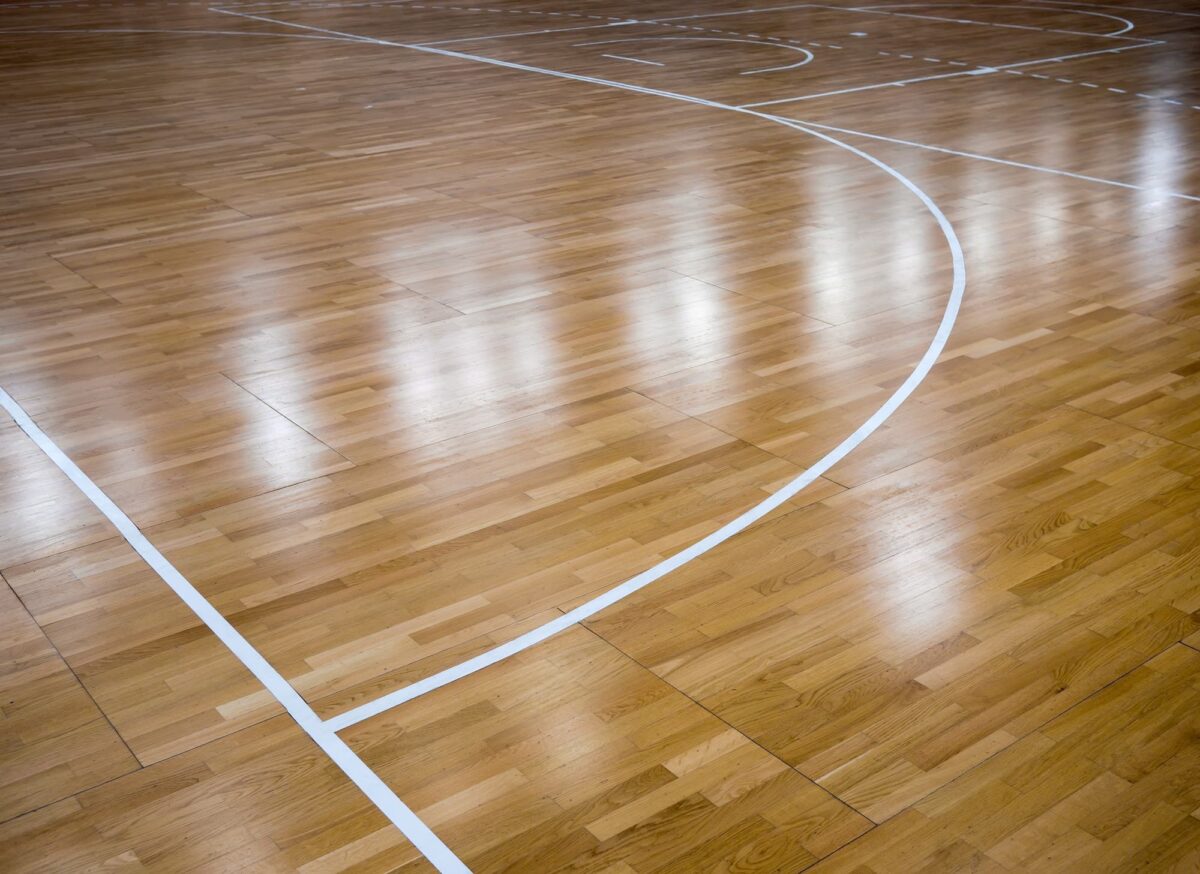
Hardwood flooring is the gold standard for basketball courts, providing superior performance, durability, and aesthetic appeal. When athletes step onto hardwood, they expect a responsive, professional-quality environment that elevates every dribble, pass, and shot. Legendary Sports Construction specializes in basketball court hardwood flooring Gilbert AZ installation for residential, community, and recreational facilities across Arizona and Nevada. From private home gyms to large multi-sport complexes, our team ensures precise craftsmanship and expert flooring performance that meets high-level standards.

Whether the goal is to enhance athletic performance, create a safe and durable indoor play space, or add value to a property, hardwood flooring stands unmatched. With decades of construction and installation experience, we help homeowners, architects, schools, and facility managers achieve a professional court that delivers consistency, longevity, and visual excellence every day.

Features of Hardwood Basketball Courts

Durable & Long-Lasting:

Premium hardwood withstands heavy use.
→ A properly installed indoor hardwood basketball court is engineered to hold up under constant foot traffic, abrupt directional changes, and dynamic athletic movements. Maple hardwood — specifically MFMA-certified maple — is the most widely trusted choice due to its density and resistance to impact damage. This level of durability makes hardwood ideal for everything from youth training sessions to intense recreational leagues.

Professional Performance:

Offers consistent ball bounce and traction.
→ The surface system delivers shock absorption, player comfort, and optimal grip, reducing the risk of slipping while supporting athletic explosiveness. A professional-grade residential basketball court flooring option ensures performance aligns with what players experience on official competition courts.

Custom Markings:

Lines and layouts for basketball, volleyball, and other indoor sports.
→ Hardwood flooring offers the perfect canvas for multi-use hardwood court installation, making it extremely versatile. Regulation basketball lines are applied with pinpoint accuracy, but many homeowners and community centers add volleyball courts, pickleball lines, or gym layout zones for multiple fitness activities.

Elegant Appearance:

Enhances the visual appeal of any indoor sports facility or home gym.
→ Natural maple flooring is visually stunning. Its warm tones pair beautifully with modern sports lighting and elevated gym design. Hardwood courts reflect a level of quality and sophistication that few other flooring systems can replicate.

Low Maintenance:

Easy to clean and maintain with proper care.
→ With simple cleaning procedures, including dust mopping and periodic refinishing, hardwood can look exceptional and perform at a high standard for decades.

Basketball Court Hardwood Flooring Installation Process

Site Assessment & Design

Evaluate space, lighting, and ventilation for optimal performance.
→ Our professional hardwood court installation process starts by analyzing room structure, ceiling height, airflow, and subfloor stability. Proper environmental control is key to preventing wood expansion, warping, or cupping.

Subfloor Preparation

Level, reinforce, and install a moisture-resistant base.
→ Hardwood flooring must rest on a properly constructed subfloor system — often a shock-absorbing sleeper base or padded resilient system to enhance comfort and protect athletes’ joints. We ensure precise leveling to eliminate dead spots and uneven performance.

Hardwood Installation

Lay high-quality hardwood planks with precision alignment.
→ We use high-quality maple planks milled to strict tolerances. Planks are installed with a tongue-and-groove system to ensure a stable and seamless playing surface. Every step emphasizes consistency, structural integrity, and athletic play performance.

Court Markings & Finishing

Apply lines for basketball and multi-sport use.
→ Through laser-guided measurement and expert finishing techniques, we paint crisp, regulation-accurate court lines customized to client needs, including custom hardwood sports and game court Arizona projects with logos and branding applications.

Sanding & Sealing

Finish the surface to protect wood and enhance performance.
→ Multiple sanding passes produce a perfectly smooth finish before sealing the court with durable coatings that resist abrasion and provide ideal traction. This finalizes the aesthetic and supports long-term durability.

Final Inspection & Maintenance Tips

Ensure proper installation and provide care guidance.
→ After installation, our crew ensures everything meets professional standards — from surface responsiveness to line accuracy — and offers advice for preserving your new flooring for decades.

Benefits of Hardwood Basketball Flooring

Provides a professional-grade playing surface
→ Indoor hardwood systems mimic professional and collegiate courts, giving every athlete the environment to thrive.

Safe and consistent for all skill levels
→ Shock-absorbing systems help reduce injury likelihood and fatigue, making them ideal for youth sports development and long-term athletics.

Enhances property value and indoor aesthetics
→ Home gyms and recreational centers with hardwood flooring instantly increase in appeal, style, and resale value.

Customizable layouts for multi-use functionality
→ Add courts for basketball, volleyball, pickleball, and more — a hallmark of multi-use hardwood court Arizona installations.

Long-lasting and easy to maintain with proper care
→ Regular refinishing keeps floors looking new and performing at peak capability for decades.

Frequently Asked Questions

What is the best hardwood floor for a basketball court?
→ MFMA-certified maple is the industry standard due to its density, uniform grain, and durability.

How much to install a hardwood basketball court?
→ Pricing varies by project size and flooring system. Home courts are often more budget friendly, while full recreational facilities involve more advanced systems and markings.

What kind of flooring is used in basketball courts?
→ Hardwood maple flooring is the primary material for high-performance athletics.

What type of wood is used for a basketball court?
→ Northern Hard Maple is the premium choice because of its stability and shock-absorbing qualities.

What is the best surface for a basketball court?
→ Indoor competitive play favors hardwood. Outdoor courts typically rely on concrete or asphalt to withstand weather conditions.

Why Choose Legendary Sports Construction?

As professional hardwood court builders, we deliver unmatched quality, backed by specialized installation expertise and high-grade materials. From a single-sport basketball court to a multi-use hardwood court installation, every detail is custom-designed to match your aesthetic goals, budget, and performance needs.

We proudly serve:
🏀 Gilbert, Phoenix, Scottsdale, Mesa, Chandler, Glendale, Peoria
🏀 And communities throughout Arizona & Nevada

Whether planning a new residential basketball court flooring project or upgrading an existing gym, we provide world-class court design that will enhance athletic potential and indoor recreation for years to come.

Take the Next Step — Build Your Hardwood Court Today

Transform your home or facility with a durable, professional-quality hardwood sports court. Contact Legendary Sports Construction for a custom consultation and detailed project planning.

📞 Ready to elevate your indoor game?
Let’s build your hardwood court with precision and passion.

Sign up for our Newsletter

Hardwood Court: Professional-Quality Flooring for Indoor Play

hardwood court installation

Hardwood Court: Professional-Quality Flooring for Indoor Play

Hardwood courts have long been recognized as the gold standard for indoor athletic flooring. They are trusted in NBA arenas, high school gymnasiums, collegiate facilities, community centers, and luxury home courts. The main reason is simple: no other surface matches the true hardwood court’s combination of durability, traction, responsiveness, and natural beauty.

Legendary Sports Construction specializes in hardwood court installation for both residential and commercial indoor environments across Arizona and Nevada. Whether you’re building a private residential hardwood court, transforming a recreational space into a competition-ready facility, or upgrading a commercial gym, our team provides expert craftsmanship from design to completion.

Indoor hardwood courts must withstand constant play, heavy foot traffic, and the quick rhythmic movements of sports such as basketball, volleyball, pickleball, futsal, and indoor training activities. With the right court construction and proper maintenance, a hardwood court can last decades without losing its performance characteristics.

Legendary Sports Construction pays attention to every detail — subfloor stability, plank alignment, shock absorption, and marking accuracy — because indoor sports demand a surface that protects athletes, elevates gameplay, and enhances the entire space.

Whether for schools, sports training centers, or homeowners in Arizona and Nevada seeking a custom indoor sports and game court, hardwood flooring is the premier choice for performance, safety, and long-term value.

Features of Hardwood Courts

Durable & Resilient: High-quality hardwood withstands heavy use.
Hardwood courts are typically made from premium-grade maple due to its tight grain, shock absorption, and incredible durability. This ensures the flooring resists dents, warping, and wear from athletic shoes and regular gameplay. Indoors, the surface is protected from weather exposure — making it far more lasting than outdoor flooring alternatives.

Professional Performance: Provides excellent traction and ball bounce.
For competitive sports, hardwood delivers predictable ball response, consistent footing, and shock absorption to reduce joint strain. This is why indoor basketball hardwood courts are found in the most demanding athletic environments, from recreational gyms to professional NBA facilities.

Aesthetic Appeal: Natural wood finish adds elegance to indoor spaces.
The rich appearance of polished maple adds sophistication, making the court not only a functional sports floor but also an attractive architectural feature. Homeowners often love how a hardwood court enhances private indoor gyms.

Customizable Layouts: Markings for basketball, volleyball, and other indoor sports.
Court lines can be applied for a single-use configuration — such as basketball — or designed as a multi-use hardwood court in Arizona or Nevada for volleyball, badminton, or pickleball. Custom logos, team colors, school branding, and graphics can also be integrated.

Long-Lasting: Proper installation and maintenance ensure years of reliable play.
When installed by professional hardwood court builders, the floor can provide decades of performance. Regular refinishing keeps the court fresh, safe, and visually appealing year after year.

Hardwood Court Installation Process

Site Assessment & Design – Evaluate space, lighting, and ventilation for optimal performance.
Every successful project begins with professional planning. Experts examine ceiling height, structural support, temperature control, and layout to ensure compliance with safety and dimensional standards.

Subfloor Preparation – Level and install a moisture-resistant subfloor for stability.
A reliable subfloor is critical. Hardwood courts rely on shock-absorbing subfloor systems that enhance player comfort and protect the wood from moisture and uneven settling.

Hardwood Flooring Installation – Lay premium hardwood planks with precise alignment.
Installation includes acclimating the wood to the indoor climate and securing each plank with exact spacing. Precision ensures consistent bounce and eliminates dead spots.

Court Markings & Finishing – Apply lines for basketball, volleyball, or multi-use configurations.
Court lines are measured using regulation standards to ensure accurate gameplay. Custom markings allow versatility for indoor hardwood basketball courts and other sports.

Sanding & Sealing – Finish the surface for durability, traction, and protection.
Multiple layers of sealant protect against scuffs, scratches, and moisture infiltration. This high-performance coating delivers the iconic shine and safe grip hardwood courts are known for.

Final Inspection & Maintenance Guidance – Ensure proper installation and provide care tips for longevity.
Customers receive cleaning instructions, humidity management advice, and refinishing timelines to maximize the lifespan of their investment.

Benefits of a Hardwood Court

Professional-grade performance for sports and recreation
Athletes instantly feel the difference — smoother movement, faster direction changes, and optimal ball response.

Safe, consistent playing surface
A properly cushioned hardwood reduces fatigue and lowers the risk of ankle and knee injuries.

Enhanced indoor aesthetics and property value
Homeowners investing in a residential hardwood court enjoy higher property appeal and a luxurious sports environment.

Custom layouts for multiple sports
Multi-use designs expand indoor recreation potential, making the court a hub for training and fun.

Long-lasting and easy to maintain with proper care
Refinishing and periodic resurfacing preserve traction, durability, and beauty — ensuring the court stays game-ready year-after-year.

Frequently Asked Questions

What kind of flooring is best for a court?
Hardwood is widely considered the top choice for indoor basketball and volleyball courts due to its grip, responsiveness, and longevity.

What is the cheapest way to make an outdoor basketball court?
Asphalt or concrete is typically the most affordable option — however, hardwood courts are designed exclusively for indoor use.

What is the cheapest option for a basketball court?
Modular sports tiles generally offer lower cost than hardwood, but they do not provide the same professional performance.

What is the best material for an outdoor basketball court?
Outdoor courts require weather-resistant materials such as acrylic-coated concrete, asphalt, or modular UV-protected tiles — not hardwood.

What are hard courts made of?
Hardwood courts use maple, engineered wood systems, or hybrid floating subfloor systems topped with specialized finishes.

What is the toughest hardwood floor?
Northern maple is one of the toughest and most widely used hardwood materials for professional indoor courts because of its durability and resilience.

Ready to Build Your Indoor Hardwood Court?

Legendary Sports Construction provides professional hardwood court installation services throughout Arizona and Nevada, helping residential and commercial clients achieve top-tier indoor playing environments.

From backyard indoor court rooms to school gyms and private training centers — our courts are built to perform.

📞 Would you like me to add a Call-to-Action with phone number, contact button text, or service area cities?

Sign up for our Newsletter

Backyard Courts: Custom Sports Spaces for Your Home

backyard courts

Backyard Courts: Custom Sports Spaces for Your Home

Backyard courts are one of the most exciting and valuable upgrades homeowners can add to their property. Designed for year-round recreation, exercise, and family fun, custom courts transform outdoor spaces into personal sports hubs without ever needing to leave home. Legendary Sports Construction specializes in backyard courts across Arizona and Nevada—two regions that enjoy ideal weather for outdoor athletics. From professional-level basketball play to family-friendly multi-sport setups, we design courts tailored to your lifestyle, skill level, and available outdoor square footage.

Whether your goal is competitive training, outdoor entertainment for the kids, or creating a shared gathering place for friends and neighbors, our home sports and game court builders Arizona provide expert guidance and precision installation. We ensure that every project enhances both the beauty and functionality of your property while maintaining long-term durability and safety.

Types of Backyard Courts

Every homeowner has different goals. Some want a college-style basketball practice space. Others want energetic family volleyball or a versatile setup for multiple sports. Legendary Sports Construction builds custom backyard basketball and volleyball courts, multi-use courts, and other recreational surfaces based on your unique vision.

Basketball Courts

A custom home basketball court can range from a compact half-court layout to a full tournament-ready space. Our design process ensures proper layout, hoop placement, surface durability, and court safety.

✔ Full or half-court build options
✔ Concrete, asphalt, or modular performance tiles
✔ In-ground, adjustable, or professional-grade hoops

We ensure the right size and markings for your style of play—pickup games, shooting practice, or advanced training for youth athletes.

Volleyball Courts

Backyard volleyball courts bring indoor-court fun outdoors. Perfect for family fun and game nights, they can be built on a variety of surfaces to match your preferred play style.

✔ Sand courts for beach-style gameplay
✔ Grass courts for easy maintenance
✔ Synthetic modular courts for advanced bounce and traction
✔ Regulation net height and accurate boundary lines

Whether for casual bump-set-spike fun or more serious training, our courts are designed for performance and longevity.

Multi-Use Backyard Courts

If you love multiple sports—or have a household with varied interests—the best investment is a multi-use backyard court. These adaptable spaces allow for endless combinations:

✔ Basketball + pickleball
✔ Volleyball + badminton
✔ Family dodgeball + foursquare
✔ Youth training + recreational activities

Versatile layouts support year-round engagement and maximize your budget and available yard space. These courts also suit communities and HOAs wanting multiple activities in one footprint.

Backyard Court Construction Process

Creating your custom sports court involves more than painting lines. Our team follows a refined process that guarantees safety, performance, and long-term endurance in Arizona and Nevada climates.

Step 1 — Site Assessment & Planning

We measure available space and examine:

  • Landscape slope
  • Water drainage patterns
  • Sun exposure (for ideal court orientation)
  • Soil stability and grading conditions

This ensures the court fits naturally into your environment.

Step 2 — Design & Layout

You choose:

  • Court type(s)
  • Sport line configurations
  • Custom logos, colors, and finishes
  • Hoop or net systems
  • Fencing, lighting, or seating add-ons

Dimensional planning optimizes gameplay without crowding your outdoor area.

Step 3 — Excavation & Base Preparation

Our certified construction team grades and compacts the ground to create a stable foundation. A professional base ensures:

✔ Proper water runoff
✔ No shifting or cracking
✔ Long-term structural strength

Step 4 — Surface Installation

Depending on the sport and usage needs:

  • Concrete for competitive basketball
  • Asphalt for cost-effective builds
  • Modular/synthetic tiles for multi-sport versatility
  • Sand or grass for exhilarating volleyball play

Each surface is installed with precision for exceptional ball response and athlete safety.

Step 5 — Equipment Installation

We install professional-grade:

  • Adjustable basketball hoop systems
  • Volleyball poles and nets
  • Pickleball or multi-sport lines
  • LED lighting (optional)

Accuracy matters—we ensure everything aligns to regulation standards and personal preferences.

Step 6 — Final Inspection & Maintenance Tips

No project is complete until our team approves playability and safety. We walk you through upkeep practices to preserve your court’s appearance and performance for years to come.

Benefits of Backyard Courts

A personalized game court brings unmatched value to home life. Beyond recreational fun, the benefits include:

Encourages Family Fitness & Active Living

Skip the screens and play together!

Sports activities boost:

✔ Coordination
✔ Endurance
✔ Confidence
✔ Healthy competition

Kids and adults get more outdoor movement—a huge win for wellness.

Increases Property Value & Curb Appeal

A professionally installed backyard recreation court installation enhances resale desirability and overall market worth. Buyers appreciate outdoor features that support lifestyle and entertainment.

Highly Durable for Arizona & Nevada Climates

Our materials handle:

  • UV exposure
  • Temperature swings
  • Heavy foot traffic

Surfaces stay smooth, steady, and safe for years—even in desert environments.

Fully Customizable Design

Choose your:

🎨 Colors
🏀 Surface type
📏 Dimensions
🔦 Lighting
🎯 Accessory upgrades

Backyard courts reflect your personal style while maximizing play space.

Professional Installation = Peace of Mind

DIY courts often struggle with cracking, poor playability, or unsafe edges. With Legendary Sports Construction:

✔ Safety zones are included
✔ Surface performance is optimized
✔ Lines are straight and regulation-aware
✔ Installations are done right the first time

Your investment stays beautiful and functional long-term.

Frequently Asked Questions

Do you need a permit to build a basketball court in your backyard?

Some Arizona and Nevada municipalities require permits, especially for concrete and fencing additions. We help navigate local regulations to ensure compliance.

How much would it cost to build a basketball court in my backyard?

Costs vary based on:

  • Court size
  • Surface material
  • Multi-sport upgrades
  • Lighting or accessories

We offer transparent estimates tailored to your home.

What is the cheapest way to make an outdoor basketball court?

Asphalt is generally the most affordable durable surface. Opting for a half-court layout and budget-friendly equipment also helps reduce cost.

What is the minimum size for a backyard basketball court?

A functional half-court can start around 30 ft × 30 ft, though more space improves player safety and game flow.

What is the cheapest way to build a tennis court?

Multi-use game tiles or converting an unused concrete slab can reduce tennis court installation costs while still allowing accurate play lines.

A custom backyard court offers something for everyone—friendly games, family bonding, and a private place to stay active. Whether you’re dreaming of a pro-style basketball setup or a versatile residential sports and game court installation, our experts develop solutions tailored to your vision and property.

From multi-use backyard courts to volleyball and basketball-specific builds, Legendary Sports Construction delivers stunning, long-lasting sports spaces designed for everyday fun. Let us help you bring the joy of athletic play right outside your door.

🏀 Spike. Shoot. Score.
Your home court advantage starts here.

Sign up for our Newsletter

Backyard Basketball Court Dimensions: Planning the Perfect Court

backyard basketball court

Backyard Basketball Court Dimensions: Planning the Perfect Court

Designing a home basketball court is an exciting upgrade for any property, especially in year-round warm climates like Arizona and Nevada. However, the key to a successful installation lies in choosing the correct backyard basketball court dimensions. Whether you want a regulation-style play area or a compact driveway practice zone, proper sizing ensures safety, ideal ball bounce, and an enjoyable playing experience for athletes of all ages.

Legendary Sports Construction specializes in residential basketball court planning, helping homeowners optimize their available space while staying true to performance standards. With careful measurement and expert guidance, your backyard can transform into a high-quality basketball environment that fits the way you and your family love to play.

Standard Dimensions for Backyard Basketball Courts

Basketball courts come in multiple size configurations depending on space, purpose, and budget. Below are the most common measurements used for home court installations.

Half-Court Dimensions

Half-courts are the most popular design for residential properties. They provide ample room for shooting practice, dribbling, one-on-one matchups, and driveway games.

Recommended sizing:

  • Length: 42–50 feet
  • Width: 47–50 feet

This layout includes enough space for free-throw practice, perimeter shots, and realistic gameplay flow.

Full-Court Backyard Basketball Dimensions

If the property supports a larger build, a full-court layout allows for advanced skill development, competitive games, and full-speed conditioning.

Standard full court:

  • Length: 84 feet
  • Width: 50 feet

This matches high-school regulation size and is ideal for serious training or private athletic development.

Hoop Height

  • Standard height: 10 feet
  • Adjustable hoops allow young players to learn proper mechanics and build confidence through each stage of growth.

Safety Zones

To prevent accidents and obstructions:

  • Minimum clearance: 3–5 feet around all edges
  • Extra space also allows room for seating, accessory storage, or landscaping

This buffer supports fluid court movement and minimizes the risk of injuries from colliding with walls or boundaries.

Factors to Consider When Planning Court Dimensions

Not every backyard can hold a regulation-sized build — and that’s perfectly okay. The goal of home basketball court layout planning is to maximize the fun and functionality of the area you have available.

Here’s what to consider:

Available Space

Measure the full usable backyard area — including clearances for fencing, trees, electrical utilities, and patio structures. The court must fit the yard comfortably rather than dominate or restrict it.


Intended Use

Ask:
Are you planning for casual play or competitive training?

  • Half-court: great for youth players, family recreation, and general fitness
  • Full-court backyard basketball: ideal for advanced athletes and more intense drills

The use-case guides design decisions and prevents wasted space.

Surface Type

Your chosen court surfacing affects foundational needs:

  • Concrete = longest lifespan and best ball response
  • Asphalt = budget-friendly but needs more maintenance
  • Modular tiles = cushioned and visually customizable

Material selection may alter the required footprint slightly since edging systems differ.

Multi-Use Options

Many families love backyard sports and game court Arizona configurations that include:

  • Pickleball lines
  • Volleyball setups
  • Shooting cages
  • Multi-sport markings

Dual-use and triple-use courts ensure every inch of the surface is enjoyed.

Hoop Type & Placement

Different hoop systems require different spacing:

  • In-ground systems need secure concrete footing and overhang clearance
  • Portable hoops allow relocation but may interrupt baseline play
  • Wall-mounted hoops conserve space in compact layouts

Placement determines court orientation, safety margins, and sight lines.

Comparison Table – Backyard Court Sizes

Court TypeDimensions (Length × Width)Best ForSpace Needed (incl. safety zone)
Compact Driveway Practice30–35 ft × 25–30 ftSmall yards, shooting drills45 ft × 40 ft
Standard Half-Court42–50 ft × 47–50 ftRecreational games60 ft × 60 ft
High-School Full Court84 ft × 50 ftCompetitive play100 ft × 60 ft

This quick guide helps homeowners visualize what will realistically fit before moving to the construction phase.

Benefits of Using Proper Court Dimensions

Accurate sizing is the foundation for a high-performing backyard court. Here’s what proper planning guarantees:

Maximized playability and comfort for all players
Correct hoop and line positioning for real-game practice
Planned circulation areas prevent accidents and missteps
Future resurfacing or expansions remain easy and cost-effective
Professionally designed courts feel authentic and balanced

With guidance from expert builders, even non-regulation courts can deliver pro-level experience and joy.

Frequently Asked Questions

What is the minimum size for a backyard basketball court?

The absolute minimum for functional play is around 30 ft × 30 ft, but this allows only limited practice and small shooting areas. Most homeowners aim for at least a partial half-court.

What is the size of an outdoor basketball court?

Full-size outdoor courts follow standard school-regulation measurements:
84 ft × 50 ft for high-school level play.

Is 30×30 big enough for a basketball court?

It works for introducing fundamentals — dribbling, layups, and free throws — but it’s too small for proper half-court basketball dimensions. It’s best used as a fun practice zone, not full play.

What are the dimensions of a typical basketball court?

Professional indoor arenas measure 94 ft × 50 ft (NBA/NCAA).
High-school courts use 84 ft × 50 ft.
Residential courts scale proportionately based on available backyard space.

What is the cheapest way to build a basketball court in your backyard?

Choosing asphalt instead of concrete and skipping upgrades like lighting or acrylic coatings will lower upfront costs. However, asphalt may require more frequent repairs.

Working with professionals saves money long-term by preventing mistakes and rework.

Building a home basketball environment is a rewarding investment — it encourages regular exercise, family bonding, and skill development while elevating property value. The right backyard basketball court dimensions can turn any outdoor space into the ultimate recreational destination.

For homeowners across Arizona and Nevada, Legendary Sports Construction delivers customized designs based on:

🏀 Property size
🏀 Player age and skill level
🏀 Surface type preferences
🏀 Multi-use court goals
🏀 Long-term durability expectations

Whether planning a full-court athletic training hub or a compact recreational setup, we ensure residential basketball court planning that optimizes performance, appearance, and value.

From half-court basketball dimensions to complete home basketball court layout solutions, our team is ready to make your project — and your jump shot — a success.

Sign up for our Newsletter

Backyard Basketball Court: Custom Courts for Your Home

backyard basketball court

Backyard Basketball Court: Custom Courts for Your Home

A backyard basketball court is one of the most exciting and rewarding additions a homeowner can make. It transforms unused outdoor space into a hub of athletic fun, healthy fitness, and unforgettable memories shared with family and friends. With Arizona and Nevada’s year-round sunshine, there’s no better environment for personalized outdoor courts designed for daily activity and lasting performance.

Legendary Sports Construction specializes in professional residential basketball court installation, delivering custom-designed courts that combine durable surfacing, precise construction, and stunning aesthetics. Our goal is to ensure that every home court allows players to enjoy consistent ball bounce, secure footing, and a safe, level playing area that meets high-quality standards.

Whether the dream is serious basketball training, casual family pick-up games, or a fully branded court with favorite team colors, our home basketball court builders provide expert guidance from start to finish. Your backyard becomes your personal arena — always open, always ready for the next game.

Types of Backyard Basketball Court Surfaces

Choosing the right court surface is crucial for performance, comfort, and long-term value. Legendary Sports Construction offers multiple options tailored to climate, budget, and intended use.

Concrete Courts

Concrete is the top-rated surface option for custom basketball court Arizona installations due to toughness and stability in desert climates.

Benefits include:

  • Durable and long-lasting — ideal for high-traffic outdoor play
  • Handles extreme temperatures and direct sunlight well
  • Can be coated with textured acrylic for better traction and aesthetics
  • Excellent surface for permanent in-ground basketball hoop installation

Concrete creates a professional-level foundation that remains consistent for years with minimal upkeep — perfect for serious players and long-term investment.

Asphalt Courts

Asphalt is another common choice for backyard courts and community play areas.

Advantages:

  • Provides a smooth, resilient surface
  • Budget-friendly compared to concrete
  • Flexibility allows easier repairs if cracks form
  • Great for casual family and neighborhood use

However, it may require more resurfacing over time compared to concrete due to heat expansion, especially in Arizona and Nevada.

Modular Sports Tiles

For homeowners seeking versatility and enhanced comfort, modular backyard basketball courts are a modern and high-performance option.

Key benefits:

  • Shock-absorbing material helps reduce joint stress during intense play
  • Quick installation makes it ideal for backyard transformations
  • Tiles are designed for excellent grip, even after rain
  • Multi-use play: basketball, pickleball, volleyball, futsal, and more

Tiles can be installed over concrete or asphalt bases, creating an adaptable playing surface with vibrant colors and custom court style.

Backyard Basketball Court Construction Process

Legendary Sports Construction follows a meticulous process to ensure your home court performs like a professional installation — properly leveled, completely safe, and built for peak enjoyment.

1️⃣ Site Assessment & Planning

  • Measure backyard size and slope
  • Check drainage and soil stability
  • Discuss desired court size, hoop type, and design features

Proper planning ensures every inch of your space is used effectively.

2️⃣ Design & Layout

  • Select chosen surface (concrete, asphalt, or modular tiles)
  • Determine boundary lines, markings, and any custom graphics
  • Orient court to reduce sun glare and wind impact during play

We create a personalized layout optimized for your property.

3️⃣ Excavation & Base Preparation

  • Level and grade the land
  • Install solid foundation and compacted subgrade
  • Ensure water flows properly away from the court

A strong foundation prevents cracking and shifting later.

4️⃣ Surface Installation

Depending on surface type:

  • Concrete or asphalt is poured, leveled, and cured properly
  • Modular tiles are installed over a sturdy base using locking mechanisms

This ensures durability and top-tier performance.

5️⃣ Hoop Installation

We offer multiple hoop system options:

  • In-ground basketball hoop installation for maximum professionalism
  • Portable systems for flexible placement
  • Wall-mounted hoops for smaller spaces

Every hoop is securely anchored for optimal safety and perfect rim height.

6️⃣ Final Inspection & Maintenance Tips

We check:

  • Levelness and surface stability
  • Hoop alignment and backboard performance
  • Court playability and safety markers

Homeowners receive guidance for long-term upkeep, ensuring the court stays in great shape.

Standard Backyard Basketball Court Dimensions

A backyard court can be built to fit almost any space. However, many homeowners aim for dimensions that reflect real-court proportions:

  • Half-Court Size:
    Typically 42–50 ft long × 47–50 ft wide
    ➤ Best for driveways or moderate backyard spaces
  • Full-Court (if space allows):
    84 ft × 50 ft, matching high school regulations
  • Hoop Height:
    Standard 10 feet, with optional adjustable systems for youth
  • Safety Zones:
    Additional run-off area around the court prevents injuries and allows comfortable play

Even a compact half-court offers substantial practice area for shooting, dribbling, and footwork drills.

Benefits of a Backyard Basketball Court

A custom home court delivers far more than just an area to shoot hoops:

Fitness
Encourages active, healthy lifestyles for kids and adults alike.

Family Bonding
Friends and family gather naturally around the court for games and activities.

Property Enhancement
Adds recreational value and aesthetic appeal, significantly boosting home desirability.

Durability
Professionally installed surfaces are built for years of consistent performance.

Customization
You choose design, size, surfacing, hoop type, and even team-colored striping.

Safety
Proper leveling, anchoring, and surface choice reduce injury risk.

A home basketball court invites convenience — no gym required, no travel necessary, always game-ready.

Frequently Asked Questions

How much does it cost to build a basketball court in your backyard?

Pricing varies depending on size, excavation needs, surface selection, and hoop systems. Concrete and modular tile installations generally cost more but offer the best durability.

How big should a backyard basketball court be?

Most homeowners choose half-court dimensions of approximately 42–50 ft × 47–50 ft, depending on available space.

How do I build a basketball court in my backyard?

Professional construction is recommended.
DIY courts often lack proper leveling and durability, impacting safety and play quality.

What is the best material for a backyard basketball court?

For the Southwest:

  • Concrete + textured coating is the top-performing option for long-term recreation
  • Modular tiles are ideal for comfort and multi-sport play

What is the cheapest option for a basketball court?

Asphalt typically costs less initially, though it requires more frequent maintenance compared to concrete or modular tile courts.

A custom backyard court is one of the best investments a homeowner can make — combining outdoor entertainment, athletic training, and property enrichment in one valuable project. From casual games beneath the stars to competitive weekend tournaments, having your own court keeps kids active and adults energized.

Legendary Sports Construction brings unmatched expertise to backyard basketball court projects across Arizona and Nevada. With professional installation techniques, high-performance surfacing, and precision hoop systems, we ensure every home court is built to last and built to impress.

Whether you want a durable concrete half-court or a vibrant modular tile multi-sport surface, our residential basketball court installation service guarantees outstanding results. We take pride in being the trusted custom basketball court Arizona specialists who transform backyard spaces into premier sports environments.

Your home deserves an exciting upgrade — and your family deserves the fun.
We’re ready when you are. 

Sign up for our Newsletter

Backyard Volleyball Court in Mesa, AZ: Fun, Custom, and Durable

residential volleyball court construction

Backyard Volleyball Court in Mesa, AZ: Fun, Custom, and Durable

A backyard volleyball court is more than just a place to play — it becomes the heartbeat of outdoor gatherings, family fun, and active living. In Mesa, AZ, where sunshine dominates most of the year, having a private court right at home means endless recreation without leaving the property. Legendary Sports Construction is a trusted leader in backyard volleyball court Mesa AZ design and installation, delivering courts that are durable, level, and precisely engineered for competitive or recreational play.

From initial planning and soil preparation to net installation and long-term maintenance guidance, our team of professional volleyball court builders Arizona ensures every detail supports optimal play. Whether you’re looking for a sand experience reminiscent of beach volleyball or a multipurpose synthetic court that can handle both volleyball and other sports, we create fully tailored solutions using industry-best materials built to withstand the Southwest climate.

With a custom-designed backyard court, your home instantly becomes the place where memories are made — friendly games, weekend tournaments, and time spent together outdoors in Arizona’s beautiful weather.

Types of Backyard Volleyball Court Surfaces

Selecting the proper surface is one of the most important decisions in residential volleyball court construction. Each material has its own advantages in terms of performance, maintenance, and cost.

Sand Courts

Sand courts are ideal for outdoor, recreational environments and provide that fun, beach-style play many families love.

Key advantages:

  • Natural cushioning reduces joint strain and impact
  • Encourages athletic conditioning with deeper footing
  • Provides a safer landing surface when diving for the ball
  • Perfect for competitive and casual recreational play

However, proper drainage is essential. Without engineered water control, sand can shift, compact improperly, or wash out. As experts in sand volleyball court installation, we design drainage layers that maintain even, playable surfaces year-round.

Grass Courts

Grass courts are best suited for smaller spaces or homeowners seeking a multipurpose backyard area.

Benefits include:

  • Soft and forgiving on joints
  • Minimal construction required for basic setups
  • Blends beautifully with landscaping

Because grass growth and density vary, occasional leveling and maintenance are required to maintain consistent ball bounce and footing. Still, this option is budget-friendly and suitable for casual play and backyard activities.

Synthetic or Modular Courts

Synthetic and modular tile courts provide premium performance and a clean, professional look.

Advantages:

  • Highly durable and UV-resistant for intense Arizona sunlight
  • Low-maintenance option ideal for heavy use
  • Precise traction for safe and consistent gameplay
  • Can be used for multi-sport activities, including basketball or pickleball

These elevated systems can be installed over concrete or engineered base layers, making them perfect for backyard sports enthusiasts who want versatility in their backyard sports and game court installation.

Backyard Volleyball Court Construction Process

A well-built volleyball court starts with professional planning and site engineering. Legendary Sports Construction follows a proven multi-step process to ensure the best results:

1️⃣ Site Evaluation & Planning

  • Assess slope, soil stability, backyard dimensions, and sunlight direction
  • Identify any drainage needs or potential obstructions

2️⃣ Design & Layout

  • Customize court orientation, boundary spacing, and surface choice
  • Plan surrounding buffer areas for running room and safety

3️⃣ Excavation & Base Preparation

  • Grade the ground to a level finish
  • Install proper foundation layers for sand, grass, or modular tile

4️⃣ Surface Installation

  • Apply surface materials at optimal thickness and consistency
  • Ensure all materials are compacted or reinforced properly

5️⃣ Net & Boundary Installation

  • Install competition-quality poles and net systems
  • Apply precise court lines with regulation or customized markings

6️⃣ Final Inspection & Maintenance Tips

  • Comprehensive safety and performance checks
  • Long-term care recommendations provided directly to the homeowner

This professional approach ensures your custom backyard volleyball court is built with precision and designed to last.

Standard Backyard Volleyball Court Dimensions

Even in residential environments, maintaining proper measurements improves gameplay quality and ensures fair play during recreational matches.

Here are the official court dimensions:

  • Length: 60 feet
  • Width: 30 feet
  • Net Height:
    • Men: 7 ft 11 5/8 in
    • Women: 7 ft 4 1/8 in
  • Overrun Area: Minimum 10 feet around the perimeter

We always take measurements seriously so your backyard court feels like a true athletic experience.

Benefits of a Backyard Volleyball Court

Installing a court offers a variety of lifestyle and property-enhancing benefits:

Provides fun and fitness for family and friends — an active backyard encourages physical activity and friendly competition.
Enhances property aesthetics and recreational value — ideal for outdoor living designs and home enjoyment.
Durable and safe surfaces for long-term use — no need to travel to play on a quality court.
Customizable design to fit any backyard size — from full-size builds to modified layouts for tighter spaces.
Professional installation ensures proper alignment and net tension — key for safety and ball trajectory.

A backyard volleyball court becomes a long-term asset that pays off with constant fun and increased home value.

Frequently Asked Questions

How much does it cost to make an outdoor volleyball court?

Costs vary depending on surface type, excavation needs, and any add-on features such as lighting or fencing. Sand courts typically fall in a mid-range price bracket, while synthetic courts may involve a higher investment due to advanced materials.

What is the size of a backyard volleyball court?

The standard size is 60 ft x 30 ft, but dimensions can be modified based on available yard space and intended use.

What is the best surface for an outdoor volleyball court?

For Arizona backyards:

  • Sand is the most popular and comfortable for players
  • Synthetic modular surfaces provide the best durability and multi-sport versatility

What is the minimum ceiling height recommended for a volleyball court?

For outdoor courts, there is no ceiling — but ensure clearance from trees, power lines, and structures to protect gameplay.

How much space is needed for volleyball?

A minimum of 80 ft x 50 ft including safety runoff area is ideal.

Transforming an open backyard into a customized volleyball court brings life, energy, and excitement to your home. Whether you’re dreaming of weekend tournaments, after-school practice, or fun nights under the lights, a professionally built court delivers lasting enjoyment and performance.

As leading professional volleyball court builders Arizona, Legendary Sports Construction delivers unmatched expertise in planning, soil engineering, layout accuracy, and surface installation. We proudly service Mesa and surrounding communities throughout Arizona and Nevada with high-quality craftsmanship tailored to your goals and space.

From custom backyard volleyball court design to sand volleyball court installation and residential volleyball court setup, we ensure your court stands out in both durability and playability.

Sign up for our Newsletter

GET A QUOTE

Please Provide Your Contact Information and Project Details