Sport Court products only available in Nevada.

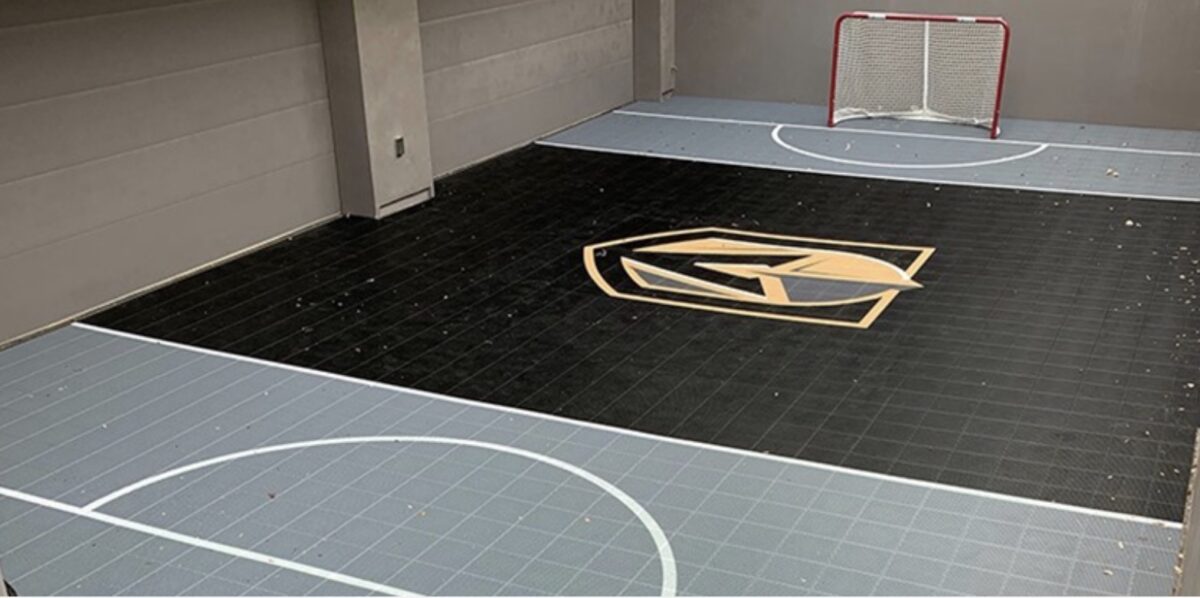
Floor Hockey Court Construction by Trusted Sports Builders

Floor-Hockey-Court-Construction

Floor Hockey Court Construction by Trusted Sports Builders

Build a Professional-Grade Floor Hockey Court

Floor hockey demands speed, precision, and flawless coordination—and that begins with a surface engineered for performance. Every glide, pivot, and pass relies on the court’s ability to balance traction with smoothness, ensuring both fast gameplay and player safety.

At Legendary Sports Construction, we bring decades of expertise to floor hockey court construction across Arizona, Nevada, and Utah. Our courts are designed to handle high-intensity play while minimizing impact on joints, reducing slippage, and maintaining durability in every environment.

Whether you’re developing a multi-sport gymnasium, a recreation facility, or a private training center, we tailor each installation to meet your exact specifications. From school gyms in Salt Lake City to community rinks in Las Vegas, our floor systems are built to perform, endure, and impress.

Types of Floor Hockey Courts We Build

Indoor Modular Tile Courts

Modular sports tile systems have revolutionized floor hockey play. Engineered for precise puck glide, rapid footwork, and consistent rebound, they provide a surface that mimics ice-like smoothness without sacrificing grip.

Each tile interlocks seamlessly, creating a level, durable surface that stands up to high traffic and physical play. Beyond hockey, modular tiles are ideal for multi-sport facilities—supporting basketball, futsal, pickleball, and more. The tiles’ cushioned understructure absorbs impact, reducing fatigue and helping athletes maintain control through fast directional changes.

These courts are also highly customizable, available in a wide range of colors, finishes, and boundary line options to match team branding or facility themes.

Rubber Sports Flooring

When safety and comfort take precedence, rubber sports flooring offers an ideal balance. Made from vulcanized or recycled rubber compounds, these floors provide excellent traction, durability, and energy return.

Rubberized flooring is perfect for schools, gyms, and fitness centers where multiple activities share the same space. Its shock-absorbent qualities protect athletes during falls and collisions, while its textured surface prevents slips even under intense play.

In addition, rubber sports flooring offers sound dampening—a valuable benefit for indoor facilities aiming to control noise levels during tournaments or training sessions.

Synthetic Court Panels

For players who crave speed and ice-like precision, synthetic court panels provide a cutting-edge option. These surfaces are engineered for inline hockey and floorball, replicating the slickness of ice while maintaining a consistent grip for skates and shoes alike.

Synthetic surfaces reduce friction for smoother puck handling and faster play. They’re ideal for both indoor and outdoor installations, capable of withstanding UV rays, moisture, and temperature fluctuations. Their low-maintenance design and extended lifespan make them a preferred choice for professional-grade facilities.

Whether used for competitive leagues or recreational play, synthetic panels offer a sleek, professional feel—perfect for those who want the speed of ice without the chill.

Comparison Table — Floor Hockey Surface Types

Surface Type

Material

Durability

Maintenance

Traction Level

Ideal For

Cost Range

Modular Tile Courts

Polypropylene Interlocking Tiles

High

Very Low

Excellent

Multi-Sport Facilities, Gyms

$25,000–$60,000

Rubber Sports Flooring

Vulcanized / Recycled Rubber

Moderate

Low

High

Schools, Gyms, Fitness Centers

$20,000–$50,000

Synthetic Court Panels

Polymer Composite Sheets

Very High

Very Low

Moderate

Inline Hockey, Floorball, Pro Facilities

$30,000–$75,000+


Benefits of a Professionally Installed Floor Hockey Court

Enhanced Player Safety

Player safety is the cornerstone of every design. Our floors feature slip-resistant surfaces and shock-absorbent underlayment to protect against falls, joint strain, and high-impact collisions. Each installation is precisely leveled to eliminate uneven spots that could disrupt movement or cause injury.

Multi-Sport Friendly

Our courts aren’t just built for hockey—they’re multi-sport ready. With adaptable layouts and customizable markings, a single court can accommodate basketball, futsal, volleyball, or pickleball. This versatility makes them ideal for schools and community centers seeking maximum utility from one facility.

Weather-Resistant Options

For outdoor installations, we use materials formulated to resist UV exposure, extreme heat, and rain, ensuring year-round playability. These weather-tolerant systems are perfect for the Southwest’s demanding climate, maintaining color vibrancy and structural integrity through every season.

Custom Design

A custom-built court makes a statement. Choose from a wide selection of surface colors, line markings, and patterns, along with optional dasher boards and wall padding for safety. Branding elements like team logos or facility emblems can also be incorporated directly into the floor design, enhancing both appearance and identity.

Our Floor Hockey Court Installation Process

Consultation & Layout Design

We begin by analyzing your facility’s dimensions, intended use, and design goals. Our specialists collaborate with you to create a layout that maximizes gameplay area, optimizes player flow, and adheres to regulation sizing where needed.

We also discuss factors such as surface selection, drainage planning, and multi-use functionality to ensure your court delivers top performance and long-term value.

Subfloor Preparation & Leveling

A flawless court begins with a flawless foundation. We grade, compact, and level the subfloor to create a stable base that supports the surface system above. Proper preparation prevents warping, cracking, or uneven puck movement over time.

Our expert team uses laser-level technology and moisture barriers where necessary, ensuring precision and stability in every project—whether indoors or outdoors.

Surface Installation

Depending on your chosen system—modular tiles, rubber flooring, or synthetic panels—our team installs each layer with meticulous precision. Interlocking systems are secured seamlessly, creating a smooth, consistent surface ideal for fast-paced play.

We ensure accurate alignment, perfect traction balance, and durable edge transitions for a professional-grade finish.

Court Lines, Goals & Safety Features

After the surface installation, we add court markings, goal areas, and boundary lines following standard regulations. For facilities that host multiple sports, additional markings can be included using color-coded paint systems.

We also install goal structures, wall padding, and dasher boards as optional safety enhancements, completing your court’s professional appearance and ensuring a secure environment for athletes.

Why Choose Legendary Sports Construction?

With projects spanning Arizona, Nevada, and Utah, Legendary Sports Construction has earned a reputation for precision, reliability, and superior craftsmanship. We understand the Southwest’s extreme climate conditions and build courts that thrive under them—whether in the desert heat of Phoenix or the mountain dryness of Salt Lake City.

Our team combines advanced construction technology with premium materials engineered specifically for floor hockey and multi-sport performance. Each installation is guided by decades of experience, ensuring not only exceptional results but also long-term cost efficiency.

From consultation to final inspection, we handle every stage with professionalism and transparency. When you partner with Legendary Sports Construction, you’re choosing a company that delivers innovation, safety, and endurance—one court at a time.

Frequently Asked Questions (FAQs)

What is floor hockey?

Floor hockey is a fast-paced sport similar to ice hockey but played on flat indoor or outdoor surfaces using plastic sticks, a puck or ball, and standard hockey goals.

What type of flooring is best for floor hockey?

The best flooring depends on the facility’s purpose. Modular sports tiles and synthetic panels offer superior puck glide and durability, while rubber floors are ideal for schools prioritizing safety and noise control.

What equipment is needed for floor hockey?

Essential equipment includes sticks, pucks, goals, and protective gear such as helmets, shin guards, and gloves. For competitive settings, dasher boards and wall padding are also recommended.

What is the size of the hockey floor?

A regulation floor hockey court typically measures 80 feet long by 44 feet wide, though dimensions can vary depending on the venue and level of play.

How big is a floor hockey goal?

Standard floor hockey goals measure 6 feet wide by 4 feet high, matching ice hockey dimensions for realistic gameplay and training consistency.

A floor hockey court should do more than provide a place to play—it should inspire performance. With Legendary Sports Construction, you get a court designed to perform under pressure, built to endure, and crafted to elevate every game.
Sign up for our Newsletter

Indoor Volleyball Court Construction by Regional Experts

Indoor Volleyball Court Construction by Regional Experts

Build a High-Performance Indoor Volleyball Court

Indoor volleyball represents precision, agility, and endurance—all made possible by a surface designed for competitive performance. Unlike outdoor setups, indoor courts eliminate weather variables and offer athletes consistency year-round. Every bounce, sprint, and dive relies on expert craftsmanship and material integrity.

At Legendary Sports Construction, we specialize in indoor volleyball court construction across Arizona, Nevada, and Utah, delivering professional-grade installations tailored to the unique requirements of gyms, schools, training centers, and sports complexes. From hardwood classics to advanced synthetic systems, each court we design reflects a fusion of technical precision and long-term durability.

Whether crafting an elite facility in Phoenix, a college arena in Salt Lake City, or a recreational gym in Reno, our team delivers installations built for speed, safety, and aesthetics. Every project is guided by engineering excellence, ensuring performance and endurance for decades.

Indoor Volleyball Court Surface Options

Maple Hardwood Flooring

The undisputed gold standard for professional and collegiate volleyball, maple hardwood flooring offers a level of performance unmatched by synthetic alternatives. It’s resilient, smooth, and naturally responsive, creating an ideal balance of traction and bounce.

Players appreciate hardwood’s spring-like feel, which reduces fatigue while maintaining precision in footwork and ball control. Its timeless appearance—polished, rich, and elegant—adds a sense of prestige to any athletic space. Though initial installation may cost more, hardwood remains the top choice for universities, elite training centers, and competition venues that demand excellence and authenticity.

Synthetic Sports Flooring

Engineered for multi-purpose facilities, synthetic sports flooring blends flexibility, comfort, and high performance. Constructed from multiple cushioned layers of polyurethane or vinyl, these floors minimize impact on joints and provide consistent traction, even during high-intensity play.

Synthetic floors are also low-maintenance, making them ideal for schools, gyms, and recreation centers that host a variety of sports activities. Their shock-absorbing composition improves athlete safety while maintaining reliable ball response and grip.

Additionally, synthetic surfaces can be customized with team colors, school logos, and unique line designs, allowing facility owners to blend function with brand identity.

Modular Tile Flooring

Modular tile flooring brings versatility and innovation to the modern volleyball court. Made from interlocking polypropylene tiles, this system provides exceptional shock absorption, quick installation, and easy maintenance.

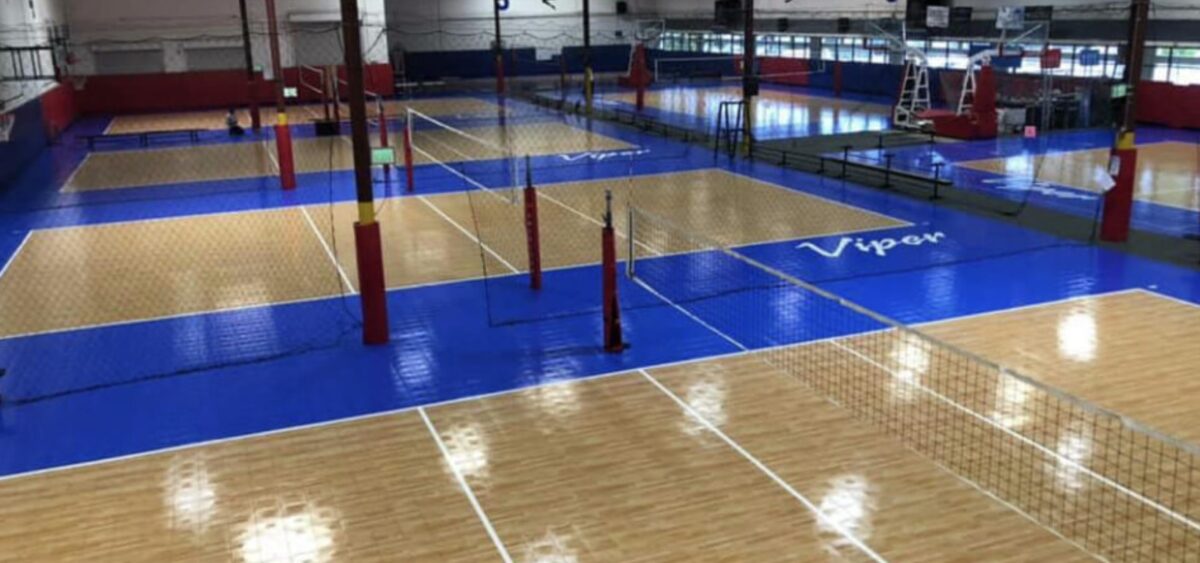
Perfect for multi-sport and rental facilities, modular tiles can be laid over existing floors without permanent modification. They are slip-resistant, moisture-tolerant, and built to withstand repeated heavy use. The result is a clean, professional appearance and a surface that’s both high-performing and easy to maintain.

Their modular design also makes them ideal for facilities requiring frequent reconfiguration—such as sports academies, convention centers, or event arenas hosting multiple court types.

Comparison Table — Indoor Volleyball Court Surfaces

Surface Type

Material Composition

Durability

Maintenance

Shock Absorption

Ideal For

Cost Range

Maple Hardwood Flooring

Solid Maple Wood Planks

Very High

Moderate

Medium

Professional & Collegiate Facilities

$60,000–$120,000+

Synthetic Sports Flooring

Polyurethane / Vinyl Multi-Layer

High

Low

High

Schools, Multi-Use Gyms, Recreation

$30,000–$80,000

Modular Tile Flooring

Polypropylene Interlocking Tiles

High

Very Low

High

Training, Rental, and Multi-Sport Use

$25,000–$70,000

Benefits of an Indoor Volleyball Court

Consistent Playing Conditions

An indoor volleyball court provides a controlled environment where temperature, humidity, and surface conditions remain constant. This ensures players can train and compete year-round without weather interruptions or surface inconsistencies.

Enhanced Safety

Modern indoor court materials are designed for athlete protection. From cushioned subfloors to anti-slip coatings, every component minimizes impact stress on knees, ankles, and joints. Legendary Sports Construction uses high-performance surfaces that absorb shock while maintaining precise traction, creating safer conditions for athletes of all skill levels.

Professional Experience

A well-constructed indoor volleyball court enhances gameplay by improving ball control, movement precision, and bounce consistency. Our installations meet NCAA and FIVB standards, ensuring athletes experience the same professional feel found in elite competition venues.

Custom Branding Options

Personalization is part of performance. Our courts can be custom-branded with team colors, logos, boundary markings, and sponsor insignias, giving schools and facilities a signature aesthetic. Whether subtle or bold, every design detail contributes to the court’s visual impact and brand identity.

Our Indoor Volleyball Court Construction Process

Consultation & Concept Design

Each project begins with an in-depth consultation where our design specialists analyze your space and determine your facility’s unique requirements. We discuss usage, performance expectations, and aesthetic preferences to develop a court layout that aligns with your athletic vision.

Subfloor Installation

The subfloor is the unsung hero of any volleyball court. It provides stability, cushioning, and longevity to the surface above. We install shock-absorbent subfloor systems that enhance player comfort, protect joints, and ensure consistent play across the entire surface. Proper subflooring also prevents warping, cracking, or shifting due to temperature fluctuations or humidity.

Surface Installation

Once the subfloor is set, the chosen surface—whether maple hardwood, synthetic, or modular tile—is installed with precision. Each layer is laid, aligned, and secured to create an even, level playing field. Our technicians ensure that seams are invisible and transitions perfectly smooth, resulting in a flawless finish that supports high-speed play and long-term performance.

Court Lining & Finishing

The final touch lies in the details. Court lines are painted to official regulation dimensions and sealed with protective coatings to preserve clarity and prevent wear. We also offer custom design elements, such as logos, team names, or school insignias.

Once complete, the court undergoes comprehensive quality testing—measuring bounce consistency, traction, and finish durability—to guarantee professional-grade performance from the very first serve.

Why Choose Legendary Sports Construction?

Across Arizona, Nevada, and Utah, Legendary Sports Construction is recognized for precision craftsmanship and superior materials. Our understanding of regional conditions—ranging from desert heat to dry altitude—allows us to engineer courts that endure and perform flawlessly in every environment.

We combine advanced installation techniques with premium materials sourced from trusted manufacturers. Our process is transparent, efficient, and tailored to your project’s unique specifications. Whether for a school gym, sports complex, or private recreation space, we ensure excellence from design to final inspection.

Our commitment extends beyond construction. We provide long-term support, maintenance guidance, and surface refinishing services to keep your court in top form for years. When you choose Legendary Sports Construction, you invest in longevity, precision, and performance—a court built not just for today but for the next generation of athletes.

Frequently Asked Questions (FAQs)

What is the size of an indoor volleyball court?

A regulation indoor volleyball court measures 60 feet long by 30 feet wide (1,800 sq. ft.), with a minimum free zone of 10 feet surrounding the court for player safety and movement.

What is the difference between indoor and beach volleyball courts?

Indoor courts feature solid, flat surfaces like wood or synthetic flooring, while beach courts use sand, which absorbs impact and slows player movement. The rules and style of play also vary between formats.

What floor does indoor volleyball have?

Most indoor volleyball courts use hardwood or synthetic flooring designed to provide reliable traction, bounce control, and shock absorption.

What type of surface is best for a volleyball court?

The ideal surface depends on facility use. Maple hardwood offers professional responsiveness, synthetic flooring provides multi-sport flexibility, and modular tiles offer easy maintenance and adaptability.

What is the minimum ceiling height for an indoor volleyball court?

For regulation play, ceilings should be at least 23 feet (7 meters) high, allowing adequate clearance for serves, volleys, and high trajectories without obstruction.

Indoor volleyball courts represent the pinnacle of engineered sports performance—spaces where precision, endurance, and design converge. With Legendary Sports Construction, your court becomes more than a facility; it becomes a symbol of excellence, built to empower athletes and inspire every serve, spike, and victory.

Sign up for our Newsletter

Volleyball Court Installation Services for Peak Performance

Volleyball-Court-Installation-Services

Volleyball Court Installation Services for Peak Performance

Build Your Ideal Volleyball Court with Professional Installation

Volleyball’s popularity has surged across the Southwest, energizing schools, recreation centers, and residential properties alike. From local leagues to family gatherings, the sport thrives on well-built courts that balance performance and endurance.

At Legendary Sports Construction, we specialize in volleyball court installation across Arizona, Nevada, and Utah, crafting spaces that meet professional standards and personal preferences. Whether your goal is a backyard setup in Tucson or a competition-ready court in Las Vegas, we deliver surfaces designed for safety, precision, and long-lasting performance.

Our courts are engineered for the region’s climate—built to withstand high temperatures, UV exposure, and heavy use. With our combination of quality materials, expert planning, and skilled craftsmanship, your court becomes more than a space to play—it becomes a lasting part of your property’s identity.

Types of Volleyball Courts We Install

Indoor Volleyball Courts

Indoor courts are designed for controlled environments where precision and consistency are paramount. These courts typically feature engineered wood or synthetic surfaces, optimized for bounce, traction, and shock absorption.

Our installation process ensures every layer—from the subfloor to the surface coating—is perfectly leveled and stable. These courts are ideal for schools, training academies, sports complexes, and gymnasiums, offering year-round usability and a professional-grade experience for players at all skill levels.

Outdoor Volleyball Courts

Outdoor volleyball courts are built for endurance. Depending on your preference, we use sand, grass, or synthetic materials to match your desired play style and environment.

In regions like Arizona and Utah, where weather extremes are common, synthetic surfacing provides superior resistance to UV rays, heat, and moisture. Our outdoor installations also include custom drainage systems to prevent pooling and maintain traction. Each court is designed to complement its surroundings, delivering both performance and visual harmony.

Backyard Volleyball Courts

Transform your backyard into a recreational hub with a custom volleyball court designed for family fun and social gatherings. These courts can be tailored to your available space, budget, and preferences—whether that means a soft sand layout or a low-maintenance synthetic surface.

Our backyard installations combine safety-focused construction with professional-grade materials, ensuring reliable footing, minimal upkeep, and a sleek, polished finish. With Legendary Sports Construction, you can enjoy year-round recreation just steps from your door.

Comparison Table — Volleyball Court Types

Court Type

Surface Material

Durability

Maintenance

Ideal For

Cost Range

Indoor Volleyball Court

Engineered Wood / Synthetic

High

Moderate

Schools, Sports Centers, Gyms

$30,000–$100,000+

Outdoor Volleyball Court

Sand / Synthetic / Grass

High

Low to Moderate

Parks, Clubs, Resorts

$15,000–$60,000

Backyard Volleyball Court

Sand / Synthetic Surface

Moderate to High

Very Low

Residential & Recreational Spaces

$10,000–$40,000


Benefits of Professional Volleyball Court Installation

Optimal Player Safety

Each court is constructed using shock-absorbent, slip-resistant materials to reduce the risk of falls and impact injuries. Proper underlayment ensures stability while maintaining comfort during intense play.

Durability in Harsh Climates

Southwestern climates can be unforgiving, but our courts are built to endure extreme heat, UV exposure, and dry conditions. Whether installed in Phoenix or St. George, they retain color, traction, and structural integrity season after season.

Precision-Leveling and Drainage

We use laser-guided grading to create perfectly even surfaces and incorporate efficient drainage systems to prevent standing water or erosion. This ensures consistent playability even after heavy rainfall.

Custom Court Design

Every project is unique. Choose from multiple surface colors, logo integration, custom boundary lines, and adjustable net systems. Your court will reflect both your vision and your level of play—professional, collegiate, or recreational.

Our Volleyball Court Installation Process

Consultation & Site Assessment

We begin by evaluating your property, considering factors like space dimensions, soil conditions, drainage, and orientation. Together, we establish the right court layout and surface materials to match your needs.

Sub-Base Preparation

Our team performs grading, compacting, and base installation using crushed stone or engineered fill. This step ensures a stable, long-lasting foundation capable of withstanding environmental changes.

Surfacing & Net Installation

Once the base is set, we apply your chosen surface system—whether it’s synthetic, acrylic, or sand. Nets and posts are installed to regulation standards, with optional padding and anchoring systems for enhanced durability.

Finishing Touches & Testing

After surfacing, we add court markings, custom logos, and line striping. The court undergoes a full performance test, verifying traction, bounce, and net stability before final approval.

Why Choose Legendary Sports Construction?

Building across Arizona, Nevada, and Utah, Legendary Sports Construction is trusted for precision, reliability, and craftsmanship. Our team understands the unique soil, heat, and weather conditions of the Southwest—and designs each volleyball court accordingly.

From residential installations to large commercial builds, we handle every detail—design, grading, surfacing, and finishing. Our projects balance aesthetics and endurance, ensuring that every court not only looks exceptional but performs at the highest level.

Whether you’re building a multi-sport facility, a club-grade court, or a backyard retreat, our approach guarantees results that last for decades.

Frequently Asked Questions (FAQs)

What type of surface is best for a volleyball court?

For outdoor settings, synthetic or sand surfaces are best for traction and heat resistance. Indoor courts perform best with engineered wood or cushioned synthetic flooring.

What is the ground material for a volleyball court?

A volleyball court base typically includes crushed rock and compacted sub-base materials for stability, topped with the chosen surface such as acrylic, polymer, or sand.

Can you play volleyball on concrete?

Yes, but it’s not ideal for long-term play. Concrete lacks flexibility and shock absorption, increasing the risk of joint strain. A cushioned or synthetic overlay is recommended for safety.

What is the best material for an outdoor volleyball court?

Synthetic surfacing offers the best combination of traction, temperature control, and durability. It resists UV degradation and requires minimal maintenance.

How many square feet is needed for a volleyball court?

A standard volleyball court measures 60 feet by 30 feet (1,800 square feet). For competitive play, additional perimeter space—at least 10 feet on all sides—is recommended for player movement.

Volleyball is more than a sport—it’s a community builder, a source of energy, and a lasting investment in recreation. With Legendary Sports Construction, your volleyball court will be built for precision, resilience, and beauty. From backyard fun to competitive facilities, we create courts that perform—and inspire—season after season.

Sign up for our Newsletter

Synthetic Volleyball Court Construction: A Modern Solution for High-Performance Play

Synthetic Volleyball Court Construction: A Modern Solution for High-Performance Play

Volleyball demands precision, agility, and resilience — both from the players and the surface beneath them. A synthetic volleyball court provides exactly that. Designed for optimal performance in all climates, these courts combine modern engineering with aesthetic excellence to create a surface built for year-round play.

At Legendary Sports Construction, we specialize in synthetic volleyball court construction for clients across Arizona, Nevada, and Utah. Our courts are crafted using high-performance materials that offer durability, safety, and versatility. From community centers and athletic clubs to private backyards, our courts are designed to perform flawlessly under the most demanding conditions.

What Is a Synthetic Volleyball Court?

A synthetic volleyball court is an advanced alternative to traditional sand, grass, or asphalt surfaces. Built using modern polymer, rubberized, or acrylic materials, these courts provide superior shock absorption, excellent traction, and weather-resistant durability.

Unlike natural surfaces that shift, erode, or require frequent leveling, synthetic courts retain their structure and consistency for years. They feature a multi-layer system — including a crushed stone foundation, reinforced sub-base, and high-grade synthetic topcoat — ensuring even play and minimal maintenance.

These courts are ideal for schools, recreation facilities, athletic complexes, and residential settings. In regions like Arizona, Nevada, and Utah, where extreme temperatures and dry climates can damage traditional surfaces, synthetic courts offer a long-lasting solution that maintains playability and visual appeal year-round.

Benefits of Synthetic Volleyball Courts

All-Weather Resilience

In the harsh desert climates of Arizona and Nevada, surfaces face relentless sun exposure, UV degradation, and temperature fluctuations. Synthetic volleyball courts are engineered to withstand it all. The UV-resistant polymers and heat-stable coatings ensure that the court color remains vibrant, even after years of sunlight.

These courts also resist moisture, meaning they won’t crack, warp, or fade during sudden rain or temperature changes. Whether under the blazing sun of Phoenix or the dry heat of Las Vegas, synthetic courts retain their integrity and performance.

Low Maintenance and High Durability

Maintenance is one of the biggest challenges with natural surfaces. Grass must be mowed and watered, and sand requires frequent raking and refilling. Synthetic courts eliminate these hassles.

Their non-porous, sealed surface repels dirt and debris, requiring only occasional sweeping and washing to maintain a clean, playable condition. With minimal upkeep and exceptional durability, synthetic volleyball courts are a cost-effective solution for schools, municipal parks, and homeowners seeking long-term reliability without ongoing maintenance costs.

Consistent Playing Surface

Performance consistency defines a great volleyball court. Synthetic surfacing ensures uniform traction, reliable bounce, and precise ball control — no matter the weather or season. The surface’s shock-absorbent properties protect players’ joints, reducing fatigue and lowering the risk of impact injuries during intense play.

Whether used for competitive matches or recreational games, the synthetic court provides the smoothness and stability that athletes need to focus entirely on their performance.

Our Volleyball Court Construction Process

Site Evaluation and Planning

Every successful installation begins with a thorough evaluation. Our team assesses the land to determine grading requirements, drainage systems, and court orientation. Proper planning ensures optimal water flow, sunlight positioning, and long-term structural stability. We also consult with the client to finalize dimensions, color preferences, and any additional features — such as lighting, fencing, or multi-sport adaptability.

Base and Surface Installation

Once the design is finalized, construction begins with the creation of a stable foundation. We install a crushed stone sub-base, compacted for load-bearing strength, followed by a fine leveling layer to ensure perfect smoothness. The chosen synthetic surface material — whether polymer, acrylic, or modular tile — is then installed with precision. Each layer is engineered for shock absorption, slip resistance, and temperature endurance. The result is a firm, stable, and resilient surface ideal for competitive and recreational use.

Court Marking, Net Setup, and Final Testing

After installation, our specialists apply regulation court markings using fade-resistant coatings. We then install net posts, boundary lines, and optional accessories like windscreens or custom logos. Before handover, we conduct rigorous performance testing — ensuring consistent bounce, even traction, and exact measurements according to competitive play standards. The final inspection confirms that your court is ready for immediate use, offering both professional aesthetics and peak functionality.

Comparison Table — Popular Volleyball Court Types

Court Type Surface Material Durability Maintenance Play Quality Ideal For Cost Range
Synthetic Volleyball Court Polymer / Acrylic Composite High Very Low Consistent, cushioned feel Schools, Recreation Centers, Backyards $25,000–$60,000
Sand Volleyball Court Natural Sand Base Moderate High Variable, weather-dependent Beach-Style Recreational & Club Play $10,000–$30,000
Grass Volleyball Court Natural Turf Low Very High Soft, uneven Temporary Recreational Use or Private Yards $5,000–$20,000
Modular Tile Court Polypropylene Interlocking Tiles High Very Low Fast, responsive surface Multi-Sport or Indoor Facilities $30,000–$70,000

Why Choose Legendary Sports Construction?

Building sports courts in desert environments demands specialized knowledge — and Legendary Sports Construction brings decades of expertise to every project. We design and install synthetic volleyball courts engineered to handle the unique heat, dryness, and UV exposure of Arizona, Nevada, and Utah. Our courts combine structural integrity with aesthetic appeal. We offer custom color options, logo integration, and multi-sport designs that allow volleyball, basketball, and pickleball to share one space. Every project is handled from planning to final inspection with precision, transparency, and professionalism. Our reputation is built on trust, superior craftsmanship, and a relentless focus on performance. When you choose Legendary Sports Construction, you’re investing in a court that looks exceptional, performs flawlessly, and lasts for decades.

FAQs About Synthetic Volleyball Court Construction

What is the volleyball court made of?

Synthetic volleyball courts are typically made of acrylic, polymer, or modular tile systems layered over a compacted stone or concrete base. These materials offer excellent traction, durability, and weather resistance.

What is the best surface for a volleyball court?

For all-weather use and minimal maintenance, synthetic acrylic or modular polymer surfaces are best. They provide consistent performance and hold up against extreme heat or moisture.

What is the best flooring for volleyball?

Cushioned synthetic surfaces provide optimal comfort, shock absorption, and player safety. They are ideal for both indoor and outdoor competitive play.

What is the strongest type of flooring?

Post-tension concrete with synthetic surfacing is the strongest option available. It offers unmatched durability, crack resistance, and longevity — perfect for high-use facilities.

What is the best material for a game court?

For multi-sport use, polypropylene modular tiles are highly versatile, durable, and low-maintenance, making them a top choice for families, schools, and recreational facilities.

Synthetic volleyball courts are redefining the future of play across the Southwest. Built for endurance, designed for excellence, and engineered for performance, they bring the spirit of the game to life—rain or shine, year after year. With Legendary Sports Construction, your court isn’t just built to last; it’s built to inspire.

Sign up for our Newsletter

Basketball Court Installation Cost Breakdown

Basketball court installation

Basketball Court Installation Cost Breakdown

Understanding the Cost to Install a Basketball Court

Installing a basketball court is more than a construction project—it’s an investment in recreation, fitness, and long-term property value. Whether envisioning a sleek indoor court or a backyard half-court, knowing where your money goes ensures smarter budgeting and smoother execution.

At Legendary Sports Construction, each project begins with transparency. Our experts break down every element—from excavation and surfacing to accessories and finishing details—so you can make informed decisions. Costs vary widely based on court type, materials, and complexity, but understanding the core components helps you create a plan that fits your goals and your finances.

Key Cost Factors for Basketball Court Installation

Size of Court & Scope

The size of your basketball court is the most influential cost factor. A half-court typically requires fewer materials, less labor, and smaller land preparation compared to a full-sized court. However, scaling up involves more than doubling expenses; it multiplies the need for reinforced foundations, additional surfacing, and extended fencing or lighting.

Residential courts often measure around 30×30 feet for half-courts, while regulation full-courts span 94×50 feet. Each additional square foot adds incremental costs for materials, paint, and finishing work—so clarity on your desired size from the start helps refine your budget accurately.

Site Preparation & Base Materials

Proper groundwork defines the longevity of your court. The site must be leveled, graded, and stabilized before any surface is laid. Excavation, drainage installation, and compaction prevent water accumulation and surface shifting.

Base material selection plays a major role:

  • Concrete bases provide unmatched strength and consistency but come at a higher cost.
  • Asphalt bases offer flexibility and lower upfront expenses but may require resurfacing sooner.
  • Post-tension concrete—the industry’s gold standard—uses steel cables for superior crack resistance and can last decades.

Each of these factors contributes significantly to the overall basketball court installation cost and determines how much maintenance your court will need in the future.

Surface Type & Features

Once the foundation is ready, it’s time to choose the surface—the heart of playability. Each type offers distinct advantages and cost ranges:

  • Acrylic Coated Concrete: Provides professional traction and a vibrant finish; great for outdoor courts with moderate budgets.
  • Asphalt with Acrylic Coating: A lower-cost solution with good performance, ideal for community or school courts.
  • Modular Sport Tiles: Quick to install, cushioned, and colorful—suitable for both indoor and outdoor setups.

Add-ons such as custom logos, multi-sport striping, premium color schemes, or UV-protected coatings can elevate aesthetics but will modestly increase total cost.

Accessories & Add-Ons

Accessories turn a basic court into a dynamic sports environment. Premium hoops, backboards, lighting systems, fencing, and even spectator seating add to both functionality and enjoyment.

Common add-ons include:

  • Hoop systems: $1,000–$5,000 depending on style and adjustability.
  • Perimeter fencing: $3,000–$8,000 for weather-resistant enclosures.
  • LED lighting: $2,000–$10,000 for safe night play.
  • Drainage and seating: Variable costs based on design.

These upgrades are optional but often enhance long-term satisfaction and overall property value.

Comparison Table – Basketball Court Installation Options & Cost Factors

Court Type

Surface Material

Durability

Maintenance

Cost Range

Ideal Use

Concrete with Acrylic Coating

Reinforced Concrete + Acrylic Layers

High

Low

$25,000–$60,000

Residential Homes, Private Clubs

Asphalt with Acrylic Coating

Asphalt Base + Acrylic Finish

Moderate

Moderate

$15,000–$40,000

Schools, Community Parks

Modular Tile System

Interlocking Polypropylene Tiles

High

Very Low

$30,000–$75,000

Indoor Gyms, Multi-Sport Facilities

Post-Tension Concrete

Steel-Reinforced Concrete Slab

Exceptional

Very Low

$50,000–$100,000+

Professional & Tournament Facilities

Cost Indicator: $ = lower budget, $$ = higher budget. Actual pricing depends on site conditions, material selection, and regional labor rates.

Typical Cost Ranges & What They Mean

Basketball court installation costs vary dramatically based on project scale and materials. Here’s a general overview to guide your expectations:

  • Outdoor Half-Court: Typically ranges from $8,000 to $30,000. Ideal for backyards or residential properties seeking recreational use.

  • Full-Sized Outdoor Court: Commonly falls between $20,000 and $75,000+, depending on the foundation, surfacing type, and extras like fencing or lighting.

  • Cost per Square Foot: Ranges from $4 to $16 per square foot, reflecting differences in material quality and installation complexity.

  • Indoor Courts: Demand a larger budget, especially for wood or cushioned flooring systems. Prices can span $22,000 to $124,000, primarily due to premium flooring and environmental control systems.

In general, concrete with acrylic surfacing offers the best balance of cost, performance, and durability for outdoor projects, while modular tile systems are ideal for multi-use indoor facilities.

Benefits of Understanding Installation Cost Ahead of Time

Budget Accuracy

Knowing what each component costs helps avoid budget overruns. Accurate estimates ensure you allocate funds for essentials—like drainage and base work—while leaving room for upgrades.

Material Selection

Understanding cost ranges allows you to weigh performance against price. Higher-end materials like post-tension concrete or modular tile systems deliver longevity and superior performance, while asphalt or basic acrylic coatings provide affordability.

Scope Clarity

Defining the project scope early helps you determine what features truly matter—whether you need full lighting systems or simply a regulation half-court with a single hoop.

Timeline Management

Cost awareness helps establish realistic timelines. Larger budgets often require longer planning and construction phases, while smaller residential projects can be completed swiftly.

Value Retention

A professionally built basketball court is more than an amenity—it’s an investment. Quality construction not only ensures years of play but also enhances property appeal and resale potential.

Why Choose Legendary Sports Construction for Your Court Build?

Legendary Sports Construction brings unmatched expertise to basketball court projects of all sizes. From site preparation and base installation to surfacing and finishing, we oversee every phase with precision and transparency.

Our approach is rooted in craftsmanship and communication. We provide detailed cost breakdowns before construction begins, so clients know exactly where every dollar goes. We tailor every project—whether it’s a backyard half-court or a professional training facility—to balance performance, longevity, and aesthetic excellence.

With a commitment to engineering integrity and long-term client satisfaction, we deliver courts that perform flawlessly and endure for decades.

Frequently Asked Questions (FAQs)

How much does it cost to set up a basketball court?

Costs depend on size, surface, and features. Residential half-courts start around $8,000–$30,000, while full courts range from $20,000–$75,000+ depending on customization.

How much is a full court in basketball?

A regulation full-size court (94×50 feet) typically costs $60,000–$100,000 or more, depending on materials, accessories, and lighting.

What is the cheapest option for a basketball court?

An asphalt surface with acrylic coating is the most budget-friendly option, offering reliable performance and durability at a lower cost than concrete or modular systems.

How much does it cost to line a basketball court?

Professional line striping averages $1,000–$3,000, depending on complexity, surface type, and whether multi-sport markings are added.

How expensive is a basketball court?

The final price depends on location, surface material, and added features. Expect $4–$16 per square foot for outdoor courts, with higher costs for premium indoor builds.

A basketball court is an investment in lifestyle, fitness, and lasting value. With Legendary Sports Construction, every project is built on transparency, craftsmanship, and enduring quality—ensuring your court performs beautifully, year after year.

Sign up for our Newsletter

Basketball Court Construction Services

Basketball-Court-Construction-

Basketball Court Construction Services

Build a Durable, High-Performance Basketball Court with Expert Craftsmanship

A basketball court isn’t merely a surface—it’s the stage for competition, teamwork, and personal triumph. Every dribble, jump, and shot demands precision engineering beneath your feet. At Legendary Sports Construction, we build courts that combine resilience, safety, and professional-grade performance.

From residential backyards to sprawling athletic complexes, each court is custom-designed for optimal playability and long-term endurance. Our specialists integrate advanced construction techniques, premium materials, and meticulous design planning to deliver courts that withstand both weather and wear.

Whether your vision is an outdoor half-court for casual games or a full indoor facility designed for serious play, our basketball court construction services bring together form, function, and flawless execution.

Types of Basketball Court Surfaces We Construct

Concrete Courts with Acrylic Coating

Concrete basketball courts are the hallmark of permanence and precision. Known for their exceptional stability and strength, these courts serve as the gold standard for outdoor installations. When paired with acrylic coatings, concrete courts gain enhanced traction, weather resistance, and visual appeal.

The acrylic topcoat not only adds color and character but also reduces glare and provides consistent ball bounce. It’s the ideal choice for homeowners, parks, and schools seeking a professional-grade surface that remains low-maintenance yet high-performing.

Asphalt Courts

Asphalt basketball courts offer a smooth, flexible, and cost-effective alternative. Commonly used in community parks and recreational areas, asphalt’s natural elasticity makes it less prone to cracking compared to rigid surfaces. When properly maintained and sealed, it delivers years of reliable playability.

We enhance asphalt installations with acrylic surfacing systems that add durability and improve traction. These coatings protect against UV damage, fading, and water penetration, ensuring that your outdoor court stays vibrant and functional through changing seasons.

Modular Sport Tile Systems

For versatility and comfort, modular sport tile systems represent the next evolution in basketball court technology. Designed for both indoor and outdoor use, these interlocking tiles offer shock absorption that reduces joint stress and provides superior traction.

Modular tiles are also highly practical—quick to install, easy to replace, and resistant to moisture. They feature built-in drainage channels for outdoor applications and come in a wide range of colors and textures. Ideal for multi-sport use, this system offers a resilient surface suited for competitive basketball, pickleball, or volleyball.

Comparison Table – Basketball Court Surface Options

Surface Type

Durability

Traction

Comfort

Maintenance

Ideal For

Concrete with Acrylic Coating

15–20 years

Excellent

Moderate

Low

Outdoor & Residential Courts

Asphalt with Acrylic Surface

10–15 years

Good

Moderate

Moderate

Schools & Recreational Facilities

Modular Sport Tile System

10–20 years

Excellent

High

Very Low

Indoor & Multi-Sport Applications

Benefits of a Custom-Built Basketball Court

Personalized Design

Customization transforms a court from functional to exceptional. Select from full or half-court configurations, adjust colors to match your home or team, and even incorporate custom logos or branding. Choose lighting options for night play, or integrate multi-use lines for games like volleyball or pickleball.

Durable Materials

We use premium-grade materials engineered to endure heavy use, high temperatures, and seasonal changes. Each layer—from the sub-base to the final coating—is designed to preserve play quality while resisting cracks, fading, and deformation.

Multi-Sport Use

A custom basketball court doesn’t have to be limited to one game. With multi-line striping, the same surface can host pickleball, tennis, or volleyball—maximizing the value and enjoyment of your recreational space.

Increases Property Value

A well-designed basketball court elevates your property both in function and aesthetics. Whether for private use or as part of a community or school facility, it adds a touch of prestige and purpose.

Year-Round Enjoyment

Our indoor and outdoor basketball courts are built for all-season play. Slip-resistant coatings, weatherproof materials, and precision drainage systems allow uninterrupted games—rain or shine.

Our Basketball Court Construction Process

Consultation & Court Design

Every project starts with a detailed consultation. We assess your space, discuss your goals, and design a layout tailored to your property and performance needs. From surface selection to color palette and equipment choices, every detail is curated to perfection.

Site Preparation & Base Construction

Proper groundwork is essential. We handle excavation, grading, and base compaction to establish a solid, even foundation. This ensures proper drainage and prevents shifting or cracking over time—an essential factor for lasting performance.

Surface Installation

Once the base is complete, we apply your selected surfacing system. Concrete and asphalt courts receive multiple acrylic coating layers for color, texture, and traction, while modular tile systems are precisely interlocked to ensure seamless coverage.

Line Striping & Equipment Setup

We finish each court with regulation line markings that meet official dimensions for competitive play. From backboards and hoops to post padding, fencing, and optional LED lighting, we install every element to professional standards.

Final Quality Check

Before completion, we conduct a comprehensive inspection. Our team verifies bounce consistency, surface traction, and dimensional accuracy to ensure every feature meets or exceeds industry benchmarks. The final result is a court that’s not only beautiful but built for decades of use.

Frequently Asked Questions (FAQs)

What is the best surface for a basketball court?

The best surface depends on your location and use. Concrete with acrylic coating is ideal for outdoor durability and low maintenance, while modular sport tiles are excellent for comfort and indoor or multi-sport flexibility.

How to convert a basketball court to a pickleball court?

You can easily adapt your court by applying temporary or permanent pickleball striping and using portable net systems. Modular surfaces make this conversion simple without altering the base structure.

How thick should concrete be for a basketball court?

A concrete basketball court should be at least 4 inches thick, reinforced with rebar or wire mesh to prevent cracking. For heavy or commercial use, 6 inches provides additional stability.

Is 30×30 big enough for a basketball court?

A 30×30 space allows for a compact half-court setup—perfect for residential backyards. However, a full-size half-court typically measures 50×47 feet, so additional space is recommended for regulation play.

Do you need rebar for a basketball court?

Yes. Rebar reinforcement strengthens the concrete slab and minimizes cracking from temperature changes or pressure over time. It’s a crucial step for ensuring long-term structural integrity.

A great basketball court doesn’t just host games—it inspires them. With Legendary Sports Construction, every project reflects our commitment to excellence, blending durability, precision, and aesthetic mastery. From design to completion, we create courts that perform as beautifully as they look—crafted for champions, engineered for longevity.

Sign up for our Newsletter

Tennis Court Construction Services

Tennis Court Construction Services

Tennis Court Construction Services

Build a High-Quality Tennis Court with Expert Precision

Every great match begins with a flawless foundation. A tennis court must be more than just level ground—it must embody balance, precision, and endurance. From recreational play to professional tournaments, the court dictates how the game feels beneath the player’s feet.

At Legendary Sports Construction, we specialize in designing and building tennis courts that meet the highest standards of performance and longevity. Each project begins with detailed planning and engineering excellence, ensuring a smooth, resilient surface capable of withstanding years of play and weather exposure.

Our expert team manages every stage of the process—from the earliest design phase to the final line striping. Whether it’s a private residential court, a school facility, or a country club showcase, our construction approach focuses on precision, durability, and unmatched aesthetics. With our craftsmanship, your court becomes a true centerpiece—a space where players compete, train, and enjoy the sport for decades.

Types of Tennis Court Surfaces We Construct

Hard Courts (Acrylic over Concrete or Asphalt)

Hard courts are the most common and versatile option, offering medium-fast play speed, consistent bounce, and a long lifespan. They are typically constructed using a concrete or asphalt base layered with acrylic surfacing materials that deliver optimal traction and color stability.

This surface type requires minimal maintenance and is suitable for both indoor and outdoor installations. It performs well in diverse climates, making it a preferred choice for clubs and public facilities. Hard courts also allow for customizable cushion layers, providing comfort for frequent play without compromising durability.

Clay Courts

Clay courts provide a softer and slower playing surface, allowing for extended rallies and strategic baseline play. Favored by traditionalists and training centers, these courts reduce joint strain and offer a distinct sliding motion that challenges players’ precision and endurance.

Constructed using crushed stone, brick, or natural clay, this surface type requires a well-designed drainage system and regular grooming. Despite higher maintenance needs, clay courts are renowned for their classic appeal and ability to encourage skill development.

Synthetic Grass Courts

Synthetic grass combines the visual elegance of natural turf with the practicality of modern materials. These courts feature artificial fibers over a shock-absorbing base, offering a medium-speed game with a comfortable surface for players of all ages.

They’re particularly popular for residential and recreational installations, as they require little upkeep and can withstand heavy use. Synthetic grass provides excellent drainage, quick drying, and a consistent bounce—making it a smart choice for homeowners seeking a premium, low-maintenance court experience.

Comparison Table – Tennis Court Surface Types

Surface Type

Play Speed

Comfort Level

Maintenance

Durability

Ideal For

Hard Court (Acrylic)

Medium-Fast

Moderate

Low

10–15 years

Public Parks, Clubs, Schools

Clay Court

Slow

High

High

5–10 years

Training Centers, Private Clubs

Synthetic Grass Court

Medium

High

Low

8–12 years

Residential, Multi-Sport Facilities

Post-Tension Concrete Base

Medium-Fast

Moderate

Very Low

20+ years

Commercial & Tournament Venues

Benefits of a Custom-Built Tennis Court

Tailored Design

A custom court begins with vision. From surface type and color scheme to fencing, lighting, and drainage, every detail can be adjusted to match your space, goals, and aesthetic. Our experts design courts that complement your environment—whether nestled in a backyard or featured at a resort.

Durable Construction

Our tennis courts are built to last. We use engineered base materials, advanced surfacing compounds, and weather-resistant coatings to ensure structural stability and surface integrity. The result is a court that maintains its quality and performance, year after year.

Player Safety

Precision leveling and premium surfacing reduce the risk of slips, falls, and uneven bounces. We focus on shock absorption and traction balance, creating a comfortable yet responsive playing experience for athletes of all levels.

Professional-Grade Results

Every tennis court we construct adheres to official ITF and USTA dimensions. This ensures accurate ball bounce, consistent court texture, and uniform color contrast—essential elements for both training and competition.

Property Value Boost

A private or commercial tennis court is more than a recreational feature—it’s a statement of sophistication. Professionally built courts enhance curb appeal, elevate property value, and transform open spaces into versatile, high-end amenities.

Our Tennis Court Construction Process

Site Evaluation & Planning

Every successful court begins with meticulous planning. We assess location, orientation, soil composition, and drainage to determine the most suitable court design. Our planning process accounts for sunlight exposure, prevailing winds, and site accessibility to ensure optimal performance and longevity.

Excavation & Base Installation

We begin construction with grading and base preparation, establishing a level and compacted foundation. For concrete or asphalt bases, we use high-quality aggregates and reinforcement to create a stable, crack-resistant platform that supports long-term durability.

Surface Application

After the base is complete, we apply the chosen surfacing system—whether acrylic coatings for hard courts, clay layers, or synthetic turf installations. Each layer is meticulously applied and leveled to ensure even texture, proper traction, and a consistent ball response.

Striping & Accessories

Once the surface cures, we apply regulation striping with precision accuracy. Accessories such as nets, posts, windscreens, fencing, and lighting systems are installed to enhance playability and aesthetics. Every element is chosen for its resilience and visual harmony with the surrounding environment.

Final Inspection

Before handover, we conduct a comprehensive inspection to verify bounce consistency, line precision, drainage performance, and safety compliance. Our final sign-off guarantees a court built to championship standards and designed to endure the test of time.

Frequently Asked Questions (FAQs)

How much does it cost to build a tennis court?

The cost varies based on surface type, materials, and site conditions. On average, residential courts range from $40,000 to $100,000, while larger commercial or tournament-grade installations can exceed that range.

What is the best surfacing material for a tennis court?

Acrylic hard courts are the most popular choice due to their durability, low maintenance, and consistent play speed. For a softer experience, clay or cushioned acrylic systems are excellent alternatives.

Are tennis courts made of concrete?

Yes. Many courts use concrete or post-tension concrete bases for superior stability and longevity. Asphalt bases are also common for lower-cost installations but may require resurfacing sooner.

What is the cheapest way to build a tennis court?

The most economical option is constructing an asphalt base with an acrylic coating. It provides reliable playability and weather resistance without the higher cost of reinforced concrete.

Is a tennis court a good investment?

Absolutely. A tennis court not only enhances your property’s value but also encourages active living, social engagement, and long-term enjoyment. It’s a lifestyle investment that blends function with prestige.

A tennis court should inspire play, precision, and passion. With Legendary Sports Construction, your vision becomes a reality—a court crafted for champions, engineered for endurance, and designed to perform with elegance.

Sign up for our Newsletter

Tennis Court Resurfacing Services

Tennis Court Resurfacing Services

Tennis Court Resurfacing Services

Restore Your Tennis Court with Expert Resurfacing Solutions

Time, weather, and constant play gradually wear down even the most meticulously built tennis courts. Sunlight fades colors, water seeps into fine cracks, and surface texture begins to lose its precision. The result is a court that not only looks aged but also feels different beneath your feet—uneven, slippery, and unpredictable.

Resurfacing is the art and science of renewal. It revitalizes the court’s structure, restoring the smoothness, traction, and visual vibrancy that define professional-grade play. At Legendary Sports Construction, we specialize in tennis court resurfacing for private residences, schools, clubs, and public facilities. Our expert approach ensures every square inch of your surface performs to the highest standards, combining durability with exceptional playability.

By using premium-grade materials and advanced application techniques, we transform worn-out courts into pristine arenas ready for countless matches. Whether your court needs minor rejuvenation or a complete resurfacing overhaul, we deliver results that look beautiful, play consistently, and stand the test of time.

Signs Your Tennis Court Needs Resurfacing

Visible Cracks and Surface Wear

Cracks are the earliest—and clearest—warning signs of surface fatigue. What begins as a faint hairline fracture can quickly evolve into a web of fissures that disrupt ball bounce and pose tripping hazards. Left unattended, these cracks deepen, allowing moisture to infiltrate and damage the subsurface layers.

Resurfacing halts this progression. Through precision crack repair and acrylic overlay application, we restore the court’s integrity and ensure a flawless, level playing field once again.

Standing Water or Drainage Issues

Water is a court’s most persistent adversary. Puddles and poor drainage systems accelerate surface degradation and contribute to mold and algae buildup. Beyond aesthetics, standing water can cause uneven drying, soft spots, and long-term foundational issues.

During resurfacing, we correct drainage slopes, install or adjust trench systems, and apply water-resistant surfacing compounds. The result is a court that sheds water efficiently and remains playable even after heavy rainfall.

Faded Lines and Color

The appearance of a tennis court plays a crucial role in the player’s perception of quality and focus. When surface color dulls and line markings fade, visibility decreases—making play less precise and less safe.

A new acrylic coating system restores the court’s brightness and vibrancy while reinforcing its top layer for extended UV resistance. Crisp white boundary lines are reapplied with laser-guided accuracy, ensuring clarity and compliance with USTA regulation standards.

Comparison Table – Tennis Court Resurfacing Options

Surface Type

Durability

Traction Level

Comfort

Maintenance

Ideal For

Acrylic Hard Court

8–10 years

High

Firm

Low

Residential & Club Courts

Cushioned Acrylic Surface

7–9 years

Excellent

Soft

Low

Schools & Senior Facilities

Post-Tension Concrete Base

20+ years

High

Firm

Very Low

Tournament & Commercial Facilities

Modular Tile Surface

10–15 years

Moderate

Variable

Moderate

Multi-Sport & Temporary Courts

Asphalt Base with Coating

5–7 years

High

Firm

Moderate

Budget or Light-Use Courts

Benefits of Tennis Court Resurfacing

Improved Playability

A newly resurfaced tennis court provides a uniform bounce and ideal traction. The precise texture allows players to execute swift movements confidently, enhancing the rhythm and pace of every match.

Enhanced Safety

Resurfacing eliminates irregularities such as cracks, peeling, or debris-prone patches. A smooth, slip-resistant finish ensures a secure footing, reducing the risk of falls and injuries during play.

Extended Court Life

Routine resurfacing prevents deeper structural deterioration. By renewing protective layers and sealing cracks, you can extend the life of your tennis court by up to a decade, safeguarding your investment.

Aesthetic Upgrade

A resurfaced court radiates professionalism. Vibrant color coatings and sharp, regulation-standard lines not only improve gameplay visibility but also elevate the overall appearance of your facility.

Cost-Effective Maintenance

Compared to full reconstruction, resurfacing is significantly more affordable and less disruptive. It revitalizes the court at a fraction of the cost while maintaining long-term durability and performance.

Our Tennis Court Resurfacing Process

Inspection & Evaluation

Every successful project begins with a detailed assessment. Our team inspects for surface cracks, base erosion, drainage efficiency, and coating condition. By identifying underlying causes, we create a customized resurfacing plan tailored to your court’s specific needs.

Surface Repair & Preparation

Preparation is key to a lasting finish. We fill cracks, patch holes, and grind down rough areas to achieve a flawless base. The court is then power-washed to remove contaminants, ensuring optimal adhesion for the new surface layers.

Resurfacing Application

Once prepped, we apply multiple coats of high-performance acrylic or cushioned surfacing materials. These layers enhance color, texture, and traction. Acrylic systems are favored for their UV stability and longevity, while cushioned coatings offer shock absorption—perfect for players seeking comfort without compromising performance.

Line Marking

After the surface cures, we precisely mark regulation lines according to USTA and ITF standards. Using laser-guided striping ensures immaculate straightness and visibility. Custom color designs and logos can also be incorporated for club branding or personal aesthetic preference.

Final Quality Check

Before declaring the court game-ready, we perform a rigorous inspection. This includes verifying bounce consistency, surface evenness, and coating uniformity. Our quality assurance process guarantees a professional-grade finish designed to withstand years of play.

Frequently Asked Questions (FAQs)

How do I resurface a tennis court?

Resurfacing involves cleaning, repairing cracks, applying multiple layers of acrylic or cushioned coating, and repainting lines. The process requires professional tools and materials to ensure even texture and long-lasting durability.

How often should a tennis court be resurfaced?

Most courts need resurfacing every five to eight years, depending on the level of use and exposure to weather. High-traffic or outdoor courts in sunny climates may require more frequent maintenance.

What is the best surfacing material for a tennis court?

Acrylic surfacing systems are the industry standard for outdoor courts, providing excellent traction, weather resistance, and vibrant color options. For players seeking softer impact, cushioned acrylic is ideal.

How long does it take to resurface a tennis court?

On average, resurfacing takes five to ten days, depending on the size of the court, existing damage, and curing conditions. Dry weather ensures faster completion times and optimal results.

What is the cheapest way to cover a tennis court?

The most cost-effective option is asphalt resurfacing with acrylic coating. It offers solid performance and aesthetic appeal while keeping project costs manageable for budget-conscious owners.

Legendary Sports Construction transforms worn courts into performance-ready surfaces that inspire competition and confidence. From private clubs to community facilities, our resurfacing services blend precision craftsmanship with long-term durability—so every serve, volley, and rally happens on a court built to perform beautifully.

Sign up for our Newsletter

Pickleball Court Repair Services

Pickleball Court Repair Services

Pickleball Court Repair Services

Bring Your Court Back to Life with Expert Pickleball Court Repair

Even the most durable pickleball courts are not immune to the passage of time. Constant play, harsh sunlight, and weather fluctuations can all conspire to wear down the surface, leaving cracks, discoloration, and uneven textures that disrupt gameplay. A once-smooth, vibrant court may become dull or hazardous if neglected for too long.

At Legendary Sports Construction, we understand that your court is more than just a slab of concrete—it’s the foundation of recreation, fitness, and community. Our pickleball court repair and resurfacing services are designed to rejuvenate your playing area, restore optimal ball bounce, and extend its lifespan for years to come.

From private backyard courts to municipal and commercial facilities, our team uses precision tools and high-quality materials to bring every surface back to peak condition. Whether it’s a small patch repair or a full resurfacing project, we ensure your court regains its professional-grade performance and safety standards.

Common Pickleball Court Issues We Repair

Cracks and Surface Damage

Cracks are the most common—and most critical—issue affecting outdoor pickleball courts. They often begin as hairline fractures, but with continued exposure to moisture and temperature changes, they expand into larger crevices that compromise the court’s structure and safety.

We use specialized crack fillers and elastomeric compounds that flex with the court’s natural expansion and contraction. This prevents recurring damage and ensures a smooth, seamless finish. For deep or structural cracks, we perform localized stabilization to reinforce the base beneath the surface, ensuring long-term durability rather than a short-lived cosmetic fix.

Fading or Peeling Surface Coating

Over time, exposure to UV rays and constant player traffic can dull your court’s once-bright surface. Acrylic coatings may fade, peel, or develop bare patches that not only diminish appearance but also reduce traction and ball responsiveness.

Our pickleball court resurfacing services include stripping away old, worn coatings and applying premium acrylic or polyurethane surfacing systems. These coatings are engineered for UV resistance, slip safety, and color retention—restoring the court’s vibrancy while ensuring consistent performance. For added comfort and reduced joint impact, cushioned layers can also be incorporated.

Drainage and Slope Issues

Even a perfectly leveled court at installation can develop drainage issues over time. Improper grading, soil shifting, or clogged systems can cause water pooling—a silent destroyer of court surfaces. Standing water seeps into tiny cracks, expanding them during freeze-thaw cycles, and weakening the underlying base.

Our repair specialists conduct a thorough inspection of slope and subsurface drainage. We correct gradients, install or clear drainage systems, and reinforce the court foundation to prevent future erosion or cracking. A properly drained court not only looks pristine but also resists long-term damage.

Comparison Table – Pickleball Court Repair Solutions

Issue

Repair Solution

Longevity (Years)

Maintenance Level

Typical Cost Range

Hairline Cracks

Elastomeric Crack Filler

5–7

Low

$500 – $1,500

Deep Structural Cracks

Concrete Stabilization & Overlay

8–12

Moderate

$2,000 – $5,000

Faded Surface

Full Acrylic Resurfacing

6–10

Low

$3,000 – $8,000

Peeling Coating

Stripping & Recoating

5–8

Low

$1,500 – $3,000

Drainage or Slope Issues

Regrading & Foundation Reinforcement

10+

Very Low

$5,000 – $10,000+


Benefits of Professional Court Repair

Enhanced Safety

Surface cracks, uneven textures, and loose coatings can turn playtime into a safety hazard. Our professional repairs eliminate tripping risks and ensure a consistent, slip-resistant surface—protecting players of all ages.

Improved Play Quality

The feel of a game changes dramatically on a freshly resurfaced court. Restored traction, uniform bounce, and bright color contrast enhance visibility and performance, making rallies smoother and more enjoyable.

Extended Life of Court

A timely repair can add a decade or more to your court’s lifespan. Addressing minor issues before they worsen prevents expensive full replacements later.

Aesthetic Improvements

Freshly applied coatings rejuvenate your court’s appearance. From vibrant blues and greens to custom color schemes, we restore your court’s original appeal and visual crispness.

Cost-Efficient Alternative

Full reconstruction can be costly. Pickleball court repair offers a budget-friendly alternative that achieves near-new performance without tearing out the existing base—maximizing value and minimizing downtime.

Our Pickleball Court Repair Process

Assessment & Evaluation

Every project begins with a thorough inspection. Our technicians examine the surface, structural integrity, and drainage systems. We pinpoint the root causes of deterioration—whether it’s substrate instability, UV degradation, or water intrusion—and develop a detailed repair plan tailored to your court’s condition.

Crack & Damage Repair

Crack restoration is an art form. We clean, fill, and seal each damaged area using high-performance polymer or epoxy compounds designed to bond securely and expand naturally with temperature fluctuations. The result is a flawless surface with invisible seams and lasting resilience.

Cleaning & Surface Preparation

Before resurfacing, the court undergoes a deep cleaning process to remove dirt, oils, and loose particles. We use industrial-grade pressure washing and mechanical brushing to ensure the new coating adheres perfectly. Proper surface preparation ensures longevity and eliminates peeling or bubbling later.

Resurfacing or Coating

Depending on the existing surface condition, we apply multi-layer acrylic surfacing systems or modular tile overlays. Acrylic coatings offer a classic finish with high traction and UV stability, while modular tiles provide shock absorption and quick installation. We use only professional-grade materials trusted in competitive sports facilities.

Final Touches & Line Striping

After resurfacing, we finish the court with precision line striping that meets USA Pickleball standards. Lines are applied using laser alignment for accuracy and coated with long-lasting, high-contrast paint. We also inspect net systems, fencing, and lighting to ensure the entire setup meets professional play standards.

Frequently Asked Questions (FAQs)

How to patch a pickleball court?

Small cracks can be patched using elastomeric or acrylic crack fillers that expand and contract with temperature changes. For larger damage, it’s best to hire professional court repair and maintenance experts who can stabilize the base before resurfacing.

What is the best concrete finish for a pickleball court?

A post-tension concrete base finished with acrylic coating offers superior durability and playability. It resists cracking and provides a uniform bounce ideal for competitive play.

How often do you need to resurface a pickleball court?

On average, courts should be resurfaced every five to eight years, depending on climate, player frequency, and surface material. Regular cleaning and minor repairs can extend this interval significantly.

What is the best material for a pickleball court?

Acrylic surfacing systems remain the top choice for outdoor pickleball courts. They offer the perfect blend of traction, UV protection, and visual appeal. In high-use or commercial settings, post-tension concrete bases ensure the longest lifespan.

What is the cheapest surface for a pickleball court?

For budget-conscious installations, asphalt with acrylic coating provides a durable yet economical option. However, for long-term performance and reduced maintenance, investing in concrete or modular surfacing often yields better value.

Revitalize your pickleball experience with Legendary Sports Construction—where craftsmanship meets precision. From resurfacing faded courts to repairing structural damage, we restore playability, safety, and aesthetics with unmatched professionalism. With every project, we deliver the same goal: a flawless court built for performance, longevity, and pure enjoyment.


Sign up for our Newsletter

Pickleball Court Construction Services

Pickleball Court Construction

Pickleball Court Construction Services

Build a Professional-Grade Pickleball Court for Years of Fun & Fitness

Pickleball has rapidly evolved from a backyard pastime into a nationwide phenomenon. It’s no exaggeration to call it the fastest-growing sport in America, captivating players from teenagers to retirees with its blend of strategy, agility, and camaraderie. The allure lies in its accessibility—easy to learn, low-impact on the joints, and suitable for nearly any skill level.

At Legendary Sports Construction, we bring professional-grade engineering and design expertise to the world of pickleball court construction. Every court we build is more than a flat playing surface—it’s a carefully engineered environment crafted for longevity, safety, and superior gameplay. Whether you’re developing a community recreation center, enhancing a resort, or installing a backyard court for family fun, our process ensures excellence at every stage.

We combine cutting-edge materials, modern construction techniques, and meticulous attention to detail to create pickleball courts that perform consistently season after season. Our installations are weather-resistant, low-maintenance, and designed to meet official tournament standards, ensuring you enjoy a seamless playing experience for years to come.

Key Components of a Quality Pickleball Court

Court Surface Types

The surface of a pickleball court is far more than just the floor beneath your feet—it’s the foundation of gameplay quality. The choice of material affects everything: speed, bounce, comfort, and maintenance requirements.

Acrylic surfaces are the most popular option, offering excellent traction, UV resistance, and consistent bounce. They are ideal for outdoor environments, especially when coupled with cushioned underlayers that reduce impact stress on joints. For those seeking the ultimate in structural integrity, post-tension concrete stands out. Reinforced with steel cables, it provides unmatched stability and prevents cracking over time.

Other options include modular sport tiles, which offer quick installation, superior drainage, and customizable color designs. These are particularly useful for multi-sport facilities that may host basketball, volleyball, or other court-based activities. Meanwhile, asphalt offers a budget-friendly alternative, though it requires more frequent maintenance compared to concrete or acrylic.

Choosing the right surface depends on the intended use—whether recreational, professional, or multi-purpose—and the local climate. At Legendary Sports Construction, our specialists help clients assess each option based on performance goals and budget, ensuring a perfect balance of playability and durability.

Court Dimensions & Layout

Precision in measurement is essential when constructing a professional-grade pickleball court. The official court dimensions are 20 feet wide by 44 feet long, and this applies to both singles and doubles play. Beyond the playing area, additional clearance—typically 10 feet behind each baseline and 5 feet on each side—is recommended to allow for comfortable movement and safe play.

A well-designed court layout also incorporates a non-volley zone, commonly referred to as “the kitchen,” which extends seven feet from the net on both sides. This area is crucial to the game’s strategic playstyle, preventing players from smacking volleys directly at the net.

Proper orientation and drainage are equally vital. The court should ideally run north-south to reduce sun glare during morning and afternoon play. A slight gradient (about 1%) ensures effective water runoff, protecting the surface from puddling and premature wear.

Lighting is another element that separates a casual setup from a professional facility. LED floodlighting positioned at strategic angles allows for optimal nighttime visibility without creating distracting shadows or glare.

Fencing and Net Systems

Pickleball is a fast-paced game, and a sturdy perimeter fence ensures safety and convenience. Typical fencing stands 10 to 12 feet high, preventing balls from escaping the court while maintaining visibility for spectators. Legendary Sports Construction uses powder-coated steel fencing, chosen for its durability, rust resistance, and sleek appearance that complements outdoor aesthetics.

At the heart of every pickleball court lies the net system. The official net height is 36 inches at the sidelines and 34 inches at the center. We install regulation-grade nets with heavy-duty tensioning systems that maintain consistent tautness. High-quality center straps and anchoring mechanisms prevent sagging and ensure precision play.

Our custom installations also include optional upgrades such as removable net posts for multi-use courts or wind-resistant designs for coastal or high-wind environments. The result? A professional setup that feels tournament-ready every time you play.

Comparison Table – Pickleball Court Surface Options

Surface Type

Durability

Maintenance

Comfort

Ideal For

Acrylic Coating

8–10 years

Low

Moderate

Residential & Community Courts

Post-Tension Concrete

20+ years

Very Low

Firm

Commercial & Tournament Courts

Cushioned Acrylic

7–10 years

Low

High

Recreational & Senior Players

Modular Tile Surface

10–15 years

Moderate

Variable

Multi-Sport & Temporary Courts

Asphalt Base

5–7 years

Moderate

Firm

Budget Installations

Benefits of a Custom Pickleball Court

Fast-Growing Sport

Few recreational amenities are as relevant right now as pickleball. With participation skyrocketing across the country, adding a court to your property makes it instantly attractive to residents, guests, and community members. It’s a social hub that promotes fitness and connection.

Low Space Requirement

A full-sized pickleball court occupies less than half the space of a tennis court, making it ideal for compact lots, private residences, or shared recreational areas. You can even fit four pickleball courts in the footprint of one tennis court—perfect for multi-game facilities looking to maximize space.

Low Maintenance

Pickleball courts are built for endurance. Surfaces like acrylic and post-tension concrete require minimal maintenance, with occasional cleaning and repainting being sufficient to keep them pristine. This long-term efficiency translates to lower upkeep costs over time.

Multi-Use Potential

A well-designed court doesn’t have to be exclusive to pickleball. With adjustable net heights and portable equipment, it can easily convert into spaces for volleyball, badminton, or mini-tennis. Multi-use capability adds immense value to schools, recreation centers, and country clubs.

Increased Property Value

Recreational amenities directly enhance property desirability. Whether you’re a homeowner looking to elevate your backyard or a developer adding value to a new community, a custom-built pickleball court symbolizes quality, recreation, and modern living.

Our Pickleball Court Construction Process

Consultation & Design

Every successful project begins with understanding your vision. Our team conducts an on-site assessment to evaluate factors like soil condition, available space, and drainage needs. From there, we craft a detailed design blueprint—complete with 3D renderings, layout planning, and material selection guidance.

We’ll discuss color schemes, court orientation, and lighting options to ensure every aspect of your court aligns with your environment and intended use.

Site Preparation

This stage establishes the foundation of quality. Our crew performs grading and compaction to guarantee a perfectly level playing surface. We install advanced drainage systems to prevent water accumulation and ensure structural stability through every season.

When necessary, we reinforce the subgrade with geotextile fabric to improve soil stability and reduce cracking over time. Proper site prep is an invisible yet essential factor that determines the court’s long-term success.

Surface Installation

Once the base is ready, we apply multiple layers of acrylic surfacing or install modular sport tiles, depending on your chosen material. Our proprietary surfacing technique creates uniform texture, optimal traction, and brilliant color contrast for visibility.

We also use UV-stable coatings to ensure that the vibrant finish resists fading and chalking even under intense sunlight.

Striping & Accessories

With the surface cured, precision striping begins. Regulation lines are applied using laser-guided systems for exact placement. Each line is painted with colorfast, high-contrast coatings that won’t chip or fade under heavy use.

Accessories follow—net posts, fencing, benches, lighting, and windscreens—bringing the court to life. For premium installations, we offer custom branding or logo integration for clubs and commercial venues.

Final Inspection

Quality assurance is our signature. Before completion, our team performs an extensive inspection covering surface flatness, line accuracy, net tension, and safety compliance. Once verified, we deliver a ready-to-play court engineered for decades of enjoyment.

Frequently Asked Questions (FAQs)

What is the best material for a pickleball court?

The best material depends on use and climate. Post-tension concrete is the gold standard for long-term durability, while acrylic surfaces provide a professional-grade texture and bounce. For backyard courts, cushioned acrylic offers added comfort for casual play.

What is a pickleball court made of?

A typical pickleball court consists of a concrete or asphalt base, layered with acrylic or modular surfacing. The setup includes permanent boundary lines, a net system, fencing, and—if desired—lighting for nighttime play.

How to make a professional pickleball court?

A professional court requires precise engineering. Start with proper site grading and a stable foundation. Use regulation dimensions, apply a high-quality acrylic coating, and install tournament-grade nets and posts. Partnering with outdoor pickleball court builders ensures compliance with USA Pickleball Association standards.

What is the cheapest way to build a pickleball court?

If budget is a concern, consider repurposing existing surfaces like old tennis or basketball courts. A resurfacing project, complete with new coatings and court lines, can cut costs dramatically while still delivering professional results.

What type of concrete is used for pickleball courts?

Post-tension concrete is preferred because it’s reinforced with steel cables that keep the slab under compression, preventing cracking and maintaining levelness. It provides a seamless, strong, and weather-resistant base ideal for outdoor pickleball courts.

Legendary Sports Construction transforms your vision of recreation into a lasting reality. From concept to competition, we build pickleball courts that stand the test of time—beautifully engineered, precisely measured, and crafted for champions in every rally.

Sign up for our Newsletter

GET A QUOTE

Please Provide Your Contact Information and Project Details