
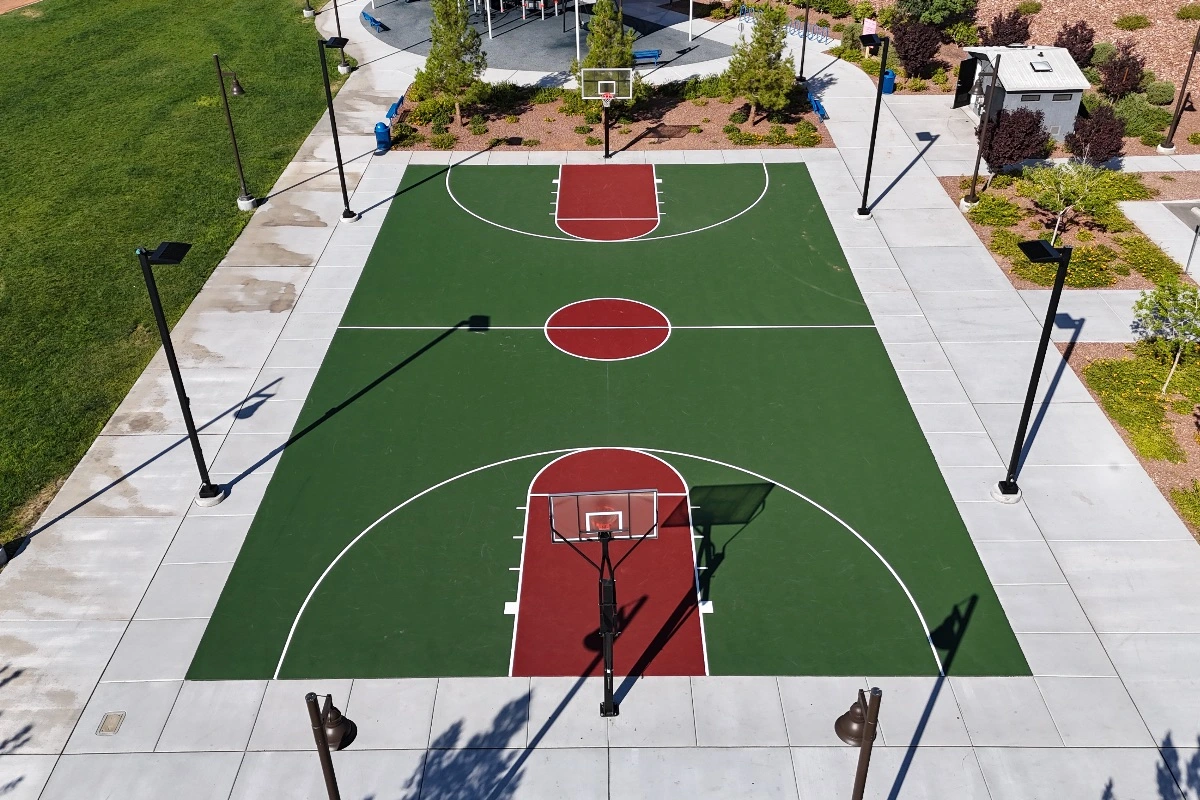
A basketball court is a long-term investment, but like any outdoor athletic surface, it requires regular care to stay in top condition. Without proper basketball court maintenance, even high-quality courts can develop cracks, fading, drainage issues, worn coatings, and unsafe playing conditions.
Whether you manage a backyard basketball court, HOA community court, school facility, park court, or commercial athletic space, routine care helps preserve the court’s appearance, safety, and performance. A well-maintained court provides better traction, consistent ball bounce, cleaner markings, and a more enjoyable playing experience.
Professional basketball court repair and maintenance services are especially important for outdoor courts exposed to heat, UV rays, moisture, and heavy use. In climates like Arizona and Nevada, acrylic coatings and outdoor court surfaces need proper upkeep to resist fading, cracking, and surface breakdown.
Basketball court maintenance includes all activities that preserve the court’s surface quality, structural integrity, gameplay performance, and safety conditions. This can include sweeping, washing, crack inspections, drainage checks, line repainting, coating care, and periodic resurfacing.
The goal is to prevent minor wear from turning into major damage. A court that is cleaned, inspected, and repaired regularly will usually last longer and perform better than one that is ignored until problems become severe.
Maintenance prevents damage before it becomes serious. This includes cleaning the surface, removing debris, checking for small cracks, and monitoring traction.
Repair fixes existing issues such as cracks, peeling coatings, faded lines, drainage problems, or surface failure. In many cases, proper maintenance reduces how often major repair work is needed.
Small issues like hairline cracks can grow into structural surface failures if ignored. Water can enter cracks, weaken the base, and cause the damage to spread.
Early maintenance helps avoid expensive repairs, major resurfacing, or full reconstruction. A small crack repair today is much easier to manage than a failed court surface later.
Well-maintained courts reduce slip hazards, uneven surfaces, trip risks, and unsafe movement areas. Basketball involves quick stops, lateral motion, jumping, and fast direction changes. If the surface is slippery or uneven, the risk of injury increases.
Proper outdoor basketball court maintenance helps protect players by keeping the court clean, textured, and stable.
Routine care can significantly extend acrylic coating life, surface durability, and structural stability. Outdoor courts naturally experience wear from sunlight, rain, dirt, and use.
Regular cleaning, coating care, and timely repairs help preserve the surface system and delay the need for full resurfacing.
A maintained court provides consistent ball bounce, proper traction, clear markings, and better gameplay quality. Players can move confidently, shoot accurately, and enjoy a cleaner playing surface.
For schools, parks, and commercial facilities, better court conditions also improve the user experience.
Surface cracks are commonly caused by temperature changes, ground movement, aging materials, and drainage issues. Cracks may begin small but can spread quickly if water gets inside them.
Professional crack repair helps prevent further damage and restores safer gameplay.
UV exposure can cause color loss, reduced visibility, and a dull court appearance. This is common on outdoor courts exposed to direct sunlight.
Faded coatings may also indicate that the surface protection is wearing down.
Poor drainage causes standing water, surface weakening, and accelerated deterioration. Water that remains on the court can damage coatings, worsen cracks, and create slippery areas.
Drainage should be checked regularly as part of court maintenance services.
Worn surfaces can become slippery and less performance-friendly. Acrylic athletic coatings are designed to provide traction, but that texture wears down over time.
When traction is reduced, players may slip during quick stops or directional changes.
|
Service Type |
Best For |
What It Includes |
Main Benefit |
|
Routine Maintenance |
Courts in good condition |
Sweeping, cleaning, inspections, drainage checks |
Prevents damage early |
|
Minor Repairs |
Small cracks or worn areas |
Crack sealing, patching, line touch-ups |
Restores safety and appearance |
|
Professional Maintenance |
High-use or aging courts |
Deep cleaning, coating evaluation, repair planning |
Extends court lifespan |
|
Court Resurfacing |
Faded or worn surfaces |
Acrylic coating renewal, texture restoration, restriping |
Restores performance |
|
Full Restoration |
Severely damaged courts |
Repairs, resurfacing, drainage correction, upgrades |
Improves long-term durability |
Regular cleaning removes dirt, debris, leaves, mold, algae, and other materials that can damage the surface or create slip hazards.
For outdoor courts, sweeping and light washing should be done regularly. Deep cleaning may be needed when the court has stains, buildup, or weather-related residue.
Early crack detection allows for crack sealing, surface patching, and preventive reinforcement. Small cracks should be repaired before they expand.
Professional basketball court repair and maintenance services use flexible repair materials designed for outdoor athletic surfaces.
Court markings may fade over time due to sunlight and use. Line repainting restores visibility, color clarity, and layout accuracy.
Fresh lines improve both appearance and gameplay, especially for shared-use courts with basketball, pickleball, or volleyball markings.
Acrylic surfaces may require recoating, texture restoration, and UV protection renewal. Acrylic basketball court maintenance helps preserve traction, color, and performance.
When the surface becomes too worn, resurfacing may be recommended.
Monthly maintenance should include sweeping debris, checking drainage, removing leaves, and basic surface cleaning.
Homeowners and facility managers should also look for early signs of cracking, fading, or slippery areas.
Seasonal maintenance may include deep cleaning, crack inspection, line touch-ups, and surface condition reviews.
This is especially important after periods of heavy use, extreme heat, storms, or seasonal weather changes.
Long-term maintenance may include resurfacing every few years and full coating renewal when needed. The exact timing depends on usage, weather exposure, coating quality, and maintenance habits.
High-use courts usually need resurfacing sooner than lightly used backyard courts.
Homeowners can handle basic backyard basketball court care such as sweeping, light washing, removing debris, and inspecting for visible surface problems.
DIY maintenance is useful for keeping the court clean and preventing buildup. However, it should not replace professional repairs when cracks, drainage issues, or coating failure appear.
Professionals provide crack repair systems, acrylic resurfacing, structural evaluation, drainage assessment, and full restoration solutions.
A professional team can identify problems that may not be obvious at first glance. They also use athletic-grade materials designed for long-term outdoor performance.
For aging, faded, cracked, or slippery courts, professional court resurfacing and upkeep is usually the best solution.
Small cracks expand quickly if left untreated. Early repair helps prevent water intrusion and structural damage.
Harsh chemicals can damage acrylic coatings and reduce surface lifespan. Gentle cleaning methods and court-safe products are recommended.
Hidden damage can worsen over time. Regular inspections help catch problems early before they become expensive repairs.
Waiting too long to resurface may lead to deeper surface deterioration and more costly reconstruction.
Proper maintenance provides several long-term benefits:
A maintained court looks better, plays better, and lasts longer.
Maintain a basketball court by sweeping debris, washing the surface, checking drainage, inspecting for cracks, repainting faded lines, and scheduling resurfacing when coatings become worn.
For outdoor courts, acrylic-coated concrete or asphalt is a popular choice because it provides durability, traction, and weather resistance. Modular tiles are also common for backyard courts.
Outdoor basketball courts can be cleaned by sweeping debris, rinsing with water, and using mild cleaning solutions when needed. Avoid harsh chemicals that can damage athletic coatings.
Indoor gym floors are usually recoated by cleaning, screening or abrading the surface, applying finish coats, and allowing proper curing time. Professional gym floor care is recommended.
Recoating frequency depends on usage, finish type, and maintenance. High-use gym floors may need recoating more often than lightly used residential or private courts.
Please Provide Your Contact Information and Project Details