
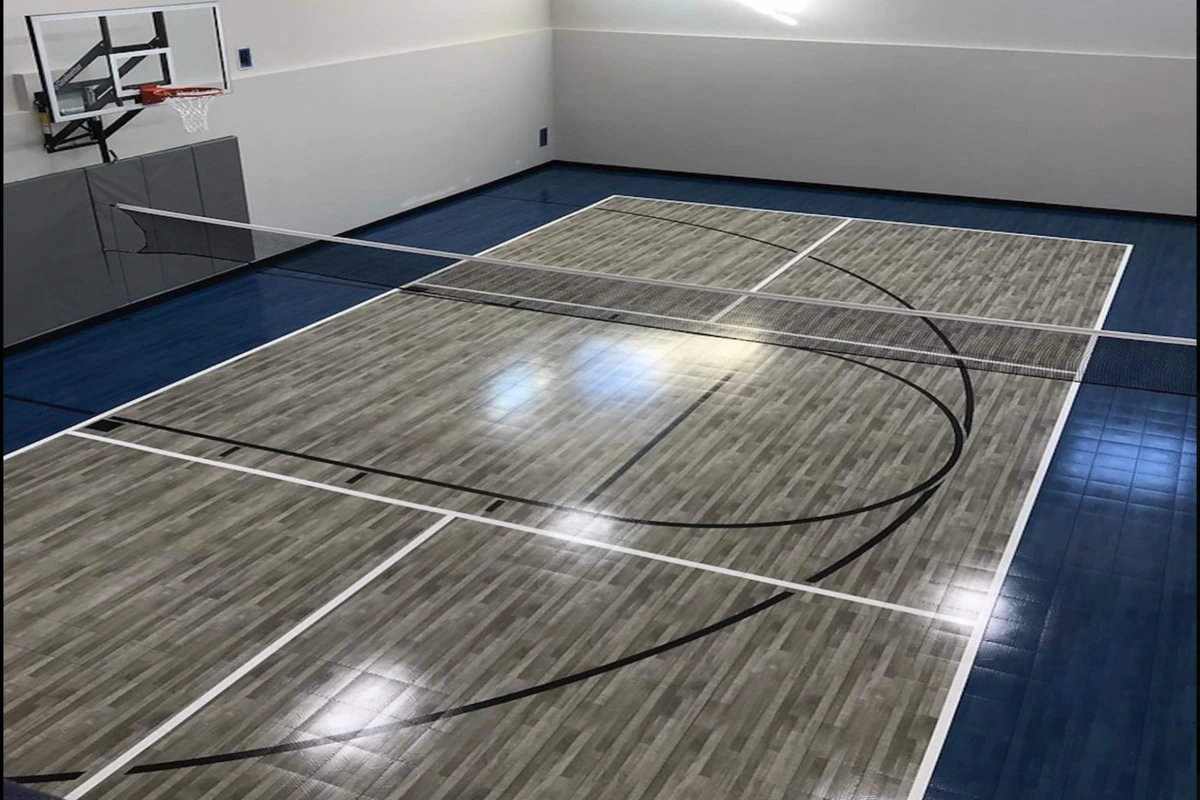
Indoor basketball courts provide year-round play, protection from weather, and a professional athletic environment for training, competition, and recreation. Whether you’re building a residential basketball gym, a school facility, or a commercial sports complex, proper indoor basketball court construction is essential for safety, performance, and long-term durability.
Unlike outdoor courts, indoor facilities require specialized flooring systems, climate-controlled environments, lighting solutions, and structural planning that directly impact player performance and court longevity.
A properly designed indoor court is more than a playing surface—it is a full athletic facility that supports performance, safety, and long-term usability.
Indoor basketball court construction involves building an entire athletic environment that includes:
A properly executed basketball gym construction project ensures the court delivers consistent performance while minimizing maintenance needs over time.
Every detail—from ceiling height to flooring selection—plays a role in how the facility performs.
Many property owners choose indoor courts because they provide:
Indoor facilities also offer controlled environments, making them ideal for athletes who want predictable performance conditions throughout the year.
A residential indoor basketball court is ideal for:
Homeowners often convert garages, barns, or custom-built structures into fully functional basketball gyms.
Educational institutions rely on indoor sports facility construction for:
Durability and safety are top priorities in these high-traffic environments.
Sports complexes often include indoor courts to support:
These facilities often require multiple courts, seating areas, and professional-grade equipment.
Hardwood remains the gold standard for competitive basketball and is widely used in professional and collegiate environments.
Benefits include:
Hardwood systems are often chosen for high-level indoor basketball court flooring installations.
Synthetic systems are widely used in modern indoor basketball court installation projects.
Advantages include:
These systems are common in schools, community centers, and recreational facilities.
Cushioned systems are designed for comfort and safety.
They help reduce:
These systems are popular in training facilities and family-oriented sports environments.
|
Flooring Type |
Durability |
Comfort |
Maintenance |
Best Use Case |
|
Hardwood |
High |
Medium |
Medium |
Professional & competitive courts |
|
Synthetic Flooring |
High |
Medium |
Low |
Schools & multi-use facilities |
|
Cushioned Systems |
Medium-High |
High |
Low |
Training & residential courts |
Planning includes:
Proper planning ensures the indoor basketball court builder creates a functional and safe athletic environment.
The foundation must provide:
Even indoor courts require careful subfloor preparation to prevent future flooring issues.
The selected flooring system is installed to create:
This is one of the most important steps in indoor basketball court construction because it directly affects performance.
Professional striping includes:
Accurate striping ensures compliance with official standards and improves gameplay clarity.
Final installation may include:
Adequate ceiling height allows:
Low ceilings can significantly limit usability.
Quality lighting improves:
LED sports lighting is commonly used in modern basketball gym construction projects.
Indoor courts benefit from controlled environments that provide:
These systems help extend the life of the court and maintain consistent playing conditions.
Low-cost flooring may result in:
Moisture issues can lead to:
Inadequate lighting affects:
Failing to plan for future use can limit expansion options or multi-game functionality.
Indoor facilities eliminate:
Professionally built courts provide:
A well-built court becomes a long-term asset for:
Many indoor courts can support:
This increases overall facility value and usability.
Legendary Sports Construction specializes in indoor basketball court construction focused on performance, safety, and long-term durability.
Every project is tailored to:
From planning and flooring installation to striping and equipment setup, every phase of indoor basketball court installation is professionally managed for high-quality results.
Hardwood is the most common for professional courts, while synthetic flooring is widely used for multi-purpose facilities.
Most hardwood courts use maple due to its durability and consistent playing performance.
Hardwood and synthetic sports flooring are the most commonly used surfaces.
A good indoor basketball typically has a composite leather cover designed for grip and consistent bounce.
An ideal indoor basketball facility includes proper ceiling height, professional flooring, lighting systems, and climate control.
Professional indoor basketball court construction creates a controlled, high-performance environment that supports year-round training, recreation, and competition. From flooring selection to structural planning, every detail impacts safety and long-term usability.
Working with an experienced indoor basketball court builder ensures your facility meets performance standards while maximizing durability and value.
A well-designed indoor court is more than a sports feature—it is a complete athletic investment that enhances lifestyle, training capability, and property value for years to come.
Please Provide Your Contact Information and Project Details