
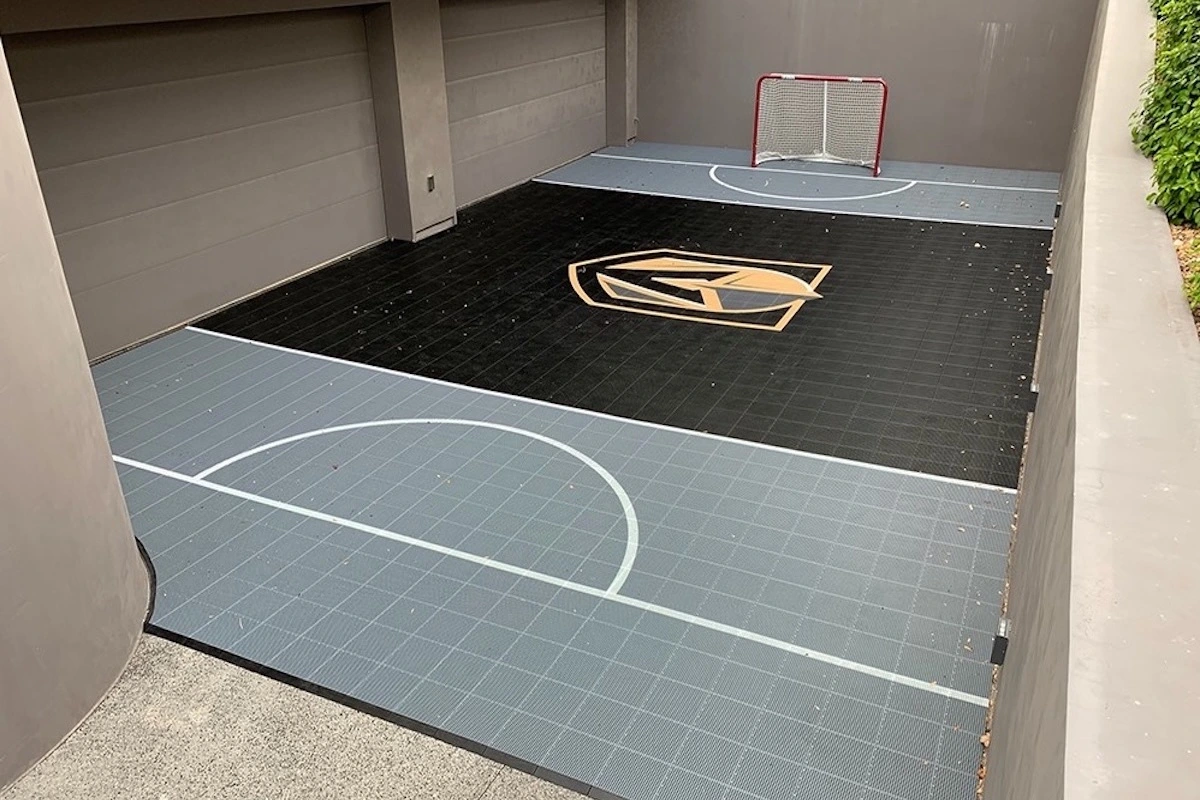
Indoor hockey court construction is a specialized process that creates high-performance athletic surfaces engineered for speed, safety, and durability. Unlike outdoor rinks, indoor hockey rink construction ensures controlled traction, consistent glide, and impact resistance in a climate-controlled environment, enabling year-round training and competition.
These courts are widely used in training facilities, schools, recreation centers, and multi-sport complexes. When designed and installed correctly, indoor hockey courts provide professional-grade playing conditions, reduce injury risk, and allow multi-sport versatility without compromising performance.
Whether your facility is intended for roller hockey, ball hockey, or multi-use activities, professional construction guarantees the rink meets athletic, safety, and durability standards.
Indoor hockey court construction involves more than laying flooring—it’s a complete system engineered for fast-paced gameplay, athlete safety, and long-term durability. Core components include:
Indoor hockey courts differ from outdoor surfaces because they require:
Designed for roller or inline hockey, these courts feature:
Ball hockey courts focus on controlled grip and impact resistance while supporting multi-sport use. Features include:
Many facilities require courts adaptable for multiple sports:
Multi-use indoor court systems maximize facility versatility without compromising hockey performance.
Materials Used in Indoor Hockey Court Construction
Synthetic systems are popular for indoor hockey because they provide:
Polyurethane surfaces offer additional benefits:
These are particularly effective for competitive training environments.
Modular tiles are interlocking systems that offer:
Modular tiles are ideal for schools, recreation centers, and facilities hosting multiple sports.
|
Flooring Type |
Durability |
Traction |
Maintenance |
Multi-Sport Use |
Best Use |
|
Synthetic Hockey Flooring |
High |
Moderate |
Low |
Medium |
Roller and ball hockey |
|
Polyurethane Athletic Systems |
High |
High |
Medium |
High |
Competitive training and heavy use |
|
Modular Sports Tiles |
Medium |
Medium |
Low |
Very High |
Multi-sport indoor facilities |
|
Rink-Style Boards + Surface |
Very High |
Controlled |
Medium |
Limited |
Professional inline hockey rinks |
Before construction begins, professionals evaluate:
This ensures the court is tailored to both hockey and multi-sport performance.
Design planning includes:
A strong subfloor ensures:
The selected surface system is installed to provide:
Final installation includes:
Predictable glide is critical for safe, competitive play.
Reduces joint stress and lowers injury risk during high-speed gameplay.
Surfaces must withstand:
Facilities often require multi-use indoor court systems to accommodate different sports without affecting hockey performance.
Professionally constructed courts offer controlled speed, predictable movement, and safe surface interaction.
Weather-independent design allows consistent training and competitions, unaffected by temperature or UV exposure.
Synthetic and polyurethane surfaces reduce upkeep, allowing more focus on athletics than repairs.
Courts can easily accommodate basketball, futsal, volleyball, and other indoor activities without compromising hockey playability.
Properly engineered shock-absorbing surfaces minimize joint stress and fatigue while ensuring safer, longer training sessions.
We design indoor hockey court construction projects that meet professional standards, ensuring durability, safety, and high performance.
We install synthetic, polyurethane, and modular systems engineered for longevity, speed, and controlled glide.
Projects are tailored to:
From single-use hockey rinks to multi-use indoor court systems, each project is optimized for performance.
What surface is indoor hockey played on?
Synthetic hockey flooring, polyurethane systems, or modular sports tiles are used for smooth glide, durability, and controlled traction.
What is the best flooring for a hockey court?
High-performance synthetic or polyurethane flooring is ideal. These materials are durable, provide consistent friction, and reduce injury risk.
What are the dimensions of the indoor hockey circle?
The standard indoor shooting circle has a radius of 14 feet (4.27 meters), but exact dimensions vary by league or facility.
How big is an indoor hockey court?
Regulation indoor hockey rinks are typically 180–200 feet long and 80–90 feet wide. Multi-use courts may adjust dimensions.
What type of flooring is best for floor hockey?
Smooth synthetic tiles or polyurethane surfaces provide low friction, durability, and multi-sport adaptability.
How long does indoor hockey flooring last?
With proper maintenance, synthetic and polyurethane surfaces can last 10–15 years. Modular tiles can be replaced individually.
Can modular tiles be used for multi-game courts?
Yes, they allow basketball, volleyball, futsal, and hockey on the same court without reducing performance.
What maintenance is required for synthetic hockey flooring?
Routine cleaning, occasional resurfacing, and inspection of seams or tiles maintain optimal performance and appearance.
Please Provide Your Contact Information and Project Details