
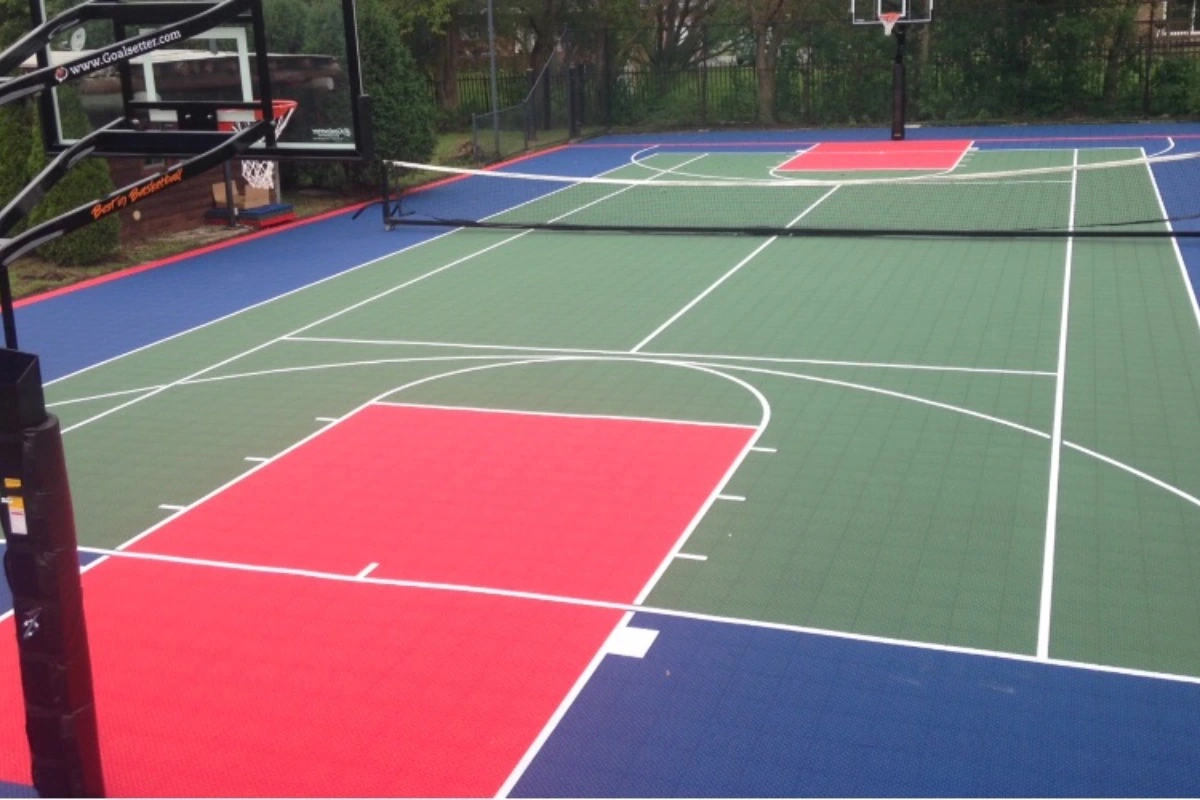
Multi Use Court: The Ultimate Backyard & Recreational Court Solution
If you want to maximize your recreational space, a multi-use court is one of the smartest investments you can make. Instead of building separate courts for every activity, multi-use courts combine several sports into one efficient and professionally designed recreational area.
These courts are becoming increasingly popular for residential backyards, schools, HOAs, parks, resorts, and athletic facilities because they create flexible outdoor spaces that support multiple activities year-round.
A professionally designed multi-use game court allows families and communities to enjoy basketball, pickleball, volleyball, badminton, fitness training, and recreational play — all within a single durable surface system.
For homeowners, this means turning unused backyard space into a highly functional entertainment area. For schools and recreational facilities, it means maximizing available property while supporting a broader range of activities.
Professional residential multi-use court builders design these courts to balance performance, durability, safety, and long-term value while adapting the layout to the specific property and sports priorities.
A multi-use court is a recreational surface specifically designed to support more than one sport or activity at the same time. Instead of dedicating an entire area to a single game, the court uses multiple line markings, adjustable equipment, flexible layouts, and multi-sport surfacing systems to create a versatile recreational environment.
This allows one court to function as a basketball court one moment and a pickleball or volleyball court the next. Professional planning ensures that each sport remains functional without making the court feel overcrowded or visually confusing.
Many courts are customized around the family or facility using the space. Some prioritize basketball and pickleball, while others focus on volleyball, badminton, or general fitness training.
Homeowners and recreational facilities choose multi-use courts because they save space, increase property functionality, reduce construction costs compared to building separate courts, and create year-round recreational opportunities.
Instead of maintaining several different sports areas, families can invest in one professionally built recreational surface that supports multiple activities. This is especially valuable for residential properties with limited outdoor space.
Schools, HOAs, and parks also benefit because multi-use courts encourage greater community engagement while maximizing budget efficiency.
One of the biggest advantages of a backyard multi-sport court is flexibility. Courts can be customized to support a variety of recreational activities depending on the available space and intended use.
Basketball remains one of the most common features on multi-use courts. Many homeowners choose half-court basketball layouts because they fit comfortably into residential backyards while still providing excellent recreational value.
Popular basketball options include adjustable hoop systems, training courts, youth practice areas, and full recreational half courts. Basketball also combines well with pickleball and volleyball layouts.
Pickleball is ideal for multi-use courts because it requires less space than tennis and works well alongside basketball configurations. The sport has grown rapidly in popularity due to its accessibility, social appeal, and ability to accommodate players of all ages.
Professional custom game court installation services can integrate pickleball striping into multi-sport layouts without compromising court appearance or gameplay quality.
Volleyball setups may include portable net systems, backyard recreational layouts, or shared hardcourt configurations. Some properties also incorporate sand volleyball areas adjacent to multi-use hardcourt systems.
Volleyball adds another layer of family-friendly recreation and entertainment value to the court.
Some outdoor recreational court systems also support badminton, futsal, roller hockey, agility training, and general fitness activities.
This flexibility is one of the main reasons multi-use courts have become so popular for residential and commercial recreational spaces.
|
Court Configuration |
Best For |
Included Sports |
Main Benefit |
|
Basketball + Pickleball |
Residential backyards |
Basketball and pickleball |
Most popular family layout |
|
Basketball + Volleyball |
Recreation and entertainment |
Basketball and volleyball |
Great for larger families |
|
Pickleball + Volleyball |
Smaller recreational spaces |
Pickleball and volleyball |
Compact and social design |
|
Full Multi-Sport Court |
Schools and HOAs |
Basketball, pickleball, volleyball, badminton |
Maximum recreational flexibility |
|
Training-Focused Court |
Athletes and active families |
Basketball drills, agility training, fitness |
Sports conditioning and recreation |
The best surface depends on the sports being played, maintenance expectations, climate conditions, and desired level of comfort and performance.
Acrylic athletic surfacing systems are extremely popular because they provide consistent traction, UV resistance, long-term durability, and professional-style gameplay performance.
These surfaces are ideal for basketball, pickleball, volleyball, and other hardcourt sports. Acrylic coatings are also available in custom color combinations and textured finishes for enhanced appearance and slip resistance.
For Arizona and Nevada properties, UV-resistant acrylic systems are especially important because they help reduce fading and heat-related surface wear.
Modular tile systems provide shock absorption, excellent drainage, easy maintenance, and customizable color designs. These surfaces are popular for residential recreational courts because they offer comfort and flexibility while requiring relatively low maintenance.
Interlocking tiles are also useful for courts that support multiple sports because they can improve joint comfort during play.
Synthetic cushioned systems prioritize player comfort, recreational versatility, and joint protection. These systems are often selected for family-focused backyard courts where comfort is more important than high-level competitive play.
Cushioned systems can help reduce fatigue and impact stress during longer recreational sessions.
The required space depends on which sports will be included, the desired safety clearance, backyard dimensions, and how competitively the court will be used.
A professional multi-purpose court construction company evaluates the available area and recommends the best layout based on the property and recreational goals.
Popular residential layouts include half basketball and pickleball combinations, compact backyard recreation courts, and shared volleyball and basketball areas.
Even smaller backyards can often accommodate a functional multi-use layout with proper planning. Professional design helps maximize the available space while maintaining safe player movement and comfortable gameplay.
One of the biggest benefits of a backyard multi-sport court is that different family members can enjoy different activities without needing multiple recreational spaces.
Children may use the court for basketball practice, while adults enjoy pickleball or fitness training. Friends and guests can gather for recreational volleyball or casual games.
This flexibility makes the court a valuable year-round entertainment feature.
Custom recreational spaces improve backyard usability, outdoor entertainment appeal, and overall property value. A professionally designed court can become one of the most attractive and functional features of a home.
For higher-end residential properties, a multi-use court can also enhance marketability and create a more complete outdoor living environment.
Trying to fit too many sports into a limited space reduces playability and creates visual clutter. Professional planning helps balance flexibility with functionality.
Different sports require different traction and performance characteristics. Choosing the wrong surface can reduce safety, comfort, and gameplay quality.
Poor drainage shortens court lifespan and may lead to standing water, surface damage, and safety hazards. Proper grading and water management are critical for outdoor court durability.
Incorrect court positioning may create sun glare problems during outdoor play. Professional builders evaluate sun exposure and court orientation during the design process.
The process begins with a property evaluation that reviews available space, recreational priorities, surface recommendations, drainage conditions, and layout possibilities.
This stage helps determine which sports can realistically fit within the property while maintaining safe movement areas.
The construction team installs the court foundation, which may include concrete or asphalt base systems, grading, leveling, and drainage preparation.
A properly prepared base is essential for long-term court durability.
The selected athletic surface is installed. Depending on the project, this may involve acrylic athletic coatings, modular athletic tiles, or synthetic cushioned systems.
Professional installation ensures proper traction, durability, and long-term performance.
The final stage includes multi-sport striping, basketball hoop systems, pickleball or volleyball net systems, lighting, fencing, and optional recreational accessories.
The goal is to create a clean, organized, and visually appealing recreational environment.
Professional custom game court installation provides several long-term benefits:
A well-designed court can become one of the most frequently used areas of a property.
A multi-purpose court is a recreational athletic surface designed to support multiple sports and activities within one space. Common combinations include basketball, pickleball, volleyball, and badminton.
The best tennis court depends on climate, maintenance expectations, and gameplay preferences. Acrylic hardcourts are popular because they offer durability, low maintenance, and consistent performance.
A multi-use games area, often called a MUGA, is a shared recreational court designed for several sports and activities. These spaces are commonly installed at schools, parks, HOAs, and residential properties.
The required space depends on layout orientation, fencing, and safety clearance. Professional court designers can determine the ideal dimensions based on the available property.
Multipurpose court sizes vary depending on the included sports and intended use. Residential courts are often customized to fit available backyard space while maintaining safe recreational functionality.
Please Provide Your Contact Information and Project Details