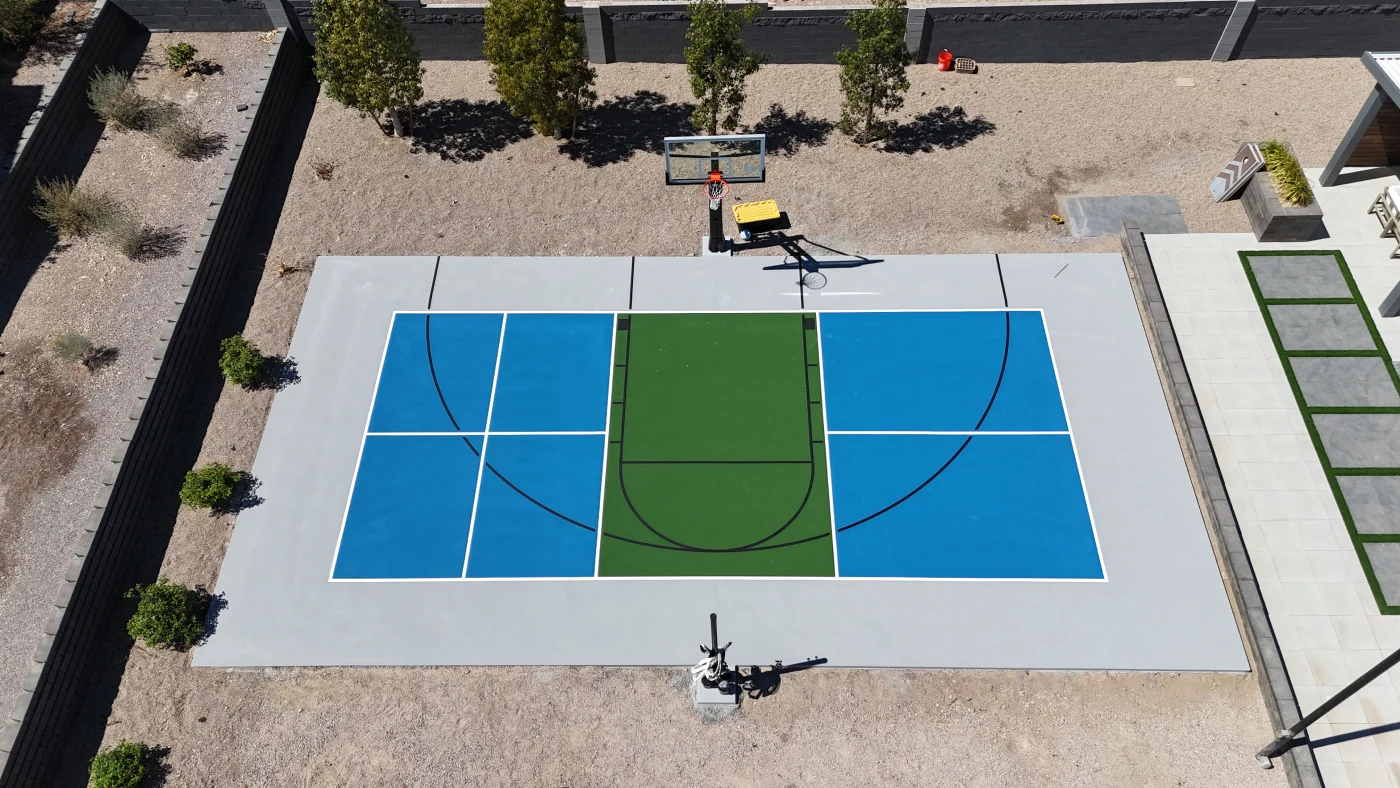
A well-built sport court is a long-term asset, but only if it’s maintained correctly along the way. Legendary Sport Construction provides resurfacing and maintenance services for basketball, pickleball, tennis, and volleyball courts across Las Vegas and Phoenix, helping property owners protect their investment and avoid premature, costly rebuilds.
Signs Your Court Needs Resurfacing
- Fading or chalking color, a sign the acrylic coating’s UV protection is breaking down.
- Hairline or spreading cracks, which allow water intrusion that can damage the base beneath the surface.
- Inconsistent bounce or traction, indicating uneven wear across the playing surface.
- Standing water after rain, which points to a drainage or slope issue that needs to be addressed before resurfacing.
- Faded or hard-to-see line striping, which affects both play accuracy and the court’s overall appearance.
What Our Resurfacing Service Includes
- Full surface assessment, checking base integrity, drainage, and the extent of cracking before recommending a scope of work.
- Crack repair, using flexible fillers designed to move with the base rather than re-crack quickly.
- Resurfacer coat application, restoring a uniform surface texture across the full court.
- Fresh color coats, applied in your existing colors or a new palette if you’re ready for a refresh.
- New line striping, painted to precise regulation spacing in durable, UV-resistant paint.
Ongoing Maintenance Recommendations
Routine cleaning. Regularly sweeping debris and periodically rinsing the surface prevents dirt and organic material from degrading the coating and creating slip hazards.
Prompt crack attention. Small cracks should be treated quickly, before they widen and allow water to undermine the base beneath the coating.
Drainage checks. Periodically confirming that water sheets off the court properly after rain helps catch developing slope or drainage issues before they cause real damage.
Scheduled recoating. Most acrylic courts benefit from a full recoat every four to seven years, depending on usage intensity and sun exposure. Recoating on a proactive schedule, rather than waiting until damage is severe, keeps costs lower and the court playable throughout.
Net, hoop, and fencing checks. Hardware should be periodically inspected for loosening, rust, or wear, since a failing net post or unstable hoop anchor is a safety issue, not just a cosmetic one.
Resurfacing vs. Full Rebuild
Resurfacing only makes sense when the underlying base is structurally sound. If your court shows significant heaving, widespread structural cracking, or persistent drainage failure that basic slope correction can’t fix, a full rebuild is the more responsible long-term investment, even though it costs more upfront than resurfacing.
Why Regular Maintenance Pays Off
Courts that receive periodic maintenance and recoating on a proactive schedule consistently outlast courts that are left alone until problems become severe. Addressing small issues early, a crack here, a drainage tweak there, is dramatically less expensive than waiting for those issues to compound into base failure that requires a full rebuild.
FAQ
How often should a sport court be resurfaced?
Most acrylic courts benefit from a full recoat every four to seven years, depending on usage intensity and sun exposure.
What are the first signs that a court needs resurfacing?
Fading or chalking color, spreading cracks, inconsistent bounce, and faded line striping are the most common early signs.
Can cracks be repaired without a full resurfacing project?
Minor cracks can sometimes be treated individually, but if cracking is widespread, a full resurfacing project (which includes comprehensive crack repair) delivers better long-term results.
How do I know if my court needs resurfacing or a full rebuild?
The deciding factor is base condition. If the concrete or asphalt base is structurally sound with functioning drainage, resurfacing is usually sufficient.
Does resurfacing include new line striping?
Yes, our resurfacing service includes fresh, precise line striping as part of the standard scope.
What routine maintenance should I be doing between resurfacing projects?
Regular cleaning, prompt attention to small cracks, periodic drainage checks, and inspecting hardware like nets, hoops, and fencing for wear.