
Court Accessories: Seating, Storage, Shade and Scoreboards
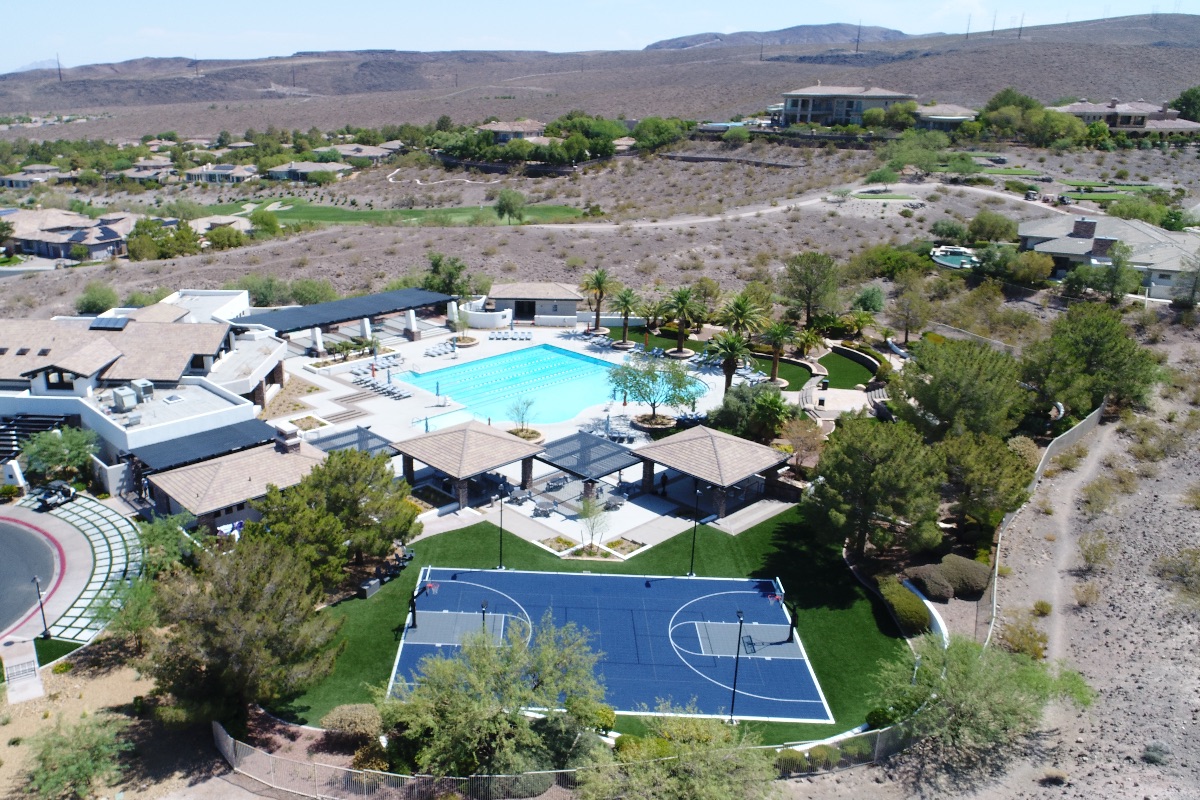
A court gets built, and then a year later the family has worked out that the balls live in the garage, there is nowhere to sit, and nobody brought water out. The accessories are what turn a playing surface into a place people spend time, and most of them are far cheaper to build in than to add. None of them is complicated. They are simply left off the drawing.
Seating
Seating is the most used accessory on any court and the one most often left off the drawing entirely.
- Courtside benches for players between games. Two is usually better than one, placed at opposite sides or ends so teams have somewhere.
- Spectator seating set back from the playing area, which is a different thing from courtside seating and matters for a household with children playing.
- Shaded seating, which in this region is the only kind that gets used in summer. A bench in full west sun is a bench nobody sits on, and the structures are covered in court shade structures and windscreens for the desert.
Built-in seating, whether a low wall or a fixed bench, has an advantage beyond permanence: it cannot be blown over in wind or left out in the sun to degrade, which are the two things that happen to furniture here.
Storage
Equipment that is stored indoors gets left indoors, and a court that requires a trip to the garage before play gets used less.
- An on-court storage box for balls, paddles, rackets, pump and anything else. It needs to be lockable where there is public or shared access, weather resistant, and ventilated so what is inside does not cook.
- Heat is the specific local problem. A sealed plastic box in this sun reaches temperatures that degrade balls, grips and anything with adhesive in it. A shaded, ventilated storage location is a genuine specification rather than a nicety.
- A ball hopper or cart for anyone doing volume practice, which needs somewhere to live.
- A bin for used balls, which keeps a court tidy and is the kind of detail that makes a court feel maintained.
Shade
Shade is the single highest-impact addition on a desert court. It serves three different purposes, and they are worth separating because they call for different structures.
- Over the seating, which is what makes the court usable between games in summer.
- Over a portion of the playing area, which is rarely practical on a full court and sometimes possible on a small one.
- As windscreen on the fence, which blocks low sun at a shallow angle as well as wind and visual distraction, covered in sport court fencing and netting systems.
Where shade is planned, the structure footings go in with the court rather than afterward, even if the structure itself comes later.
Water
Water at the court is easy to overlook and significant in this climate, where a session without it is a short session.
- A hose bib at the court serves several purposes: drinking water, rinsing the surface, cooling players and cleaning equipment.
- A dedicated drinking fountain suits a community or commercial installation rather than a residential one, and it is covered on our commercial courts page.
- A rinse point for shoes and equipment, which keeps dust off the court surface and extends the time between cleanings.
Running water to the court while the yard is open is inexpensive. Running it afterward means trenching beside a finished court.
Lighting beyond the court
Court lighting is a specific discipline covered in sport court lighting, glare and shielding ordinances. Several adjacent lighting items are worth including.
- Path lighting between the house and the court, which is a safety matter after dark.
- Seating area lighting, separate from the court lighting, because the light you play under is not the light you sit under.
- Switching, which determines whether the court gets used in the evening. A switch at the house, or control from a phone, is the difference between using the court after dinner and not bothering.
Scoreboards and timers
Scoreboards are more relevant to community and commercial installations than residential ones, and they are worth knowing about before the court is built rather than after.
- A simple manual scoreboard suits most residential courts and needs nothing but mounting.
- An electronic scoreboard needs power and control, and it makes sense where organized play happens.
- A shot clock or timer is a facility item rather than a backyard one.
Where any of these is contemplated, the power and mounting are planned with the court. Community planning is covered in HOA community sport court planning.
Nets and net posts
Net posts are not strictly an accessory. They are included here because the post installation is frequently treated as one, and that is how a court ends up needing to be cored. Net posts are set in footings that go in with the slab. Retrofitting a post into a finished court means coring it, which on a post-tensioned slab is a serious matter covered in expansive soil and post-tension slabs in Las Vegas. Where a court may later serve an additional sport with a different net position, those post sleeves are worth installing at the same time even if unused, which is the same logic as the multi-sport layouts in multi-game court ultimate design guide.
What to build in versus add later
Build in: footings for shade structures and seating, water, power and conduit, net post sleeves including future ones, storage location with shade and ventilation, and anything requiring a footing or a trench. Add later: furniture, portable storage, scoreboards that are not hard-wired, and the decorative layer.
The principle is the same as every other phased outdoor project: anything buried or footed goes in first, and anything that sits on the surface can wait. Phasing is covered in phased backyard court construction.
What it costs to defer
It is worth being specific about this, because the deferral cost is the whole argument for doing the list above at once. Running a water line and a conduit to the court while the trencher is already on site is a small addition. Doing the same thing afterward means trenching beside a finished court, which is a separate mobilization, and the trench usually runs through whatever landscaping went in after the court.
Footings are the same. A footing poured with the court is incidental. A footing cut into a finished surface is a repair as well as a footing. The list above is short and inexpensive at the right moment, and the right moment is once.
Frequently asked questions
What court accessory gets used most?
Shaded seating, by a wide margin. A court with nowhere to sit between games gets shorter sessions, and in this climate seating in full sun is seating nobody uses. Built-in benches or a low wall have the additional advantage of not blowing over in wind or degrading in sun the way furniture does.
Where should equipment be stored?
On the court, in a lockable, weather resistant and ventilated box placed in shade. Heat is the specific problem here, since a sealed plastic box in this sun reaches temperatures that degrade balls, grips and anything with adhesive. Equipment kept indoors gets left indoors, and a court that requires a trip to the garage gets used less.
Is water at the court worth running?
Yes, and it is inexpensive while the yard is open. A hose bib at the court serves drinking water, rinsing the surface, cooling players and cleaning equipment, and a rinse point for shoes keeps dust off the surface. Running it afterward means trenching beside a finished court.
What should be built in rather than added later?
Anything buried or footed: footings for shade structures and seating, water, power and conduit, net post sleeves including sleeves for future sports, and a shaded ventilated storage location. Furniture, portable storage and non-wired scoreboards can all wait, because they sit on the surface rather than under it.
Do I need a scoreboard?
On a residential court, rarely, and a simple manual scoreboard covers it if you want one. Electronic scoreboards and timers make sense where organized play happens, which is usually a community or commercial installation. Where one is contemplated, the power and mounting are planned with the court rather than added afterward.