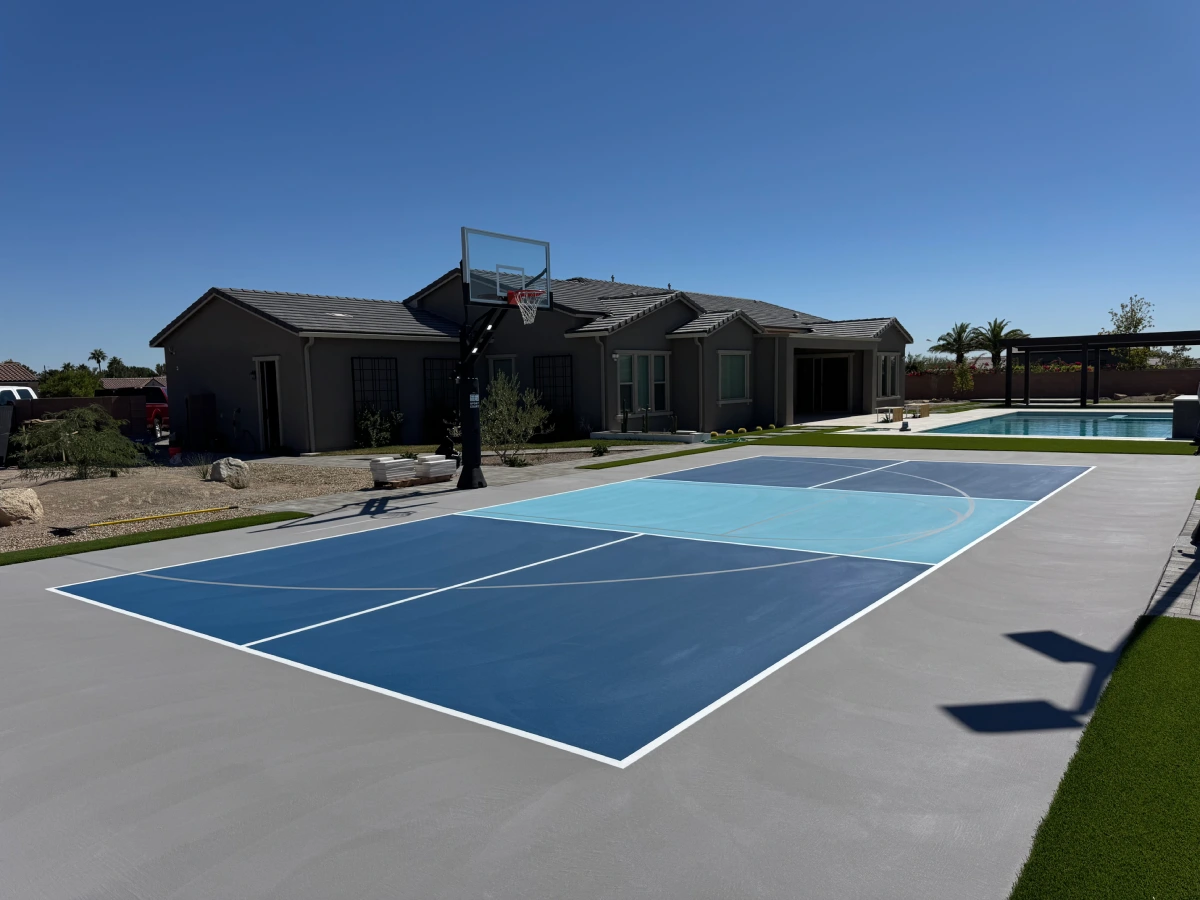
The surface system you choose for an outdoor basketball court affects everything from how the ball bounces to how long the court lasts before it needs major work. This guide walks through the main surface materials available for outdoor courts in Las Vegas and Phoenix, so you can choose the right one for your budget, usage, and site.
Acrylic Surfacing Systems
Acrylic is the most common surface for outdoor basketball courts, and for good reason. It’s applied as a multi-coat system directly over a properly prepared concrete or asphalt base:
- Resurfacer coat — fills minor surface imperfections and hairline cracks, creating a uniform texture.
- Color coats — typically two or more coats, applied in your chosen colors, giving the court its final look and playing texture.
- Line striping — court lines and any logos or graphics painted with durable, UV-stable paint.
Acrylic systems are prized for their consistent ball bounce, textured non-slip surface, and nearly unlimited color and design options, including two-tone key areas, logos, and multi-sport line overlays. They are also the most economical way to achieve a professional, tournament-grade look.
The tradeoff: acrylic coatings sit on top of the base, so the base still has to be well-built. A great acrylic job over a poorly compacted base will still crack.
Cushioned Acrylic Systems
Cushioned (or “cushioned game court”) systems add a rubberized underlayment beneath the standard acrylic color coats. This layer absorbs impact, reducing stress on players’ joints during extended play, and it also helps bridge minor surface irregularities. Cushioned systems cost more than standard acrylic but are a smart upgrade for courts used for daily training, camps, or by younger players where impact reduction matters.
Modular Tile Systems
Modular sports tiles are interlocking polypropylene tiles that snap together over an existing hard surface, such as a driveway or existing concrete pad. Key advantages:
- Fast installation with minimal curing time compared to poured surfacing systems.
- Built-in drainage through perforated tile design, which helps in areas prone to standing water.
- Flexibility — tiles can, in some cases, be removed and reinstalled elsewhere.
- Forgiving over imperfect surfaces, since the tile system floats above minor unevenness.
The tradeoff: tile seams and edges require quality installation to avoid lifting, and the aesthetic is different from a smooth acrylic finish, some homeowners prefer one look over the other.
Which Surface Should You Choose?
Choose acrylic if you want the closest experience to a professional or tournament court, maximum color/design customization, and you’re building on a new or well-prepared concrete/asphalt pad.
Choose cushioned acrylic if the court will see heavy daily use or you want extra joint protection for younger or competitive players.
Choose modular tile if you want faster installation, need to work around drainage challenges, or are installing over an existing surface without extensive base rework.
Climate Considerations for Las Vegas and Phoenix
Outdoor courts in our region face extreme summer surface temperatures and intense, sustained UV exposure. Not every “outdoor-rated” coating on the market is actually formulated to hold color and texture under those conditions. We use acrylic systems specifically engineered for high-heat, high-UV climates, which is a major reason our courts don’t chalk, fade, or crack prematurely the way lower-grade coatings often do within a season or two.
FAQ
What’s the most durable surface for an outdoor basketball court?
A properly installed acrylic system over a well-built base is the most durable and cost-effective option for most outdoor courts. Cushioned acrylic adds even more longevity for high-use courts by reducing surface stress.
Can modular tile be installed over an old, cracked driveway?
In some cases yes, since tile systems are more forgiving of minor surface imperfections than poured coatings, but significant cracking or heaving still needs to be addressed first.
Does surface color affect court temperature or durability?
Lighter colors reflect more heat and stay cooler underfoot, which can matter in extreme summer heat. All colors in a quality acrylic system are UV-stable, but lighter palettes are often preferred for comfort in desert climates.
How long does acrylic surfacing last before it needs to be redone?
A well-installed acrylic system typically lasts four to seven years before a recoat is needed, depending on sun exposure and usage.
Is modular tile a good option for a multi-sport court?
Yes, tile systems handle striping for multiple sports well and their drainage properties make them a strong choice for courts that need to handle varied use.