
The Best Time of Year to Build a Sport Court in Las Vegas or Phoenix

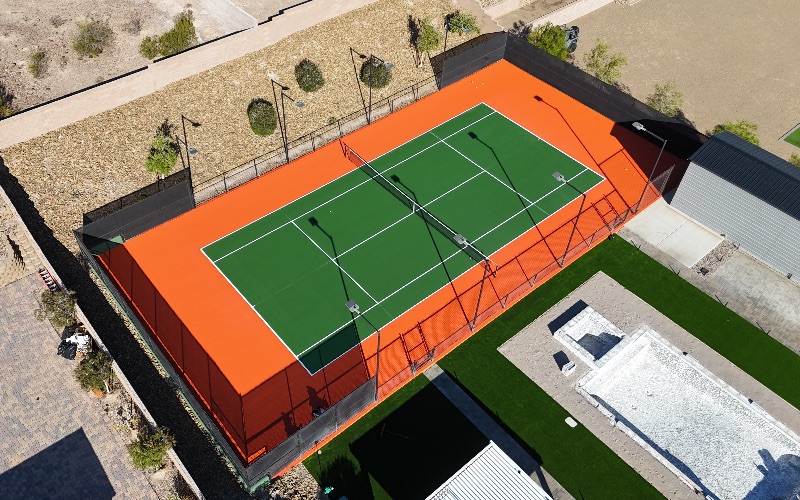
The best time of year to build a sport court in Las Vegas or Phoenix is not the season most owners assume. People tend to plan a court the way they plan a barbecue: decide in spring, build in summer, play by fall. In the desert, that calendar fights the materials at almost every step.
The court itself does not care when you sign the contract. The concrete and the acrylic surfacing care a great deal about when they go down. Here is how each season actually behaves on a job site in Southern Nevada and the Phoenix valley, and how to use that to your advantage.
What the materials require, independent of the calendar
Two physical constraints drive everything else.
Concrete placed in extreme heat loses water too fast, which makes finishing harder and increases the risk of shrinkage cracking. Crews manage this with early morning pours, mix adjustments and curing measures, so hot-weather concrete is routine here, but it demands more care and narrower windows.
Acrylic surfacing is stricter. Coating manufacturers publish minimum air and surface temperature requirements for application, and they also warn against applying coats to a court surface that is dangerously hot, because coats that dry too fast fail to bond and cure properly. A dark slab in July in either valley can hit surface temperatures far above the air temperature, which pushes surfacing work into short morning windows or off the schedule entirely. On the other end, winter cold snaps and short days shrink the workable hours from the opposite direction.
Season by season in the two valleys
Fall. The strongest surfacing season. Air and surface temperatures come back into the comfortable range for coatings, monsoon moisture is gone from Phoenix, and days are still long enough for full work windows. The tradeoff is that every builder’s calendar knows this too, so fall slots go early.
Winter. Site work, excavation and concrete are comfortable in the desert winter, and it is often the easiest season to schedule crews. Surfacing continues on mild days and pauses on cold ones, so coating work needs flexibility around the weather rather than a fixed date. Winter is an excellent time to get the slab in and curing.
Spring. The other strong surfacing season, with the same generous windows as fall. Spring finishes feed courts that are ready for the entire following fall and winter play season. Wind is the variable to watch, since blowing dust during coating application is a quality problem crews plan around.
Summer. The hardest season for finishing work. Phoenix adds monsoon storms, which bring rain, dust and humidity that stop coating work outright, a pattern familiar to anyone who has watched a July forecast in the East Valley. Las Vegas skips most of the monsoon drama but keeps the surface heat problem. Summer is far from useless, though, and that is the key to the whole calendar.
The smart sequence: let summer do the curing
A new slab needs its curing period before surfacing regardless of season, and a slab is far less picky about heat than a coating is. That opens the most efficient desert schedule we know: run design and permits in late spring, pour in early summer with hot weather precautions, let the slab cure through the hottest stretch when nothing could be surfaced anyway, and surface in early fall the moment the windows open.
Sequenced this way, the summer months that fight every other plan quietly do the one job they are suited for. The same thinking extends to a build spread over stages, which we describe in phased backyard court construction.
Design choices that widen the calendar
Season matters less when the court is designed for the desert in the first place. Lighter surface colors run cooler than dark ones, which matters both during application season and for every summer of play afterward. Shade structures extend playable hours and protect the surface, and we cover the options in court shade structures and windscreens. Drainage and grading decisions decide how quickly a court sheds a monsoon storm and gets back in service, which is the subject of sport court drainage and grading. And the broader picture of what desert heat does to surfaces over time is in how Arizona heat impacts court performance.
Las Vegas and Phoenix are similar, not identical
The two valleys share the fundamentals: hot summers, mild winters, and surfacing seasons in spring and fall. The differences are worth knowing if your project sits in one of them.
Phoenix carries the monsoon. From roughly early summer into September, afternoon storms bring rain, blowing dust and humidity swings that make coating work a day-by-day judgment call. The practical effect is that the Phoenix surfacing calendar has a harder stop in midsummer and a more crowded reopening in early fall, because everyone whose project waited out the storms wants the same weeks.
Las Vegas gets less monsoon disruption but does not escape summer. Surface temperatures on a slab in July are extreme in both cities, and Las Vegas adds more frequent spring wind days, which matter during coating application because blowing dust embeds in wet acrylic. Vegas projects also deal with a wider winter temperature swing between morning and afternoon, which compresses cold-season coating work into the middle of the day.
Neither difference changes the strategy. Both markets reward the same sequence of early paperwork, summer curing and shoulder-season surfacing. The differences change the margins: a Phoenix schedule needs more storm slack in late summer, and a Las Vegas schedule needs more wind awareness in spring.
When should you actually start?
Earlier than feels necessary, because the calendar you are really booking is not the crew’s work days. It is the permit and HOA cycle in front of them, the concrete cure in the middle, and the seasonal surfacing window at the end. Owners who want to play in fall are best served starting conversations in winter or early spring. Owners who call in September for an October court are usually choosing between a rushed job and a wait.
Off-season inquiries also tend to get more scheduling flexibility, simply because fewer people are asking. There is no discount season for quality work, but there is absolutely a convenience season.
If you want your project mapped onto the real calendar for your city and jurisdiction, request a project quote and we will walk the site and sequence it with you. You can see what we build across new court construction and our backyard courts page, and our team serves both valleys through our Nevada and Arizona service areas.
Frequently asked questions
What is the best time of year to build a sport court in Las Vegas or Phoenix?
Fall and spring are the best seasons for the surfacing phase, because acrylic coatings need moderate air and surface temperatures. The most efficient full schedule often starts earlier: permits in spring, concrete in early summer, curing through the hottest weeks, and surfacing in early fall.
Can a sport court be surfaced in the summer here?
Sometimes, in early morning windows on milder days, but summer surface temperatures in both valleys regularly exceed what coating manufacturers allow, and Phoenix adds monsoon rain and dust. Most quality builders schedule surfacing outside the peak summer weeks rather than gamble the finish.
Does winter stop court construction in the desert?
No. Excavation, base work and concrete are comfortable through the desert winter, and it is often the easiest season to book crews. Coating work continues selectively on mild days, so winter projects simply need date flexibility for the surfacing phase.
How does the monsoon affect court projects in Phoenix?
Monsoon storms bring rain, blowing dust and humidity that halt coating application and can interrupt concrete finishing. Builders in the Phoenix valley plan surfacing around the monsoon pattern, and good drainage design decides how quickly a finished court sheds storm water and returns to play.
When should I start planning if I want to play by fall?
Start in winter or early spring. Design, permits and any HOA architectural review come before construction, the slab needs its curing period, and fall surfacing slots fill early. Starting a season ahead turns the desert calendar from an obstacle into a sequencing tool.
Planning a court and want it sequenced right? Call Nevada at (702) 883-8386 or Arizona at (480) 878-2292, or request a project quote.