Outdoor Basketball Court Flooring Material: Best Surface Options for Durable Backyard Game Courts

Outdoor Basketball Court Flooring Material: Best Surface Options for Durable Backyard Game Courts
Selecting the right outdoor basketball court flooring material is one of the most important decisions when designing a durable, safe, and high-performing backyard game court. The flooring you choose affects everything from ball bounce and traction to maintenance needs, weather resistance, and long-term repair costs.
Whether you are building a simple half-court for family recreation, a driveway practice space, or a full multi-use athletic surface, the court material plays a major role in how enjoyable and reliable the playing experience will be. Some materials prioritize professional-level performance, while others focus on comfort, flexibility, or budget-friendly installation.
Because outdoor courts face sun exposure, rain, temperature changes, and heavy foot traffic, choosing the right court surface is about more than appearance. It is about building a court that lasts.
Understanding the most common basketball court surface options helps homeowners make better long-term investments in their recreational spaces.
Best Outdoor Basketball Court Flooring Materials
Several surface materials are widely used for outdoor basketball courts, each with unique advantages depending on climate, usage, and budget.
Acrylic-Coated Concrete Flooring
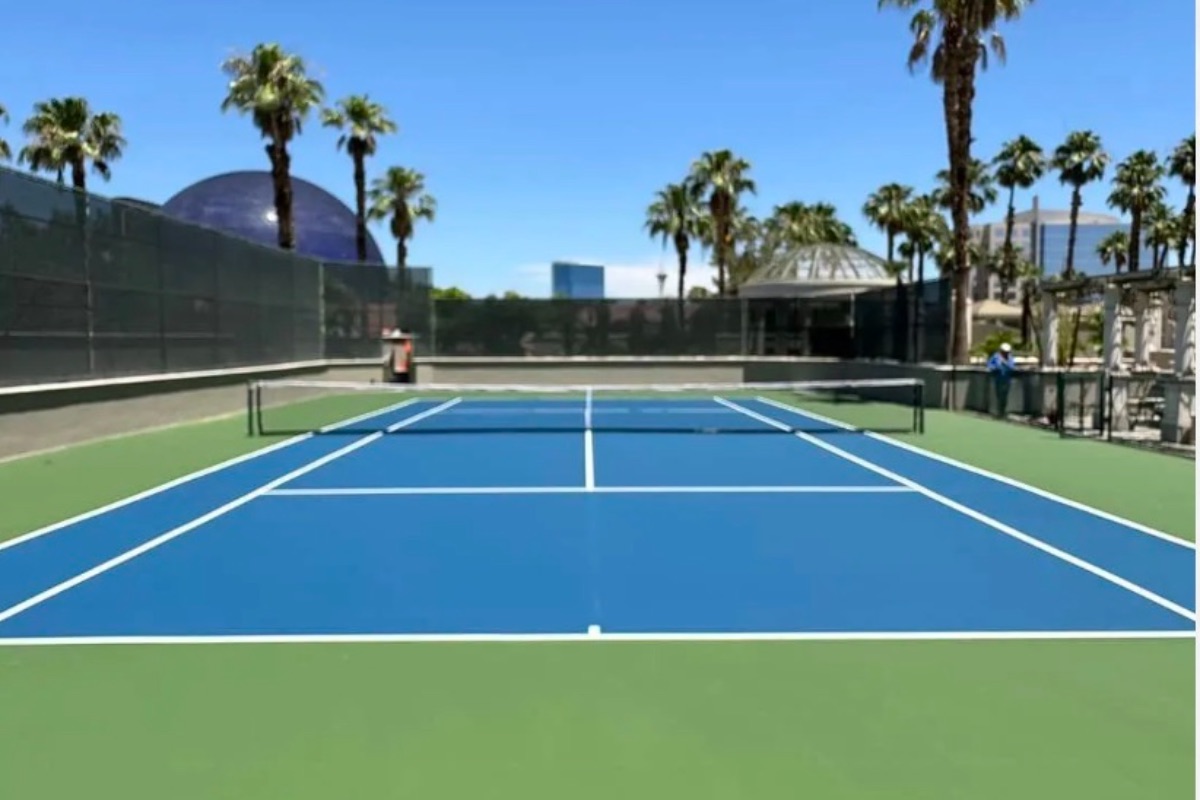
Acrylic-coated concrete is one of the most widely used surfaces for outdoor basketball courts because it combines durability with professional-grade performance.
Key Features:
- Smooth, even playing surface
- Excellent ball bounce consistency
- UV-resistant surface coatings
- Long-lasting weather durability
Acrylic coatings are applied over concrete slabs and create a textured finish that improves grip and reduces slipping.
Best For:
Permanent residential or commercial backyard courts in hot, sunny climates.
This is one of the most reliable choices for homeowners who want a long-term court with low maintenance and strong professional play quality.
Modular Interlocking Court Tiles
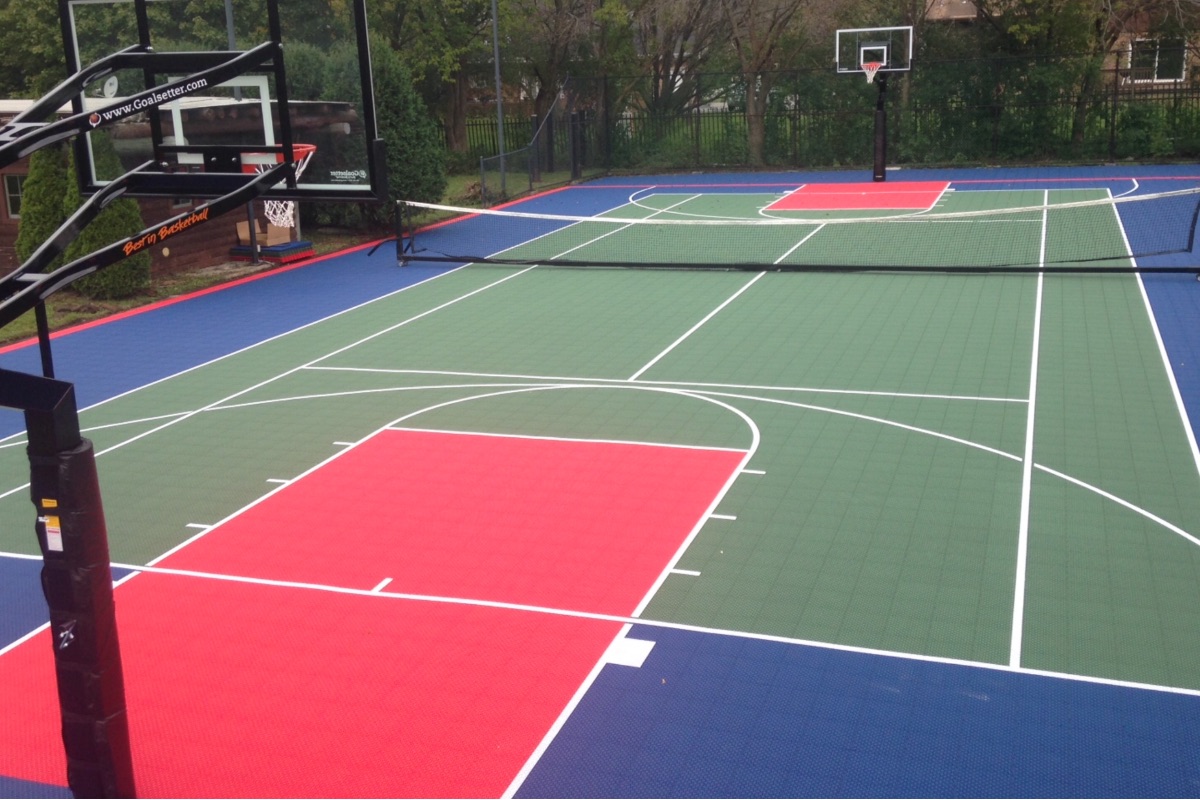
Modular basketball court tiles have become increasingly popular because they offer flexibility, comfort, and easier installation.
These snap-together systems are installed over concrete or asphalt bases and provide excellent versatility.
Key Features:
- Shock-absorbing surface comfort
- Easy tile replacement if damaged
- Excellent drainage and airflow
- Fast installation process
Tiles are especially popular for residential courts because they are customizable and easy to repair.
Best For:
DIY-friendly backyard courts and multi-use family recreation spaces.
Asphalt Base with Sport Coating
Asphalt is a traditional choice for larger outdoor courts, especially in schools and community parks.
When combined with acrylic coatings, it becomes a durable athletic playing surface.
Key Features:
- Strong stable structural base
- Cost-efficient for larger installations
- Can be resurfaced over time
- Supports acrylic court coatings well
Best For:
Large residential courts, community courts, and driveway basketball installations.
Asphalt may require more long-term maintenance than concrete but remains highly effective.
Synthetic Sports Flooring Systems
Synthetic systems offer more cushioning and comfort compared to harder surfaces.
These are often used where multi-sport flexibility and injury reduction are priorities.
Key Features:
- Cushioned underfoot comfort
- Reduced joint strain
- Slip-resistant texture
- Multi-sport adaptability
Best For:
Family recreation courts and multi-game athletic spaces.
Synthetic systems are especially beneficial for younger players or older adults seeking softer play surfaces.
Rubberized Court Surfaces
Rubberized outdoor courts focus heavily on safety and impact absorption.
Though less common for competitive basketball, they are excellent for recreational settings.
Key Features:
- High shock absorption
- Soft underfoot feel
- Noise reduction
- Safe for children and family play
Best For:
Recreational backyard courts and youth training zones.
Rubberized surfaces create comfortable environments for casual play.
Comparison Table – Outdoor Basketball Court Flooring Materials
|
Flooring Material |
Best For |
Main Advantage |
Consideration |
|
Acrylic-Coated Concrete |
Competitive outdoor play |
Professional bounce quality |
Harder on joints |
|
Modular Interlocking Tiles |
Residential flexible courts |
Easy repair and comfort |
Higher upfront tile cost |
|
Asphalt with Sport Coating |
Large outdoor courts |
Cost-effective large areas |
More resurfacing needed |
|
Synthetic Sports Flooring |
Multi-sport family use |
Cushion and comfort |
Moderate cost |
|
Rubberized Surfaces |
Youth and recreational play |
Maximum shock absorption |
Less pro-style bounce |
How to Choose the Right Flooring Material
Choosing the best basketball court material depends on several key factors.
Climate Conditions
Climate plays a major role in material performance.
In hot regions with strong UV exposure:
Best options include:
- Acrylic-coated concrete
- Modular basketball court tiles
These materials resist fading, expansion damage, and heat stress better than many alternatives.
Usage Type
How the court will be used affects the best flooring choice.
Casual Family Play:
- Rubberized surfaces
- Synthetic sports flooring
Competitive Basketball:
- Acrylic-coated concrete
- Asphalt with sport coatings
Multi-Sport Recreation:
- Modular tiles
- Synthetic systems
Match the surface to the primary activity level.
Maintenance Preference
Some homeowners prefer minimal upkeep.
Low Maintenance Options:
- Modular tiles
- Acrylic systems
Higher Maintenance Systems:
- Asphalt coatings
- Rubberized specialty surfaces
Maintenance requirements should match your long-term expectations.
Budget and Longevity
Initial budget matters, but long-term repair costs matter more.
Lower upfront cost:
- Asphalt systems
- Painted concrete
Higher long-term value:
- Acrylic-coated concrete
- Modular tile systems
Durable materials reduce resurfacing frequency.
Benefits of the Right Flooring Choice
Selecting the proper surface creates lasting benefits beyond aesthetics.
Improved Player Safety
Good traction reduces slipping hazards.
Shock absorption lowers joint stress and injury risk.
Consistent Ball Bounce
Uniform surfaces create predictable ball behavior.
This improves gameplay quality significantly.
Longer Court Lifespan
Quality materials withstand weather and heavy use better.
This reduces replacement frequency.
Better Outdoor Weather Resistance
UV-stable materials resist:
- Sun fading
- Heat cracking
- Moisture damage
Increased Property Value
Well-designed courts enhance outdoor living appeal.
A quality court becomes a valuable home feature.
Common Mistakes to Avoid
Avoiding common flooring mistakes saves money and frustration.
Choosing Indoor Flooring for Outdoor Use
Indoor materials often fail quickly outdoors due to UV and weather exposure.
Always use outdoor-rated athletic surfaces.
Ignoring Heat and UV Effects
Sun damage causes fading, warping, and cracking.
Choose UV-resistant products for hot climates.
Skipping Proper Base Preparation
Poor foundations cause shifting and uneven surfaces.
Base preparation is critical to long-term performance.
Using Non-Sport-Grade Coatings
Generic paints wear out quickly and lack traction properties.
Use specialized sports coatings only.
Overlooking Drainage Planning
Water pooling destroys surfaces over time.
Proper runoff design is essential.
Backyard Court Design Considerations
Surface material should align with court design goals.
Ask These Questions:
- Full court or half court?
- Basketball only or multi-sport?
- Permanent or upgradeable system?
- Professional or casual use?
Your design purpose determines the best material choice.
Frequently Asked Questions (FAQs)
What is the best floor for an outdoor basketball court?
Acrylic-coated concrete is often considered the best for professional-quality bounce and long-term durability, while modular tiles are excellent for comfort and flexibility.
What material is used for outdoor basketball courts?
Common materials include acrylic-coated concrete, asphalt with sport coatings, modular interlocking tiles, synthetic flooring, and rubberized surfaces.
What can I use instead of concrete for an outdoor basketball court?
Alternatives include asphalt bases, modular tile systems over stable hard surfaces, and synthetic outdoor sport flooring platforms.
What is the best material for outdoor basketballs?
Outdoor basketballs are typically made from durable rubber or composite leather designed to withstand rough outdoor surfaces.
Can you play basketball on an epoxy floor?
Yes, but epoxy surfaces are less common for outdoor basketball because they can become slippery and may not offer ideal athletic traction.
Choosing the right outdoor basketball court flooring material is essential for building a court that performs well, lasts for years, and supports safe enjoyable play. Whether you prioritize elite-level bounce, low maintenance, cushioned comfort, or multi-sport flexibility, understanding the available basketball court surface options helps you make smarter long-term decisions.
From durable acrylic court systems to flexible modular basketball court tiles, the best flooring solution is the one that matches your climate, playing style, and maintenance goals. A well-chosen court surface transforms any backyard into a high-value recreational space built for years of dependable performance.