
Backyard Sport Court Liability and Insurance: What Owners Should Know

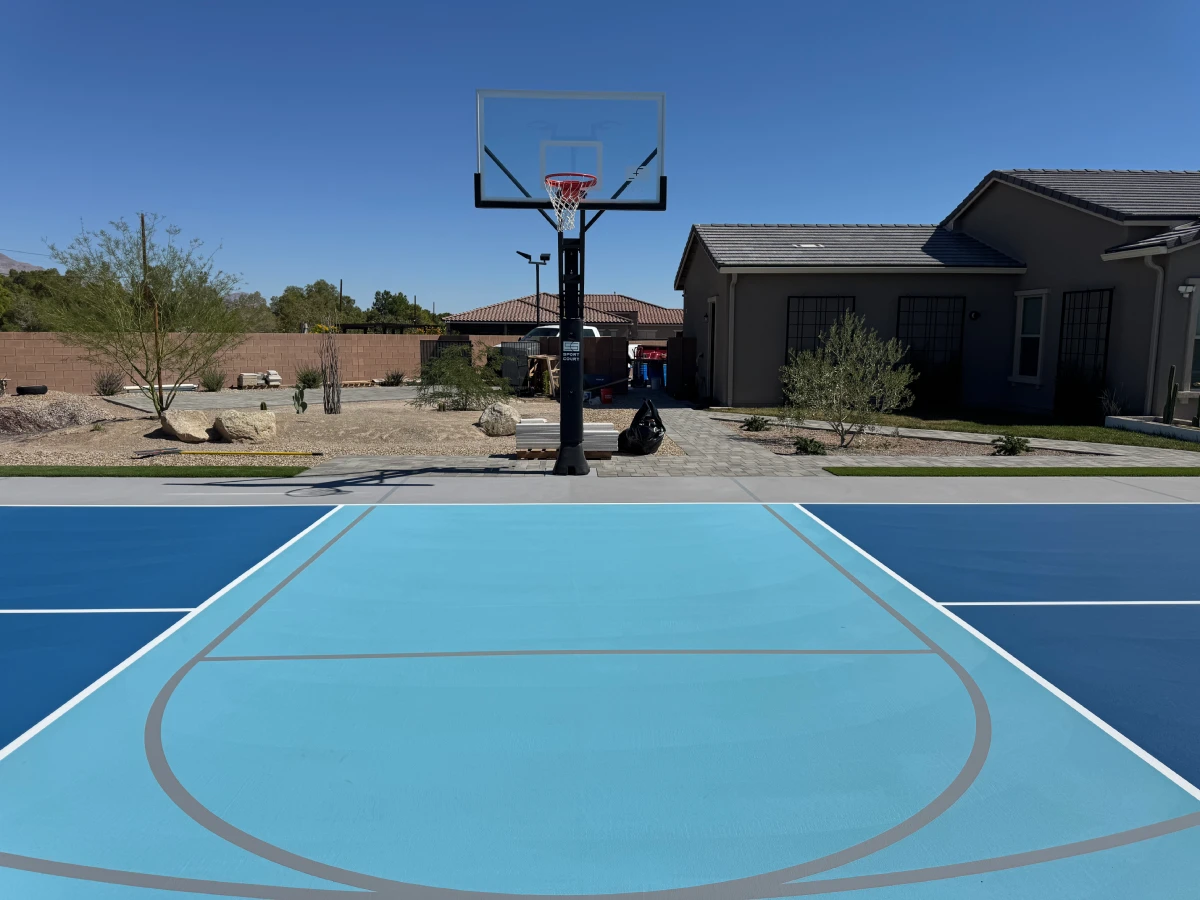
Backyard sport court liability is the part of court ownership nobody daydreams about, and the part that deserves twenty minutes of attention before the first guest ever plays. A court invites people onto your property to run, jump and compete. That is the whole point of building one, and it is also why the insurance and liability questions deserve real answers instead of assumptions.
One thing before anything else: we are court builders, not insurance professionals or attorneys. What follows is the practical framework we encourage every court owner to walk through, and the specific answers for your property should come from your insurance agent and, where it matters, a licensed attorney in your state.
The basic picture: your property, your guests, your policy
A backyard court is, from a liability standpoint, an active-use feature of your property, in the same general family as a pool or a trampoline. Homeowners insurance policies typically include personal liability coverage that responds when a guest is injured on the property, but policies differ in limits, in exclusions and in what they expect you to have disclosed.
That leads to the single most useful action in this article: tell your insurance agent about the court. Ask three questions. Is the court and its use covered under your current liability limits? Are those limits sensible for a feature that concentrates athletic activity in your yard? And does the insurer expect any specific safety measures, such as fencing, as a condition of coverage? Owners with meaningful assets often discuss umbrella liability policies in the same conversation, since those exist precisely to sit above the homeowners policy limits. Your agent can price those options in minutes, which is why the phone call beats guessing.
Uninvited users are a real category
Every court owner eventually finds evidence of a game they did not host. A visible, inviting play surface attracts neighborhood kids, and the law in many places treats features that attract children differently, expecting owners to take reasonable steps to limit access. You may hear your agent or attorney use the phrase attractive nuisance for this general idea.
The practical response is physical, not legal: control access. Perimeter fencing with a lockable gate is the standard measure, and it earns its cost in peace of mind alone. Fencing choices, gate placement and containment netting are covered in our guide to sport court fencing and netting systems. If your court is lit, timers and switched circuits that keep the court dark when you are not using it remove the open invitation after dinner, alongside the glare and ordinance points in sport court lighting and glare shielding.
Condition is a liability issue, not just a play issue
Most court injuries are ordinary sports injuries that no owner can prevent. The category an owner does control is the surface itself. Cracks that catch a toe, slick spots where drainage fails, loose net posts and degraded surfacing move an incident from bad luck toward a condition question, and a documented maintenance habit is the honest answer to it.
Walk the court on a schedule, fix what you find, and keep simple records of both. Our desert court maintenance schedule lays out the cadence, and our court maintenance services handle the repairs that need professional work. The same file that protects you here also pays off at sale time, as covered in whether a sport court adds home value.
Permits and inspections are part of the liability story
An owner rarely connects the permit binder to an injury question until an insurer or opposing party does it for them. Work that was permitted and inspected is work you can prove was built to code, and that proof is worth having in every dispute a court could ever be part of. Unpermitted electrical for lighting is the classic self-inflicted wound. The permit process for backyard courts in the Las Vegas valley is described in court permits and HOA approval in Clark County, and keeping those records with the construction documents and warranty is the habit we recommend to every client.
Noise and neighbors, the other exposure
Not every dispute is an injury. Court noise, especially pickleball, is the most common source of neighbor friction, and friction escalates when it was never designed for. Siting the court thoughtfully, respecting setbacks, and building in sound-aware details cost far less during construction than any dispute costs later. The design playbook is in pickleball noise mitigation, and the property line rules are in court setback requirements, easements and property lines.
Leagues, lessons and renting the court change the picture
Everything above assumes the normal case: family and invited guests playing for fun. The moment money or organized activity enters, the insurance conversation changes character, and owners stumble into this more easily than they expect.
Hosting a recurring neighborhood league, letting a coach run paid lessons on your court, or listing the court on a rental app all move the use of your property toward something a homeowners policy may treat very differently from personal recreation. Policies commonly distinguish personal liability from business activity conducted on the premises, and the boundary is not where a reasonable owner would guess. The rental app scenario in particular has become common enough that insurers have specific positions on it.
None of this means a court cannot host any of those things. It means each of them is a specific question for your insurance agent before it starts, not after. Describe the actual arrangement, ask what your current policy treats it as, and ask what coverage the arrangement would need. Organized users, for their part, often carry their own coverage: a coach or league operator with a certificate of insurance is a better guest on paper than one without.
The same honesty applies inside the household. A court built partly for a teenager’s training business, or a yard that doubles as an event space a few times a year, deserves a policy conversation that matches how the property is really used. Insurance surprises live in the gap between what the policy assumes and what actually happens on the slab.
A short checklist that covers most of it
Call your insurance agent and disclose the court, reviewing liability limits and any umbrella option. Fence the court and lock the gate when it is not in use. Keep lighting on switches or timers you control. Maintain the surface on a schedule and keep simple records. Keep the permit, inspection and warranty file together. Design for noise and setbacks before the first shovel of dirt moves. None of these steps is expensive, and together they cover the large majority of what turns a backyard amenity into a problem.
Liability planning is easiest when the court is designed for it from day one, with fencing, lighting control, drainage and siting decided as a package. That is how we approach every backyard court we build, and you can request a project quote to talk through the safety and siting details for your own yard.
Frequently asked questions
Does homeowners insurance cover a backyard sport court?
Homeowners policies typically include personal liability coverage for guest injuries on your property, but limits, exclusions and disclosure expectations vary by insurer and policy. The reliable answer comes from telling your agent about the court and reviewing your coverage, rather than assuming the default policy fits the new use.
Do I need extra insurance for a backyard court?
Not always, but many owners review their liability limits after adding an active-use feature, and some add an umbrella liability policy that sits above the homeowners coverage. An insurance agent can compare the options for your situation, which is a short conversation worth having before the court opens.
Am I liable if neighborhood kids use my court without permission?
Features that attract children can create owner responsibilities even for uninvited users, which is why access control matters. Perimeter fencing with a lockable gate, and lighting that stays off when the court is not in use, are the standard practical measures. For how the law applies to your property, consult an attorney in your state.
Does an unpermitted court affect liability or insurance?
It can complicate both. Permitted, inspected work gives you proof the court and its electrical were built to code, which strengthens your position in any dispute and avoids questions from insurers and future buyers. Keeping the permit and inspection records with your warranty file is the simple habit that preserves that proof.
What maintenance matters most for reducing court liability?
Fixing trip and slip conditions: surface cracks, failed drainage spots, loose posts and worn surfacing. Walking the court on a schedule, repairing promptly and keeping brief records shows the court was cared for, and it keeps small defects from aging into the kind an injury claim is built around.
Designing a court with safety and siting handled from the start? Call Nevada at (702) 883-8386 or Arizona at (480) 878-2292, or request a project quote.