
Desert Court Maintenance Calendar: Monthly, Annual and Five-Year

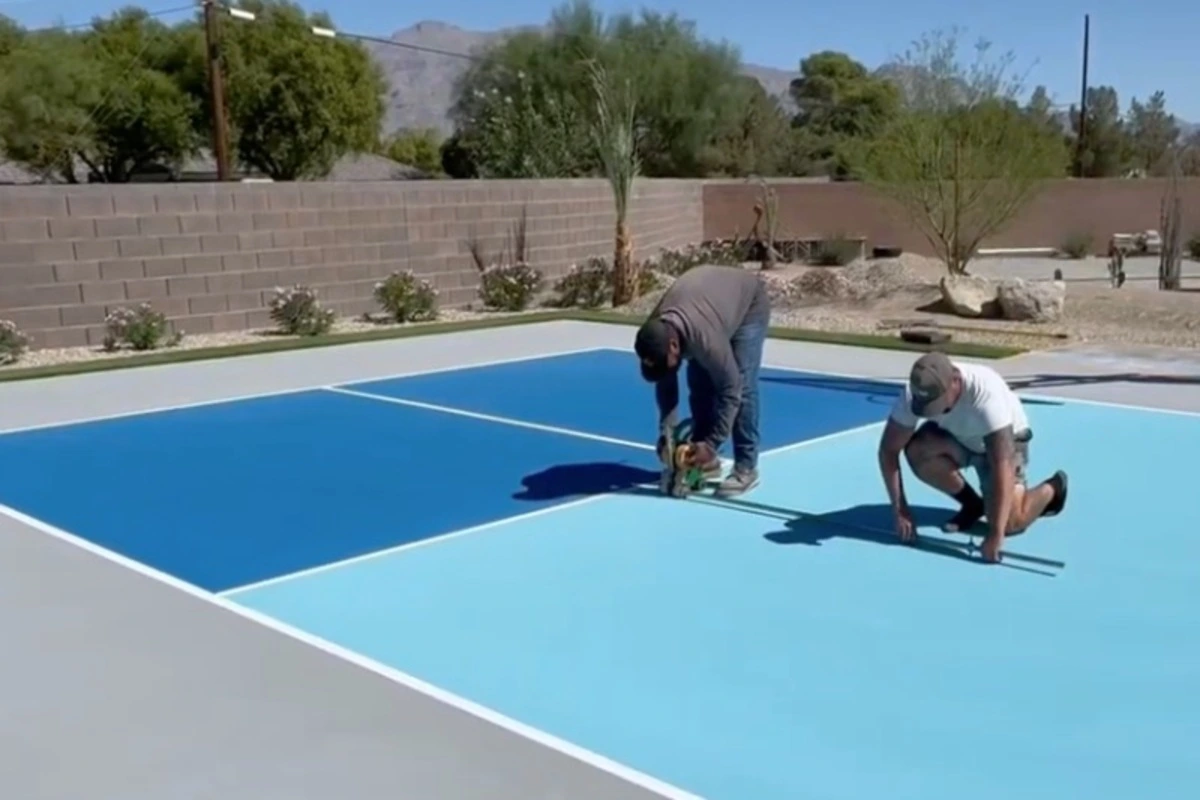
A sport court maintenance schedule written for Ohio does not work here, and one written for a basketball court does not cover the net posts on a pickleball court. This is a cross-sport calendar built for Nevada and Arizona conditions: ultraviolet exposure, extreme daily temperature swings, blowing grit and monsoon season.
If you want the service side of this, meaning what a professional visit includes, that lives on sport court resurfacing and maintenance. If your court is basketball only, basketball court maintenance covers that sport specifically. This piece is the calendar: what to do, when, and why the desert changes the answer.
What this climate actually does to a court
Five forces do most of the damage, and none of them are dramatic.
Ultraviolet exposure. Sunlight degrades the binders in acrylic coatings and fades line paint. Southern Nevada and central Arizona deliver more of it than almost anywhere in the country, which is why courts here reach the end of a color coat sooner than the same product in a milder climate.
Thermal cycling. A large daily swing between afternoon high and overnight low means the slab expands and contracts every single day of the year. That cycling works joints, works crack repairs, and eventually finds anything that was not bonded well.
Blowing grit. Fine sand lands on the surface and then gets ground into it by shoes. Grit left on a court is abrasive, and sweeping is not cosmetic maintenance here. It is wear prevention.
Monsoon. Short, violent storms deliver debris, silt and standing water all at once, and they are the annual stress test for your drainage.
Irrigation and hard water. Overspray leaves mineral deposits and staining, and it puts moisture at the slab edge where you least want it.
Weekly, or whenever you notice
Blow or sweep the surface. Grit and leaf litter both need to leave, and organic debris that sits on acrylic in the sun will stain it permanently within days.
Walk the court after any real rain and note where water sits. A puddle that dries in an hour is nothing. A puddle in the same place every time is information, and it is worth writing down with a date.
Lift equipment rather than dragging it. Goals, benches, ball hoppers and net posts all leave permanent scars when dragged across a coated surface.
Monthly
Wash the surface. Water and a soft-bristle push broom handles most of it. Where a cleaner is needed, use only what the surface manufacturer approves, since the wrong chemistry damages coatings and typically voids coverage.
Clear the drains and the perimeter. Trench drains, area drains and swales all collect grit in this climate, and a drain that is half full of silt is a drain that will fail on the day it matters.
Inspect the fence. Look at fabric tension, ties, the condition of the coating, and gate hardware and latches. Tighten what is loose before it works itself into damage.
Check anchors and hardware. Net post sleeves, goal mounts, backboard hardware and any bolted equipment. Thermal cycling loosens fasteners over time, and a loose backboard is both a play problem and a safety problem.
Check the lighting. Confirm fixtures still point where they were aimed, confirm the timer schedule is correct, and replace anything failed. Aim drifts more than people expect after a windy month.
Check the irrigation. Walk the perimeter with the system running and confirm nothing is spraying the court, the slab edge or the fence line.
Seasonal, four times a year
Late spring, before monsoon. This is the most important seasonal visit. Clear every drain and swale completely. Inspect shade structure and fence footings. Decide whether windscreen and shade fabric stay up or come down, and if they stay, verify the attachments. Trim vegetation that overhangs the court, because monsoon wind puts it on your surface.
Early fall, after monsoon. Remove accumulated silt from drains and the perimeter. Look for new low spots where water now sits and did not before, which is an early warning of base movement. Inspect for new cracking. Reinstall anything you took down.
Winter. The cool months are the right time to schedule repairs, crack treatment and resurfacing, because coatings cure properly at moderate temperatures and crews are not fighting heat. Winter is also when the schedule is less crowded. Inspect joint condition and any sealant.
Early spring. Deep clean before the heavy use season. Inspect line work for fading and wear. Plan and budget any work you identified over the winter.
Annual
Once a year, do a real inspection rather than a glance.
Survey the cracks. Photograph each one from the same position with something for scale, and compare against last year. A crack that has not changed is a maintenance item. A crack that is growing or opening seasonally is a structural conversation, and the reasons are laid out in why sport courts crack.
Check the surface plane. After rain, or by flooding the court with a hose, mark where water stands and how deep. Standing water is the single best indicator of a slab or base problem developing under a surface that still looks fine.
Assess coating wear and color. Look at the high-traffic zones: baselines, the key, service areas. Wear shows there first.
Service the systems. Fence hardware, gate operation, light fixtures and their aiming, and replacement of nets and worn equipment.
Update the log. Dated photos and a written record of what was done. Almost every warranty conditions coverage on performing maintenance and puts the burden of proving it on you, which we cover in more detail alongside the rest of the court maintenance services we provide.
Multi-year: the resurfacing cycle
Outdoor acrylic courts in this climate need resurfacing periodically. The interval depends on how heavily the court is used, how much direct sun it gets, the surface system installed and the color selected. Ask your manufacturer and your builder for the interval that applies to your court rather than assuming a number you read somewhere.
What a resurfacing involves: thorough cleaning, patching of cracks and damage, filling of low spots so the court drains and plays correctly, resurfacer coats, color coats and new line work. Done on schedule, it is routine. Deferred until the coating has worn through to the substrate, it becomes a bigger and more expensive job.
Roughly every five years, step back and ask structural questions rather than cosmetic ones. Is the court still draining the way it did when it was new? Are the low spots the same ones as last time, or are there new ones? Is any crack pattern spreading? Are the fence footings still plumb? That review is what tells you whether you are maintaining a sound court or maintaining the surface of a failing one, and the decision framework is in resurface versus replace.
Sport-specific additions
Tennis and pickleball courts add net and post hardware to the list: sleeve caps, ratchets, center straps and net condition, plus baseline wear where footwork concentrates. Line accuracy matters more here than on a basketball court, so fading lines get attention sooner.
Basketball courts add goal hardware, backboard mounting and rim condition, with the heaviest surface wear inside the key.
Volleyball courts add sleeve caps and corrosion checks at the post sleeves, which sit in the slab and collect water if left uncapped.
Modular tile surfaces have their own list: check for lifted or shifted tiles, keep debris from working underneath, and watch how the field behaves through the hottest part of the year. Tile detail is covered under court flooring tiles.
What to never do
No high-pressure washing. It strips coating and the damage is not always visible until later. No solvents, degreasers, bleach or acid. No wire brushes or stiff bristles. No sealers or paints that the surface manufacturer has not approved, including hardware store line paint. No vehicles, dumpsters or lifts on the surface. No dragging anything. No letting a third party patch or resurface without written approval, which commonly voids remaining coverage.
Frequently asked questions
How often should a sport court be cleaned in the desert?
Sweep or blow debris weekly, and wash the surface monthly with water and a soft-bristle push broom. Blowing grit is abrasive underfoot and organic debris stains acrylic quickly in direct sun, so both need to come off sooner than in a milder climate.
When is the best time of year to resurface a court in Nevada or Arizona?
The cooler months. Coatings cure properly at moderate temperatures, crews are not fighting extreme heat, and scheduling is easier outside the summer rush. Plan the work over the winter for the following season rather than trying to squeeze it in during peak heat.
How do I know if standing water on my court is a problem?
Water that clears within a short time after rain is normal. Water that pools in the same location every time, or in a location where it never used to pool, indicates a low spot from slab or base movement. Mark it, date it, photograph it, and compare against next year.
What should I do before monsoon season?
Clear every drain and swale completely, inspect fence and shade structure footings, verify or remove windscreen and shade fabric attachments, and trim any vegetation overhanging the court. Monsoon storms deliver debris, silt and water all at once, and clogged drainage is what turns a storm into damage.
How often does a court need resurfacing?
On a multi-year cycle that varies with use, sun exposure, the surface system and the color selected. There is no single interval that applies to every court. Ask your surface manufacturer and your builder for guidance specific to your installation, and resurface on schedule rather than waiting for the coating to wear through.
If you would rather have this handled on a schedule than remembered, call Nevada at (702) 883-8386 or Arizona at (480) 878-2292, or request a project quote.