
Backyard Putting Green Construction
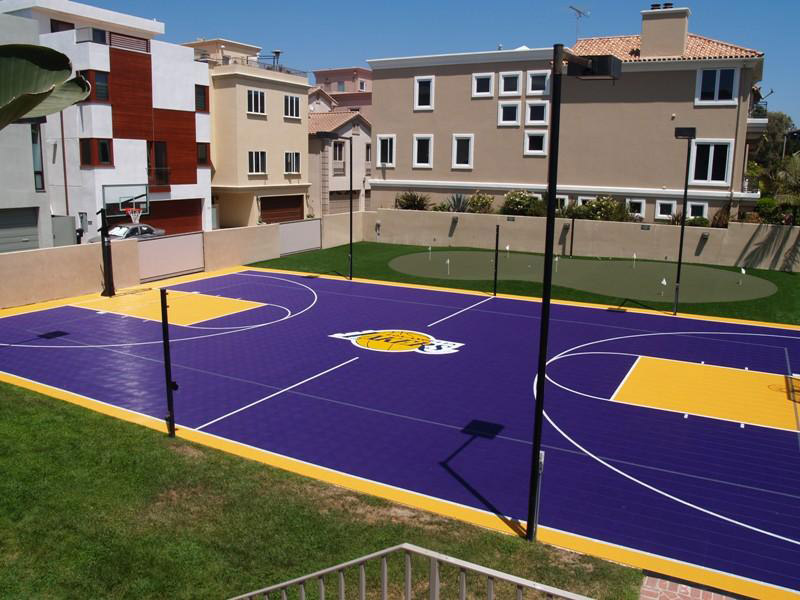
A synthetic putting green is the most used backyard sports surface per square foot that exists. It takes a fraction of the space of a court, it gets used in short sessions rather than requiring a game, and it works in the hours when a court is too hot. It is also the one where the difference between a good installation and a poor one is most obvious, because a putt either rolls true or it does not.
The base is the green
Everything that matters about how a putting green rolls is decided below the turf.
- Compaction determines whether the surface stays true. An under-compacted base settles unevenly, and on a putting surface a dip of a fraction of an inch is visible in every putt that crosses it. This is where a cheap installation shows within a season.
- Contours are built in the base, not in the turf. Breaks, slopes, tiers and subtle movement are shaped into the compacted base, and the turf follows it. A green described as having break that was not shaped into the base is a flat green with a wrinkle in it.
- Drainage has to work, and in this region the reason is monsoon rainfall arriving all at once rather than steady rain. A green that holds water is a green that settles.
- The edge detail holds everything in place, and it is where failures start.
The same base discipline that governs a court applies here, and it is covered in sport court base construction and subgrade.
Designing the contours
This is the part worth spending time on, because it determines whether the green stays interesting.
- Scale the break to the size. A small green with dramatic contour is unplayable. A large green with none is dull after a week.
- Build for multiple pin positions, which is what keeps a green in use. Four or five cups at different points on the green give genuinely different putts, and moving the pin takes seconds.
- Think about approach, since many owners want to chip onto the green as well as putt on it. That changes the fringe requirement, the surround and where the green sits relative to anything breakable.
- Keep one straight putt, which sounds counterintuitive and is what makes practice useful. A green where every putt breaks is a green nobody practices on.
- Match the contour to the player. A serious golfer wants subtlety and a family wants fun, and those are different designs.
Green speed
Speed is a specification rather than a property of the turf, and it is worth deciding deliberately. Three things set it.
- The turf product, meaning pile height, density and fiber type. Shorter and denser rolls faster.
- Infill, the sand brushed into the turf, where quantity affects both speed and how the surface holds up.
- Maintenance, since brushing and rolling keep the fibers upright and the surface consistent, and a neglected green slows and becomes inconsistent.
The useful conversation is about what the green is for. A green matched to the speed of the courses you actually play is more useful for practice than one set as fast as possible, which is frequently faster than anything you will putt on.
The fringe and the surround
The fringe is the collar of longer turf around the green, and it does two jobs. It provides a visual and playing transition, which matters if you chip onto the green, and it protects the edge of the putting surface, which is the most vulnerable part of the installation.
Beyond the fringe, the surround is a design decision. A green set into planting reads very differently from one set into a turf lawn or bordered by hardscape, and the choice affects maintenance as much as appearance. Turf considerations generally are in outdoor sports turf.
Cups, flags and the details
- Cup placement should give genuinely different putts rather than being distributed evenly.
- Cup construction matters more than people expect, since a cup that is not set flush and stable in the base produces a lip that deflects balls and is visible in every putt.
- Fringe cups, where someone wants to practice longer putts from off the green.
- Sand areas, where a bunker is wanted, which is a separate construction with its own drainage requirement.
- Chipping areas, which is turf at a different pile, positioned to allow a swing with safe run-out.
Heat, which is the local limit
Synthetic turf in this sun gets hot, and a putting green is no exception. Three things matter. Position, since a green in afternoon shade is used far more than one in full west sun. Product, since some turf and infill combinations run cooler. And expectation, since a green in full exposure will be a morning and evening surface in summer regardless. Shade over part of a green extends its usable hours considerably, and the structures are covered in court shade structures and windscreens for the desert.
Maintenance
A putting green is low maintenance rather than no maintenance, and the maintenance is what keeps it rolling true.
- Brush it, which keeps fibers upright and distributes infill. This is the single most important task and it is quick.
- Top up infill as it depletes with play and brushing.
- Blow off debris before it works into the infill, which matters more under trees.
- Rinse it, which cools it temporarily and removes dust, and in this valley dust is constant.
- Check the edges and cups periodically, since catching a lifting edge early is trivial.
Done consistently that is minutes rather than hours, and the difference between a green that rolls true at year five and one that does not is almost entirely this. The general discipline is in desert court maintenance schedule.
Combining with a court
A putting green combines well with other backyard sports surfaces, and the combination is frequently better than either alone. A green tucked beside a court uses space that is otherwise circulation. A green plus a small court covers more household interest than a larger court alone. And both can share lighting, which is covered in sport court lighting, glare and shielding ordinances.
Where both are planned, design them together, since the grading, drainage and edges interact. Phasing is covered in phased backyard court construction.
What a quote should specify
The base depth, material and compaction method. How contours are shaped and where. The drainage arrangement. The turf product and its pile specification. The infill type and quantity, and the resulting green speed. The fringe specification. Cup number, placement and construction. The edge detail. And the maintenance regime the installation assumes.
A quote that names a turf product and a square footage has left out most of what determines whether the green rolls true. Our work is on the backyard courts page.
Frequently asked questions
What makes a putting green roll true?
The base. Compaction determines whether the surface stays true, and on a putting green a settled dip of a fraction of an inch shows in every putt that crosses it. Contours are also shaped into the base rather than into the turf, so a green sold as having break without that shaping is a flat green with a wrinkle in it.
How is green speed set?
By the turf product, meaning pile height, density and fiber type, by the infill quantity, and by maintenance. Shorter and denser rolls faster. The useful decision is matching the speed to the courses you actually play rather than asking for the fastest possible, which is frequently faster than anything you will putt on in a round.
How many cups should a green have?
Four or five, placed to give genuinely different putts rather than distributed evenly, is what keeps a green in use. Moving the pin takes seconds and changes the practice entirely. It is also worth keeping one straight putt, because a green where everything breaks is a green nobody practices putting stroke on.
Does a synthetic green get too hot here?
In full afternoon sun, yes, and it will be a morning and evening surface in summer. Position in afternoon shade matters most, some turf and infill combinations run cooler, and shade over part of the green extends its usable hours considerably. Rinsing it cools it temporarily and also removes the dust this valley deposits constantly.
What maintenance does it need?
Brushing, which keeps the fibers upright and distributes infill and is the single most important task. Topping up infill as it depletes. Blowing off debris before it works into the infill. Rinsing for dust. And checking edges and cups periodically. Done consistently that is minutes rather than hours, and it is what keeps the green rolling true.