How Much Space Do You Need for a Pickleball Court? Complete Backyard Court Size Guide

1. How Much Space Do You Need for a Pickleball Court_

How Much Space Do You Need for a Pickleball Court? Complete Backyard Court Size Guide

One of the most common questions homeowners ask before building a backyard game court is: “How much space do you need for a pickleball court?”

While the official playing area for pickleball is relatively compact, proper court planning also requires additional run-off space, fencing clearance, drainage considerations, and safe movement zones around the court. Whether you are planning a residential recreation space or a larger outdoor sports and games court, understanding the correct dimensions is essential for creating a safe, comfortable, and professional-quality playing experience.

Pickleball continues to grow rapidly because it combines accessibility, social interaction, and low-impact gameplay. Homeowners love that it can fit into many residential properties while still providing an exciting and active recreational feature. However, fitting a court into a backyard requires more planning than simply measuring the painted court lines.

Understanding the ideal pickleball court dimensions, clearance recommendations, and layout options will help ensure your project performs well for years to come.

Official Pickleball Court Dimensions

Standard Court Size

A regulation pickleball court measures:

  • 20 feet wide
  • 44 feet long

These dimensions are identical for both singles and doubles play, making court planning much simpler than sports like tennis.

The official court includes:

  • Baselines
  • Sidelines
  • Centerline
  • Service courts
  • Non-volley zone (commonly called the kitchen)

The kitchen extends 7 feet from the net on each side and plays a major role in pickleball strategy and gameplay.

When homeowners discuss backyard pickleball court size, they often assume the 20’ x 44’ area is the total space required. In reality, the court itself is only the beginning. Players need additional space beyond the painted boundaries to move comfortably and safely.

Net Height Requirements

A pickleball net should measure:

  • 36 inches high at the sidelines
  • 34 inches high at the center

This slight center dip is intentional and essential for proper gameplay. Incorrect net height can affect ball bounce, shot consistency, and overall court performance.

Permanent net systems are generally recommended for homeowners who want a more polished and durable recreational court. Portable nets may work for temporary setups, but permanent installations provide better stability and aesthetics.

Recommended Total Space for a Pickleball Court

Although the official playing area is 20 feet by 44 feet, additional clearance space is strongly recommended for safety and gameplay quality.

Minimum Recommended Space

For most residential projects, the minimum recommended court area is approximately:

  • 30 feet wide
  • 60 feet long

This extra space allows for:

  • Better player movement
  • Safer gameplay
  • Improved shot recovery
  • Reduced fencing interference
  • Easier ball retrieval

A 30’ x 60’ court layout works well for many homeowners who want a recreational court without requiring a massive backyard footprint.

Preferred Tournament-Style Space

For a more professional playing experience, many court builders recommend:

  • 34 feet wide
  • 64 feet long

This larger footprint creates extended run-off areas behind the baselines and sidelines. Competitive players especially appreciate the added movement space during fast-paced rallies and defensive shots.

If your property can accommodate the additional clearance, the larger layout often provides a much more enjoyable long-term playing experience.

Comparison Table – Pickleball Court Space Planning Options

Court Type

Recommended Dimensions

Best For

Notes

Official Playing Area

20’ x 44’

Court markings only

No safety clearance included

Minimum Backyard Layout

30’ x 60’

Casual residential play

Most common home court size

Preferred Residential Layout

34’ x 64’

Comfortable competitive play

Better movement space

Multi-Use Game Court

Custom dimensions

Multiple sports

Requires custom planning

Compact Recreational Layout

Smaller than 30’ x 60’

Small backyards

Best for casual use

Backyard Factors That Affect Court Space

Several site conditions can influence the final pickleball court layout and overall court usability.

Fence Placement

Fencing should never sit directly against the playing lines. Players need space to move safely beyond the court edges.

A good recommendation is to allow:

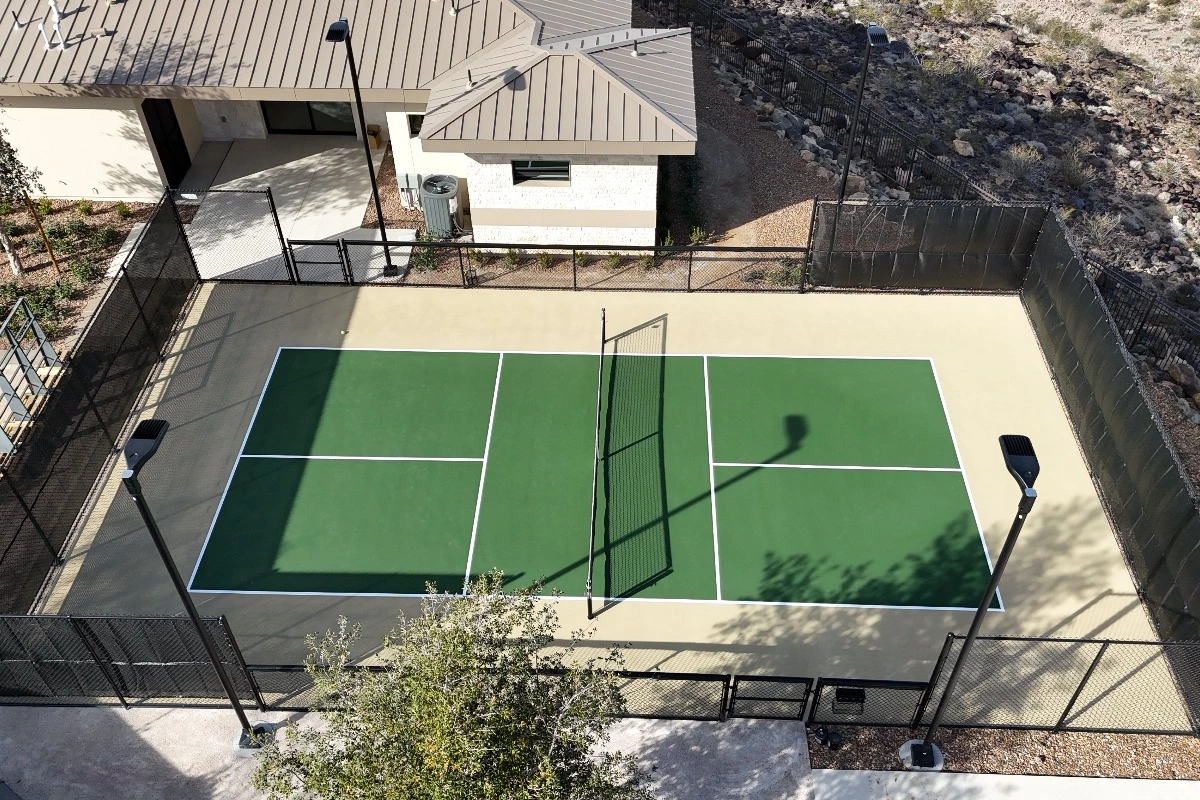
  • 5 to 10 feet of clearance around the court whenever possible

This improves:

  • Safety
  • Ball retrieval
  • Player comfort
  • Overall gameplay flow

Proper fence placement also protects surrounding landscaping and structures from repeated ball impacts.

Landscaping & Obstacles

Before installing a court, evaluate nearby obstacles carefully.

Avoid placing courts too close to:

  • Trees
  • Pools
  • Retaining walls
  • Patio furniture
  • Outdoor kitchens
  • Decorative landscaping
  • Storage buildings

Trees may create shade, but they also introduce leaves, debris, roots, and sap that can affect the playing surface. Hardscape obstacles can also increase injury risks if players run beyond the court boundaries.

A well-designed recreational court should feel open and functional rather than cramped.

Court Orientation

North-south court orientation is generally recommended because it reduces direct sun glare during morning and afternoon play.

Courts installed east-west may force players to look directly into the sun, especially during peak daylight hours. This can reduce visibility and negatively impact gameplay.

For sunny climates like Arizona, proper orientation becomes even more important for long-term usability.

Can a Pickleball Court Fit in a Small Backyard?

Yes — With Smart Layout Planning

Many homeowners assume their backyard is too small for pickleball, but modern court design solutions can often make it possible.

Smaller properties may benefit from:

  • Compact court layouts
  • Shared multi-use game court designs
  • Adjustable fencing systems
  • Modular tile flooring systems
  • Reduced recreational clearance zones

The key is understanding how the court will be used. Casual recreational play can often work with slightly tighter dimensions, while competitive players typically benefit from larger run-off areas.

Half-Court Combination Layouts

Many homeowners choose to combine several activities into one outdoor recreational space.

Popular combinations include:

  • Pickleball
  • Basketball
  • Volleyball
  • Badminton
  • Fitness training space

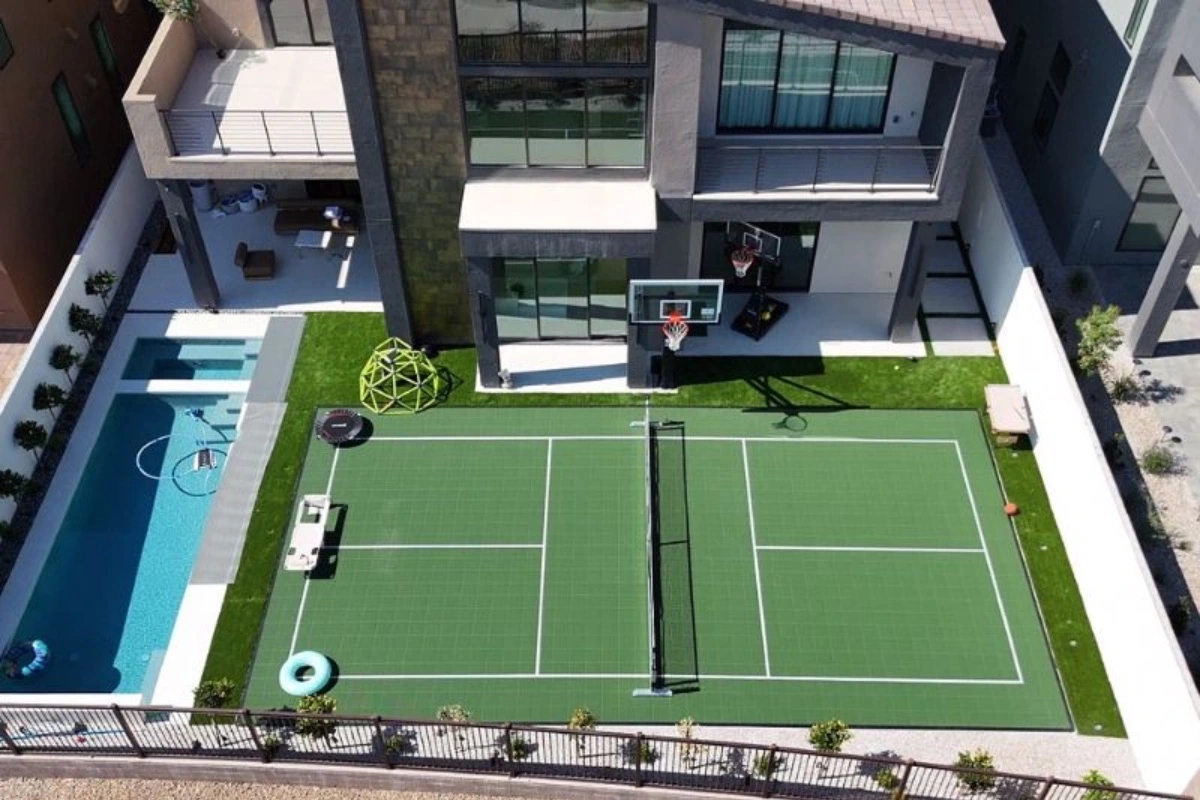
A custom multi-use court can maximize backyard functionality while reducing the total footprint required for multiple separate sports areas.

Professional court builders can help balance line striping, hoop placement, net systems, fencing, and playing zones to avoid overcrowding.

Best Surface Options for Backyard Pickleball Courts

The playing surface greatly impacts comfort, durability, maintenance, and gameplay quality.

Acrylic-Coated Concrete

Acrylic-coated concrete is one of the most popular surfaces for outdoor pickleball courts.

Benefits include:

  • Professional playing surface
  • Excellent ball response
  • Long-term durability
  • Weather resistance
  • Strong traction
  • Custom color combinations

A properly installed concrete base is critical for preventing cracks, puddling, and uneven bounce.

Modular Interlocking Tiles

Modular tile systems are becoming increasingly popular for residential game courts.

Benefits include:

  • Cushioned comfort
  • Easier maintenance
  • Multi-sport flexibility
  • Faster installation
  • Replaceable sections
  • Slip-resistant surface texture

These systems work especially well for families wanting a multi-use recreational court.

Synthetic Outdoor Systems

Synthetic court systems provide a softer, more recreational-style playing experience.

Benefits include:

  • Joint-friendly performance
  • Comfortable movement
  • Slip-resistant texture
  • Outdoor durability
  • Recreational versatility

Homeowners looking for reduced impact on knees and joints often prefer synthetic systems over harder acrylic surfaces.

Benefits of Proper Court Space Planning

Taking the time to properly plan pickleball court clearance and layout dimensions creates significant long-term advantages.

Proper planning helps:

  • Improve player safety
  • Enhance gameplay experience
  • Reduce interference from fencing
  • Create smoother movement flow
  • Increase long-term court usability
  • Improve recreational enjoyment
  • Protect nearby structures and landscaping
  • Create a more professional-looking installation

A cramped court may technically function, but it often feels restrictive during gameplay. Players may hesitate to chase shots or move aggressively near boundaries, reducing the overall enjoyment of the space.

A properly sized court feels more open, natural, and comfortable.

Common Mistakes to Avoid

Several common planning mistakes can negatively affect the performance and longevity of a backyard court.

Avoid these issues:

  • Building the court too close to fences
  • Ignoring drainage requirements
  • Using incorrect dimensions
  • Forgetting run-off space
  • Poor court orientation
  • Installing too close to trees
  • Failing to plan for lighting
  • Choosing the wrong surface system

Drainage is especially important for outdoor courts. Water accumulation can damage surfaces, create slipping hazards, and shorten the life of the installation.

Lighting should also be considered early in the design process if evening play is expected.

Planning a Residential Pickleball Court Installation

A successful residential pickleball court installation starts with a complete evaluation of the property.

Important planning factors include:

  • Available backyard dimensions
  • Soil conditions
  • Drainage patterns
  • Surface material selection
  • Intended level of play
  • Fencing requirements
  • Lighting plans
  • Multi-sport functionality
  • Accessibility for construction equipment

Homeowners should also think long-term. A court that works today should still feel functional years from now as players improve and usage increases.

Working with experienced outdoor game court professionals can help ensure the court is designed correctly from the beginning.

Frequently Asked Questions (FAQs)

How much room do you need around a pickleball court?

Most backyard courts should include at least 5 to 10 feet of clearance around the playing area. While the official court measures 20 feet by 44 feet, a total area closer to 30 feet by 60 feet is typically recommended for comfortable recreational play.

What is the best size for a backyard pickleball court?

The best backyard pickleball court size is usually 30 feet by 60 feet at minimum. For a more professional and comfortable layout, 34 feet by 64 feet is often preferred.

How much space does a pickleball court require?

A pickleball court requires a 20-foot by 44-foot playing area, but total recommended space is larger once safety clearance and movement zones are included.

What is the size of a pickleball court?

Official pickleball court dimensions are 20 feet wide by 44 feet long. These measurements apply to both singles and doubles play.

Is a pickleball court the same size as badminton?

Yes. A doubles badminton court shares the same dimensions as a pickleball court at 20 feet by 44 feet. However, the net height, court markings, and rules differ significantly.

So, how much space do you need for a pickleball court? While the official playing surface measures 20 feet by 44 feet, most homeowners should plan for at least 30 feet by 60 feet to allow for safe movement and comfortable gameplay.

For a more professional experience, 34 feet by 64 feet provides ideal clearance and a much more open feel during play.

From fencing placement and court orientation to surface materials and drainage, every detail contributes to the overall performance and enjoyment of the court. With proper planning and expert construction, even many residential properties can successfully accommodate a high-quality outdoor pickleball court designed for years of recreational use.

Acrylic Pickleball Court Surface: Why It’s One of the Best Outdoor Court Options

Acrylic Pickleball Court Surface

Acrylic Pickleball Court Surface: Why It’s One of the Best Outdoor Court Options

If you’re planning a new pickleball court or resurfacing an existing one, you’ve probably asked: What is the best surface for outdoor pickleball?

One of the most trusted and widely used solutions is an acrylic pickleball court surface. Professional acrylic systems are commonly used for residential backyard courts, community pickleball courts, schools, parks, athletic complexes, and competitive recreational facilities.

These surfaces are designed to deliver consistent ball bounce, reliable traction, long-term durability, weather resistance, and clean visual appeal. For outdoor courts in hot climates like Nevada and Arizona, acrylic systems are especially valuable because they are built to handle sun exposure, heat, and frequent recreational use.

A professionally installed acrylic pickleball court coating creates a smooth, slip-resistant, and performance-focused playing surface that supports both casual and competitive play.

What Is an Acrylic Pickleball Court Surface?

A Specialized Athletic Coating System

An acrylic pickleball court surface is a layered athletic coating system applied over a stable concrete or asphalt base. Unlike ordinary paint, acrylic court surfacing is engineered specifically for sports performance, outdoor durability, and player safety.

The surface typically includes acrylic resurfacer layers, texture coatings, color coatings, and regulation line striping systems. Together, these layers create a durable playing surface with controlled traction, consistent ball response, and strong resistance to outdoor wear.

Acrylic systems can also be customized with different court colors, border colors, and line markings to match the property’s design goals.

Why Acrylic Is Popular for Pickleball Courts

Acrylic surfaces are widely used because they provide excellent traction, resist UV damage, handle outdoor weather conditions well, and deliver professional-style gameplay performance.

For homeowners, acrylic creates a court that looks sharp and plays consistently. For schools, parks, and recreational facilities, acrylic offers a reliable surface that can handle regular use while remaining relatively easy to maintain.

Because pickleball requires quick lateral movement, controlled stops, and precise ball response, the surface must provide the right balance of grip and smoothness. Acrylic systems are designed to support that balance.

What Are the Benefits of Acrylic Pickleball Court Surfaces?

Consistent Ball Bounce

One of the biggest advantages of acrylic systems is predictable ball response. Pickleball depends heavily on consistent bounce, especially during serves, volleys, dinks, and baseline rallies.

Players benefit from accurate bounce behavior, reliable shot performance, and better gameplay consistency. A properly installed outdoor pickleball court surface helps create a more enjoyable experience for beginners and experienced players alike.

Uneven or poorly coated surfaces can cause dead spots, unpredictable bounce, and frustrating gameplay. Acrylic surfacing helps reduce those issues when installed over a properly prepared base.

Slip-Resistant Texture

Acrylic coatings are designed with textured materials that improve foot traction and player stability. This is important because pickleball involves fast starts, quick stops, side-to-side movement, and frequent direction changes.

A slip-resistant surface helps improve player confidence and reduces the risk of slipping during normal play. The texture level can also be adjusted depending on the desired balance between traction and smooth movement.

Professional installers understand how to apply the right texture for pickleball so the court is safe without feeling overly rough.

UV and Weather Resistance

Outdoor courts in Arizona and Nevada experience intense sun exposure, extreme heat, and seasonal weather changes. A high-quality acrylic system is engineered to resist fading, surface deterioration, and premature wear caused by UV exposure.

This makes acrylic an excellent choice for desert climates where ordinary coatings may quickly break down. When installed correctly, acrylic surfacing helps protect the court while maintaining strong color and performance over time.

Low Maintenance Requirements

Compared to many alternative surfaces, acrylic courts are relatively easy to maintain. Typical maintenance includes removing debris, washing the surface occasionally, checking drainage, and scheduling periodic resurfacing as the court ages.

Acrylic surfaces do not require complicated daily upkeep. For homeowners and facility managers, this makes them a practical long-term option.

Comparison Table – Acrylic Pickleball Court Surface vs Other Surface Types

Surface Type

Best For

Key Benefits

Considerations

Acrylic Court Surfacing

Outdoor residential and commercial courts

Consistent bounce, UV resistance, traction, durability

Requires stable concrete or asphalt base

Modular Tile Systems

Backyard multi-use courts

Cushioning, drainage, design flexibility

Ball bounce may feel different than acrylic

Cushioned Acrylic Systems

Comfort-focused courts

Joint comfort, traction, professional appearance

Higher cost than standard acrylic

Concrete Only

Basic recreational spaces

Strong base material

Needs coating for proper play performance

Asphalt Only

Budget court foundations

Common outdoor base option

Should be surfaced for better durability and traction

How Is an Acrylic Pickleball Court Installed?

Step 1 – Base Preparation

The foundation is one of the most important parts of the installation process. Acrylic surfacing performs best over a level, properly graded, structurally stable concrete or asphalt base.

The base must be designed with drainage in mind. If water sits on the court, it can shorten the life of the surface and create safety concerns. Professional builders evaluate slope, drainage paths, and surface stability before applying any coatings.

Step 2 – Surface Repair and Cleaning

Before coatings are applied, the existing surface must be repaired and cleaned. Cracks are filled, surface imperfections are corrected, and the court is pressure cleaned to remove dirt, dust, and debris.

This step ensures proper coating adhesion. Skipping repairs or applying coatings over a dirty surface can lead to peeling, bubbling, or premature surface failure.

For pickleball court resurfacing, this step is especially important because older courts often have cracks, fading, worn texture, or uneven areas that need attention before new coatings are installed.

Step 3 – Acrylic Resurfacer Application

Acrylic resurfacer layers are applied to smooth minor imperfections, improve surface uniformity, and prepare the court for texture and color coatings.

This layer helps create a more consistent base for the finished surface. It also improves the appearance and performance of the court before the final color system is installed.

Step 4 – Color Coating and Striping

The final layers include court color coatings, textured performance systems, and regulation pickleball striping. Color coatings define the playing area and border zones, while striping creates the official court layout.

Professional striping is essential. Pickleball lines must be accurate, clean, and easy to see. Poor layout or crooked lines can affect gameplay and make the court look unprofessional.

How Long Does an Acrylic Pickleball Court Surface Last?

Lifespan Depends on Maintenance and Usage

A properly installed acrylic system can last many years with routine cleaning, good drainage, and periodic resurfacing. Lifespan depends on usage levels, weather exposure, base condition, coating quality, and maintenance habits.

A private backyard court may experience less wear than a busy park or school court. Commercial and community courts often require more frequent maintenance because of heavier traffic.

Resurfacing Extends Court Life

Over time, pickleball court resurfacing helps restore surface texture, color vibrancy, traction, and ball response. Resurfacing can prevent the need for full court replacement in many situations.

A professional resurfacing project may include cleaning, crack repair, acrylic resurfacer, new color coatings, and fresh line striping. This gives the court a renewed appearance and improved playability.

Is Acrylic Better Than Modular Tile for Pickleball?

Acrylic Is Preferred for Traditional Play

Many players prefer acrylic because it offers professional-style ball bounce, tournament-style gameplay, consistent performance, and a clean court feel. Acrylic is also commonly used in public courts, athletic complexes, and competitive recreational facilities.

If your goal is a traditional pickleball playing experience, acrylic is often the preferred option.

Modular Tiles Offer More Cushioning

Modular tile systems are popular for backyard flexibility, joint comfort, drainage, and multi-use recreational courts. They may be a good fit for families who want a court that supports multiple activities and provides a softer feel underfoot.

The best choice depends on player preference, budget, intended use, maintenance goals, and climate conditions.

Common Mistakes to Avoid with Acrylic Court Surfaces

Ignoring Drainage Planning

Poor drainage shortens surface lifespan and can cause standing water, coating damage, and unsafe play conditions. Drainage should be addressed before the surface is installed.

Using Low-Quality Coating Systems

Cheap coatings may fade quickly, crack under UV exposure, lose traction, or deteriorate faster outdoors. High-quality acrylic court surfacing systems are designed for performance and durability.

Skipping Surface Repairs Before Coating

Existing cracks and surface damage can worsen if not repaired properly. Coatings should never be treated as a shortcut for structural repair.

Incorrect Texture Levels

Too much texture can feel abrasive and slow the ball. Too little texture may reduce traction. Professional installers apply the correct texture level for pickleball performance.

Why Homeowners and Facilities Choose Acrylic Pickleball Courts

Professional Playing Experience

Acrylic courts closely resemble the surfaces used at many recreational facilities, competitive courts, and athletic complexes. This makes them a strong choice for players who want a reliable and familiar playing experience.

The combination of traction, color, bounce, and durability makes acrylic one of the most dependable options for outdoor pickleball.

Long-Term Outdoor Durability

Acrylic systems perform well in desert climates, high UV exposure areas, and heavy recreational usage environments. With proper installation and maintenance, they provide lasting performance and strong visual appeal.

For homeowners, schools, parks, and commercial facilities, acrylic surfacing offers an excellent balance of performance, durability, and value.

Frequently Asked Questions

What is the best surface for a pickleball court?

Acrylic is one of the best and most common surfaces for outdoor pickleball courts because it provides consistent ball bounce, reliable traction, UV resistance, and long-term durability.

What surface do I need for pickleball?

Pickleball is typically played on a hard, smooth, slip-resistant surface. Acrylic-coated concrete or asphalt is one of the most popular options for outdoor courts.

What is the best acrylic paint for pickleball courts?

The best option is not regular paint, but a professional acrylic court coating system designed specifically for athletic surfaces. These systems provide better traction, durability, and UV resistance.

What is the official surface of a pickleball court?

Pickleball can be played on several hardcourt surfaces, but acrylic-coated courts are commonly used for outdoor recreational and competitive play.

How often should an acrylic pickleball court be resurfaced?

Resurfacing frequency depends on usage, weather exposure, and maintenance. High-use courts may need resurfacing sooner, while private residential courts may last longer between resurfacing projects.

Pickleball Resurfacing: How to Restore Performance, Safety & Court Appearance

8. Pickleball Resurfacing

Pickleball Resurfacing: How to Restore Performance, Safety & Court Appearance

Over time, even high-quality pickleball courts begin to show signs of wear. If your court has cracks, fading colors, peeling surfaces, poor traction, standing water, or uneven gameplay, it may be time for professional pickleball resurfacing.

Many homeowners, HOAs, schools, and recreational facilities eventually face the same question: should you completely replace the court or restore the existing surface?

In many cases, resurfacing is the smarter and more cost-effective solution. A professional resurfacing system can restore court appearance, ball performance, surface traction, player safety, and long-term durability without requiring a full reconstruction.

For outdoor courts in Arizona and Nevada, resurfacing becomes especially important because constant UV exposure, heat expansion, and weather conditions accelerate surface wear. A properly resurfaced court helps protect the investment while creating a cleaner, safer, and more enjoyable playing experience.

What Is Pickleball Resurfacing?

A Surface Restoration Process

Pickleball court resurfacing is the process of repairing and renewing an existing court surface using specialized athletic coating systems. The process may include crack repair, acrylic resurfacing layers, texture coatings, color systems, and fresh court striping.

The goal is to restore the court to optimal playing condition while extending the lifespan of the existing foundation.

Unlike full reconstruction, resurfacing focuses on repairing and renewing the top athletic surface rather than replacing the concrete or asphalt base entirely. When the structural foundation is still stable, resurfacing can provide major visual and performance improvements at a lower overall cost.

Why Courts Need Resurfacing

Outdoor pickleball courts constantly face UV exposure, heat expansion, moisture intrusion, heavy foot traffic, and normal surface aging. Over time, these conditions cause coatings to fade, texture to wear down, and cracks to form.

Without maintenance, these issues may continue to worsen and eventually affect gameplay quality and player safety. Resurfacing helps restore the court before minor damage becomes a larger structural problem.

Professional pickleball court restoration services also improve the appearance of older courts, helping recreational facilities and homeowners maintain a more attractive outdoor environment.

What Are the Signs a Pickleball Court Needs Resurfacing?

Surface Cracks

Cracks are one of the most common warning signs that a court needs attention. Small cracks may appear harmless at first, but they often spread over time due to heat expansion, water intrusion, and repeated use.

If ignored, cracks can affect ball bounce, create tripping hazards, and allow moisture to penetrate deeper into the surface system.

Professional pickleball court crack repair helps stabilize these damaged areas before resurfacing layers are applied.

Faded or Discolored Coatings

Strong sunlight and UV exposure often cause acrylic court colors to fade or become uneven. Courts may begin to look dull, worn, or patchy over time.

This not only affects appearance but also reduces court visibility during gameplay. Fresh resurfacing restores vibrant colors and improves line visibility.

Slippery or Worn Texture

As athletic coatings wear down, the court may lose surface grip and traction consistency. Players may notice slippery movement, reduced stability, or difficulty controlling quick directional changes.

Acrylic resurfacing restores the textured finish designed to improve player safety and movement performance.

Standing Water or Drainage Issues

Standing water is another major warning sign. Poor drainage may lead to premature surface deterioration, unsafe playing conditions, and long-term structural damage.

Before resurfacing begins, professional contractors evaluate water flow and drainage conditions to determine whether corrective work is needed.

Comparison Table – Common Pickleball Court Surface Problems & Resurfacing Solutions

Surface Problem

Common Cause

Resurfacing Solution

Benefit

Surface Cracks

Heat expansion and aging

Acrylic crack repair systems

Restores smoother gameplay

Faded Colors

UV exposure

New color coating application

Improves appearance and visibility

Slippery Texture

Worn surface coatings

Textured resurfacing layers

Better traction and safety

Uneven Ball Bounce

Surface wear or cracks

Leveling and resurfacing

Consistent gameplay performance

Standing Water

Drainage problems

Drainage correction and resurfacing

Longer court lifespan

What Happens During Pickleball Resurfacing?

Step 1 – Court Inspection

The resurfacing process begins with a complete court inspection. Contractors evaluate cracks, surface wear, drainage conditions, coating damage, and overall court stability.

This step helps determine the proper repair strategy and whether the existing court foundation remains structurally sound.

Professional inspections also help identify hidden issues that may affect the resurfacing results later.

Step 2 – Cleaning and Surface Preparation

Before coatings are applied, the court must be thoroughly cleaned and prepared. The surface is pressure washed, cleared of debris, and prepared for proper coating adhesion.

Preparation is critical for long-term durability. Applying coatings over dirt, loose materials, or unstable surfaces may lead to premature peeling or uneven performance.

Step 3 – Crack Repairs and Patching

Damaged areas are repaired using acrylic crack fillers, patch systems, and leveling materials. The goal is to stabilize the surface before resurfacing layers are applied.

Professional outdoor pickleball court repair services address both cosmetic and functional issues during this stage.

Crack repair is especially important because untreated cracks often reappear quickly beneath new coatings.

Step 4 – Acrylic Resurfacing Application

New resurfacing layers are then applied to restore surface texture, improve traction, and create consistent ball response.

Professional acrylic pickleball resurfacing systems are specifically engineered for outdoor athletic performance. These coatings are designed to resist UV exposure, weather damage, and long-term recreational use.

Texture levels can also be adjusted to create the ideal balance between traction and smooth gameplay.

Step 5 – Court Color and Striping

The final stage includes applying fresh court colors, regulation pickleball striping, and optional multi-sport markings.

This dramatically improves the visual appearance of the court while restoring gameplay clarity and professional aesthetics.

Many resurfacing projects also include updated color combinations and custom layout enhancements.

What Is the Best Surface for Pickleball Resurfacing?

Acrylic Coating Systems

Acrylic resurfacing remains one of the most popular choices because it provides excellent traction, UV durability, professional-style gameplay, and long-term weather resistance.

A professional pickleball court coating system creates a smooth, textured surface designed specifically for outdoor sports performance.

Acrylic systems are commonly used on recreational courts, community facilities, schools, athletic complexes, and residential backyard courts.

Cushioned Acrylic Systems

Some resurfacing projects include cushioned acrylic layers designed to reduce joint stress and improve player comfort.

These systems are often preferred for family recreation courts, training facilities, and recreational-focused properties where comfort is a priority.

Cushioned systems may also help reduce fatigue during longer play sessions.

Multi-Use Court Surfacing

Many resurfacing projects add basketball striping, volleyball markings, or additional multi-sport functionality. This allows homeowners and facilities to expand the usefulness of the court without major reconstruction.

Professional layout planning helps keep the court organized and visually clean while supporting multiple activities.

Why Resurfacing Is Often Better Than Full Replacement

Lower Project Disruption

Resurfacing is typically faster, less invasive, and more efficient than complete court reconstruction. Instead of removing and rebuilding the entire foundation, resurfacing focuses on restoring the existing surface system.

This reduces project downtime and often lowers overall costs.

Extends Existing Court Life

A professionally resurfaced court can continue performing well for many years. Regular resurfacing helps protect the underlying base while maintaining gameplay quality and safety.

For many courts, resurfacing can delay the need for complete replacement significantly.

Improves Appearance and Property Value

Fresh resurfacing dramatically improves court appearance, recreational appeal, and overall outdoor aesthetics.

For residential properties, this enhances backyard entertainment value. For commercial facilities and HOAs, it helps maintain a more attractive recreational environment for guests and residents.

Common Mistakes to Avoid with Pickleball Resurfacing

Delaying Repairs Too Long

Small cracks and minor surface issues often become major structural problems over time. Addressing problems early usually leads to better resurfacing results and lower long-term repair costs.

Using Non-Athletic Paint Systems

Standard paints are not designed for athletic performance. They often lack proper traction, durability, UV resistance, and weather protection.

Professional acrylic sports coatings are specifically engineered for pickleball gameplay and outdoor conditions.

Ignoring Drainage Problems

Water problems will continue damaging resurfaced courts if the drainage issues are not corrected first. Proper water management is critical for long-term court performance.

Hiring Inexperienced Contractors

Improper resurfacing may lead to premature peeling, uneven texture, poor adhesion, inconsistent bounce, and reduced traction.

Experienced resurfacing contractors understand athletic coatings, crack repair methods, texture application, and climate-specific installation requirements.

Why Homeowners and Facilities Invest in Pickleball Resurfacing

Pickleball Continues to Grow Rapidly

Pickleball continues to grow across residential communities, parks, athletic facilities, and recreational properties. Many facilities are upgrading older courts to improve player experience and support increasing demand.

Resurfacing allows older courts to remain functional and visually appealing without complete replacement.

Better Gameplay and Safety

Resurfacing restores reliable ball bounce, proper traction, smooth movement performance, and safer playing conditions.

Players immediately notice the difference between a worn surface and a professionally resurfaced court. Improved texture, visibility, and bounce create a more enjoyable experience for all skill levels.

Frequently Asked Questions (FAQs)

How often do pickleball courts need to be resurfaced?

The timing depends on usage, weather exposure, maintenance, and coating quality. Courts with heavy recreational use or strong UV exposure may require resurfacing sooner than lightly used residential courts.

What is the surface coating for pickleball?

Most outdoor pickleball courts use acrylic athletic coating systems designed for traction, UV resistance, and consistent gameplay performance.

What is the best surface for a pickleball court?

Acrylic hardcourt surfacing is one of the most popular choices because it provides reliable bounce, durability, traction, and weather resistance.

What type of surface is used for pickleball?

Pickleball is commonly played on acrylic-coated concrete or asphalt surfaces. Some courts also use cushioned systems or modular athletic tiles.

What is the best coating for a pickleball court?

Professional acrylic sports coatings are considered one of the best options because they are designed specifically for athletic performance, outdoor durability, and player safety.

Pickleball Court Paint Colors: Best Color Combinations for Performance & Design

9. Pickleball Court Paint Colors

Pickleball Court Paint Colors: Best Color Combinations for Performance & Design

When designing or resurfacing a court, one of the most overlooked—but important—decisions is choosing the right pickleball court paint colors. Color does not just affect appearance. It also impacts ball visibility, player performance, heat absorption, court safety, and the overall feel of the space.

Whether you are building a backyard court, upgrading an HOA facility, or resurfacing a recreational game court, selecting the right color combination plays a major role in how the court looks and performs. A well-planned color system can make the court easier to play on, more comfortable in hot climates, and more visually appealing for years.

Professional court builders use athletic-grade coatings designed specifically for outdoor sports surfaces. These coatings are not standard paint. They are textured, UV-resistant systems built to handle foot traffic, sun exposure, and regular gameplay.

Why Do Pickleball Court Paint Colors Matter?

Visibility During Play

The right pickleball court colors help players track the ball more easily, identify boundaries clearly, and reduce visual confusion during fast rallies. Pickleball is a quick game, and players need to react to shots in real time. Poor color contrast can make it harder to see the ball, judge lines, and move confidently.

A strong contrast between the playing area, outer zones, and court lines creates a cleaner visual field. This is especially important for shared courts, recreational facilities, and older players who may need clearer boundary visibility.

Performance and Safety

Color choices also affect performance and safety. When the court lines stand out clearly against the playing surface, players can position themselves better and react faster. This improves court awareness and reduces hesitation during gameplay.

A good color system also supports safer movement. If the surface markings are confusing, players may misjudge boundaries, step awkwardly, or lose focus during quick directional changes.

Heat Reflection in Outdoor Courts

In hot climates like Nevada and Arizona, court color can influence surface temperature. Dark colors absorb more heat, while lighter colors reflect more sunlight. This can affect player comfort, especially during warm afternoons.

Choosing heat-conscious pickleball court design colors can make outdoor courts more enjoyable and practical for regular use.

What Are the Standard Pickleball Court Colors?

Classic Blue and Green Combination

The most common professional layout includes a blue playing surface with green outer zones. This combination is popular because it provides strong contrast, a clean tournament-style appearance, and balanced visibility.

Blue helps the ball stand out clearly, while green creates a familiar athletic court look. This is one of the safest choices for homeowners, parks, HOAs, and recreational facilities that want a traditional pickleball court appearance.

Red and Green Variations

Some courts use a red playing area with green surrounding zones. This creates a bold, energetic look while still offering strong contrast between court sections.

Red and green combinations can work well when the surrounding property design supports warmer tones. However, in very hot climates, darker red shades may absorb more heat than lighter alternatives.

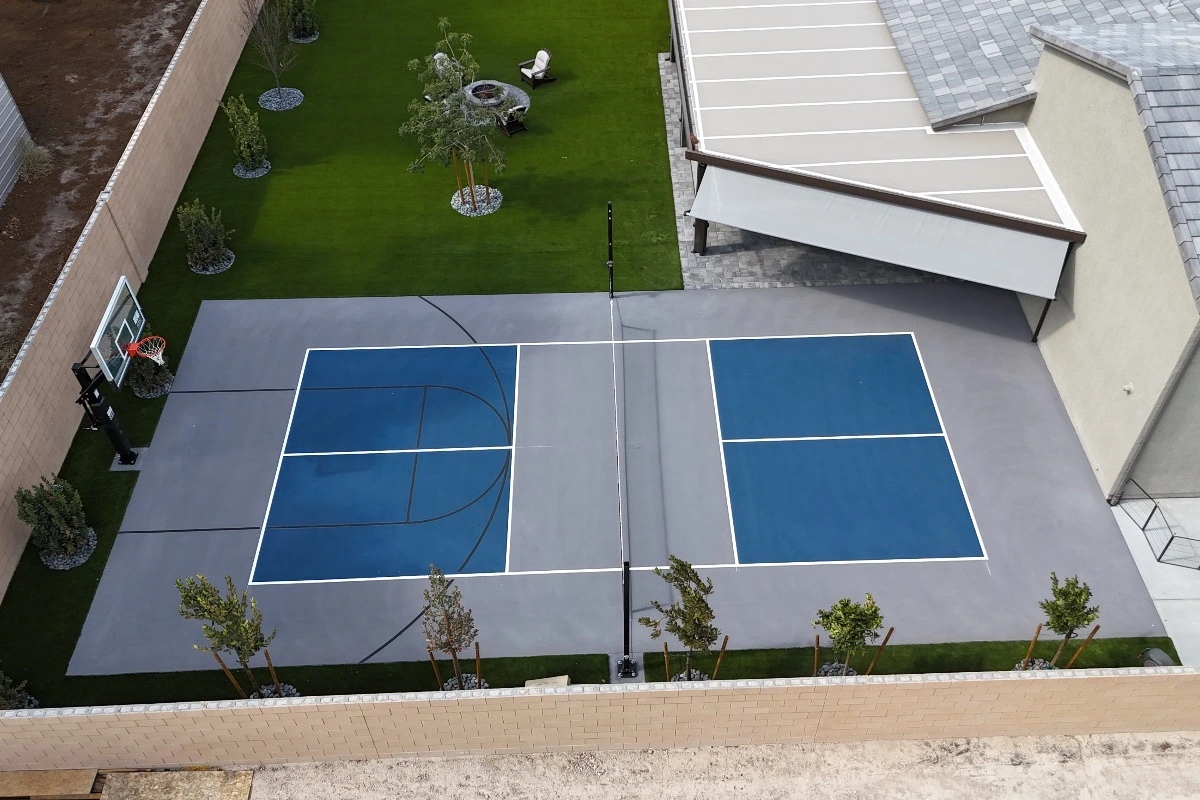
Gray and Blue Modern Courts

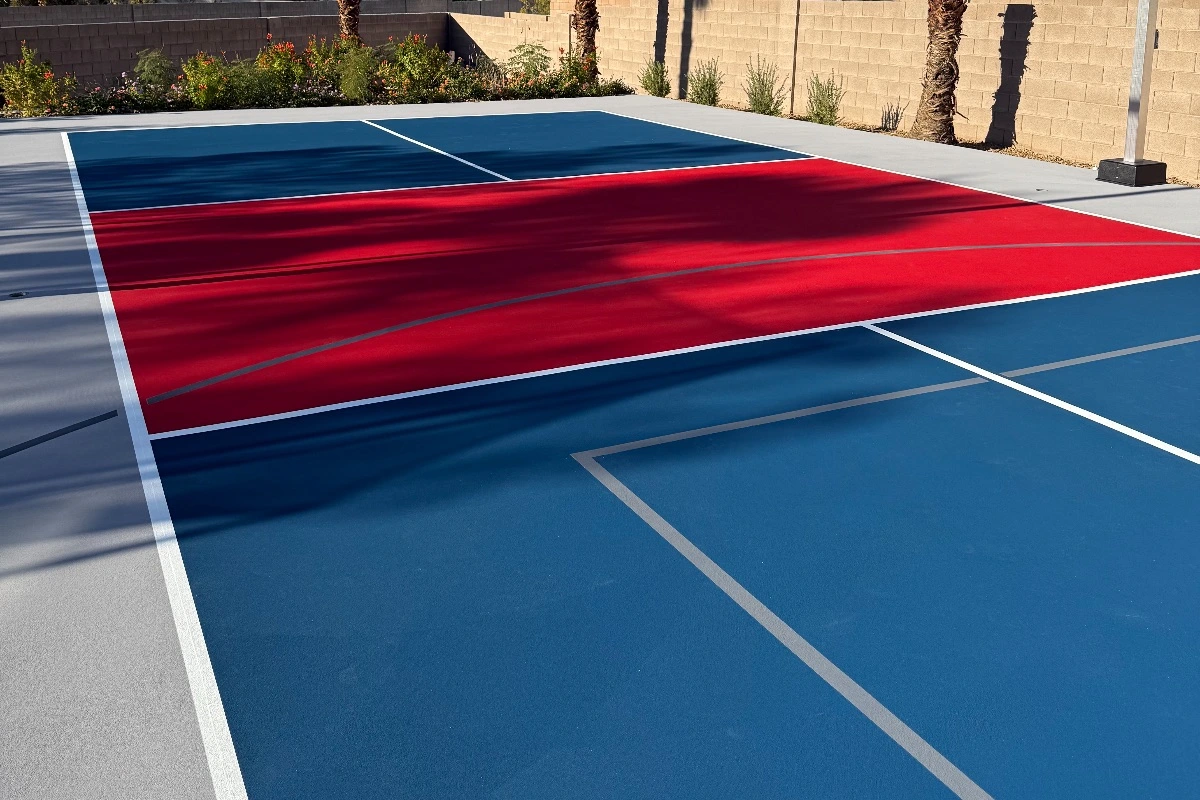
Modern court designs often use light gray playing areas with blue or colored borders. This combination creates a sleek, contemporary appearance while reducing glare and visual intensity.

Gray-based designs are especially popular for custom backyard courts because they can blend nicely with patios, landscaping, pool decks, and modern outdoor living spaces.

Comparison Table – Popular Pickleball Court Paint Color Combinations

Color Combination

Best For

Main Benefits

Considerations

Blue Playing Area + Green Border

Traditional pickleball courts

Excellent visibility, professional look, strong contrast

Very common design

Green Playing Area + Blue Border

Parks and recreational courts

Balanced appearance, familiar game court style

Works best with bright line striping

Red Playing Area + Green Border

Custom residential courts

Bold look, strong zone separation

Dark reds may absorb more heat

Light Gray + Blue Border

Modern backyard courts

Sleek design, lower glare, clean appearance

Needs strong line contrast

Tan + Green Border

Desert-style properties

Natural look, better heat reflection

May need brighter line colors

Full Blue Court + White Lines

Compact backyard courts

Simple, clean, high visibility

Less zone separation

What Paint Is Used for Pickleball Courts?

Acrylic Court Coatings

Most professional pickleball courts use acrylic court color coatings. These systems are specifically designed for athletic surfaces and include acrylic-based coatings, textured surfacing materials, and UV-resistant pigments.

A professional outdoor pickleball court paint system is designed for outdoor durability, consistent traction, long-term color stability, and reliable performance. These coatings also help protect the surface from wear caused by sunlight, weather, and regular play.

Acrylic coatings can be applied over properly prepared concrete or asphalt surfaces. They are commonly used for pickleball, tennis, basketball, and multi-use recreational courts.

Why Regular Paint Should Not Be Used

Standard paint should not be used on pickleball courts. Regular paint can peel quickly outdoors, become slippery, fade under UV exposure, and reduce gameplay quality.

House paint, garage floor paint, or general commercial coatings are not engineered for athletic movement, ball response, or slip resistance. They may look acceptable at first, but they often fail much faster than professional sport coatings.

Only athletic-grade acrylic coatings should be used for proper court performance and durability.

How Are Pickleball Court Colors Applied?

Step 1 – Surface Preparation

Before color coatings are applied, the court surface must be cleaned, repaired, and leveled if needed. Surface preparation may include pressure washing, crack repair, patching, and removing loose coating material.

This step is essential because the new color system needs a clean and stable surface to bond properly.

Step 2 – Base Color Application

Once the court is prepared, acrylic layers are applied to create a uniform base color and proper adhesion surface. These layers help improve appearance and prepare the court for final color zones.

On resurfacing projects, this step can dramatically improve the look of an older, faded court.

Step 3 – Court Color Zones

Different colors are then applied for the playing area, out-of-bounds zones, borders, and multi-sport layouts. These zones help players quickly understand the court layout.

For multi-use courts, professional planning is important to prevent the design from looking too busy.

Step 4 – Line Striping

Finally, pickleball lines are painted using athletic-grade striping materials. Multi-use markings may also be added for basketball, volleyball, or tennis layouts.

Sharp, accurate striping is essential for both appearance and playability. Poor line work can make even a newly resurfaced court look unprofessional.

How Do Colors Affect Ball Visibility?

High Contrast Improves Play

High contrast improves gameplay because the ball stands out clearly, court lines are easy to see, and playing zones are visually distinct. This helps players react faster and move more confidently.

The best color for pickleball court visibility usually depends on the ball color being used. Since many pickleballs are bright yellow, orange, or green, the court surface should provide enough contrast to make the ball easy to track.

Blue and gray surfaces often work well with bright pickleballs because they create strong visual separation.

Avoiding Poor Color Combinations

Poor color combinations include low-contrast shades, overly bright reflective tones, and similar colors for different court zones. These can reduce gameplay clarity and make the court harder to use.

For example, using two very similar green shades for the playing area and border may look subtle but can make boundaries difficult to identify. Likewise, overly bright surfaces may create glare during sunny conditions.

What Are the Best Colors for Hot Climates?

Heat-Reflective Color Choices

In areas like Arizona and Nevada, heat-conscious color selection matters. Better options often include light gray, light blue, tan-based coatings, and medium-tone color systems.

These colors can help reduce heat absorption compared to darker tones while still maintaining a clean, professional appearance.

For residential backyards, lighter modern color palettes can also blend beautifully with desert landscaping, pool areas, stonework, and outdoor living spaces.

Avoid Dark Heat-Absorbing Colors

Dark colors such as deep red, dark green, navy, and black tones can increase surface temperature significantly. While these colors may look dramatic, they may not be ideal for courts exposed to direct sun throughout the day.

Professional court designers can help balance appearance, heat comfort, and visibility when selecting the final color scheme.

Can You Customize Pickleball Court Colors?

Yes — Fully Custom Designs Are Available

Custom court designs are one of the biggest advantages of professional resurfacing and installation. Courts can include team colors, HOA branding, multi-sport layouts, decorative borders, school colors, or personalized backyard designs.

Custom colors can make a court feel unique while still maintaining proper playability. The key is choosing colors that look good and function well during play.

Why Custom Colors Are Popular

Homeowners choose custom pickleball court resurfacing colors because they want the court to match the property’s style. A custom court can complement landscaping, patios, pool decks, exterior paint colors, and outdoor furniture.

For schools, HOAs, and commercial facilities, branded court colors can create a more polished and memorable recreational environment.

Common Mistakes When Choosing Court Paint Colors

Ignoring Visibility Contrast

Poor contrast reduces gameplay quality. The court should make it easy to see the ball, lines, and boundaries.

Choosing Purely Aesthetic Colors

Looks matter, but performance is more important. A beautiful court that is hard to play on is not a successful design.

Not Considering Climate

Some colors perform poorly in extreme heat. Darker tones may make the surface hotter and less comfortable during outdoor play.

Overcomplicating Designs

Too many colors can create visual confusion. A simple, clean color scheme often performs better and looks more professional.

Benefits of Choosing the Right Pickleball Court Colors

Choosing the right color system improves gameplay visibility, player safety, surface comfort, property aesthetics, and long-term court appearance.

A professionally selected color combination can also help your court look newer for longer. UV-resistant acrylic systems maintain color better than standard paints and are designed to perform under outdoor conditions.

For homeowners, the right colors can turn a basic court into a premium backyard feature. For facilities, they can improve user experience and support a more professional recreational environment.

Frequently Asked Questions

What is the best color for a pickleball court?

Blue and green are among the most popular pickleball court colors because they provide strong contrast, good visibility, and a professional appearance. Light gray and blue combinations are also popular for modern backyard courts.

What kind of paint is used on a pickleball court?

Pickleball courts should use acrylic game court coatings, not regular paint. These coatings are designed for traction, UV resistance, outdoor durability, and athletic performance.

What colors are associated with pickleball?

Common pickleball court colors include blue, green, red, gray, tan, and white line markings. Blue and green are the most traditional combinations.

What is the most common pickleball color?

For court surfaces, blue and green are the most common. For pickleballs, bright yellow and green are commonly used because they are easy to see during play.

Do pickleball colors matter?

Yes. Pickleball court colors affect ball visibility, player awareness, heat absorption, safety, and overall design. A good color combination improves both performance and appearance.

Single Pickleball Court Dimensions: Complete Size Guide for Backyard & Professional Courts

10. Single Pickleball Court Dimensions

Single Pickleball Court Dimensions: Complete Size Guide for Backyard & Professional Courts

If you’re planning to build a pickleball court, one of the first and most important questions is: what are the correct single pickleball court dimensions?

Whether you are designing a backyard court, HOA facility, school recreation area, or professional game court, understanding the exact measurements is essential for proper gameplay, safety, and long-term usability.

A poorly sized court can create several problems, including limited movement space, incorrect gameplay experience, safety concerns, and reduced court performance. Proper sizing ensures players can move comfortably, react naturally, and enjoy the court the way the game was intended to be played.

This guide explains everything you need to know about pickleball court size, clearance recommendations, layout planning, backyard installation considerations, and common sizing mistakes.

What Are the Official Single Pickleball Court Dimensions?

Standard Court Size

The official standard pickleball court dimensions are 20 feet wide by 44 feet long.

These dimensions apply to both singles and doubles play. Unlike tennis, pickleball uses the same court size regardless of the number of players on the court.

This standardized layout allows recreational and competitive players to enjoy consistent gameplay across residential, community, and tournament courts.

A properly sized court ensures accurate ball placement, balanced movement, and realistic gameplay performance.

Court Layout Zones

A complete pickleball court layout includes several important zones that must be marked accurately.

These include:

  • Two service areas
  • A center net line
  • Baselines and sidelines
  • A non-volley zone, commonly called the kitchen

Each section of the court plays a specific role in gameplay strategy and movement. Proper striping is critical because even small measurement errors can affect gameplay consistency.

Professional court builders use precise measurements to ensure every line and zone matches official standards.

What Is the Non-Volley Zone (Kitchen) Size?

Kitchen Dimensions Explained

The non-volley zone extends 7 feet from the net on both sides of the court.

This area is one of the most important parts of pickleball because players cannot volley while standing inside it. The kitchen helps control gameplay strategy and prevents aggressive net dominance.

Because the kitchen affects nearly every rally, the dimensions and striping must be exact. Incorrect measurements can change the way the game feels and negatively affect competitive play.

The kitchen line must also remain highly visible so players can easily judge their position during fast exchanges.

How Much Total Space Do You Need for a Single Pickleball Court?

Minimum Recommended Space

Although the actual court measures 20 feet by 44 feet, additional clearance space is required around the court perimeter.

The minimum recommended total area for a residential or recreational court is approximately:

  • 30 feet wide
  • 60 feet long

This extra pickleball court clearance space allows players to move safely during gameplay without immediately reaching fencing or obstacles.

Proper buffer zones improve comfort, safety, and overall court functionality.

Ideal Court Space for Better Play

For a more professional playing experience, many builders recommend approximately:

  • 34 feet wide
  • 64 feet long

This larger layout is commonly used for HOA courts, recreational facilities, athletic complexes, and high-traffic backyard courts.

The additional space allows smoother player movement, safer recovery shots, and a more tournament-style playing environment.

Comparison Table – Pickleball Court Space Options

Court Type

Court Size

Recommended Total Space

Best For

Basic Residential Court

20′ x 44′

30′ x 60′

Compact backyard use

Recreational Court

20′ x 44′

32′ x 62′

HOA and casual community courts

Professional-Style Court

20′ x 44′

34′ x 64′

Competitive and high-use facilities

Compact Multi-Use Court

Variable

Space-dependent

Shared basketball and pickleball layouts

Backyard Training Court

Reduced clearance

Custom layout

Limited residential spaces

Can a Single Pickleball Court Fit in a Backyard?

Yes — Most Backyards Can Accommodate It

A single pickleball court is one of the most space-efficient court options available. Compared to tennis, pickleball requires far less space, making it easier to integrate into residential properties.

A typical backyard pickleball court size works well in medium-sized residential yards, HOA common areas, side-yard conversions, and recreational outdoor spaces.

Many homeowners are surprised to learn that a pickleball court can often fit into areas where a full basketball or tennis court would not.

Smart Layout Design Helps Maximize Space

Even smaller properties can often accommodate pickleball through smart design planning. Professional builders may recommend compact layouts, modular court systems, efficient fencing placement, or multi-use configurations that combine basketball and pickleball into one recreational area.

Professional planning is especially important when dealing with limited backyard dimensions or irregular property shapes.

What Surface Works Best for a Single Pickleball Court?

Acrylic Court Systems

Most professional courts use acrylic athletic coatings because they provide consistent ball bounce, strong outdoor durability, UV resistance, and slip-resistant traction.

Acrylic systems are popular for both residential and commercial courts because they create a reliable and familiar playing surface.

For outdoor courts in Arizona and Nevada, UV-resistant acrylic coatings help reduce fading and weather-related deterioration.

Modular Tile Systems

Modular athletic tile systems are also popular for residential installations because they provide shock absorption, easy maintenance, and multi-sport flexibility.

These systems can work especially well for backyard recreation spaces where comfort and versatility are priorities.

Some homeowners choose modular tiles for courts that combine pickleball with basketball or other activities.

What Happens If the Court Is Too Small?

Limited Player Movement

A smaller-than-recommended court can negatively affect gameplay in several ways. Players may experience restricted movement, more frequent collisions near fencing, and reduced safety during fast-paced rallies.

Without proper clearance space, players may hesitate during shots because they are worried about running into obstacles.

Lower Game Quality

Improper sizing may also reduce gameplay quality. Players can experience inconsistent shot recovery, shorter rallies, awkward positioning, and a less realistic pickleball experience overall.

Even though the court itself may technically fit, the surrounding space is equally important for proper play.

Common Mistakes in Pickleball Court Sizing

Ignoring Clearance Space

One of the biggest mistakes is building only the 20-foot by 44-foot playing area without adding sufficient clearance around the court.

The extra space is critical for movement, safety, and realistic gameplay.

Poor Fence Placement

Fences placed too close to the court reduce playability and may create safety hazards. Players need enough room to move comfortably near the sidelines and baselines.

Not Planning for Multi-Use Needs

Many homeowners later decide they want basketball hoops, volleyball systems, or additional recreational functionality. Planning for multi-use features during the design stage helps avoid expensive changes later.

Incorrect Orientation

Improper court orientation may create sun glare issues during outdoor play. Professional builders typically evaluate sun positioning to improve player visibility and comfort.

Why Proper Dimensions Matter

Better Gameplay Experience

Correct sizing ensures smooth rallies, natural movement, balanced competition, and a more authentic pickleball experience.

Players notice the difference immediately when a court feels too cramped or improperly laid out.

Improved Safety

Adequate clearance space helps reduce trip hazards, fence collisions, and player injuries. This is especially important for recreational facilities and high-use community courts.

Higher Property Value

A professionally built court increases backyard functionality, recreational appeal, and overall property value. For many homeowners, a custom pickleball court becomes one of the most-used outdoor features of the property.

A properly designed court also improves long-term durability and helps preserve the appearance of the space.

Frequently Asked Questions (FAQs)

What is the size of a single pickleball court?

The official size of a pickleball court is 20 feet wide by 44 feet long. This applies to both singles and doubles play.

Is singles pickleball better than doubles?

Singles and doubles offer different playing experiences. Singles requires more movement and endurance, while doubles focuses more on teamwork and strategy. Most recreational pickleball is played as doubles.

What size is a skinny singles pickleball court?

Skinny singles is a modified version of pickleball played on a reduced portion of the court. Different variations exist, but it is typically used for practice or training rather than official competition.

What are the new dimensions for singles pickleball?

There are no separate dimensions for singles pickleball. Official singles and doubles games both use the standard 20-foot by 44-foot court size.

What is single court pickleball?

Single court pickleball refers to gameplay taking place on one dedicated pickleball court rather than multiple courts or shared court systems.

GET A QUOTE

Please Provide Your Contact Information and Project Details