
Pickleball 101: Guide to Court Ownership
 Legendary Admin
on
June 7, 2024
Legendary Admin
on
June 7, 2024
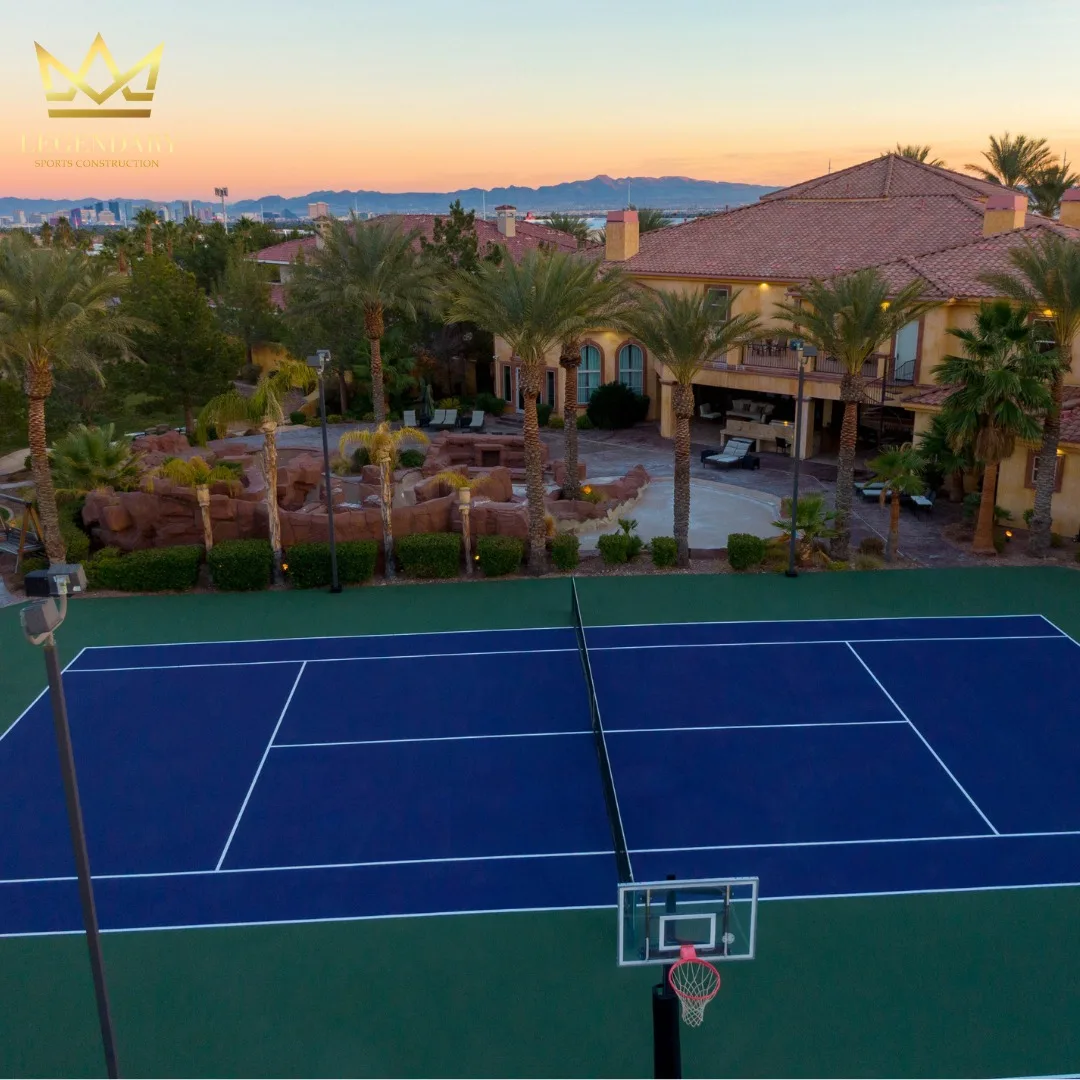
Pickleball 101: Guide to Court Ownership
Pickleball has risen in popularity over the years. And while local parks and recreation departments across the country are converting existing tennis and basketball courts into multi-game or individual pickleball playing surfaces, the best way to ensure you can play pickleball whenever you want is by investing in pickleball court construction for your own home court.
In this Pickleball 101 Guide, we’ll explain:
- Benefits of a Personal Pickleball Court
- Essential Features of a High-Quality Pickleball Court Design
- How to Choose the Best Pickleball Court Installer
- Maintaining Your Home Court
- Advanced Playing Techniques to Practice
Benefits of a Personal Pickleball Court
There are many advantages to installing a personal pickleball court, including:
- The flexibility to play at any time
- The convenience of stepping outside to start a game
- The ability to stay active in your own backyard
- Quality family time
- Daily opportunities for skill development
- An increase in property value
- And the versatility of multi-game courts using specialized pickleball court construction companies
Learn more about the benefits of installing a backyard court
Essential Features of a High-Quality Pickleball Court Design
Once you have decided to invest in a home court, it’s time to consider the design. A pickleball court should prioritize the following features:
- Basic court dimensions – The official pickleball court size is 44 feet long by 20 feet wide with an additional out-of-bounds area surrounding each side, requiring a total space of 64 by 34 feet. If space is limited, you can reduce the out-of-bounds areas, making your court 44 by 20 feet.
- The right surface materials – There are several playing surface options for pickleball courts. The best choices include: concrete, asphalt, and synthetic materials.
- Personal style – Customizing your pickleball court design is an added benefit. Some installers let you choose the colors, materials, and accessories to suit your preferences.
- Backyard placement – When deciding on the placement of your court, consider proper drainage to prevent water accumulation, or the court material you use. Furthermore, strategically position the court to avoid wind pockets that could hinder the game or invest in wind blockers like additional landscaping or glass boundaries.
- Accessories to improve game play – This includes selecting the right net and posts, installing proper lighting for nighttime play, and possibly added netting or glass around the court to block wind and keep pickleballs from rolling away.
Learn more tips for your pickleball court design
How to Choose the Best Pickleball Court Installer
Some important things to look for in a pickleball court construction company include:
- Experience and expertise – Companies with a longer track record often have more expertise installing backyard courts. You can also look for a company that specializes in pickleball court installations.
- Positive reviews – What have others said about them? Have they enjoyed their experience? Reviews can help you narrow down your search from the very beginning.
- Diverse portfolio – A variety of projects demonstrate an installer’s versatility and experience.
- Quality materials – Make sure the company you choose offers high-quality, durable playing surfaces to make your investment worthwhile.
- Design flexibility – Customizable options like color choices and surface types are going to make your court feel more unique.
- Consultation services – Pickleball court installers that help you get what you want will make the whole experience more enjoyable.
- Licensing and compliance – Verify the company is properly licensed and insured to perform work in your area and able to cover any potential damages or injuries during the installation process. Additionally, they should comply with local codes and regulations, following industry standards for pickleball court construction.
- Detailed estimates – Obtaining a written estimate outlining the costs involved offers transparency moving into the installation process so you know what to expect.
- Warranties – Check the warranty terms before committing to ensure you’re getting assurance that your investment will last and otherwise be protected. This indicates confidence in their work and helps you know you are covered.
- Ongoing maintenance – While some playing surfaces need less maintenance than others, it’s good to check with your court installer to see if they offer maintenance and court cleaning services.
- Timeline – Finally, discussing the project timeline at the beginning can help establish expectations on either side and see if it aligns with your schedule. Ask about their ability to handle potential delays like weather to ensure you get your court on time.
Maintaining Your Home Court
Once you have your pickleball court installed, it’s time to maintain it. The great thing to know about Legendary’s residential courts is that ongoing maintenance requires occasional sweeping and a spray-down with the hose. Then, when the play surface starts to show signs of wear, simple touch-ups may be needed, depending on the chosen material. Acrylic surfaces should be recoated while cushioned courts may need repairs. Additionally, the lines can be repainted once they become stained or faded.
Learn more about pickleball court maintenance
Advanced Playing Techniques
One of the benefits of a home pickleball court is being able to develop your skills as a pickleball player. Some advanced playing techniques you might try at home include:
- Strategic shot selection tailored to different court surfaces
- Adapting play style for competitive matches
- Drills for improving accuracy and agility
Conclusion
Installing a custom court is a beneficial investment for you and your family. We hope this guide was informative and helpful as you begin the process!
Comparison of Backyard Court Options
| Court Type | Sports Supported | Space Requirements | Pros | Cons |
| Single-Sport and Game Court | Basketball OR Tennis OR Pickleball | Moderate | Simple design; lower upfront cost | Limited flexibility; only one sport |
| MultiSport and Game Court | Basketball, Tennis, Pickleball, Volleyball | Larger footprint | Versatile; accommodates all ages and skill levels; great for family & neighborhood play | Higher initial cost; requires planning for line markings |
| Scaled-Down Multi Sport and Game Court | Mini Basketball, Pickleball, Short Tennis | Small backyard | Fits limited spaces; still versatile | Not regulation size; fewer players can play at once |
| Commercial Multi Sport and Game Court | Basketball, Tennis, Pickleball, Volleyball | Large backyard or HOA/community space | Tournament-quality; supports high traffic | Higher cost; may require professional installation |
How a MultiSport and Game Court Benefits Families and Communities
Encourages Year-Round Outdoor Activity
Nevada families can take advantage of sunny weather nearly all year. A backyard multi-sport and game court gives everyone a safe place to exercise, improve skills, and enjoy competitive play without leaving home.
Promotes Healthy Social Interaction
Invite neighbors, friends, or extended family for games and tournaments. These courts become social hubs, helping children and adults connect and strengthen community bonds.
Offers Customization Options
Courts can be designed with:
- Multi-sport line layouts (basketball, pickleball, tennis, volleyball)
- Custom colors and surface finishes
- Shade structures and lighting for evening play
- Fencing or wind screens for safety and convenience
Supports Skill Development
Players of all ages can practice shooting, passing, serving, and rallying. Children develop coordination and teamwork while adults improve fitness, precision, and strategic play.
Pickleball: The Ideal Addition to MultiSport and Game Courts
Pickleball’s popularity has skyrocketed for good reason:
- Easy to Learn: Players of any age can pick up the basics quickly.
- Fun for All Ages: Young children and grandparents can enjoy the same game together.
- Low Impact: Gentle on joints compared to high-impact sports like basketball.
- Great for Social Play: Doubles format encourages teamwork and interaction.
Adding pickleball lines to your multi-sport and game court maximizes play options and ensures the court stays in constant use.
Why Choose Legendary Sports Construction
- Custom Designs: Tailored layouts for basketball, tennis, pickleball, and volleyball.
- Premium Materials: High-quality, durable surfaces built for extreme desert conditions.
- Safety First: Proper grading, fencing, and surface choice for safe family play.
- Experienced Team: Expert installation, resurfacing, and ongoing support in Nevada and Arizona.
Take the First Step Toward Your Backyard
A backyard multi-sport and game court is more than a play area—it’s a space for fitness, fun, and family memories that will last for years. With a court designed by Legendary Sports Construction, you’re creating a central hub for activity, bonding, and home enjoyment.
Frequently Asked Questions
Does a pickleball court add value to your house?
Yes, a pickleball court can increase property value by adding a desirable recreational feature, especially in communities where the sport is popular.
Can you build a pickleball court in your backyard?
Yes, you can build a pickleball court in your backyard if you have enough space—typically 30′ x 60′ to allow for play area and safe movement.
What kind of court do you need for pickleball?
Pickleball is typically played on a 20′ x 44′ court with a hard surface like concrete or asphalt, finished with an acrylic sports coating for proper traction and ball control.
What is the cheapest way to build a pickleball court?
The most affordable option is to use an existing concrete or asphalt slab and add court lines and a basic acrylic surface coating.
How to play pickleball in your house?
For indoor play, you can use a smaller practice net, foam or low-bounce balls, and painter’s tape to mark lines on a smooth floor or garage surface.
Sign up for our Newsletter
- Category: Uncategorized